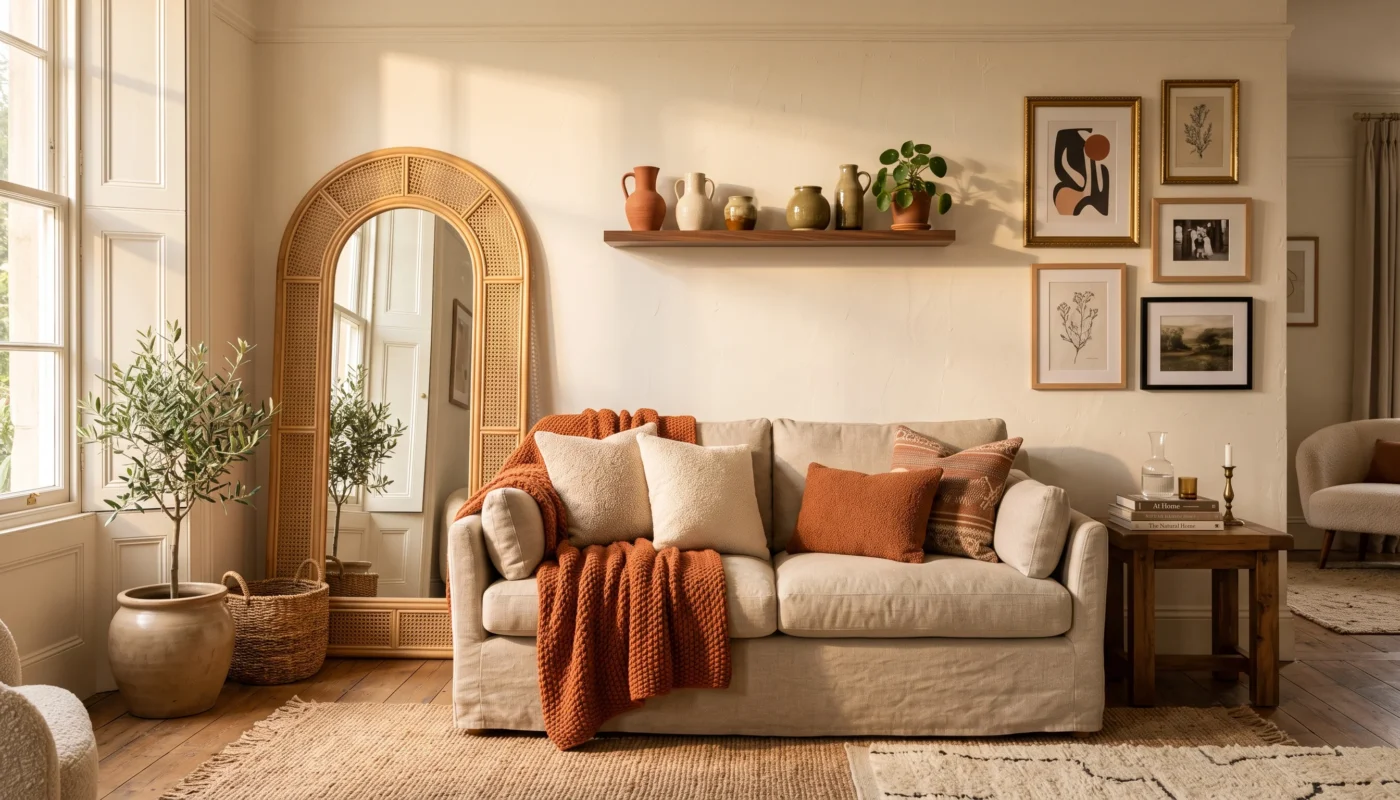

A living room shouldn’t feel unfinished just because the budget is tight. If your space still looks a little bare or mismatched, these 12 budget living room decor ideas will help you turn it into somewhere you actually want to sit down at the end of the day — all for under $50 total. No renovations, no expensive furniture hauls, just small, thoughtful changes: a layered throw here, a leaning mirror there, a swapped cushion cover in between. Each idea on this list is something you can start today with things you may already own, or a quick trip to a thrift store or discount shelf.
Start Here: Statement Mirror Corner
This is the single highest-impact change on the list — it needs no drilling, costs almost nothing, and visibly brightens the whole room within minutes.
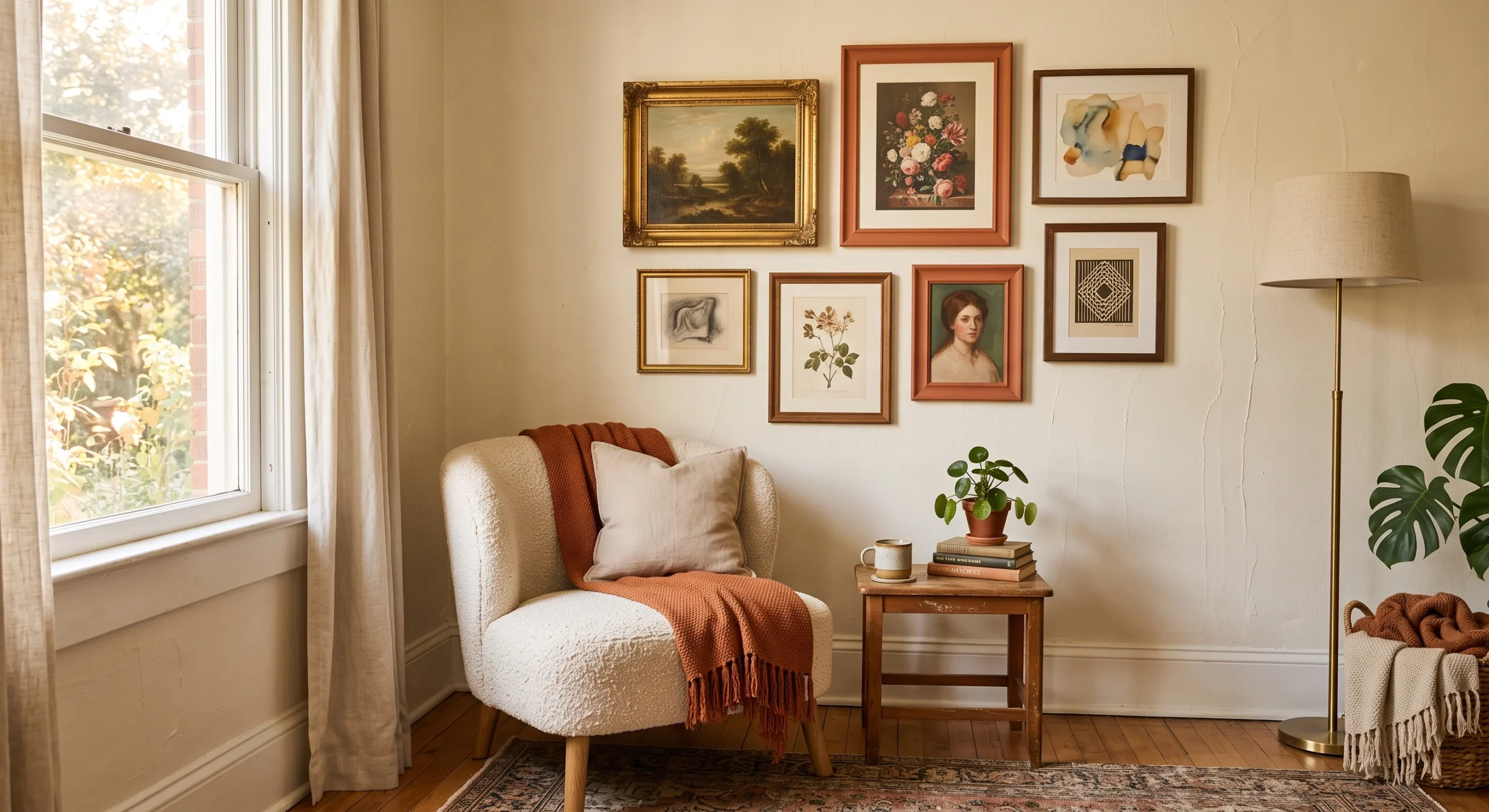
Thrifted Gallery Wall
- Turns bare wall space into the room’s focal point without a single new furniture purchase
- Mismatched frames (thrift, hand-me-down, or dollar-store) read as intentional when grouped tightly
- Design tip: keep frame colors within one warm or one cool family so the mix still feels curated
- Costs next to nothing if frames are already lying around the house
Every home has a stretch of wall that’s been ignored for months, and a gallery wall is the fastest way to fix that without spending real money. Secondhand frames, printed photos, even a child’s drawing in a cheap frame — grouped together on one wall — instantly reads as personality instead of clutter. A common approach is to lay the frames out on the floor first, adjusting spacing until it feels balanced, before a single nail goes into the wall. This is one of the easiest wins in any round of budget living room decor, because the “expensive” look comes from arrangement, not price tag.
Start with an odd number of frames — five or seven tends to look more natural than an even grid. Leave two to three inches between each frame so the wall still breathes, and hang the largest piece slightly off-center rather than dead in the middle. This tends to work particularly well above a low piece of furniture, like a console or armchair, since it anchors the eye downward first before pulling it up toward the wall. The whole project can be finished in an afternoon, and it’s fully reversible if the layout needs adjusting later.
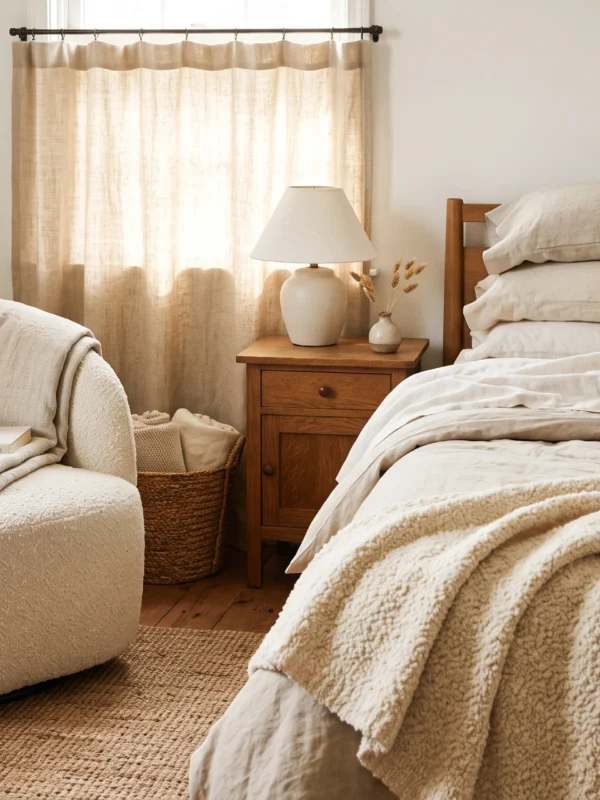
Layered Throw Textures
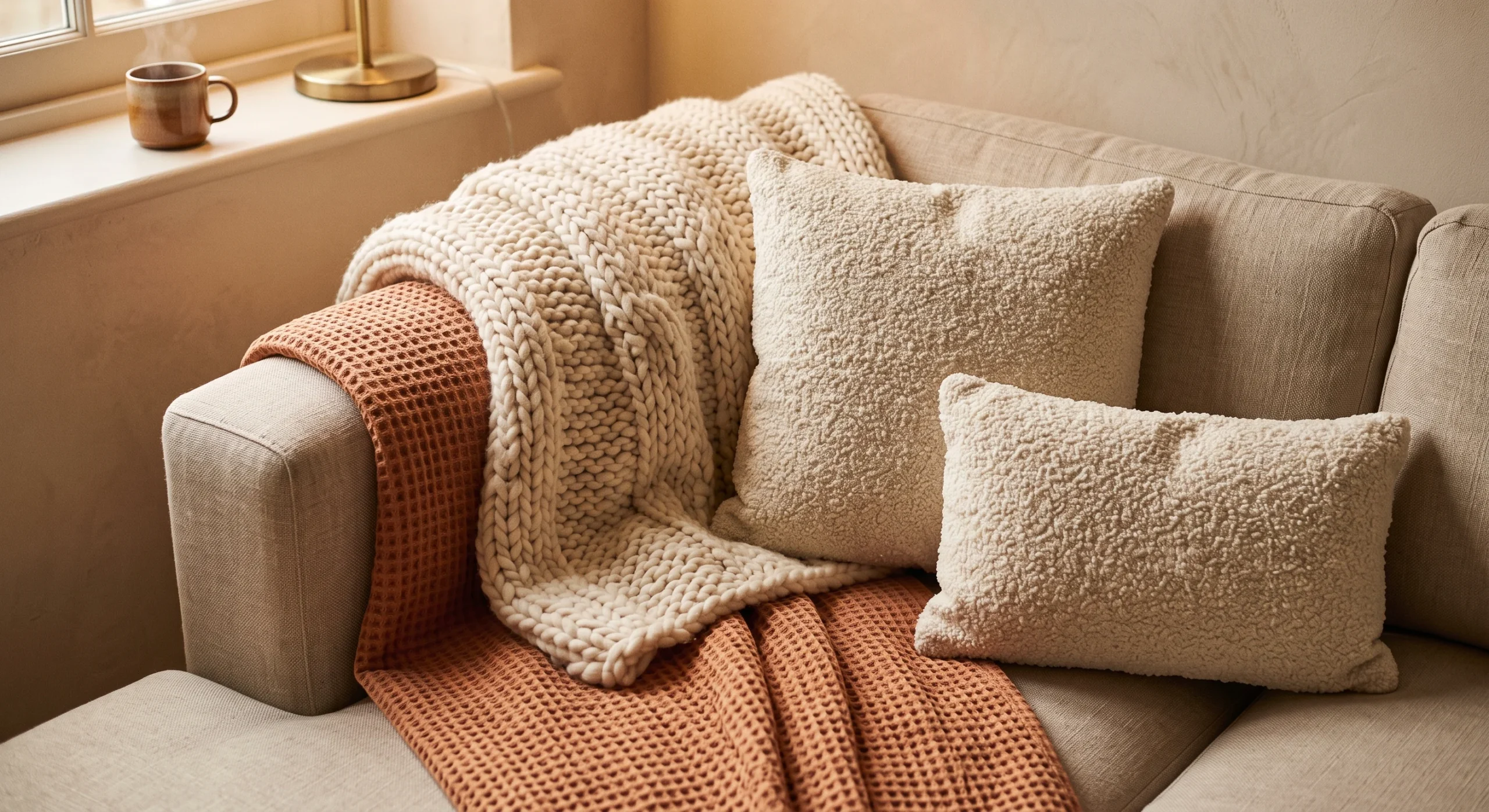
- Adds visual warmth to a plain sofa without reupholstering anything
- Mixing textures (knit, linen, bouclé) creates depth even in a single-color palette
- Cheapest layer can be folded at the sofa arm, not draped flat, for a lived-in look
- One detail that’s easy to miss is washing older throws before styling — dulled fabric photographs flat
A plain sofa can look unfinished even when it’s in perfectly good condition, and the fix usually isn’t a new sofa — it’s texture. Two or three throws in different weaves, folded and layered rather than matched, do more visual work than a single expensive blanket ever could. This is one of the lowest-cost upgrades on this list, since older throws already in a closet can often be reused once they’re clean and neatly folded. The goal isn’t symmetry; it’s the kind of soft imperfection that makes a room feel lived-in rather than staged.
Layering works because it breaks up a flat, single-texture surface into something the eye wants to linger on. A chunky knit against a smoother linen sofa base creates contrast without needing a single new color in the room. This tends to work particularly well in neutral or monochrome living rooms, where texture is doing the job color usually would. It’s also one of the few decor changes that can be fully redone in under two minutes if the current arrangement doesn’t feel right the first time.
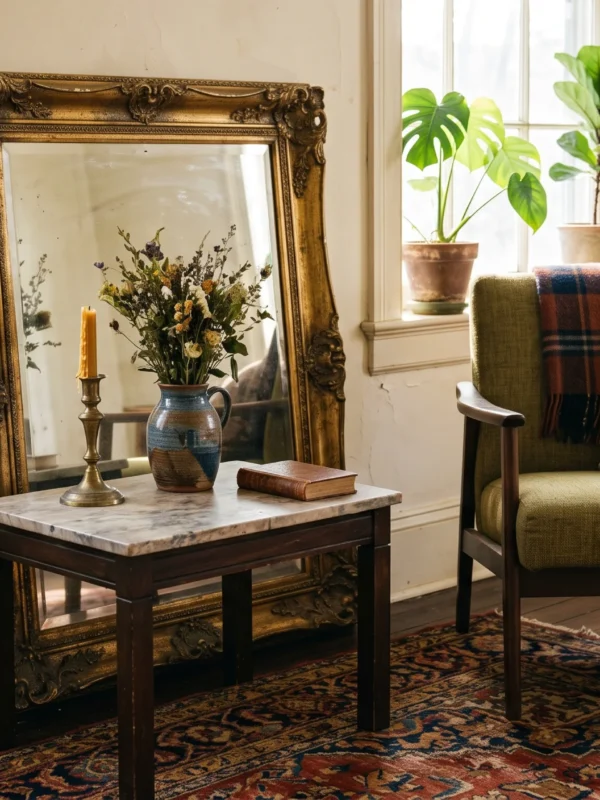
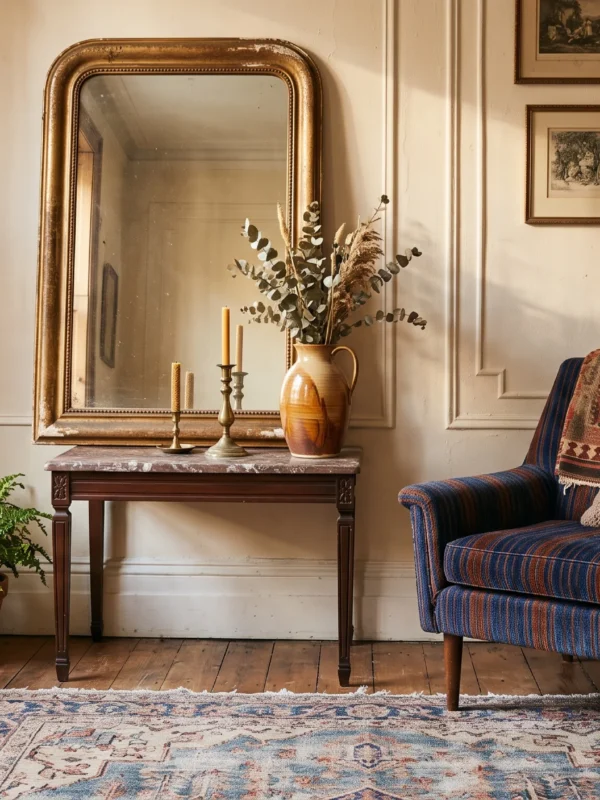
Statement Mirror Corner
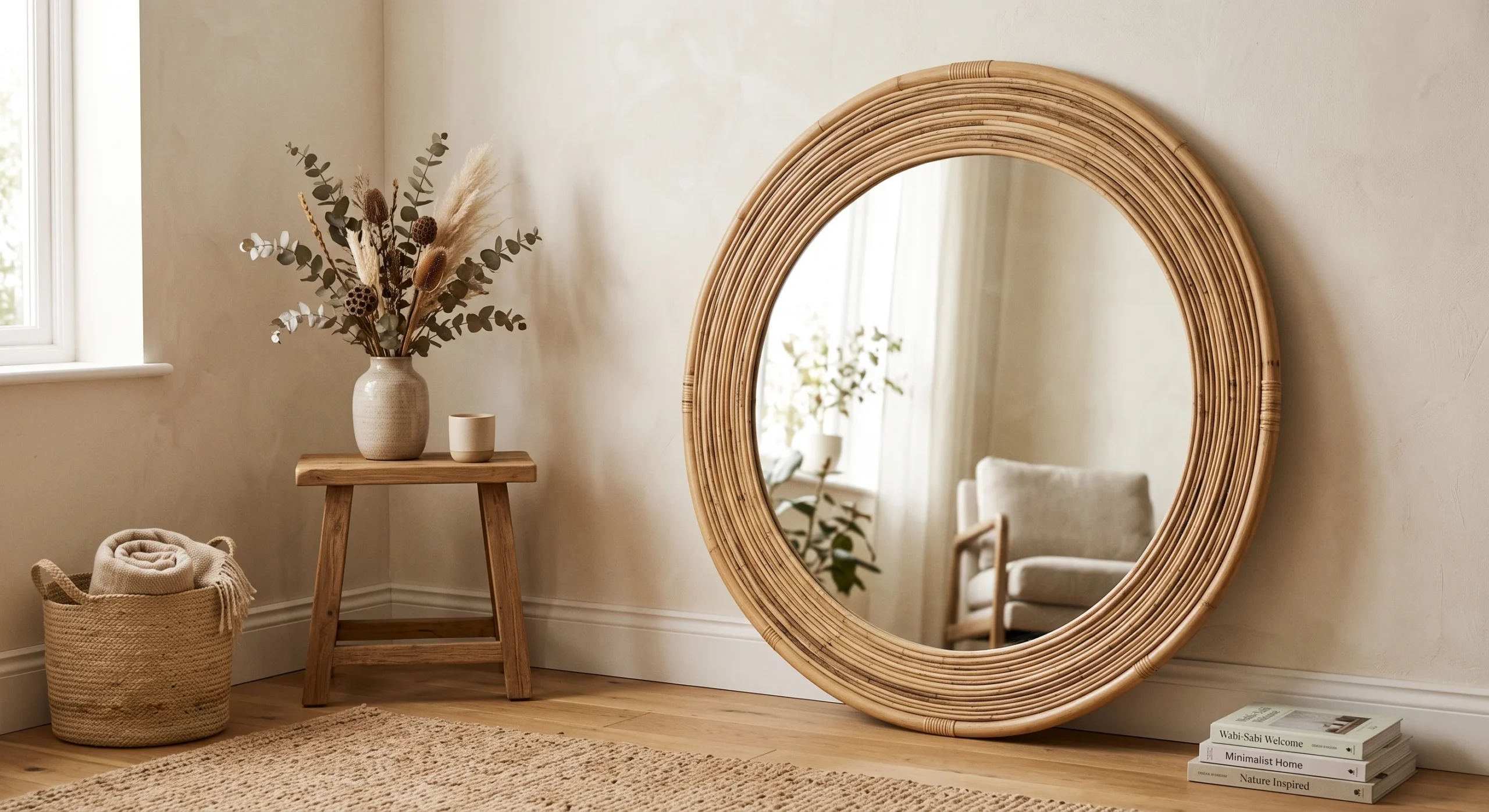
- Makes a small or dim corner feel larger by reflecting existing light back into the room
- A leaning mirror (not wall-mounted) needs no drilling — ideal for rental spaces
- Secondhand or discount-store mirrors work as well as designer pieces once framed and placed well
- Best positioned to reflect a window or a decorated wall, not a blank one
An empty corner is one of the most common dead zones in a living room, and a large leaning mirror is one of the few single items that can fix it on its own. Rather than mounting anything, propping an oversized mirror against the wall creates the illusion of extra depth and doubles whatever light is already in the room. This is a favorite trick among renters specifically because it requires zero permanent changes, yet delivers one of the most noticeable transformations on this entire list of budget living room decor upgrades.
Placement matters more than price here. A mirror angled to reflect a window will visibly brighten the room by midday, while one facing a blank wall does very little. This tends to work particularly well paired with a small side table or a plant at its base, which keeps the corner from feeling like an afterthought. Even a basic frame from a discount store reads as intentional once it’s leaning at the right height and catching the right light.
Floating Shelf Styling
- Turns an unused wall stretch into functional, decorative storage
- Grouping objects in odd numbers (three or five) reads more intentional than pairs
- Design tip: leave at least a third of the shelf empty — a fully packed shelf looks cluttered, not curated
- Budget floating shelves and secondhand decor objects both work equally well here
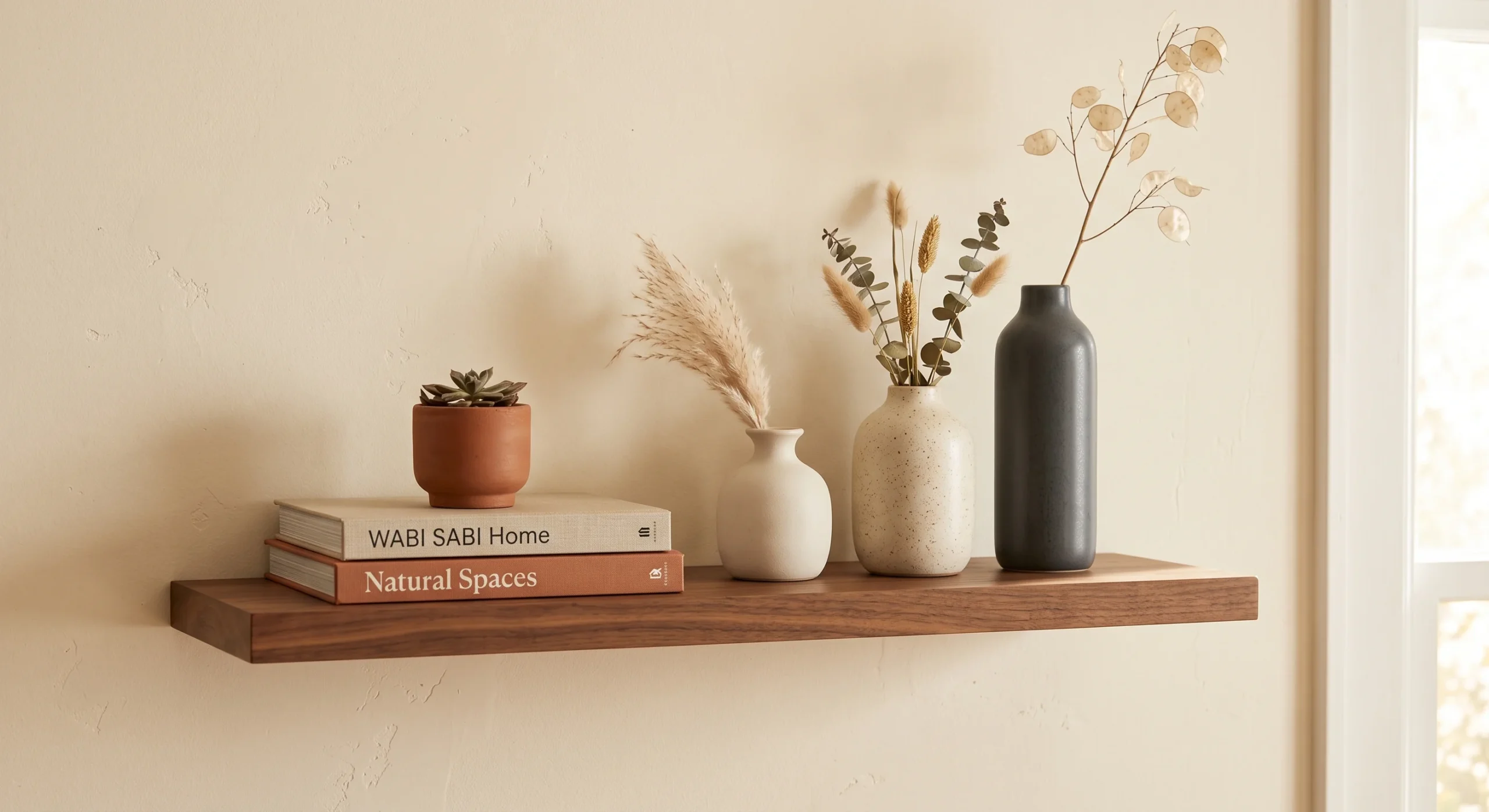
A single floating shelf does more for a plain wall than most people expect, and it’s one of the cheapest additions on this whole list of budget living room decor upgrades. Unlike a bookcase or console table, it takes up zero floor space, which makes it especially useful in smaller living rooms where furniture footprint matters. The trick isn’t the shelf itself — it’s restraint in what goes on it. A shelf styled with too many small objects looks busy from across the room, while one with a few taller and shorter pieces grouped together reads as deliberate.
Height variation is what separates a styled shelf from a cluttered one. Placing the tallest object slightly off-center, then layering shorter pieces in front or beside it, creates the kind of visual rhythm interior stylists rely on constantly. A common approach is to group items in threes, since odd numbers tend to feel more balanced to the eye than even ones. This works particularly well as a low-cost way to add color or texture to an otherwise plain wall, without committing to anything permanent or expensive.
Vintage Book Stack
- Uses books already owned (or thrifted for a dollar each) as instant coffee table styling
- Muted, worn spines photograph better than bright modern book covers
- A small object on top of the stack (candle, small dish) finishes the look without extra cost
- Height from stacked books balances taller lamps or vases nearby
Coffee tables often sit half-styled, with a remote and a coaster and not much else, and a stack of old books is one of the fastest ways to fix that for free. The color of the spines matters more than the titles — muted, worn, or faded covers blend into almost any color scheme, while glossy modern jackets tend to stand out in a way that reads as clutter rather than styling. A common approach is to pull three to five books already on a shelf somewhere in the house and simply restack them by size, largest on the bottom.
The stack works as a base for something else, not just on its own. This tends to work particularly well when a small object — a candle, a tiny dish, a single stem in a bud vase — sits on top, giving the eye a place to land. It also solves a practical styling problem: a low coffee table often needs some height variation to avoid looking flat, and a book stack does that job without needing an actual decor purchase. It’s one of the few ideas here that costs literally nothing if the books are already at home.

Woven Basket Corner
- Solves visible clutter (blankets, magazines, kids’ toys) while doubling as decor
- Natural woven texture softens a room that’s mostly hard furniture surfaces
- One detail that’s easy to miss is leaving the basket slightly under-filled so it doesn’t look like storage overflow
- Works in awkward corners that are too small for furniture but too big to leave empty
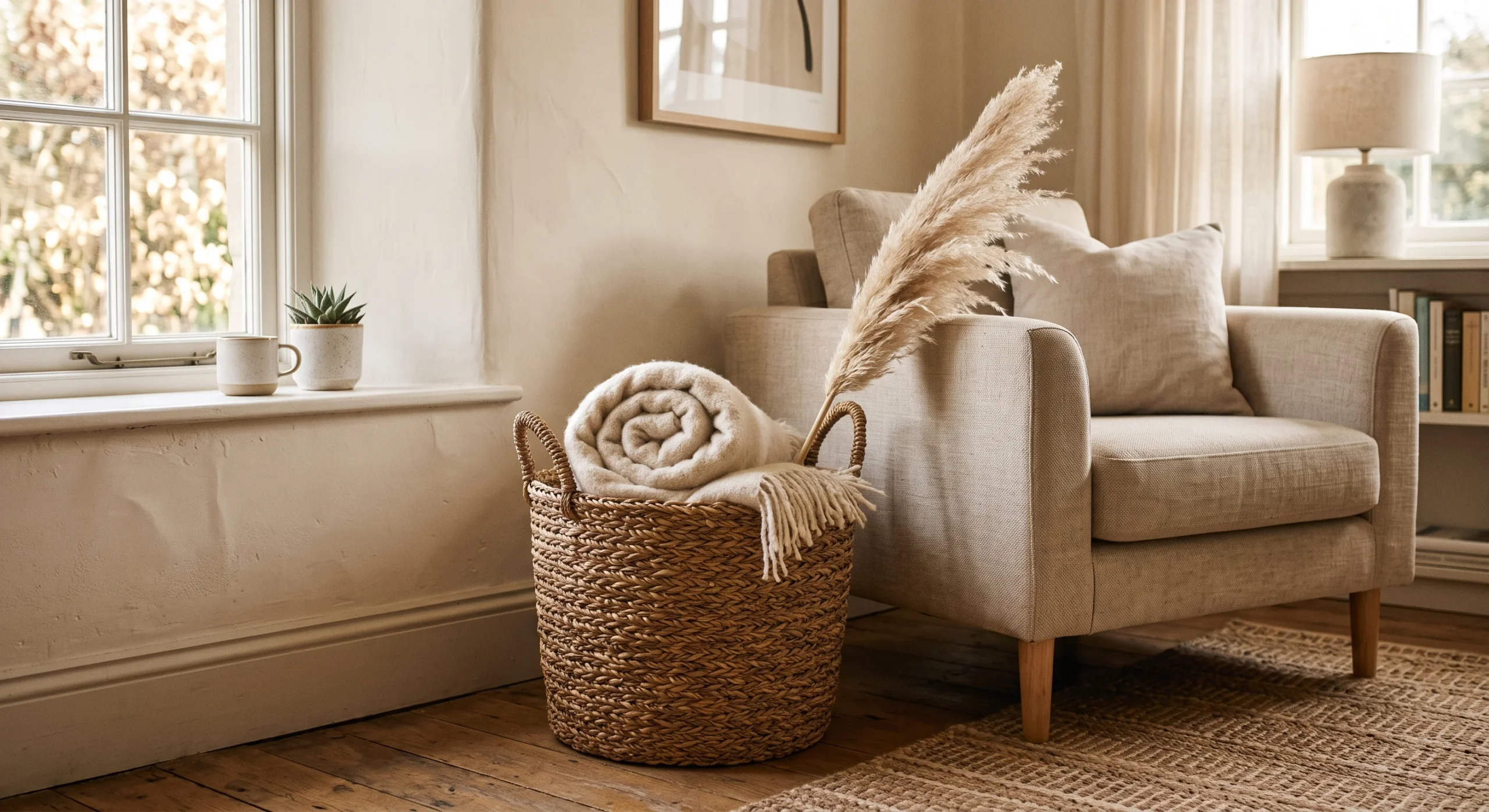
Every living room has one item that never has a proper home — a spare blanket, a stack of magazines, a charging cable — and a woven basket solves that visibly instead of hiding it in a closet. Placed in a corner or beside a sofa, it does double duty as both storage and texture, softening a room that’s often dominated by flat, hard surfaces like a coffee table or TV console. This is one of the more practical entries in this list of budget living room decor upgrades, since it solves an actual clutter problem rather than adding decoration for its own sake.
The material does most of the visual work here. A woven or seagrass basket brings in a natural, slightly imperfect texture that pairs well with almost any color palette, unlike a plastic bin that reads as purely functional. This tends to work particularly well in that awkward corner near a sofa arm — too small for a side table, too big to leave completely empty. A single tall stem or a rolled blanket peeking out the top keeps it from looking like overflow storage, and finishes the corner without needing anything else.
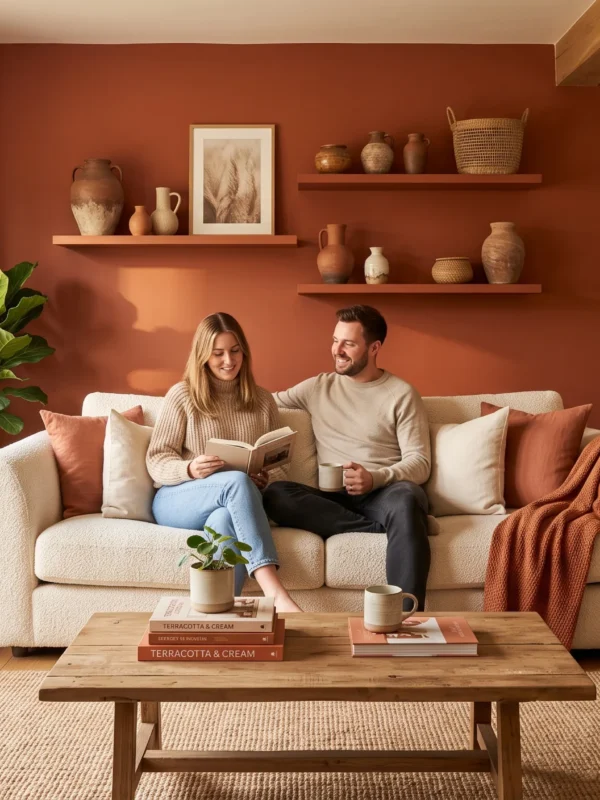
Painted Accent Corner
- Paints a single wall or corner instead of the whole room, cutting both cost and time
- A bold color in a contained space feels intentional rather than overwhelming
- Sample-size paint pots are often enough to cover a small accent area
- Design tip: pick a color already present in a cushion or throw so it feels connected, not random
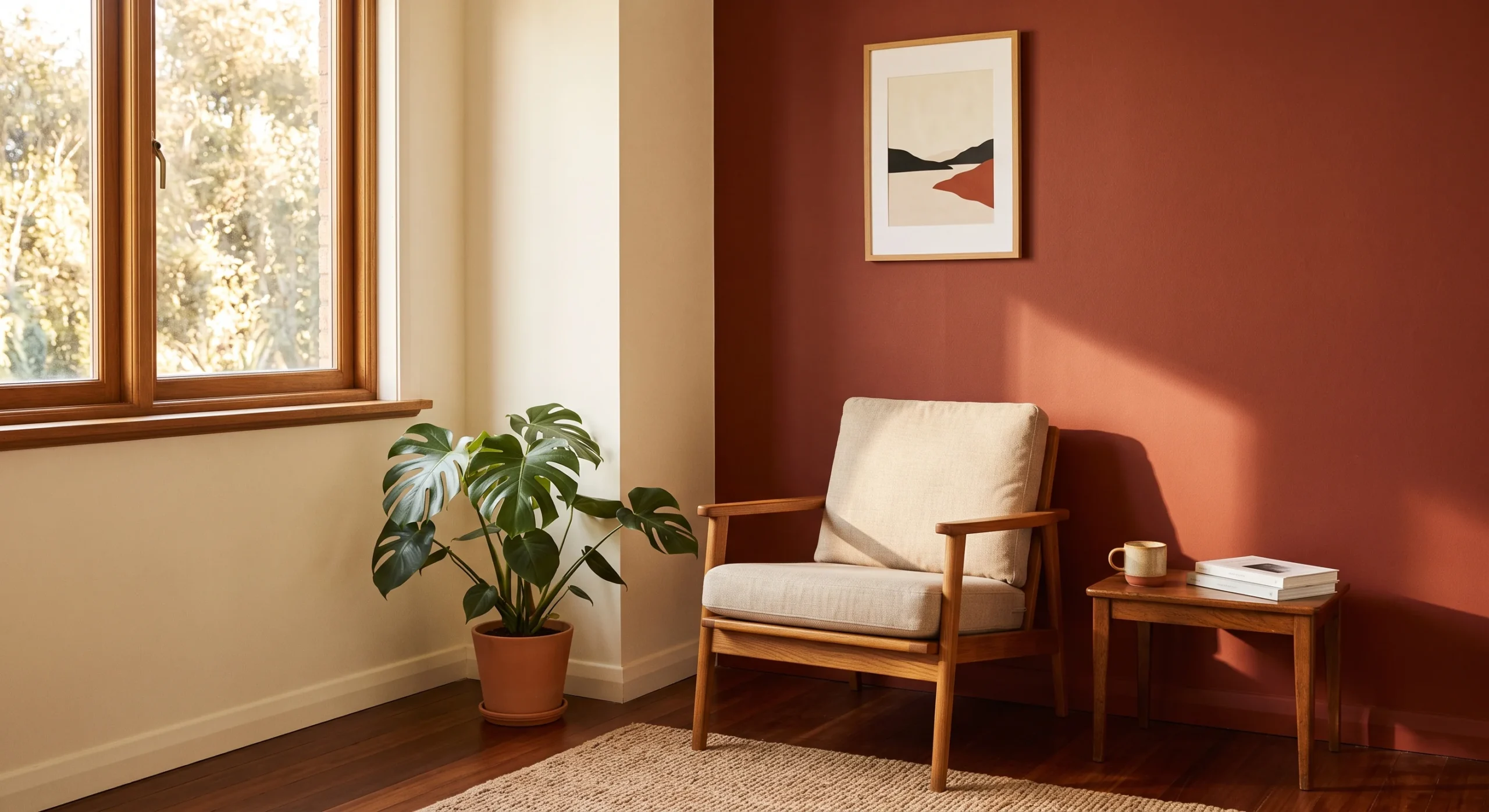
Repainting an entire living room is expensive and time-consuming, but a single accent wall — or even just one corner — delivers a surprising amount of the same visual impact for a fraction of the cost. A small can or even a sample pot of paint is often enough to cover a contained area, which makes this one of the more affordable transformations on this list of budget living room decor ideas. The key is choosing a spot that’s already a natural focal point, like the wall behind a sofa or the corner nearest a reading chair.
Color choice matters more than the size of the painted area. A common approach is to pull the accent shade directly from something already in the room — a cushion, a rug, a piece of art — so the new color feels coordinated instead of random. This tends to work particularly well in rooms that are otherwise fully neutral, since one contained pop of color reads as a deliberate design choice rather than a mismatch. The whole project can usually be finished in a single afternoon, start to dry, with minimal supplies.
Layered Area Rug
- Adds pattern and texture to a room without replacing an existing rug
- A smaller budget rug on top costs far less than one large replacement rug
- Layering hides worn edges or stains on an older base rug
- Works especially well anchoring a seating area that currently feels visually flat
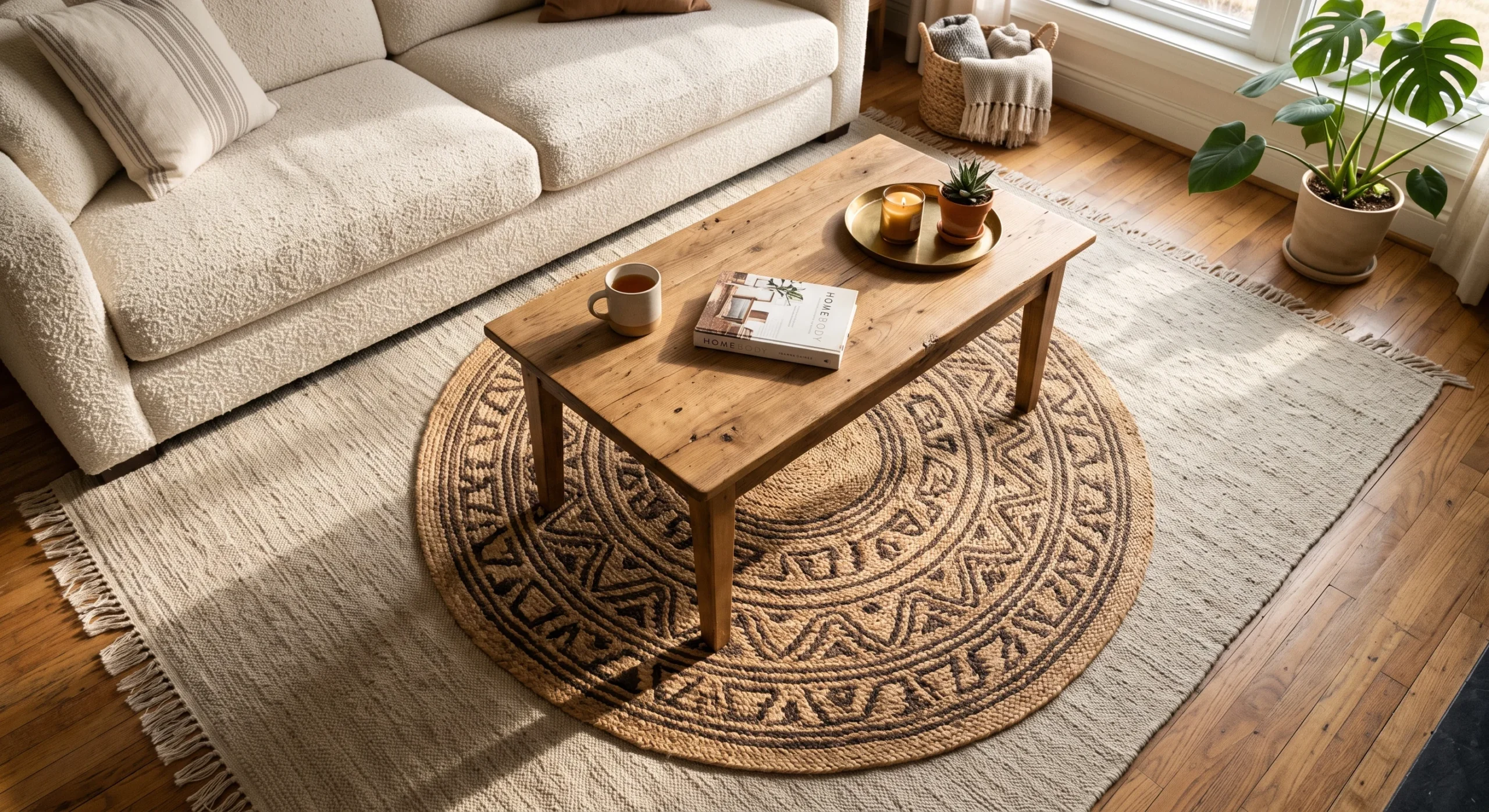
Buying one large, high-quality rug for a living room can be one of the most expensive single purchases in the whole room, but layering a smaller, inexpensive rug on top of an existing one sidesteps that cost almost entirely. A patterned jute or flatweave rug placed off-center over a plain base rug adds texture and visual interest without needing to replace anything already on the floor. This is especially useful if the base rug is a bit worn or stained in places, since the layer on top naturally covers the areas that show the most wear.
The trick to making this look intentional rather than accidental is offsetting the smaller rug rather than centering it perfectly. A common approach is to angle it slightly, letting more of the base rug show on one side than the other. This tends to work particularly well under a coffee table, where the layered look draws the eye downward and anchors the seating area. It’s a low-cost way to introduce pattern into a room that otherwise leans neutral, without committing to a full rug replacement.
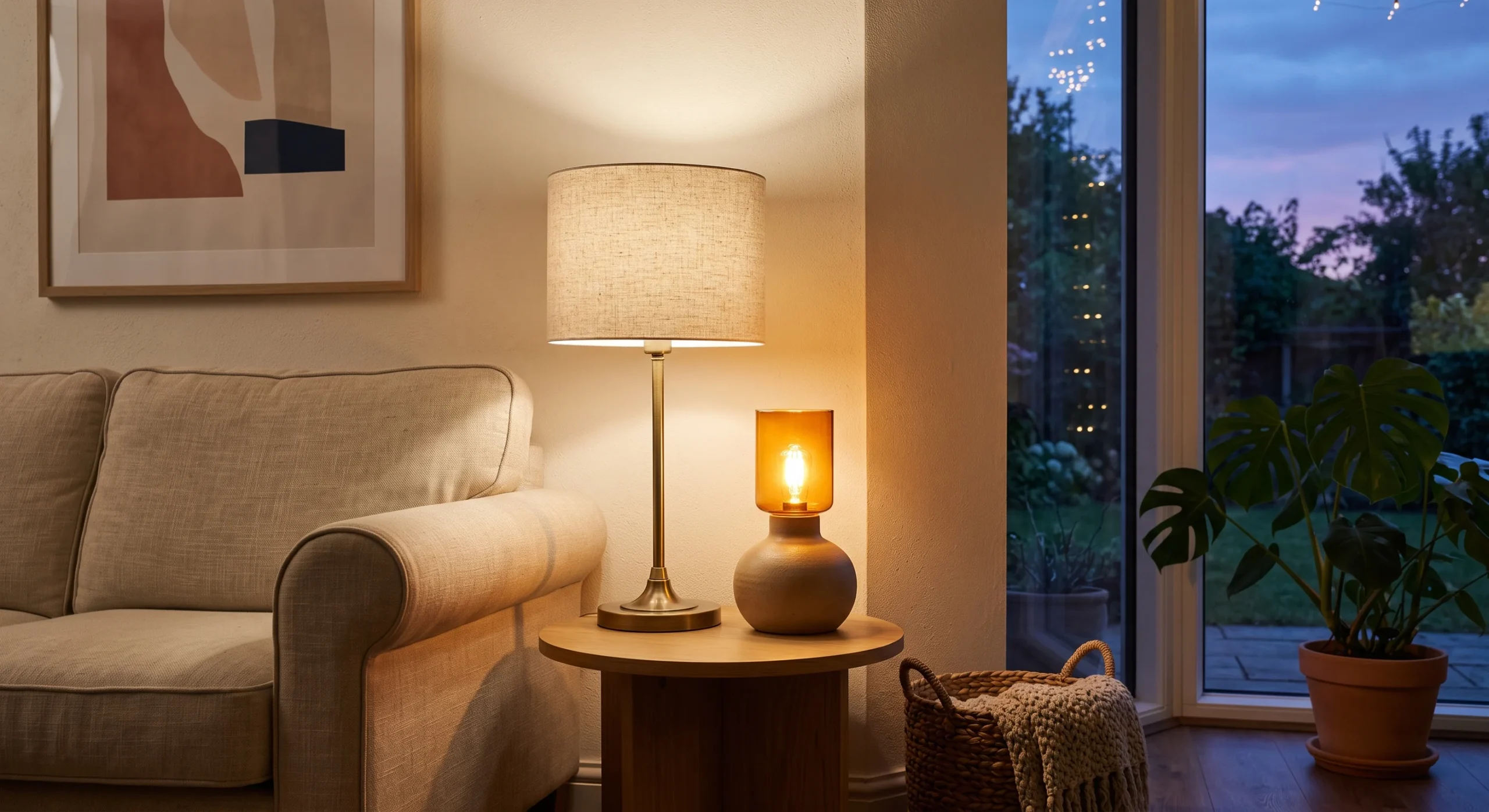
Warm Lamp Layering
- Replaces harsh overhead lighting with softer, more flattering ambient light
- Two lamps at different heights create depth that a single light source can’t
- Secondhand lamps often just need a new shade to feel current
- One detail that’s easy to miss is using warm-toned bulbs, not bright white ones, for a cozier feel
Overhead lighting alone tends to flatten a room, making even well-decorated spaces feel a little sterile once the sun goes down. Two smaller lamps, placed at different heights across the room, do far more to create warmth and depth than a single ceiling fixture ever could. This is one of the more affordable evening-focused upgrades in this list of budget living room decor ideas, since secondhand lamps are widely available and often just need a fresh shade or a bulb swap to feel completely updated.
Bulb temperature makes a bigger difference than most people expect. A common approach is to stick to warm-toned bulbs (around 2700K) rather than bright white ones, since warm light is what gives a room that soft, evening glow associated with cozy interiors. This tends to work particularly well when the two lamps sit at different heights — one on a side table, one on a lower shelf or console — since the varied light levels add dimension a single lamp can’t achieve on its own. It’s a small change that noticeably shifts how a room feels after dark.
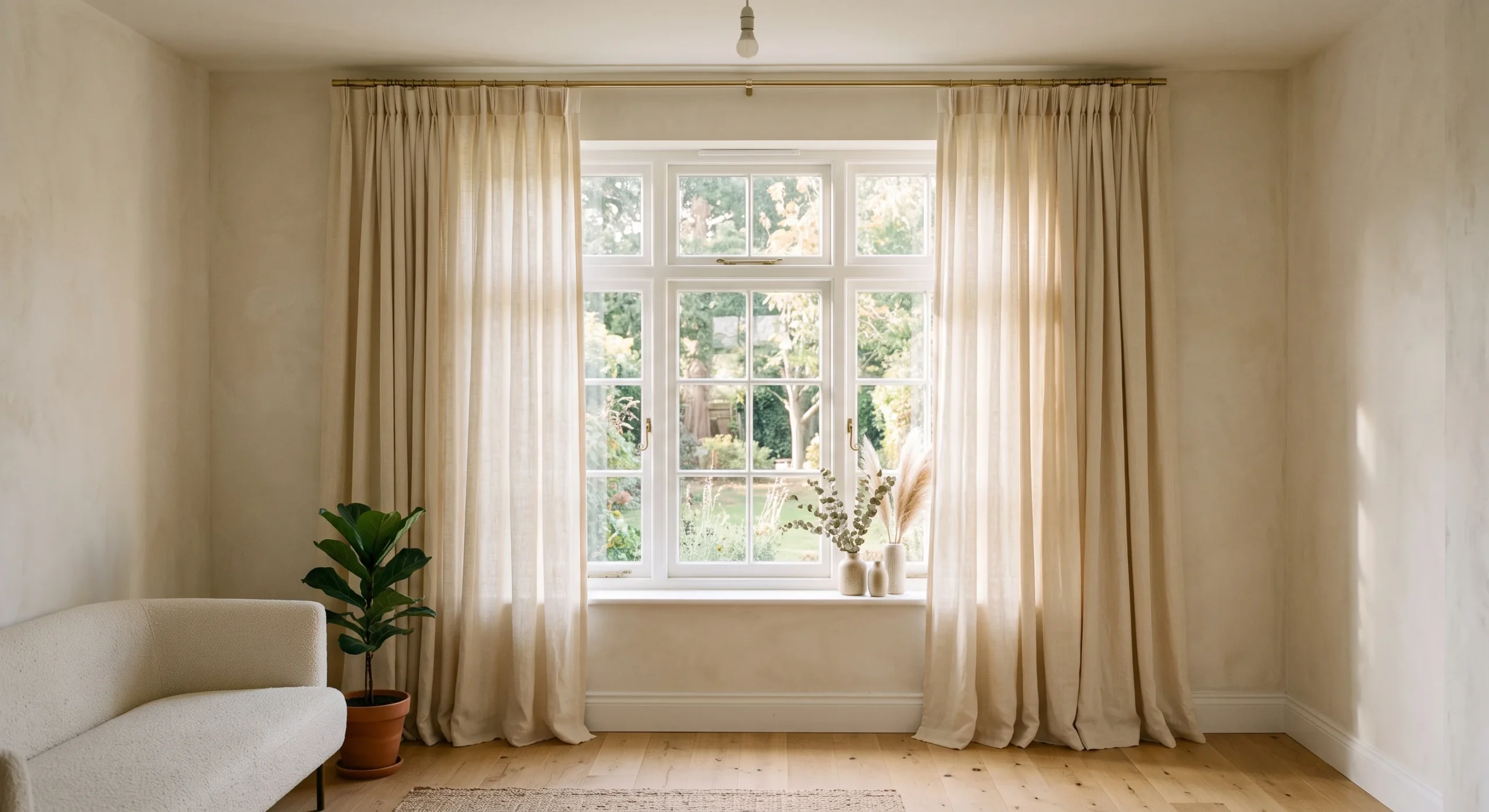
Curtain Height Trick
- Makes ceilings feel taller without any construction or renovation
- Uses existing curtains — only the hardware placement changes, not the fabric
- Curtain rods mounted higher and wider than the window frame create the illusion of a larger window
- Design tip: curtains should graze the floor, not stop short — length affects the whole room’s proportions
One of the simplest tricks in budget living room decor isn’t about buying anything new — it’s about moving the curtain rod. Most curtains are hung directly above the window frame, which visually shortens the wall and makes ceilings feel lower than they are. Mounting the rod six to twelve inches higher, and a few inches wider than the window itself, tricks the eye into reading the whole wall as taller and the window as larger, all without changing a single piece of furniture in the room.
Length matters just as much as height. A common approach is to let the curtains fall all the way to the floor, or even puddle slightly, rather than stopping an inch or two short. This tends to work particularly well in living rooms with lower ceilings, where every inch of visual height counts. It’s a rare decor change that costs nothing beyond a screwdriver and ten minutes, since it typically reuses curtains and hardware already owned.
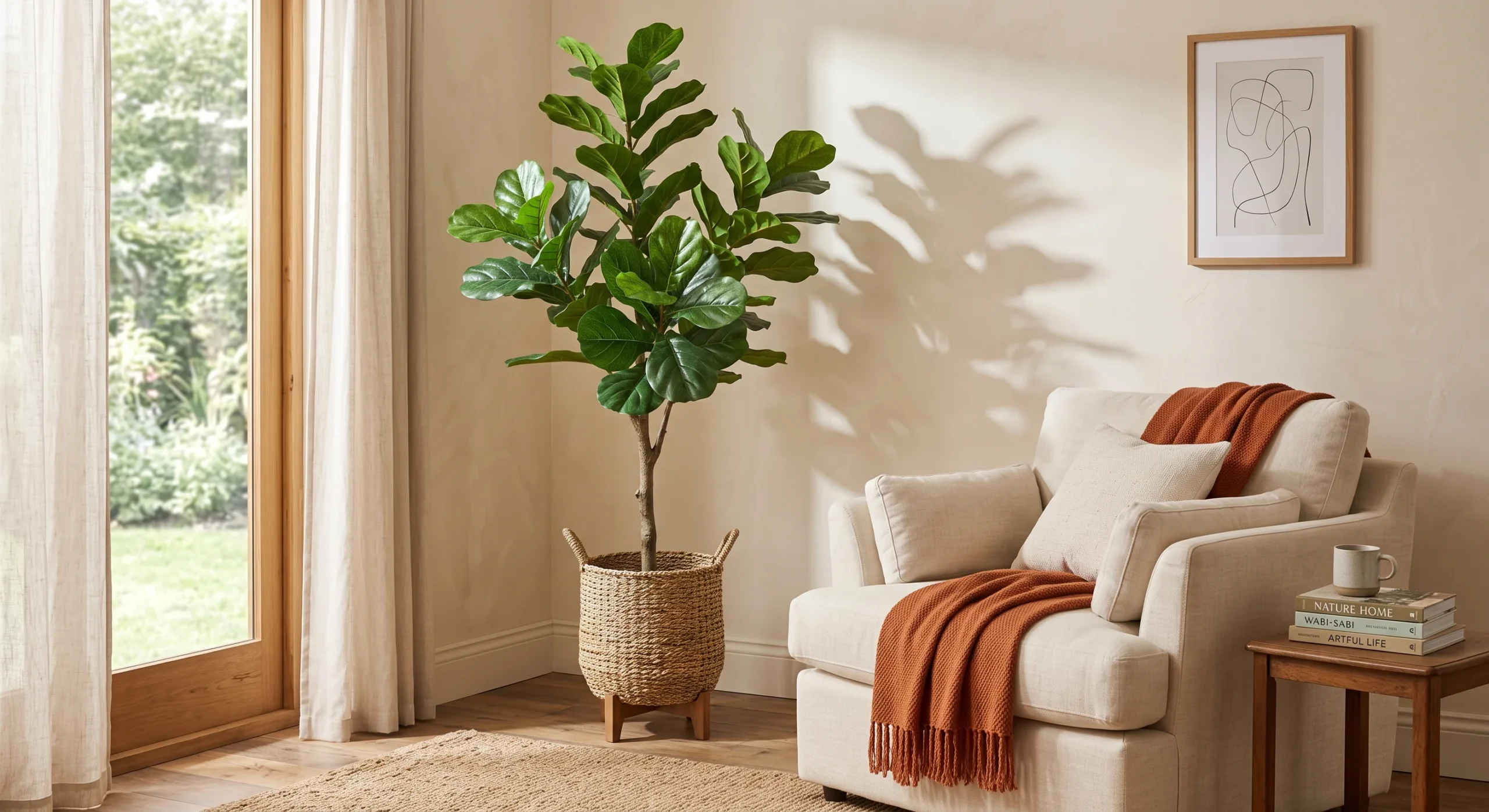
Faux Plant Styling
- Fills empty corner height without the upkeep of real plants
- A tall faux plant draws the eye upward, making ceilings feel higher
- Budget faux plants photograph just as well as expensive ones once potted properly
- Works well in low-light corners where real plants would struggle to survive
Real plants add life to a room, but they also need light, water, and attention that not every corner of a living room can provide. A tall faux plant solves the same visual problem — filling awkward, empty vertical space — without any of the upkeep, which makes it one of the more forgiving entries in this list of budget living room decor ideas. A basic faux fiddle leaf fig or olive tree from a budget retailer looks nearly identical to a pricier version once it’s placed in the right pot.
The planter matters as much as the plant itself. A common approach is to swap the plastic nursery pot for a woven basket or ceramic planter, which instantly upgrades the whole look for a few dollars more. This tends to work particularly well in corners that get limited natural light, where a real plant would struggle but a faux one looks exactly the same either way. Height is the main goal here — a tall plant draws the eye upward and makes the whole room feel less boxy.
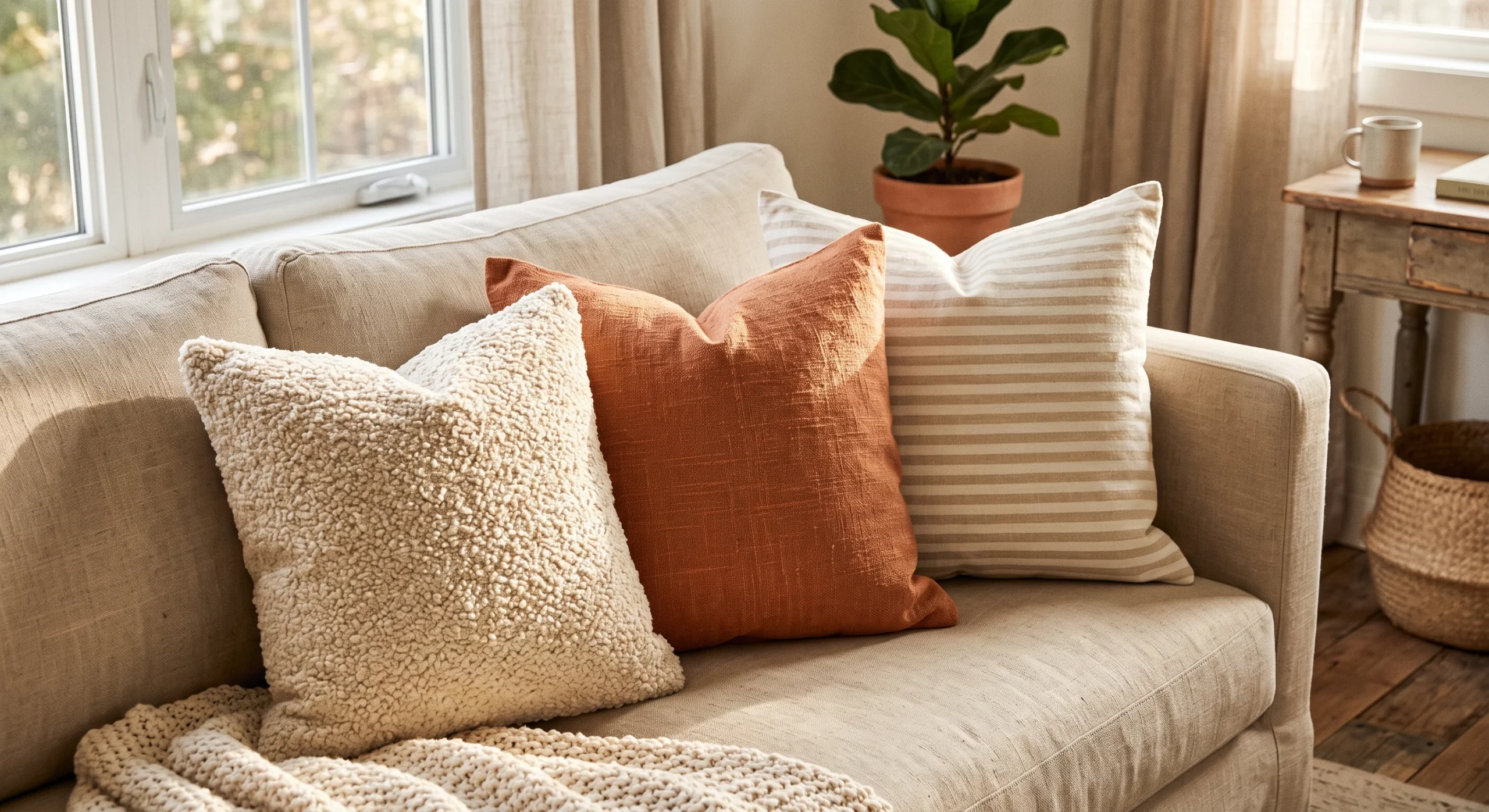
Cushion Cover Swap
- Refreshes an entire sofa’s look without replacing the sofa or cushion inserts
- Swapping just the covers costs a fraction of buying new cushions outright
- Mixing pattern, solid, and texture in odd numbers reads as styled, not mismatched
- Old covers can be stored and rotated seasonally instead of thrown away
A tired-looking sofa is rarely the sofa’s fault — it’s usually the cushions. Swapping only the covers, and keeping the existing inserts, is one of the cheapest ways to completely change how a sofa reads, since covers cost a fraction of full cushions and take seconds to change once purchased. This is one of the most repeatable ideas on this list of budget living room decor upgrades, because the same set of inserts can be restyled every season just by rotating covers.
Mixing textures and patterns works better than matching everything exactly. A common approach is to combine one solid color, one subtle pattern, and one textured cover — bouclé, corduroy, or linen — rather than buying three identical cushions. This tends to work particularly well when the count is odd, three or five, since even numbers can look overly matched and less intentional. It’s a small, low-cost change that can be redone entirely in under a year without spending much at all.
FAQ
Can you really redecorate a living room for under $50?
Yes, as long as the changes are targeted rather than trying to overhaul everything at once. Ideas like restacking books, layering throws, or moving a curtain rod cost little to nothing since they reuse things already in the home. The $50 budget goes furthest when it’s spent on one or two secondhand statement pieces, like a mirror or a basket, rather than spread thin across many small purchases.
What’s the single highest-impact cheap decor change?
For most living rooms, a leaning oversized mirror or a repositioned curtain rod tends to make the biggest visible difference relative to cost. Both change how the room’s proportions read — larger, brighter, taller — without touching furniture. A gallery wall is a close second if there’s already a bare stretch of wall to work with.
Where’s the best place to find cheap decor pieces?
Thrift stores, secondhand marketplace apps, and the sale sections of budget home stores are usually the most reliable sources. Mirrors, frames, lamps, and vases hold up well secondhand since they don’t wear out the way fabric or upholstery does. It’s worth checking these sources before buying anything new, even small items like vases or trays.
How do I make mismatched thrifted pieces look intentional instead of cluttered?
The trick is usually restraint and repetition — sticking to a narrow color palette or repeating one material (like wood tones or woven texture) across different pieces ties them together. Grouping items in odd numbers, like three or five, also tends to read as styled rather than random. Leaving some empty space around a grouping matters just as much as the objects themselves.
Do I need to do all 12 ideas at once?
Not at all — most people see a noticeable difference after just three or four changes. Starting with whichever idea addresses the room’s most obvious problem (a bare wall, a flat sofa, dim lighting) usually gives the most satisfying result first. The rest can be added gradually as budget or thrifted finds allow.
Conclusion
A living room doesn’t need a big budget to feel finished — it needs a few well-placed changes. Whether it’s a layered throw, a thrifted mirror, or curtains hung a little higher, each idea here proves that budget living room decor can still look intentional and put-together. Pick two or three that fit your space best, and give them a try this weekend — you’ll likely notice the difference faster than expected. Save this post to Pinterest so it’s easy to find again as you work through the list, and pass it along to anyone else furnishing a room without a big budget to match. **Pinterest Pin Package**