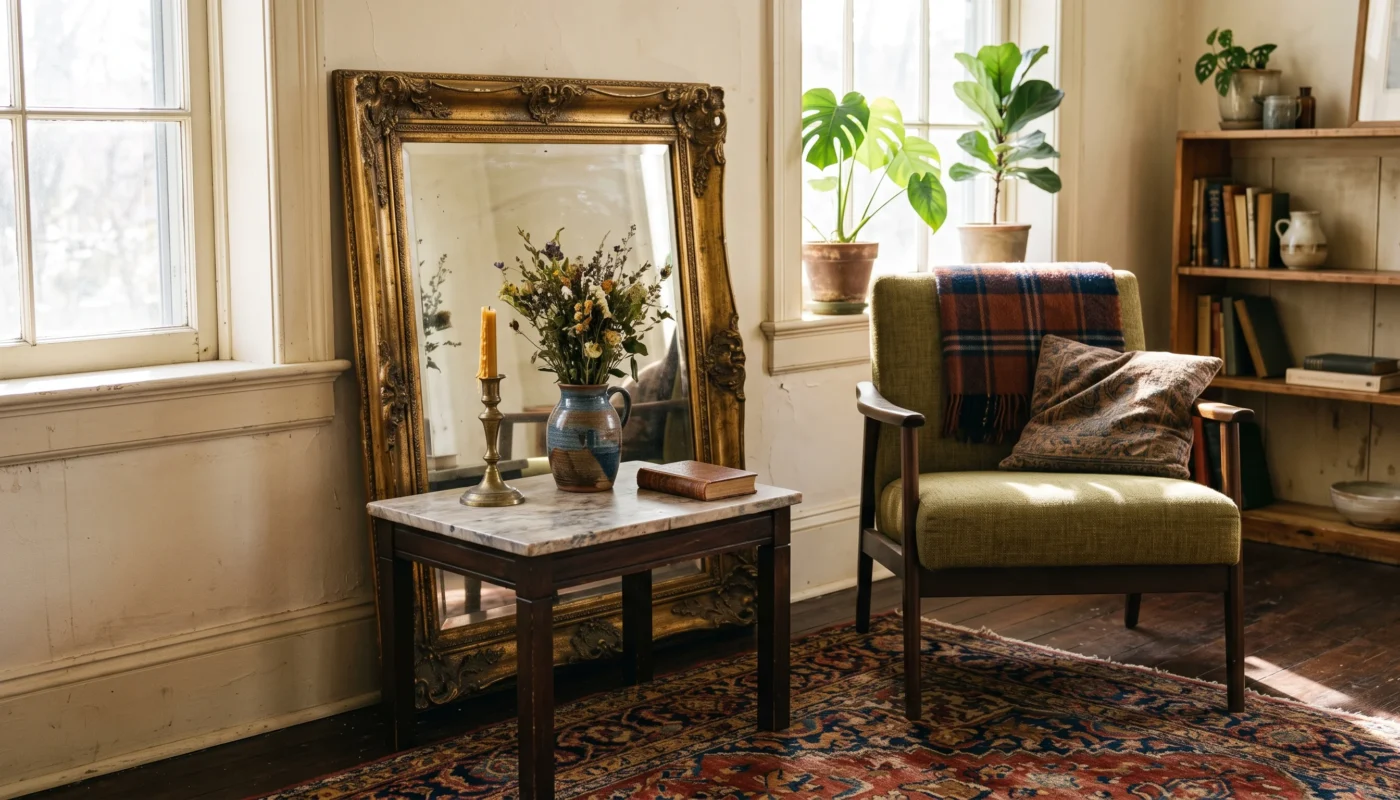

A genuinely expensive-looking home rarely comes from a single big purchase — it comes from a collection of thoughtful, well-chosen pieces, and thrifted decor is one of the most effective ways to build that look without the matching price tag. As an architect, I think of secondhand pieces as carrying something new furniture simply can’t fake: real material weight, natural patina, and proportions from an era when craftsmanship was the default rather than the upgrade. This list gathers twenty thrifted finds that consistently read as elevated, from ornate mirrors down to small ceramic accents, each chosen for genuine versatility across different home styles.
Start Here: Ornate Gilded Mirrors
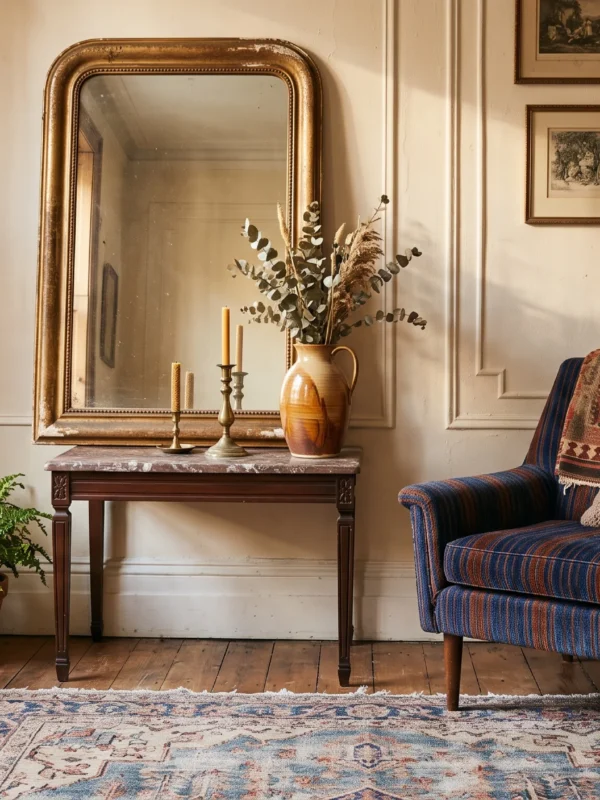
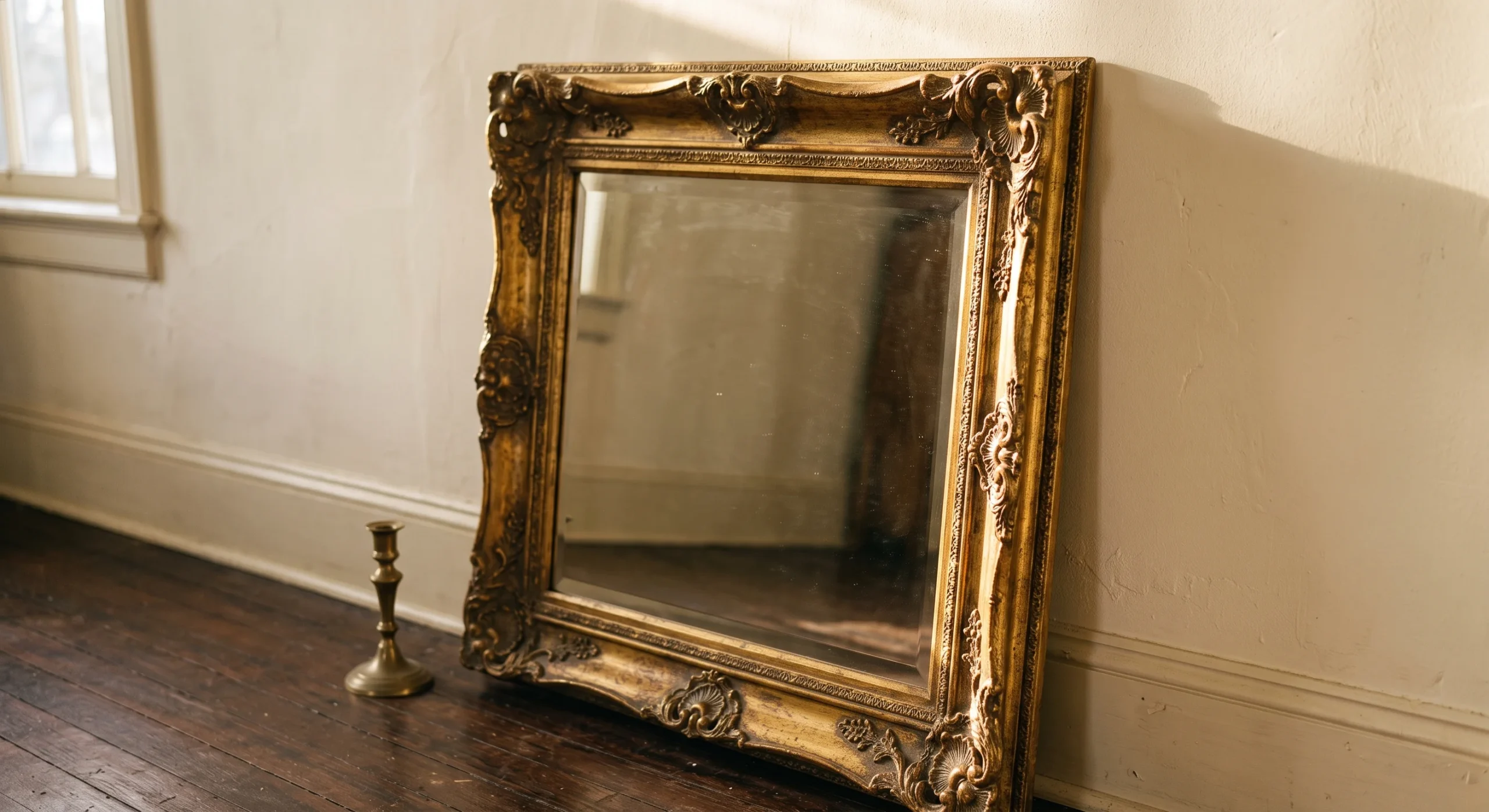
A single gilded mirror does more visual work than almost any other thrifted find — it adds instant architectural presence, reflects light around the room, and is one of the easiest secondhand items to spot in good condition at a low price.
Ornate Gilded Mirrors
- A gilded mirror instantly adds architectural presence, the kind new mass-produced frames rarely achieve.
- Leaning a large mirror against a wall, rather than hanging it, reads as intentionally curated.
- Reflected light from a mirror this size genuinely brightens an entire room during the day.
- Minor tarnish on the gold finish often adds character rather than detracting from the piece.
An ornate gilded mirror is one of the most reliably impressive thrifted finds available, since the carved detail and gold finish on older frames carry a level of craftsmanship that new mass-produced versions rarely attempt to replicate at any price point. As an architect, I think of a mirror like this as doing double architectural duty: it adds genuine visual weight to a wall while also expanding how light and space read within the room itself, something a flat framed print or a plain mirror simply cannot achieve in quite the same way.
Leaning a large gilded mirror against a wall, rather than hanging it at a fixed height, reads as considerably more intentional and collected over time, echoing the kind of styling seen in genuinely curated, layered interiors rather than a showroom display. Minor tarnish or slightly uneven gilding on an older frame typically adds character rather than detracting from the piece, since it signals real age rather than a manufactured distressed finish. This is consistently one of the highest-impact thrifted finds for the price paid, worth prioritizing early on any dedicated thrifting trip.
Vintage Brass Candlesticks
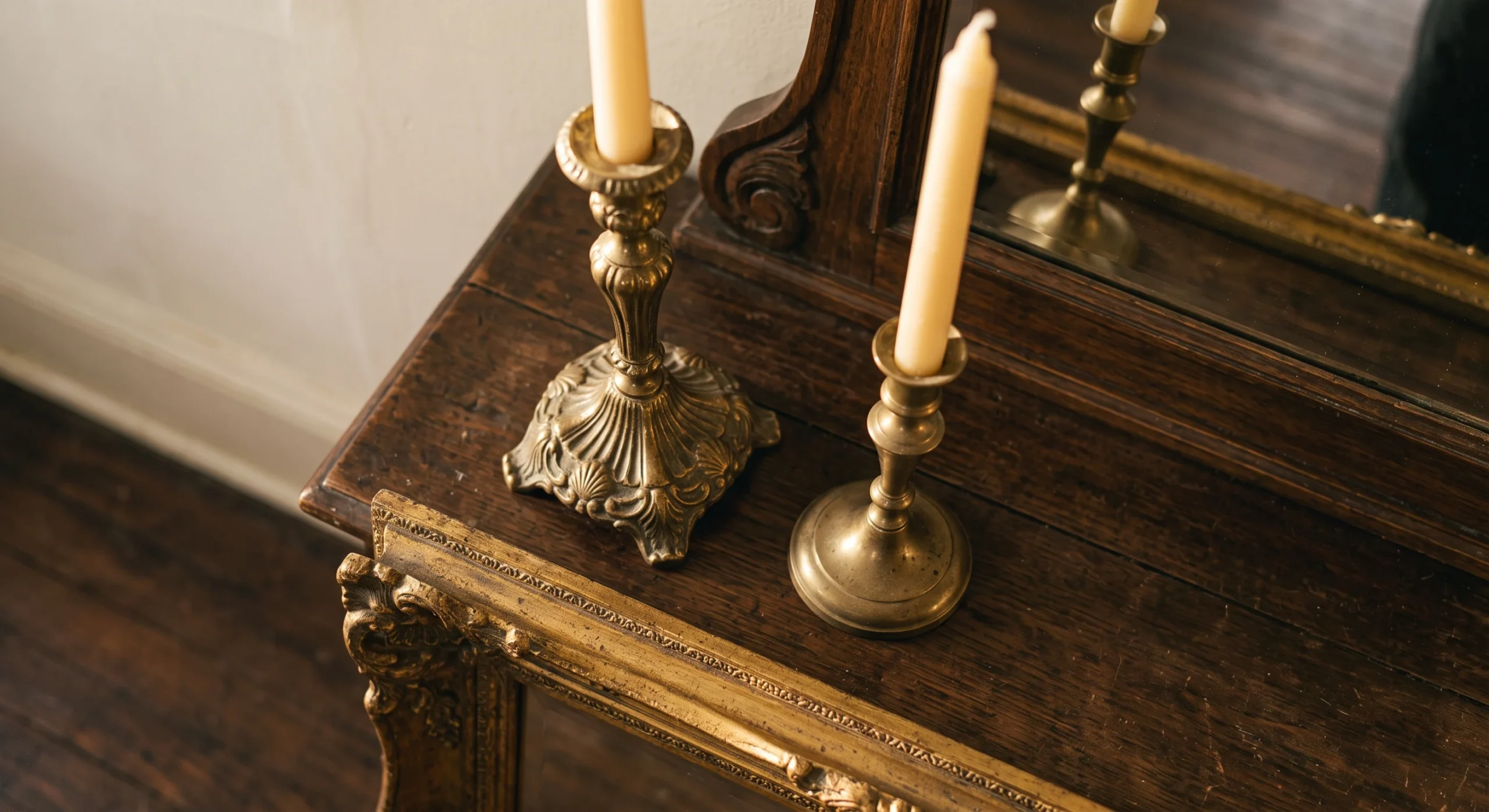
Vintage brass candlesticks bring genuine warmth and a sense of collected history into a room, especially when grouped in varying heights across a console table or the center of a dining table. Unlike new brass reproductions, which often carry an overly uniform, slightly plastic-feeling shine, older brass pieces develop a natural tarnish and softness in tone over decades that no manufacturing process can convincingly fake. This small material difference is often the exact detail that separates a room that reads as genuinely curated from one that reads as recently purchased from a single catalog order.
Mismatched pairs, rather than a perfectly matched identical set, tend to read as considerably more collected and less obviously staged, since a real collection built over time rarely arrives in matching sets to begin with. Leaving the brass in its naturally tarnished state, rather than polishing it to a mirror shine, often looks more genuine and lived-in, closer to how these pieces would have aged in an actual home over the decades. Their small scale also makes them easy to bring home from nearly any thrifting trip without a second thought.
- Brass candlesticks add genuine warmth and height variation to a console or dining table.
- Mismatched pairs, rather than identical sets, read as more collected and less staged.
- Tarnished, unpolished brass often looks more genuine than a bright, freshly polished finish.
Ceramic Table Lamps
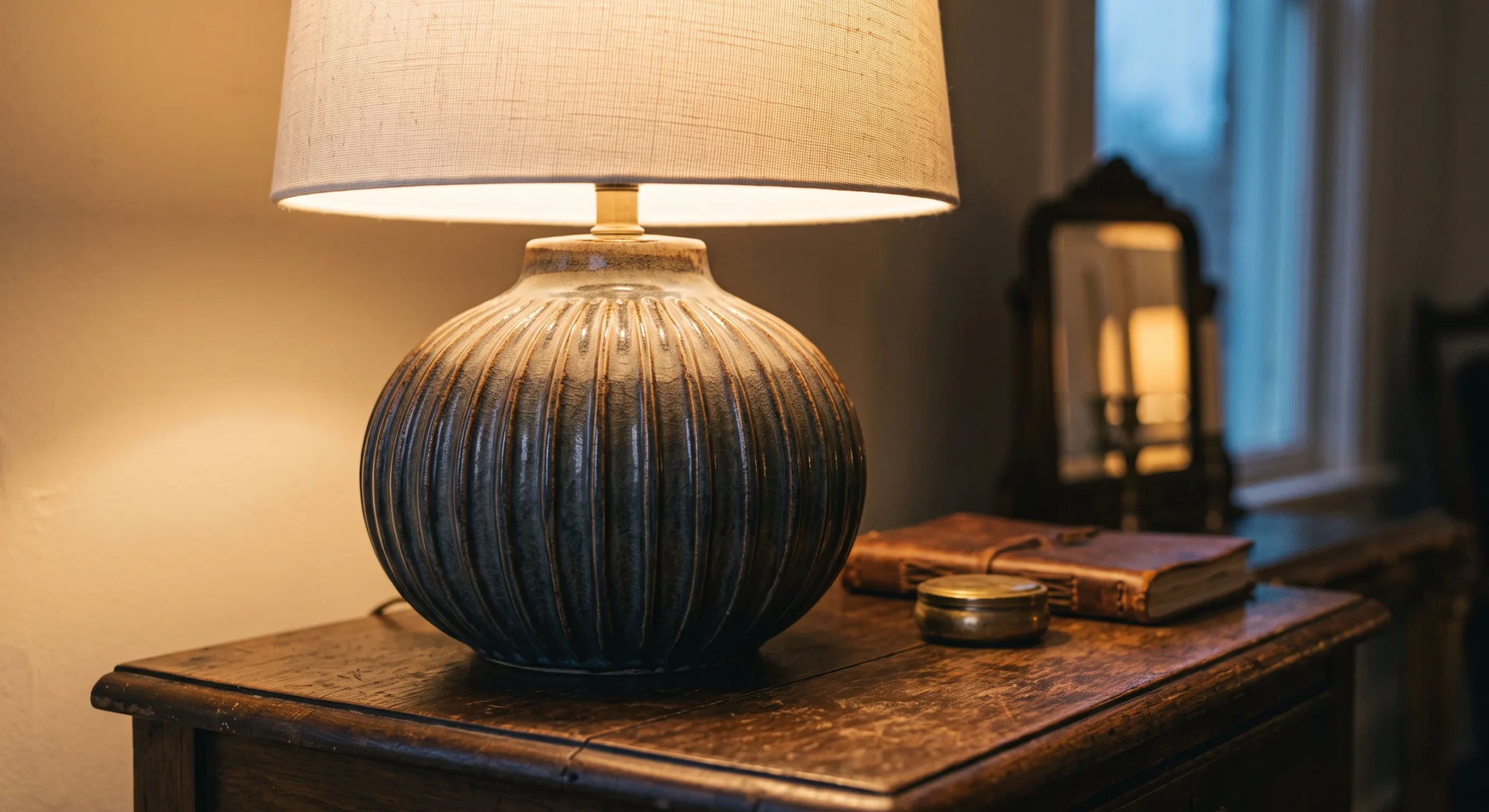
Most people assume old lamps mean rewiring headaches, but the base is almost always the valuable, reusable part. Ceramic table lamps from decades past frequently carry a sculptural quality that current mass-market lighting rarely matches, since older manufacturing favored genuinely fluted, ribbed, or organically rounded bases over the flatter, more generic shapes common in today’s budget lighting aisles. A well-chosen ceramic lamp base can function almost like a small piece of sculpture on a nightstand, doing double duty as both functional lighting and a genuine decorative anchor for the surface it sits on.
Swapping the shade for a simple linen or cream drum shade, even if the original shade doesn’t survive the thrifting trip intact, instantly modernizes an older ceramic base without losing any of its original character or charm. This is one of the more overlooked thrifted categories, since lamps are often priced low simply because shoppers assume the wiring needs replacing, when in most cases the base itself is the valuable, genuinely well-made part worth bringing home. Most shoppers walk straight past the lighting section entirely, leaving genuinely well-made pieces behind unnoticed.
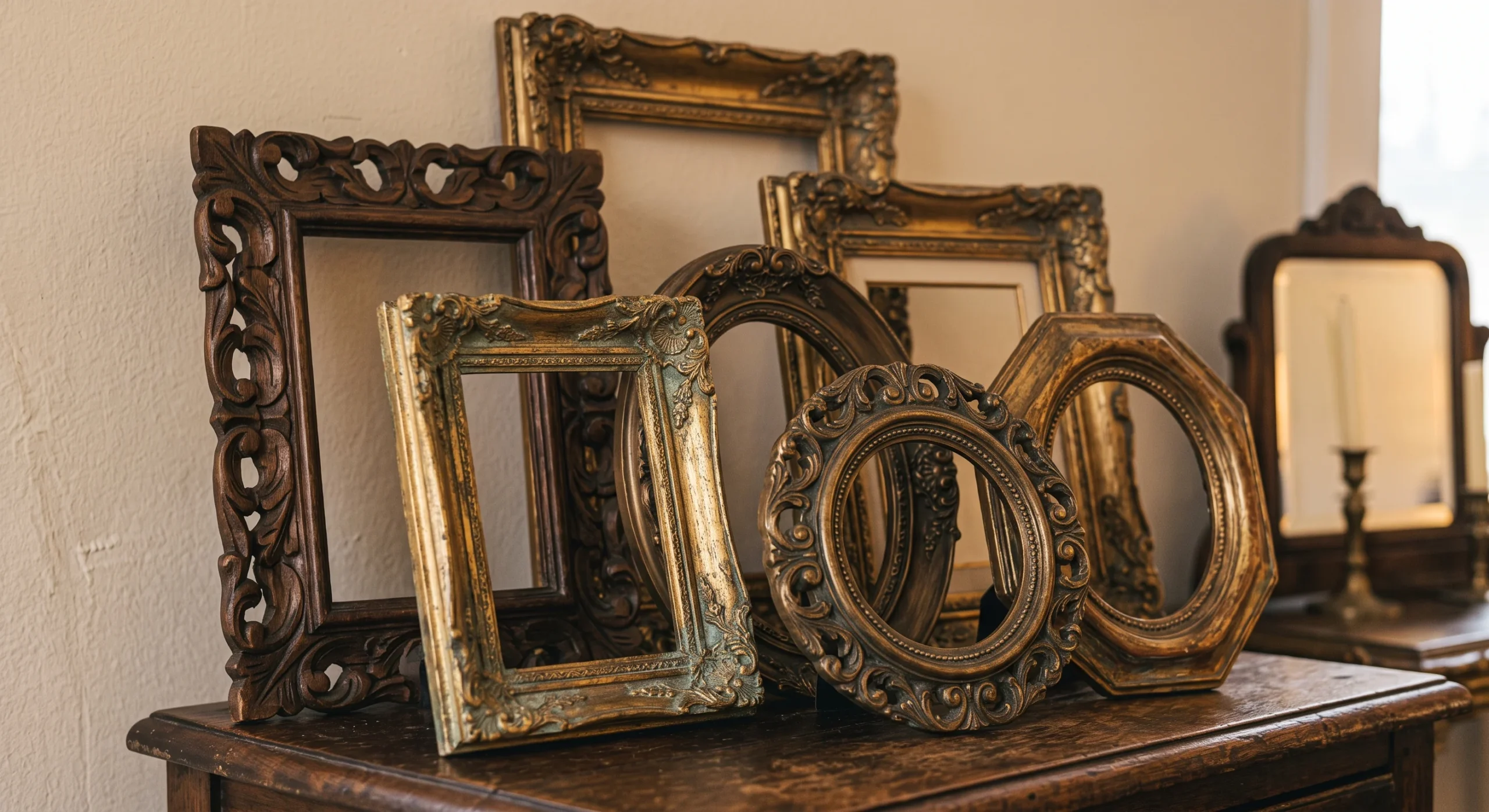
Ornate Picture Frames
Ornate picture frames, whether carved wood, gilded plaster, or painted composite, bring genuine texture and historical character to a gallery wall in a way that plain modern frames from a big-box store simply cannot replicate at a comparable price. Many thrifted frames arrive with artwork you don’t want or original glass that’s cracked, but the frame itself is usually the valuable part, easily repurposed with a new print, a mirror insert, or even left empty as a piece of wall sculpture in its own right. This makes frames a genuinely forgiving category for a first-time thrift shopper.
Mixing gold, dark wood, and painted finishes together within the same grouping reads as genuinely collected over years rather than matched from a single set, which is exactly the effect most people are trying to achieve with a gallery wall in the first place. This is also one of the more affordable thrifted categories, since pricing is usually based on size alone rather than craftsmanship, meaning a genuinely ornate piece can often be found for only slightly more than a plain, unremarkable one. Pricing rarely accounts for the actual craftsmanship involved, which works entirely in the shopper’s favor here.
- Ornate carved frames add real texture to a gallery wall that plain modern frames can’t match.
- Displaying a frame empty, or with a mirror insert, works even without original artwork.
- Mixing gold, wood, and painted finishes together reads as genuinely collected rather than matched.
Ceramic Vases and Vessels
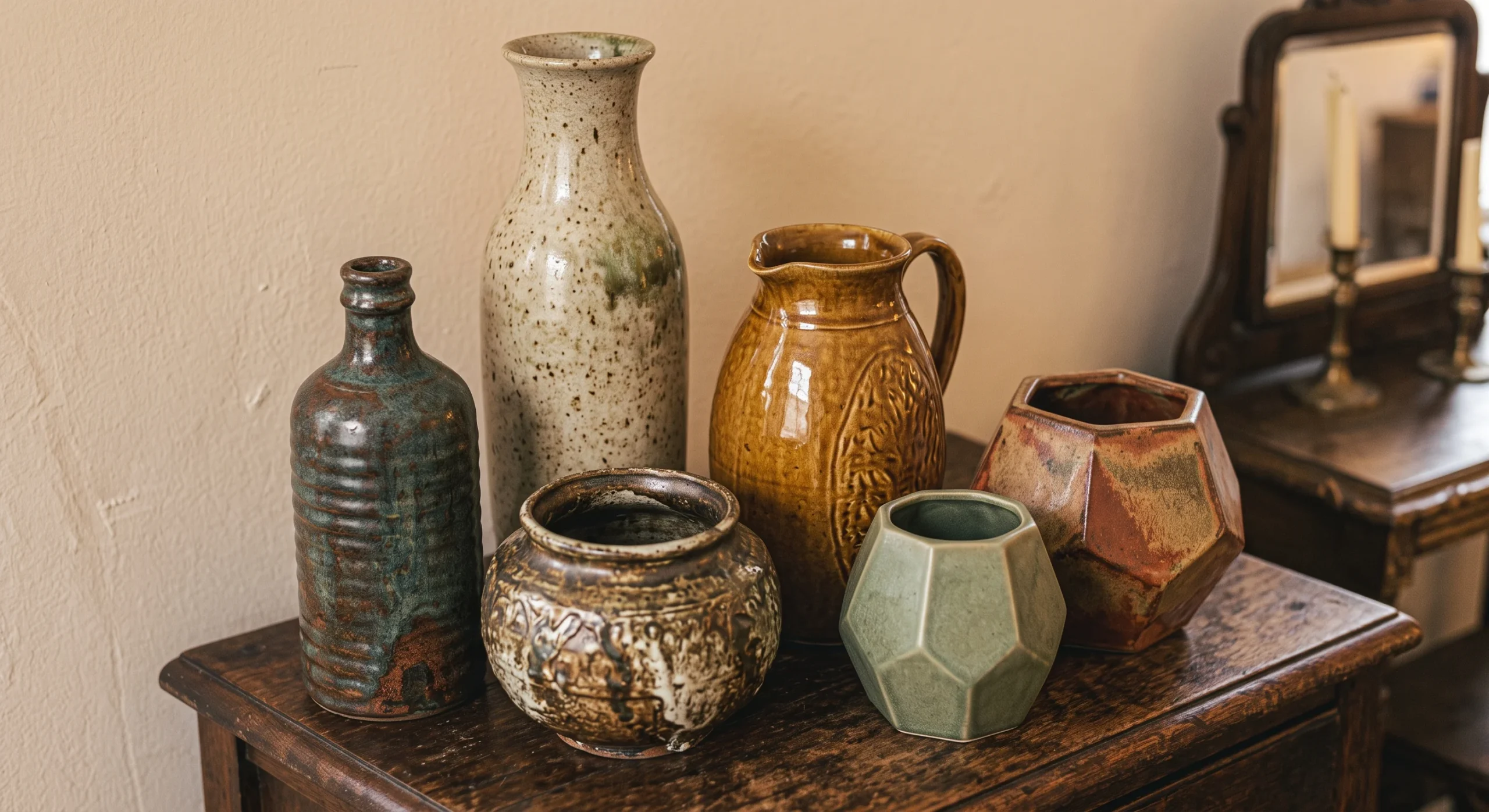
Ceramic vases and vessels found secondhand often carry hand-thrown irregularities and richly layered glazes that mass-produced versions rarely attempt, since the cost of true handmade ceramics has made this kind of piece considerably rarer in current new-furniture catalogs than it was decades ago. A single interesting vase, even left empty without flowers, functions as a genuine sculptural object on a shelf or table, adding real visual weight through form and glaze alone rather than needing anything else styled around it to justify its presence. Even one well-chosen vessel can shift how an entire shelf reads.
Grouping two or three vessels together, in a mix of heights and finishes rather than a single matched set, creates a considerably more layered, collected display than any one piece could achieve alone, echoing the same principle that works well throughout most of this list. Thrifted ceramics are also genuinely easy to evaluate for quality in person, since chips, cracks, or uneven glazing are immediately visible, making this one of the lower-risk categories for a first-time thrifting trip focused specifically on decor. This makes vases a genuinely low-risk category to start collecting with confidence.
Vintage Wood Side Tables
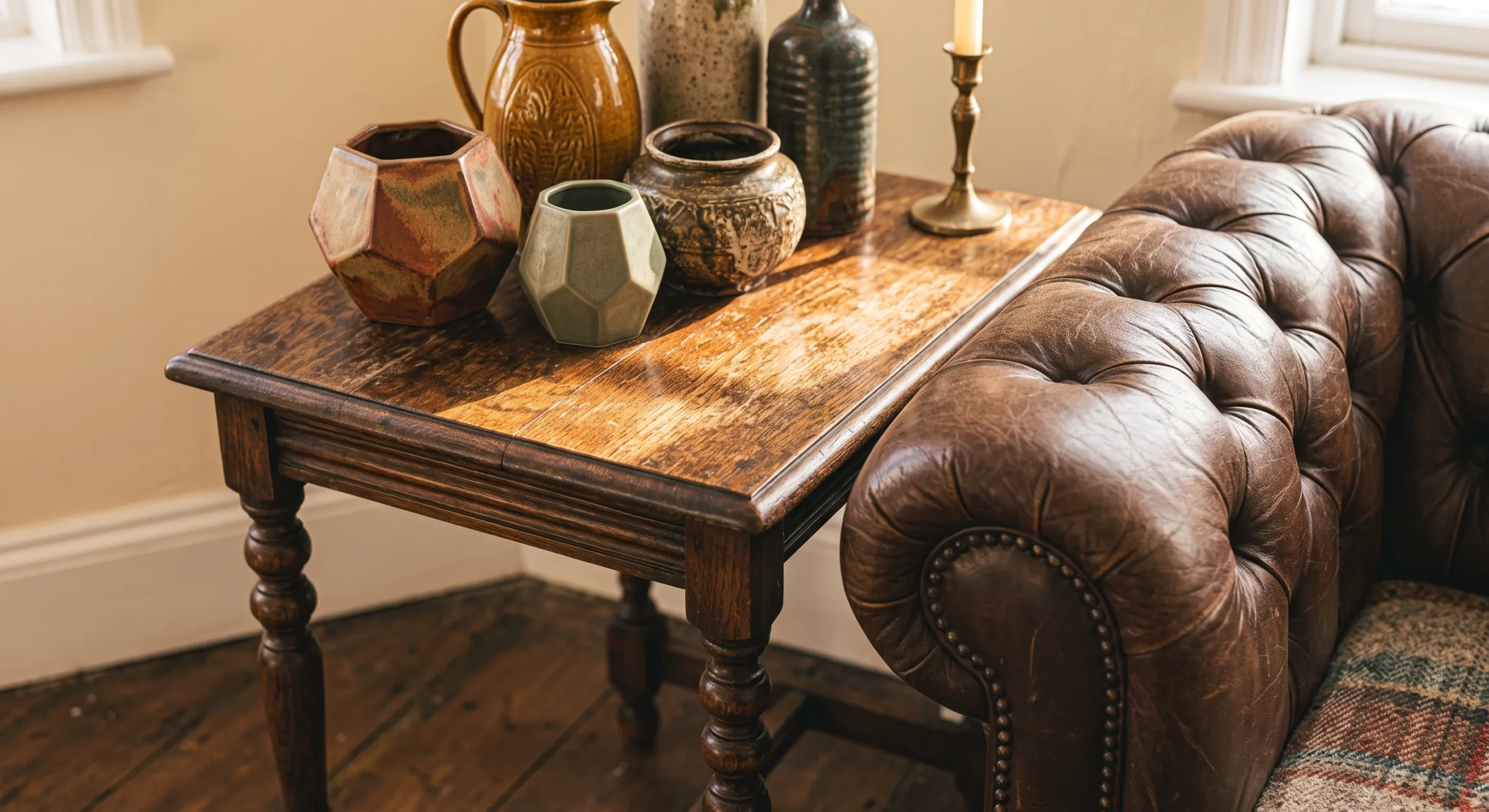
- Solid wood side tables from decades past hold up better than most current particleboard versions.
- Turned or carved legs add genuine detail that flat-pack furniture rarely includes.
- Visible wear or a slightly worn finish often reads as authentic rather than damaged.
- A single well-made side table can anchor an entire seating arrangement on its own.
Vintage wood side tables, particularly those made from solid walnut, oak, or mahogany, hold up structurally and visually in a way that most current budget furniture, built primarily from particleboard and veneer, simply cannot match over time. The turned legs, dovetail joinery, and richer wood tones common in older furniture add a genuine sense of craftsmanship next to a sofa or accent chair, doing far more visual work than a flat-pack replacement at a similar price point would ever manage to accomplish. This kind of structural quality is hard to find near the same price point buying new.
A slightly worn finish, a small water ring, or minor surface scratches on a vintage table often read as authentic signs of a real, lived-in life rather than as damage needing repair, especially once the piece is styled alongside a lamp or a small stack of books. As an architect, I find that a single well-made side table like this can genuinely anchor an entire seating arrangement, giving the whole grouping a sense of permanence that lighter, more disposable furniture rarely manages to provide on its own. It also tends to become the piece guests genuinely comment on first.
Crystal Glassware Display
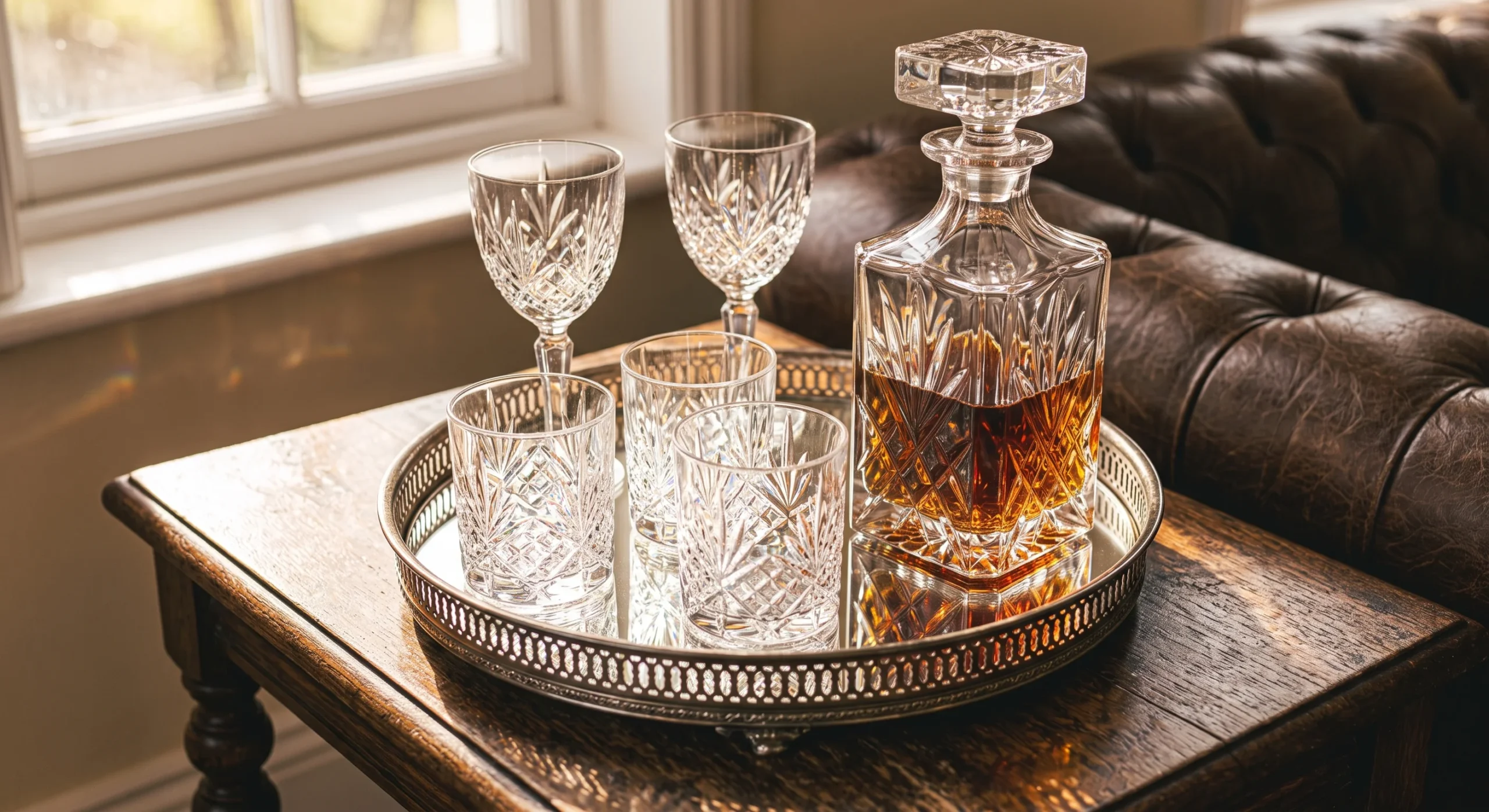
A small collection of cut crystal glassware, displayed openly on a tray or shelf rather than hidden away in a closed cabinet, brings genuine sparkle and refracted light into a room in a way that plain glass or modern acrylic simply cannot replicate under the same conditions. This kind of display works especially well on a sideboard or bar cart, where the crystal catches ambient light throughout the day and takes on an almost jewelry-like quality that elevates the entire surface it sits on. This kind of ambient sparkle is genuinely difficult to replicate with any newly manufactured glassware today.
Mismatched crystal patterns, gathered gradually from different thrifting trips rather than purchased as one matching set, tend to read as a genuine, collected assortment rather than something bought all at once for display purposes alone. This is also one of the more budget-friendly thrifted categories, since individual glasses are frequently priced far lower than a full boxed set would cost new, making it realistic to build a genuinely varied collection over several separate trips without a large single expense. making it realistic to build a genuinely rich collection gradually, one thrifting trip at a time.
- Cut crystal glassware catches and refracts light in a way plain glass simply can’t.
- Displaying pieces on a tray, rather than in a closed cabinet, turns them into decor.
- Mismatched crystal patterns grouped together read as a genuine collection, not a matched set.
Antique Wooden Trays
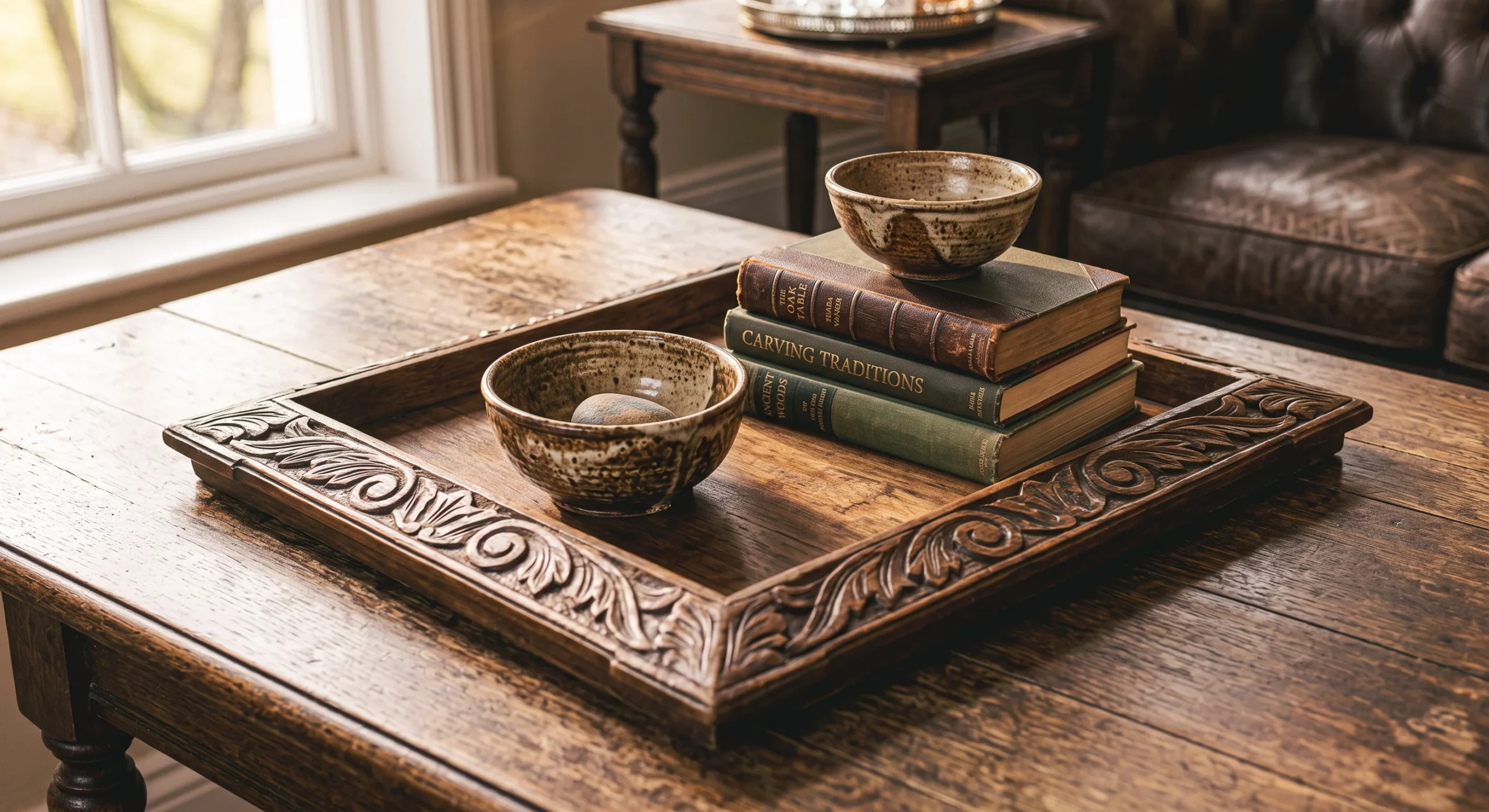
An antique wooden tray, whether carved, inlaid, or simply worn smooth from decades of handling, adds genuine warmth and function to a coffee table or ottoman in a way that a plain new tray rarely manages at a comparable price point. The tray itself becomes a kind of foundation for smaller styled objects, like a stack of books or a small candle, giving those items a defined, intentional home rather than letting them sit loosely scattered across the table’s surface. Even a simple, unadorned wood tray adds this same grounding effect to an otherwise cluttered surface.
This is a genuinely practical thrifted find as much as a decorative one, since a tray solves the real problem of corralling smaller coffee table items while also adding a layer of texture and material variety to the surface below it. Older wood trays also tend to develop a richer patina over time than a newly stained version, meaning the piece often looks more valuable with age rather than needing to be refinished or restored before it earns its place in the room. This is a piece worth watching for consistently, since well-made examples don’t stay available for long.
Carved Wood Bookends
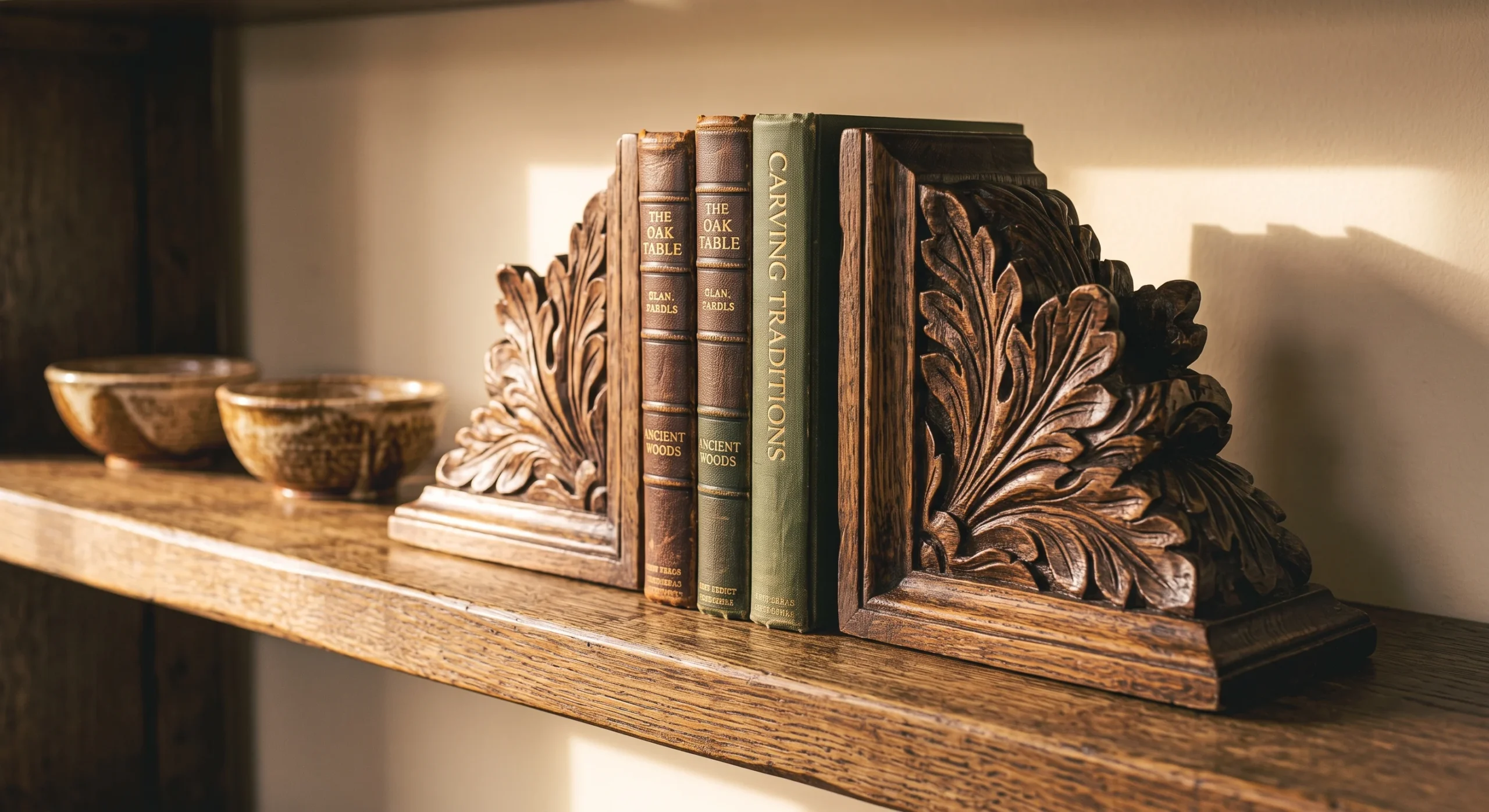
Carved wood bookends, whether shaped as simple geometric forms or more detailed figures, add genuine sculptural interest to a bookshelf that plain metal or acrylic bookends from a big-box store rarely achieve at the same price. Beyond their obvious function, a well-carved pair works almost like a small decorative object in its own right, giving a shelf visual structure even in the sections where books aren’t the primary focus of the display being styled. This small sculptural detail is easy to overlook while shopping, but it makes a genuine difference once styled.
A heavier, solid wood bookend also performs its actual job better than most lightweight modern versions, genuinely holding a stack of books upright without sliding or tipping, which matters considerably more than most shoppers initially expect when purchasing a set. Pairing a carved set with just a small stack of five or six books, rather than a fully packed shelf, actually highlights the bookends’ shape and detail more clearly than a dense, crowded shelf arrangement ever could. This is a small, inexpensive detail that consistently punches above its actual thrift-store price tag.
- Carved wood bookends add sculptural detail to a shelf that plain metal versions lack.
- A heavier, solid wood bookend genuinely holds books upright better than lightweight versions.
- Pairing bookends with a small stack of books, rather than a full shelf, highlights their shape.
Vintage Woven Baskets
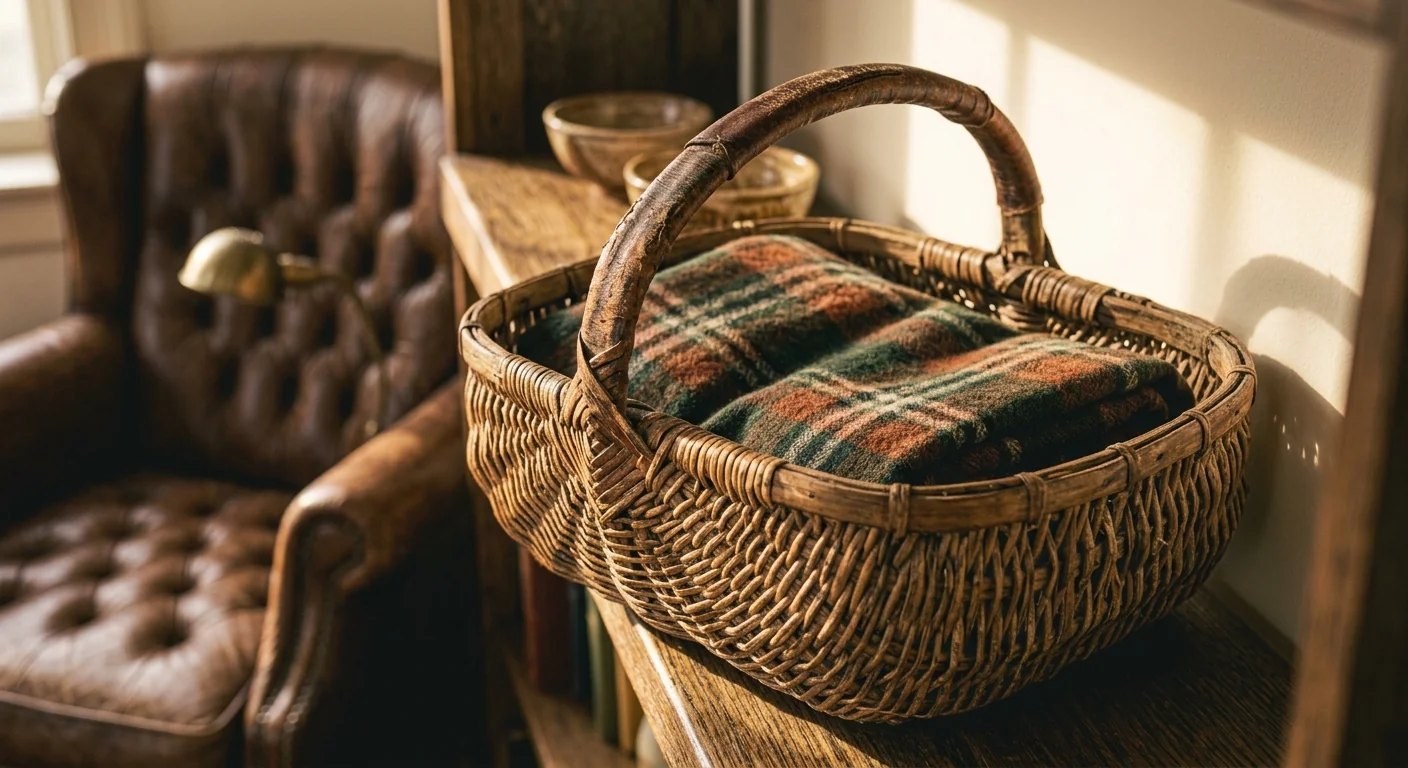
- Vintage baskets often have a tighter, more irregular weave than current mass-produced versions.
- A worn leather handle adds genuine age and character that new hardware can’t replicate.
- Using a basket for practical storage, like blankets, keeps the piece functional as well as decorative.
Vintage woven baskets, particularly those with a worn leather handle or a tighter, more irregular hand-woven pattern, carry a level of material character that current mass-produced baskets, often machine-woven from more uniform synthetic fiber, simply don’t replicate in quite the same way. A basket like this works well beside a reading chair or at the base of a bookshelf, functioning as genuine storage for blankets or magazines while also contributing real texture to a corner of the room that might otherwise feel empty. Choosing a basket sized specifically for its intended use keeps the piece practical, not purely decorative.
The slight irregularity in an older basket’s weave, along with any natural darkening or wear on the handle, tends to read as authentic age rather than as a flaw needing correction, which is exactly the quality that makes a piece like this feel collected rather than purchased new for the occasion. This remains one of the most functional entries on this entire list, since the basket earns its place through genuine daily use as much as through its contribution to the room’s texture. This is a piece that earns its keep daily, not just when guests happen to visit.
Marble-Top Side Table
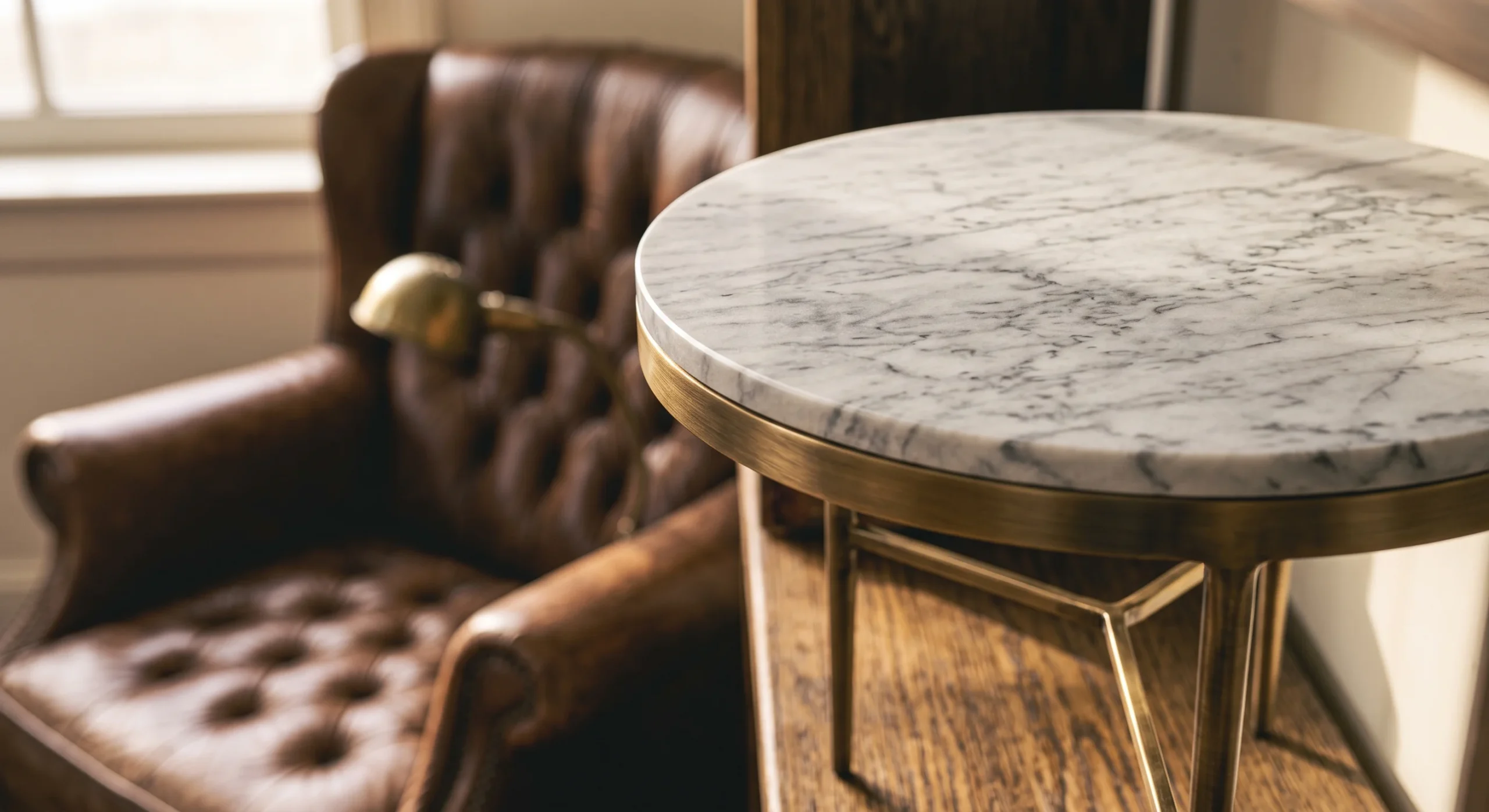
A marble-top side table is one of the more genuinely luxurious thrifted finds available, since natural stone carries an inherent weight and coolness to the touch that no laminate or engineered surface can fully imitate, regardless of how convincing the printed veining pattern looks from a distance. Finding one secondhand, often paired with a slender brass or wood base from an earlier design era, typically costs a fraction of what a comparable new marble piece would run, since sellers frequently underprice stone furniture without recognizing its actual value. This makes marble a genuinely strong value category to watch for.
Minor etching or a small stain on the marble surface, something natural stone is genuinely prone to over time, rarely detracts from the piece’s overall presence and can even be treated as part of its accumulated character rather than something requiring restoration. As an architect, I think of a marble-top table as one of the clearest examples of how real material quality, more than arrangement or styling choices, can single-handedly change how a room reads to a first-time visitor. Visitors tend to notice real material quality before they notice anything else in a room.
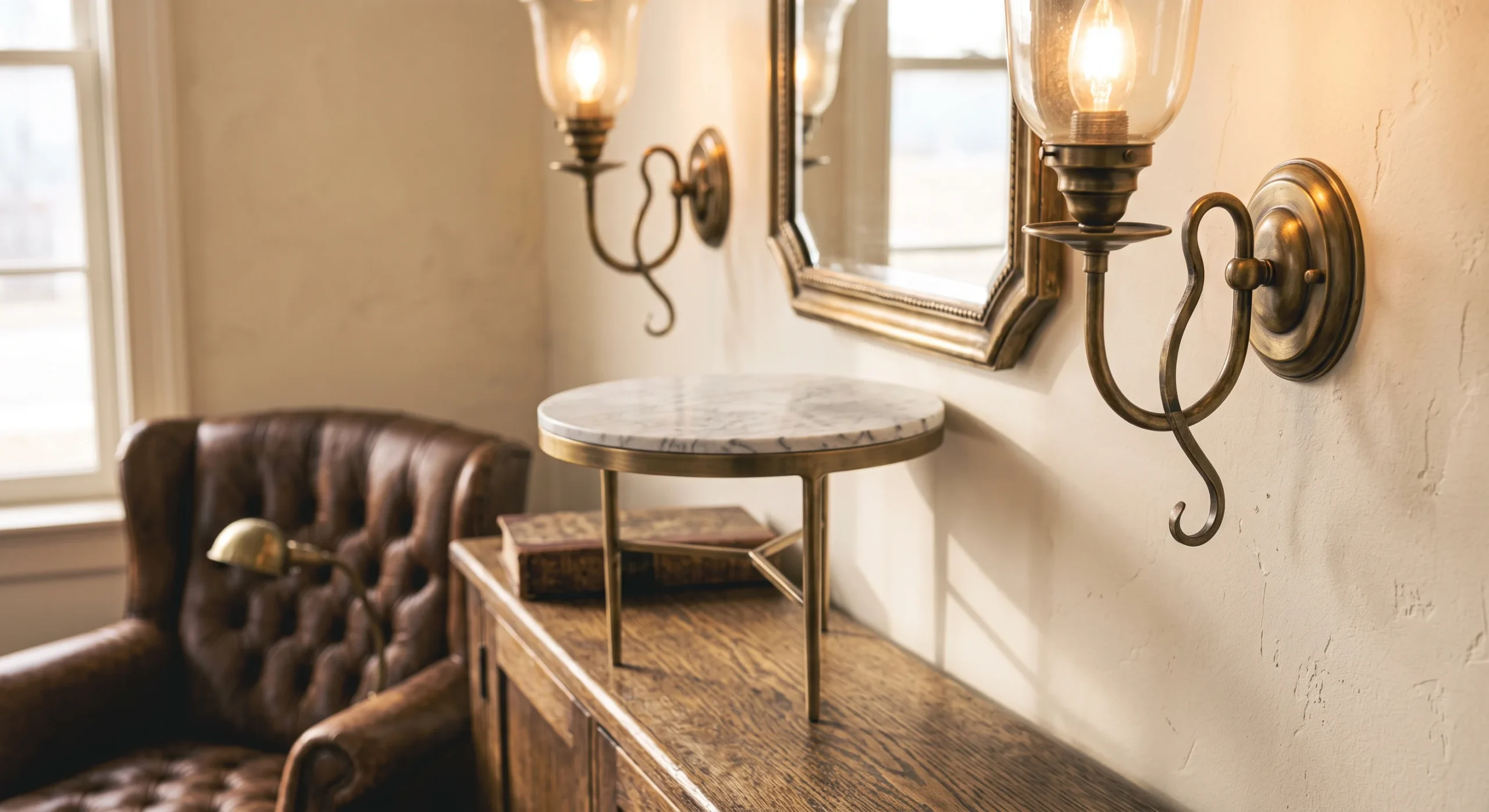
Brass Wall Sconces
Brass wall sconces bring genuine architectural lighting detail into a room, adding a layered source of warm light that a single overhead fixture simply cannot provide on its own, regardless of how well-chosen that main fixture might be. A pair of sconces, positioned symmetrically on either side of a mirror or a piece of artwork, creates an immediate sense of intentional design in an entryway or hallway, spaces that are otherwise easy to underdecorate compared to a home’s larger, more obviously styled rooms. This is a detail most new homeowners overlook entirely when first furnishing an entryway or hallway space.
Older brass sconces frequently feature more detailed, curved arms and etched glass shades than the flatter, more minimalist fixtures common in current budget lighting lines, giving a secondhand find genuine visual complexity that’s difficult to source new without paying considerably more. Rewiring an older sconce is a straightforward, inexpensive step for most electricians, meaning the main challenge here is simply locating the right pair in good working condition, not repairing the fixture once it’s already been brought home. Locating the right pair in good condition is genuinely the harder part of this whole process.
- Brass wall sconces add architectural lighting detail that overhead fixtures alone can’t provide.
- A pair flanking a mirror or artwork creates genuine visual symmetry in an entryway or hallway.
- Older brass fixtures often have more detailed, curved forms than current minimalist options.
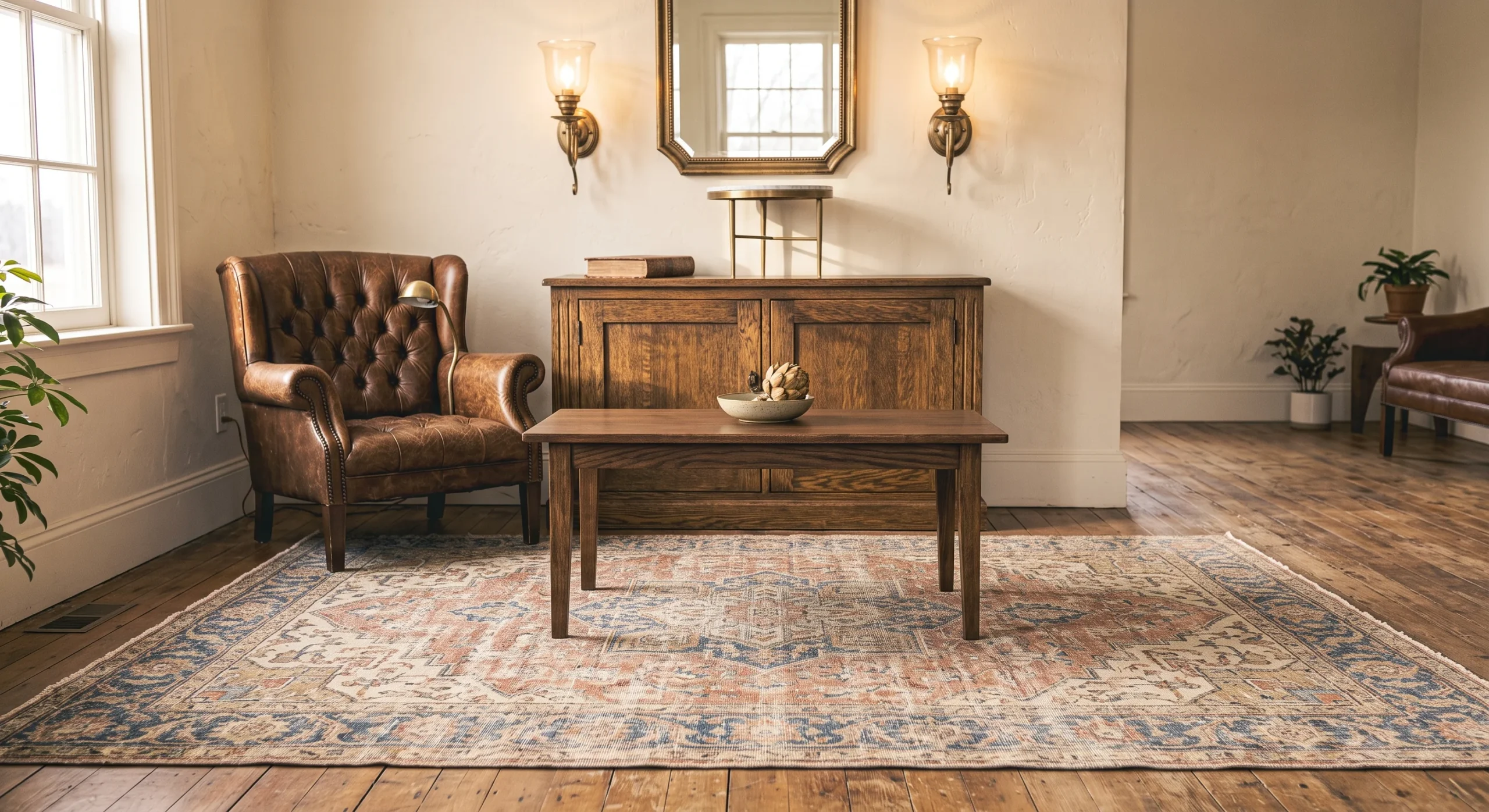
Vintage Area Rugs
A vintage wool area rug, particularly one with a slightly faded, intricate pattern, brings a level of depth and history to a floor that new rugs, even well-made ones, rarely achieve until they’ve been walked on for decades themselves. The muted, naturally worn colors common in older rugs tend to complement a wider range of furniture and wall colors than a bright, newly dyed rug, since the softened palette reads as considerably more neutral and easier to style around in practice. This makes a vintage rug considerably easier to style into an already-established room without a full refresh.
Genuine wool construction also means an older rug typically holds up structurally better than a budget synthetic version, even after years of wear, which is part of why so many secondhand wool rugs remain in usable, attractive condition decades after they were originally made. Layering a smaller vintage rug over a larger plain jute base is a practical way to work with an older rug that’s slightly undersized for the room, without losing any of its visual presence on the floor. This is one of the more durable thrifted categories, holding up well for years after it’s brought home.
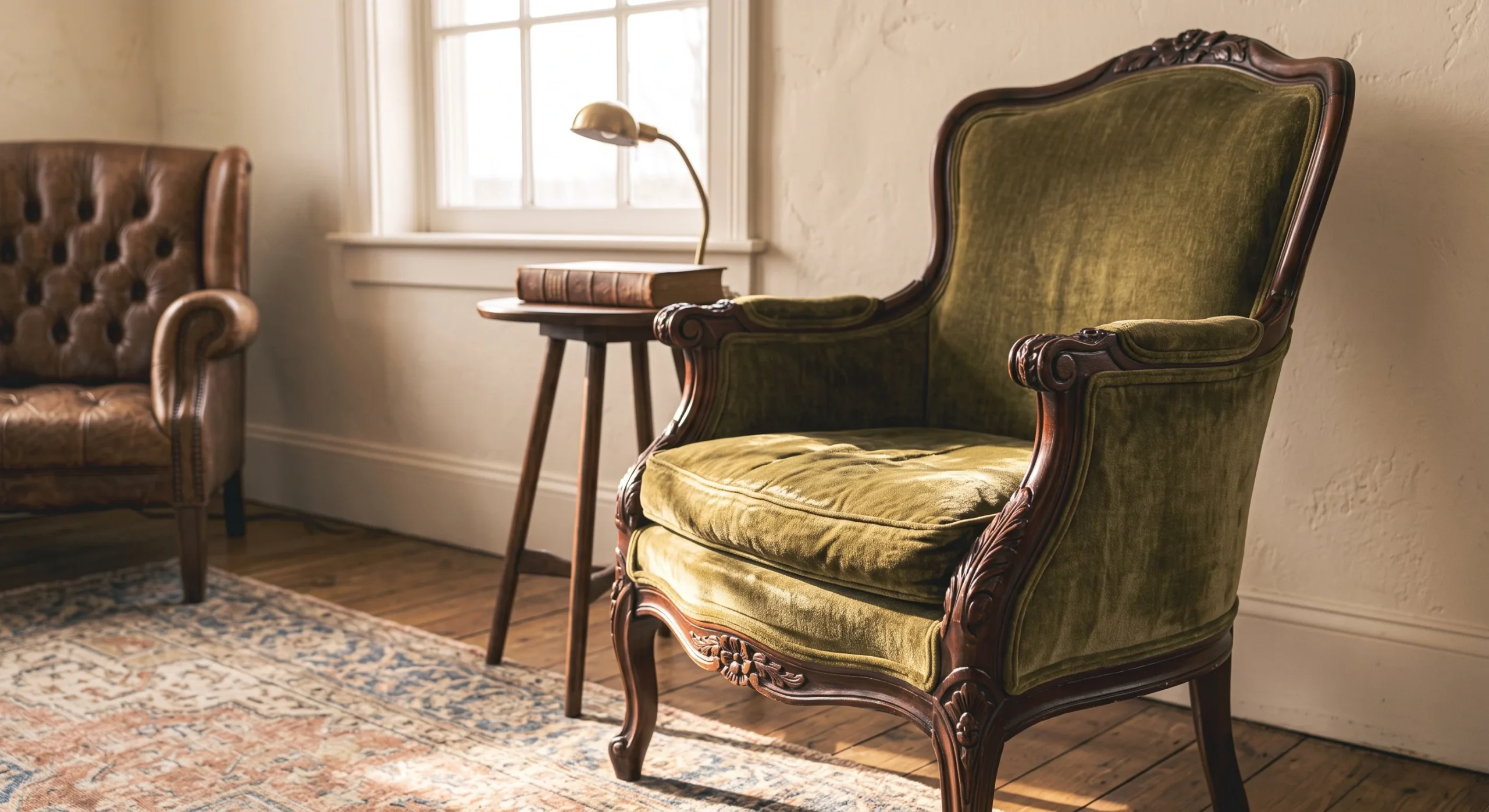
Upholstered Accent Chair
- Vintage chair frames often have more detailed, carved silhouettes than current mass-market seating.
- Reupholstering an old frame in new fabric costs less than buying comparable new furniture.
- A worn original fabric, left as-is, can also work if the wear feels intentional and cohesive.
An upholstered accent chair with a genuinely older wood frame, whether carved arms or a curved silhouette, offers a level of structural detail that most current mass-market seating, built around simpler straight lines and minimal joinery, doesn’t attempt to include at a comparable price point. Even when the original fabric is worn or dated, the frame itself is usually the valuable part, meaning the chair can be reupholstered in a fresh fabric while keeping its genuine vintage shape and craftsmanship intact. This is one of the more rewarding thrifted categories for anyone willing to take on a small project.
Reupholstering an older frame, while it does require a small additional investment beyond the chair’s original thrift price, still typically costs considerably less than purchasing a comparably well-built new chair, while also resulting in a genuinely one-of-a-kind piece rather than something mass-produced. If the original fabric happens to be in decent condition and its wear feels intentional rather than damaged, leaving it exactly as-is is also a genuinely valid option worth considering before committing to any reupholstery project. Either path still results in a chair that’s genuinely one-of-a-kind, not mass-produced.
Decorative Ceramic Bowls
A decorative ceramic bowl is one of the simplest, lowest-cost ways to add genuine texture and visual interest to a coffee table or console, especially when the glaze carries the kind of subtle color variation and depth that only hand-applied finishes tend to produce. Even without anything placed inside it, a well-chosen bowl functions as a small sculptural object on its own, giving an otherwise flat surface a sense of intentional styling rather than looking like an afterthought left unaddressed. Even a slightly imperfect glaze finish tends to add rather than subtract from the bowl’s overall appeal.
Filling the bowl with something simple, like dried botanicals, a few smooth stones, or a small stack of matchbooks, gives the piece an obvious, functional purpose while still keeping the overall styling light and uncluttered rather than overly busy. This is also one of the easiest thrifted categories for a beginner to shop confidently, since bowls are inexpensive, widely available secondhand, and genuinely easy to evaluate for chips or cracks before deciding to bring one home. This is one of the easiest thrifted categories for a beginner just starting to build confidence shopping secondhand.
- A single decorative bowl provides a simple, low-cost way to add texture to a coffee table.
- Filling the bowl with dried botanicals or small objects gives it a styled, intentional purpose.
- Hand-glazed ceramic bowls have visual depth that plain new bowls typically lack.

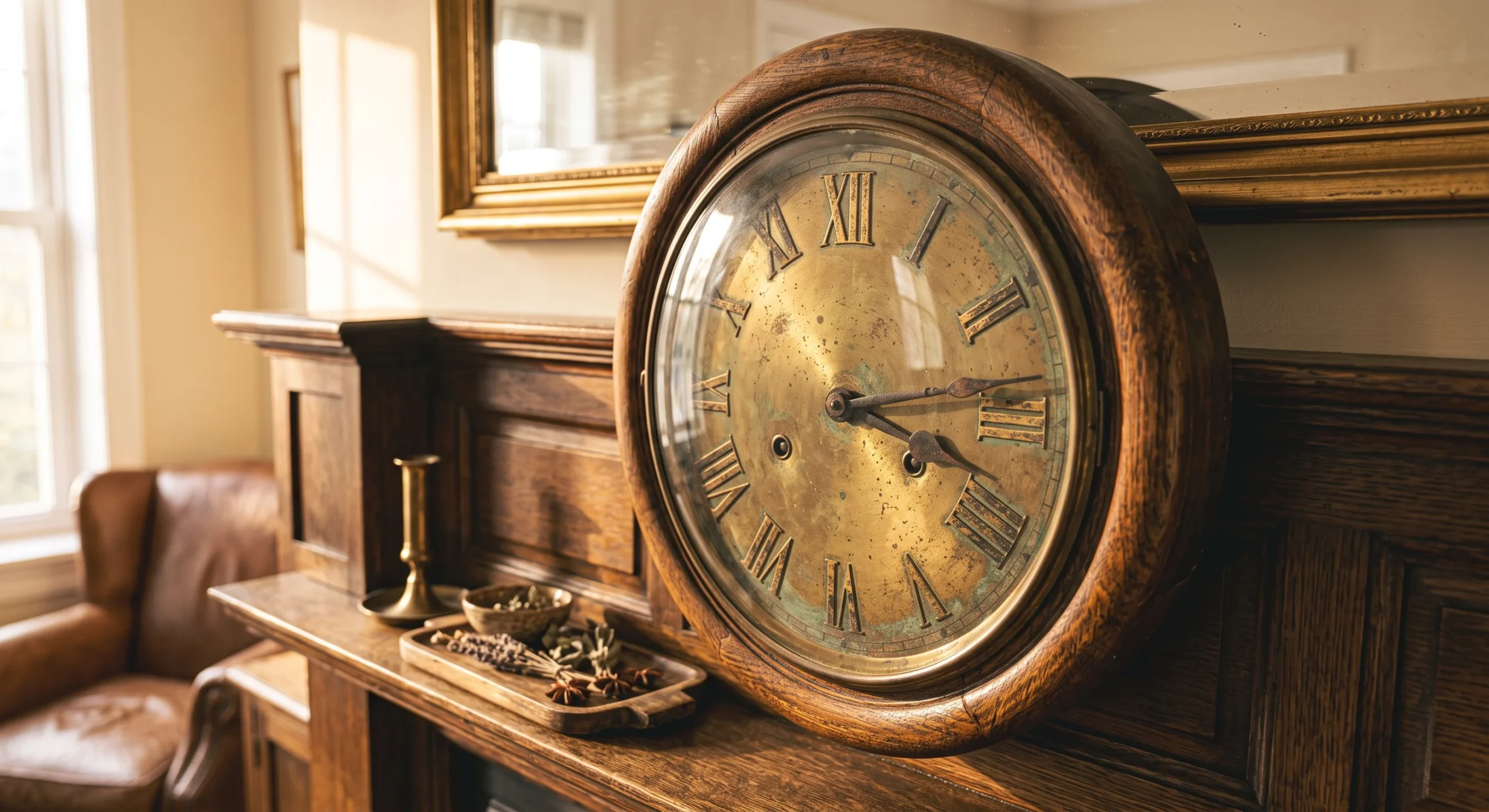
Vintage Wall Clocks
A vintage wall clock, particularly one with a wood case and a brass or enamel face, brings genuine functional decor into a room in a way that most current wall clocks, typically molded from plastic or thin metal, don’t manage to replicate with the same visual weight. Mounted above a mantel or on an otherwise empty stretch of wall, an older clock reads as a considered, purposeful piece, adding real presence to a spot that would otherwise need something else entirely to fill it. Filling that kind of space purely decoratively rarely reads as intentional the same way.
Many secondhand clocks are priced low simply because the movement no longer keeps accurate time, but for decor purposes this rarely matters, since the case and face are the genuinely valuable, visually interesting parts of the piece regardless of whether the mechanism still functions correctly. This makes vintage wall clocks a particularly good value category for anyone focused purely on the visual impact of a piece rather than needing it to serve its original timekeeping function. This makes clocks a genuinely good value category for anyone focused purely on visual impact.
Carved Wood Frames
A large carved wood frame, even one without its original artwork intact, adds genuine architectural scale and presence to a plain wall, functioning almost like a piece of woodworking in its own right rather than purely as a border for whatever sits inside it. This works especially well above a dresser or fireplace, where a single large-scale piece can anchor the entire wall far more effectively than several smaller items scattered across the same space would manage to achieve. This is a genuinely underrated category, since most shoppers walk past empty frames without a second glance.
Repurposing an old frame around a new mirror insert, rather than seeking out matching original artwork, is a practical, accessible way to bring this kind of piece into a current home while giving it a genuinely fresh, usable purpose. The deep, uneven wood grain and hand-carved edge detail common in older frames also photograph with considerably more texture and depth than a flat, painted modern frame, a detail worth considering if the room is one you tend to photograph often. a detail worth considering if the room is one you photograph or share fairly often.
- A large carved frame adds genuine architectural scale to a plain wall or mirror.
- Repurposing an old frame around a new mirror insert gives it a fresh, current use.
- Deep wood grain and carved edges photograph with more texture than a flat painted frame.
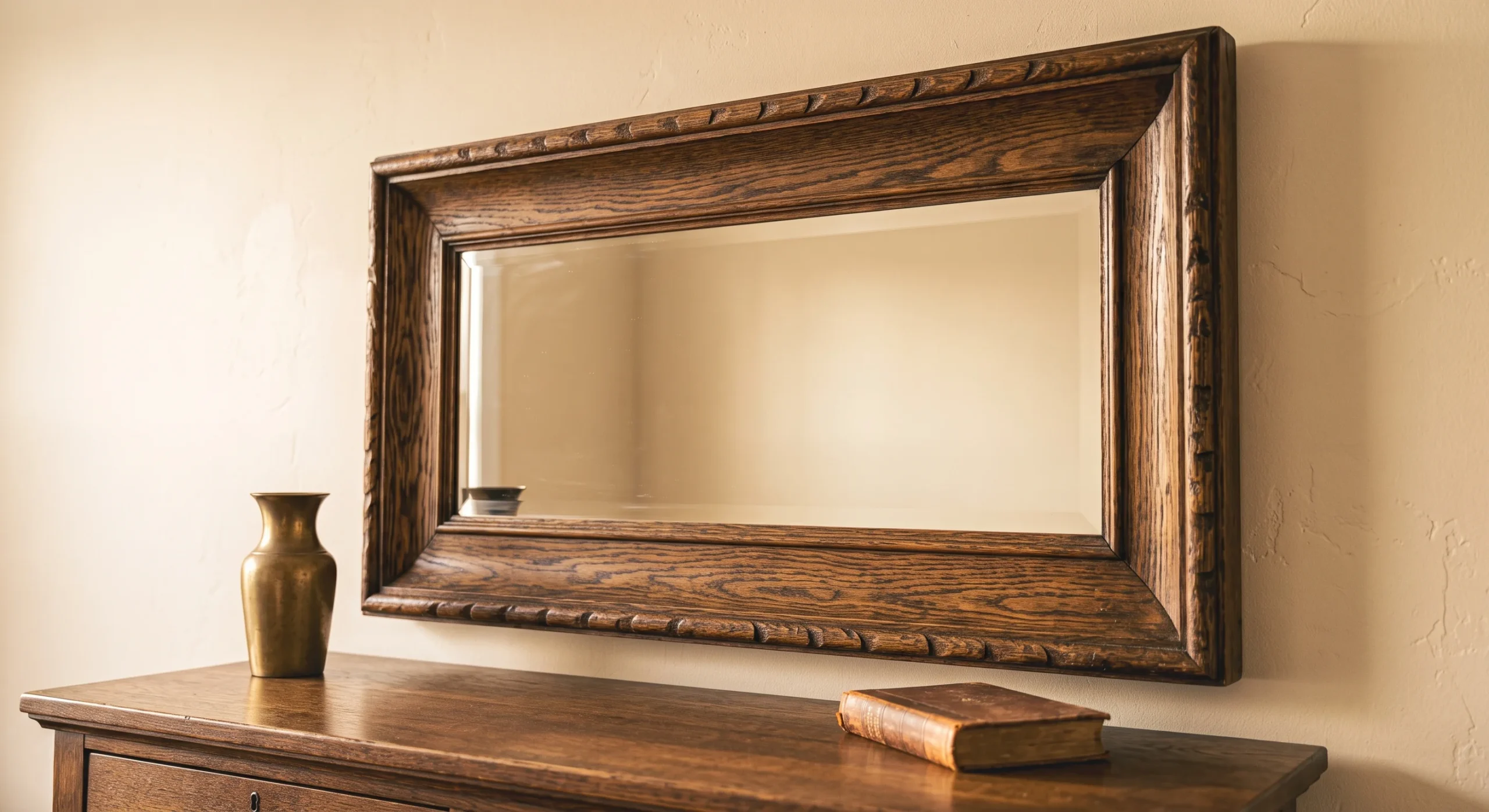
Vintage Table Linens
- Embroidered vintage linens add genuine texture to a table setting that plain new fabric lacks.
- Slight ivory discoloration on older linens often reads as authentic rather than dirty.
- A single vintage runner or napkin set is an affordable way to try this category.
Vintage table linens, particularly hand-embroidered tablecloths, napkins, or runners, bring genuine textile texture and detail to a dining table that plain new linen, mass-produced without the same handwork, generally doesn’t include at any comparable price point. Even a single vintage runner, layered over a plain modern tablecloth, adds a noticeable amount of visual interest and a sense of occasion to an everyday table setting, without requiring a full matching set to make a real, noticeable difference. Even one small embroidered detail, like a napkin corner, can carry the same effect at a smaller scale.
A slight ivory or cream discoloration on older linens, common after decades of storage, often reads as authentic age rather than as a stain needing to be removed, particularly once the piece is styled alongside other collected, slightly imperfect objects from elsewhere on this list. This is also one of the most affordable and space-efficient thrifted categories, since linens take up almost no storage room and are frequently priced at only a fraction of what a comparably detailed new set would cost. Since linens take up almost no storage room, this is an easy category to collect gradually over time.
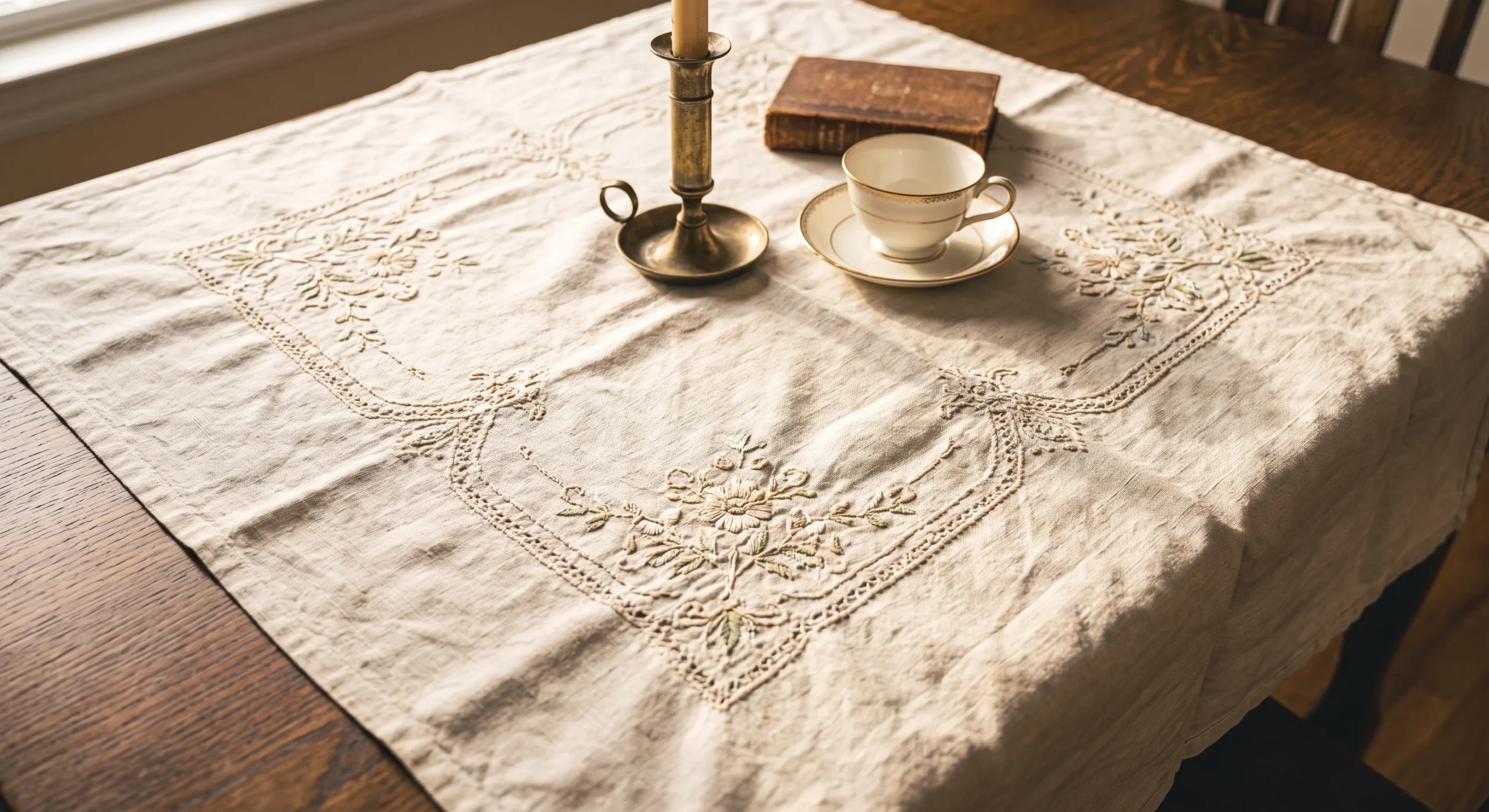
Antique Glass Bottles
Antique colored glass bottles, whether amber, green, or cobalt blue, bring a subtle but genuinely striking quality to a windowsill or shelf, since sunlight passing through older, slightly irregular glass casts soft colored light across the surrounding surface in a way that plain modern glass rarely achieves with the same richness. Even a small cluster of three or four differently shaped bottles creates a naturally layered, collected display, especially when grouped by color rather than scattered randomly across the available surface. Even a single bottle on its own catches enough light to justify a spot on a sunlit shelf.
This is genuinely one of the lowest-cost entries on this entire list, since old glass bottles are frequently priced at only a dollar or two each, making it realistic to build a genuinely varied collection across just one or two thrifting trips without spending much at all. Their small scale also makes them a good fit for a home still building its collection gradually, since a windowsill display like this fills space meaningfully without requiring a large furniture-level investment. This makes it a genuinely approachable starting point for anyone new to thrifting decor altogether.
- Colored glass bottles catch and cast light in a way plain clear glass simply can’t.
- Grouping bottles of varying heights on a windowsill creates a naturally layered display.
- This is one of the lowest-cost entries on this entire list to start collecting.
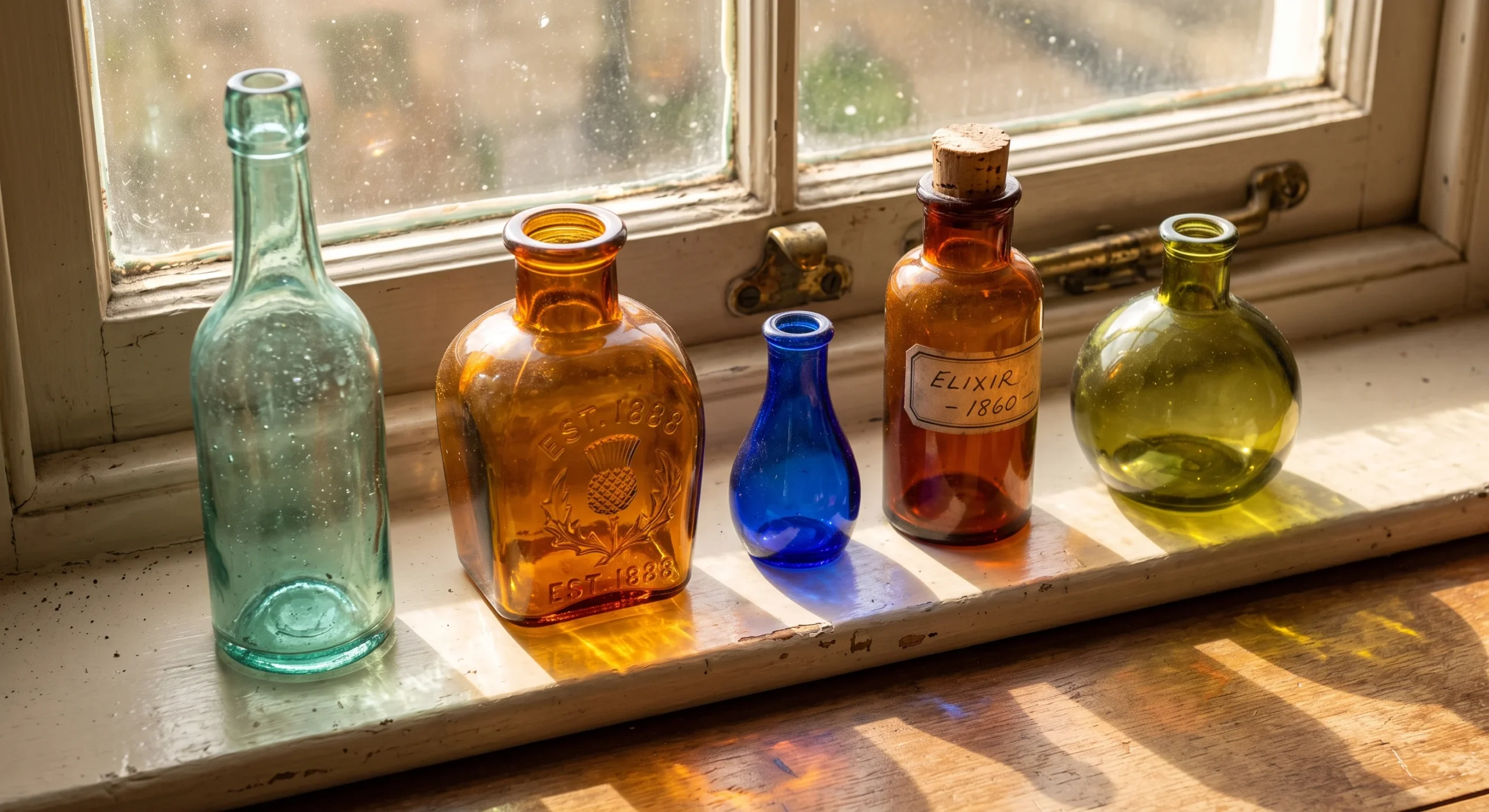
Reupholstered Ottoman
A vintage ottoman frame, once reupholstered in a current fabric like a warm cream bouclé or a durable linen blend, becomes a genuinely custom piece of furniture at a fraction of what a comparable new custom ottoman would cost, since the underlying structure, springs, and tufting detail are typically the most expensive parts of the piece to reproduce. Older ottomans also frequently feature deeper, more detailed tufting patterns than current budget versions, giving the reupholstered result a noticeably more substantial, well-built feel underfoot. That kind of underlying structure is genuinely difficult and expensive to commission from scratch today.
This project does require a small additional investment in fabric and labor beyond the initial thrift price, but the total cost still typically lands well below what a comparably well-constructed new ottoman would run, while producing a genuinely unique piece that isn’t available anywhere else in exactly the same form. Positioned in front of a sofa, a reupholstered ottoman like this often becomes the single piece in the room that guests ask about first, before anything else nearby. That single detail says a great deal about the piece’s actual value relative to its cost.
FAQ
How do I know if a thrifted piece is actually worth buying?
Look at the material and construction first, not just the style — solid wood, real brass, and natural stone hold up and photograph well regardless of current trends. Minor cosmetic wear is usually fixable or even adds character, but structural damage, like a wobbly frame or deep cracks, is generally worth skipping.
Does thrifted furniture need to be professionally cleaned or refinished before using it?
Most pieces just need a basic wipe-down, and older wood often looks best with its original patina left intact rather than being fully refinished. Upholstered pieces are the main exception — a fabric-safe cleaner or a full reupholster is worth considering if the original fabric feels genuinely unclean rather than simply worn.
How do I mix thrifted pieces with newer furniture without it looking mismatched?
Repeating a material or tone, like brass hardware or a consistent wood color, across both old and new pieces ties the room together visually. If you’re unsure how much older furniture your specific space can structurally and visually support, you can book a consultation directly at https://wa-associates.com/book-a-consultation/ to talk it through.
Where is the best place to actually find these kinds of pieces?
Estate sales and consignment shops tend to have the highest concentration of genuinely well-made older furniture, since they’re often sourced from a single long-term home. Local thrift stores are more hit-or-miss but worth regular visits, since inventory turns over constantly and good pieces don’t stay long.
Conclusion
Building a home that genuinely looks expensive has less to do with a large budget and more to do with recognizing real material quality when you find it secondhand. These twenty thrifted finds, from a single gilded mirror to a reupholstered ottoman, prove that patina, craftsmanship, and a collected feel consistently outperform anything bought all at once from a single catalog. Start with just one or two pieces on this list, rather than trying to source everything immediately. Save this list to Pinterest for your next thrifting trip, and share it with anyone who thinks an elevated home requires a full-price budget.