
Classroom organization ideas exist for a genuinely practical reason: a room full of kids and materials falls apart fast without real systems holding it together, and that same logic applies just as directly to a busy household. In my years of teaching, I’ve built and rebuilt classroom systems more times than I can count, and the ones that actually stuck were never the pinnable, picture-perfect setups, they were the boring, sturdy systems built around how people actually behave under pressure. This list translates eighteen of those genuinely working systems for home use, each one chosen because it solves a real, recurring point of household friction rather than just looking tidy for a photo.
Start Here: Labeled Supply Bins
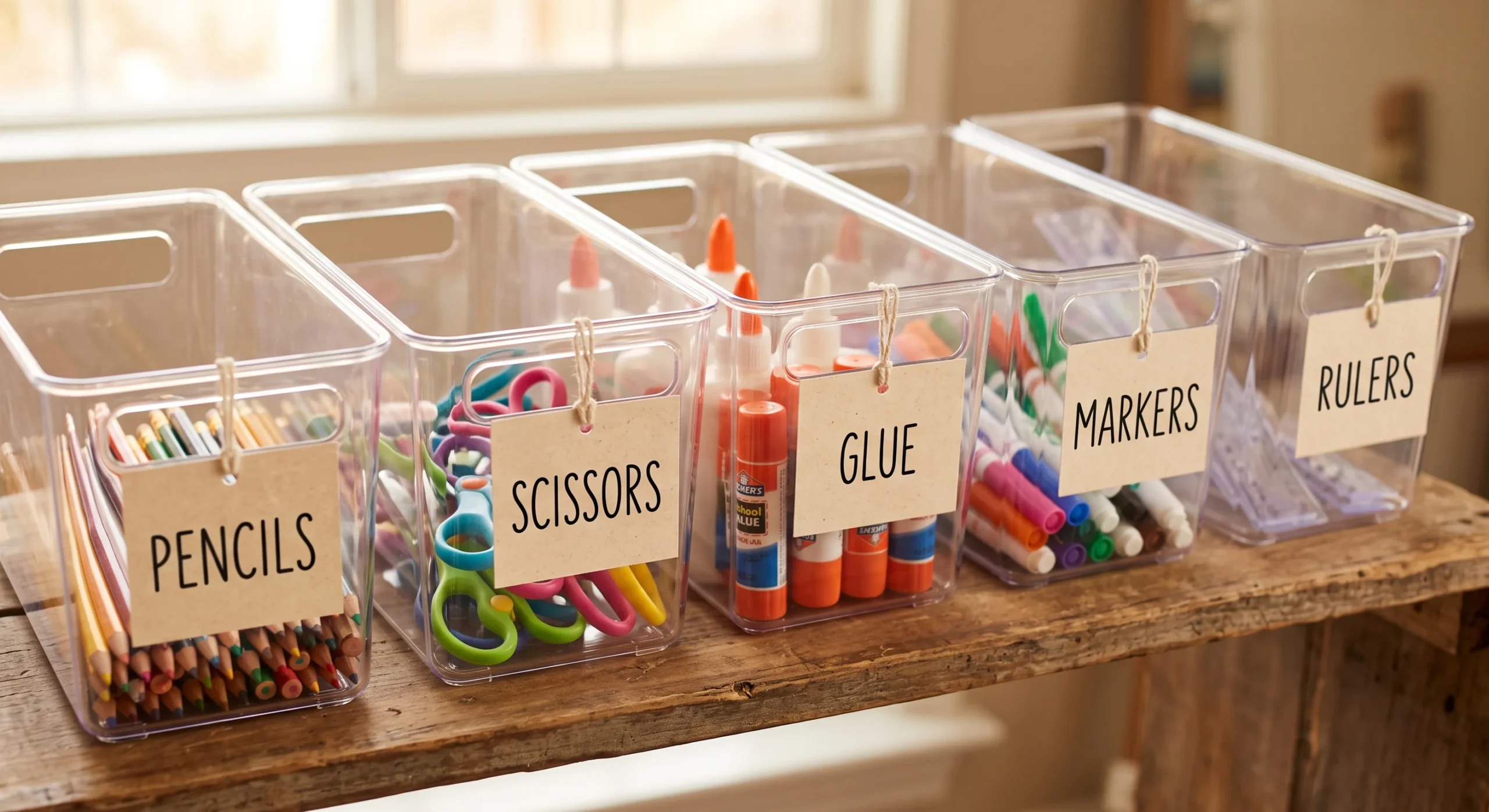
This is the fastest system to set up and the one that solves the most immediate daily friction — the constant hunt for scissors, tape, or a missing pencil — with almost no ongoing maintenance required.
Labeled Supply Bins
- Clear bins with simple labels let anyone, including a young child, put an item back in the right spot.
- This removes the daily question of ‘where does this go’ that quietly drains a parent’s patience.
- Picture labels work well for kids too young to read fluently yet, alongside the written word.
- A bin system only works if every single category actually has its own labeled home.
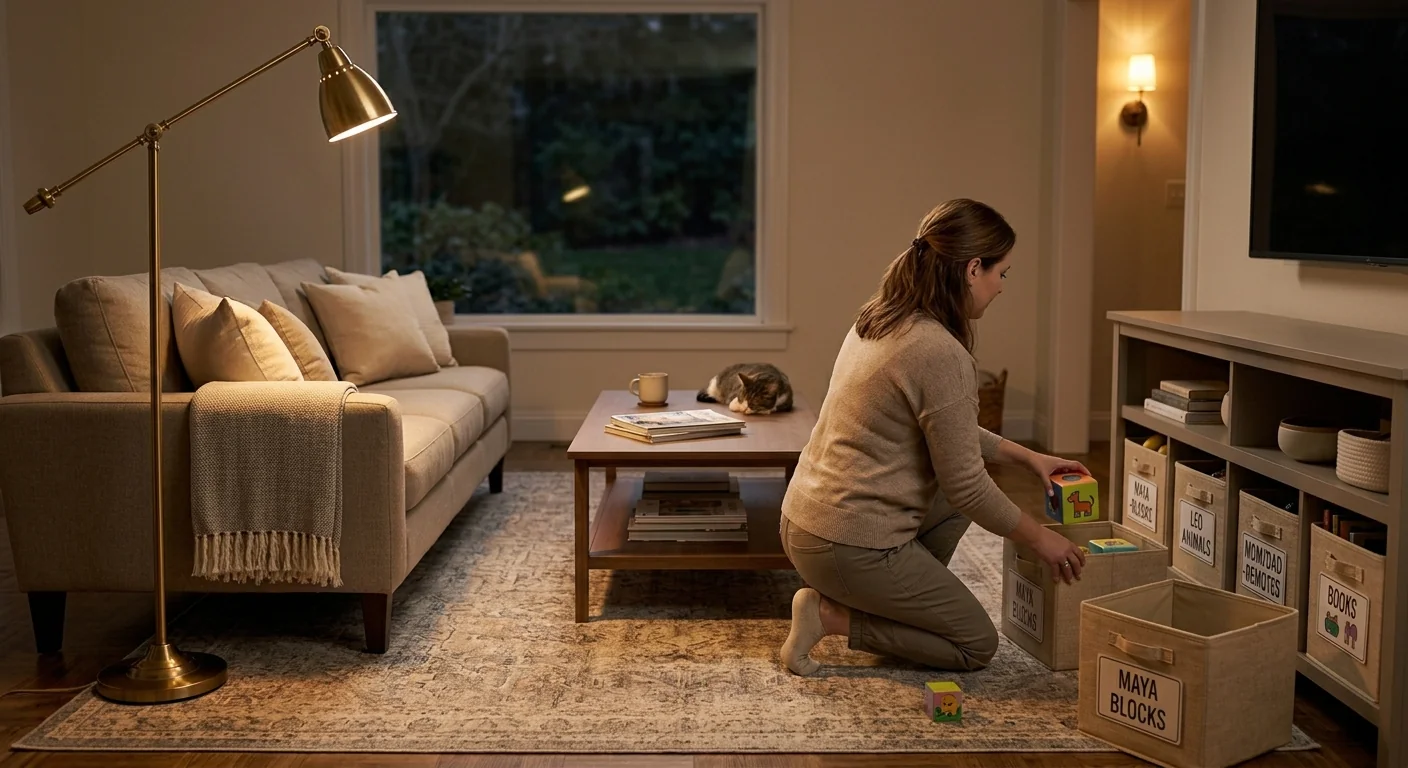
Labeled supply bins solve the exact same problem at home that they solve in a classroom: without a clearly labeled, specific home for each category of item, things end up piled wherever there’s space, and finding anything later becomes a genuine daily hunt. Clear bins with simple, legible labels let anyone in the household, including a young child who can’t read fluently yet, correctly identify where a specific item actually belongs and return it there without needing to ask an adult first every single time it moves.
This removes one of the most quietly draining daily questions in a busy household — where does this actually go — which adds up to real mental fatigue over the course of a full week when it happens dozens of times a day. Picture labels alongside the written word work especially well for younger kids still learning to read, closing the gap between a system that merely looks organized and one that a whole family can actually maintain together, day after day, without constant adult intervention.
Color-Coded Folders
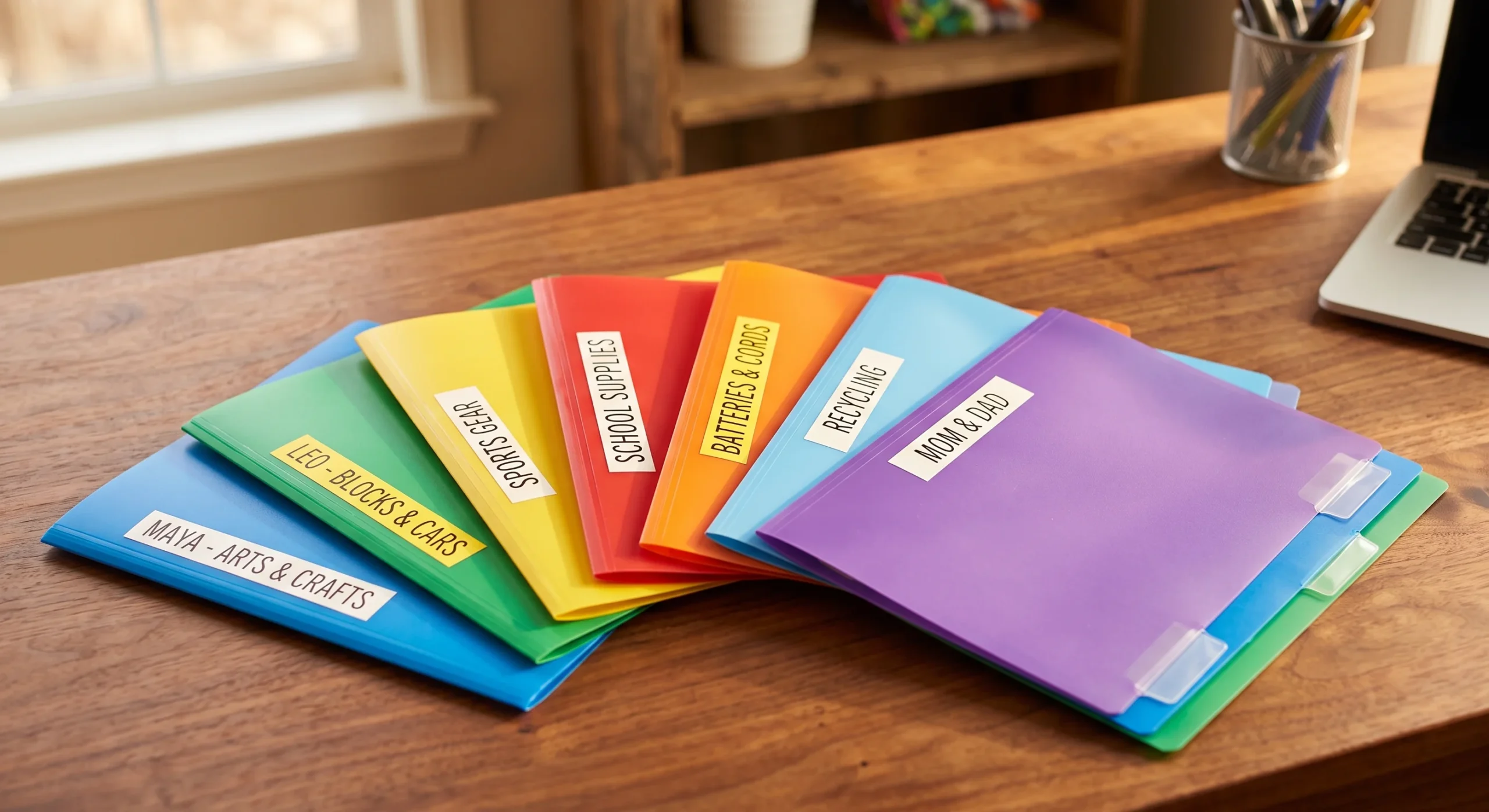
Color-coded folders assign a single, consistent color to each subject or category, which turns sorting into something close to automatic rather than a decision that has to be made fresh every single time a new paper comes home. In a classroom, this might mean blue for math and red for reading; at home, it could mean one color per family member, or one color for school papers and another entirely for household bills that need genuine action taken on them soon. Choosing colors that feel intuitive to the household, rather than arbitrary, makes the system stick considerably faster.
This system works especially well for the steady stream of school papers, permission slips, and household mail that otherwise accumulates into one undifferentiated pile on a kitchen counter within days. A consistent color scheme, used the same way across every room rather than reinvented in each one, reinforces the system considerably faster than an inconsistent one where blue means something entirely different in the kitchen than it does on a bedroom desk upstairs. Kids especially benefit from that predictability, since it removes one more thing to relearn in each new room.
- Assigning one color per subject or per family member makes sorting mail or papers nearly automatic.
- This system works for school papers, bills, or any recurring category of household paperwork.
- A consistent color scheme across the house reinforces the system faster than an inconsistent one.
Daily Task Chart
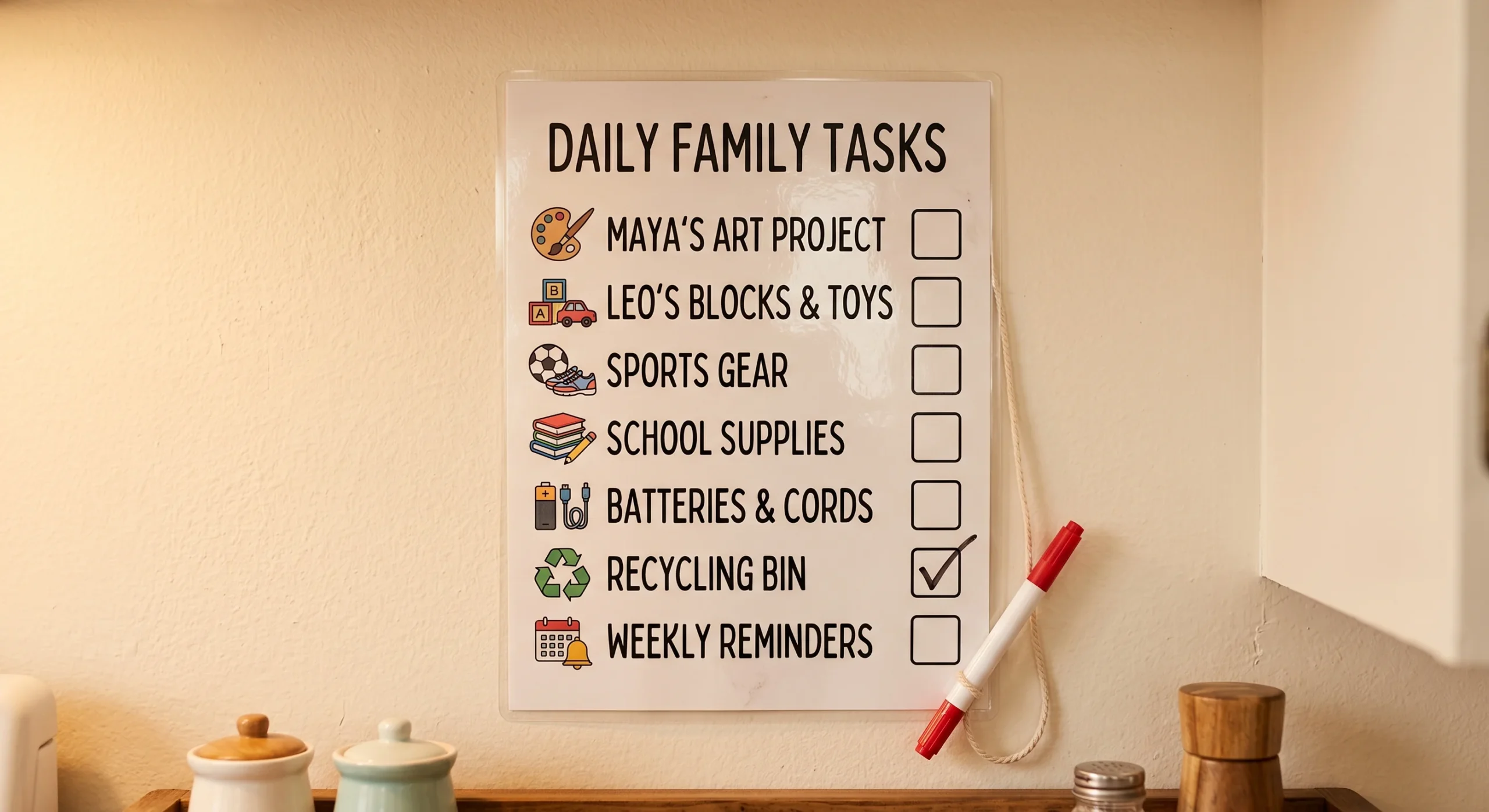
- A visible checklist of daily tasks removes the need for a parent to verbally repeat instructions.
- Icons alongside text help younger kids follow the chart independently before they read fluently.
- Checking off each task provides a small, genuine sense of accomplishment throughout the day.
- A laminated chart with a dry-erase marker can be reused daily without printing new copies.
A daily task chart, posted somewhere visible like a kitchen wall or a bedroom door, removes the need for a parent to verbally repeat the same list of instructions every single morning and evening. In a classroom, a posted daily agenda lets students know what’s coming without constantly asking the teacher; at home, the same visible structure lets a child check their own progress independently, rather than needing an adult to announce each next step out loud, over and over again, day after day, week after week, without any real end in sight.
Icons paired with simple text help younger kids follow the chart independently well before they’re reading fluently on their own, extending the system’s usefulness across a wider age range within the same household. Checking off each completed task provides a small, genuinely motivating sense of accomplishment throughout the day, the same visible progress that makes a classroom checklist satisfying to work through. A laminated version with a dry-erase marker gets reused daily without ever needing reprinting, week after week, without ever running out of fresh copies or paper.
Designated Work Zones
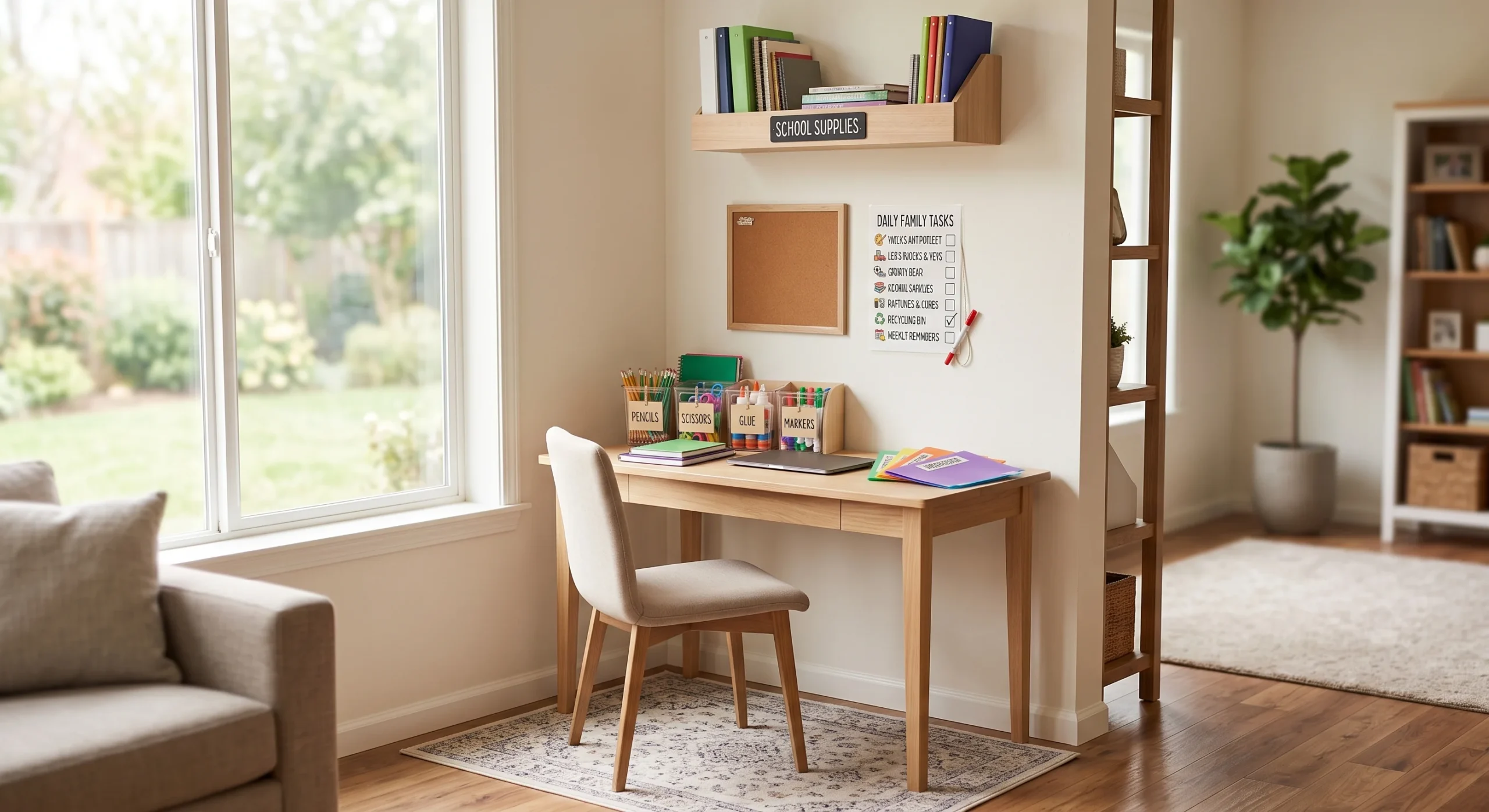
Designated work zones assign a specific physical space to a specific activity, the same way a classroom has a reading corner distinct from a math work table distinct from a group discussion area. At home, this might mean one corner reserved specifically for homework, with its own small desk or caddy of supplies, kept separate from the space where a child plays or watches television, so the physical location itself quietly signals what kind of activity is actually expected there each time a child sits down.
This works even in a genuinely small home, since a defined corner of a shared living room still counts as a distinct zone, as long as its purpose stays consistent rather than shifting between homework, play, and screen time depending on the day. Keeping that purpose steady reinforces the mental association over time, so simply sitting down in that specific spot starts to cue focus automatically, the same way walking into a classroom cues a genuinely different mode of attention entirely, almost without a child noticing the shift happen.
- A specific spot reserved only for homework or reading signals to a child’s brain what that zone means.
- This works even in a small home — a defined corner of a shared room still counts.
- Keeping the zone’s purpose consistent, rather than multi-purpose, reinforces the mental association over time.
Turn-In Basket System
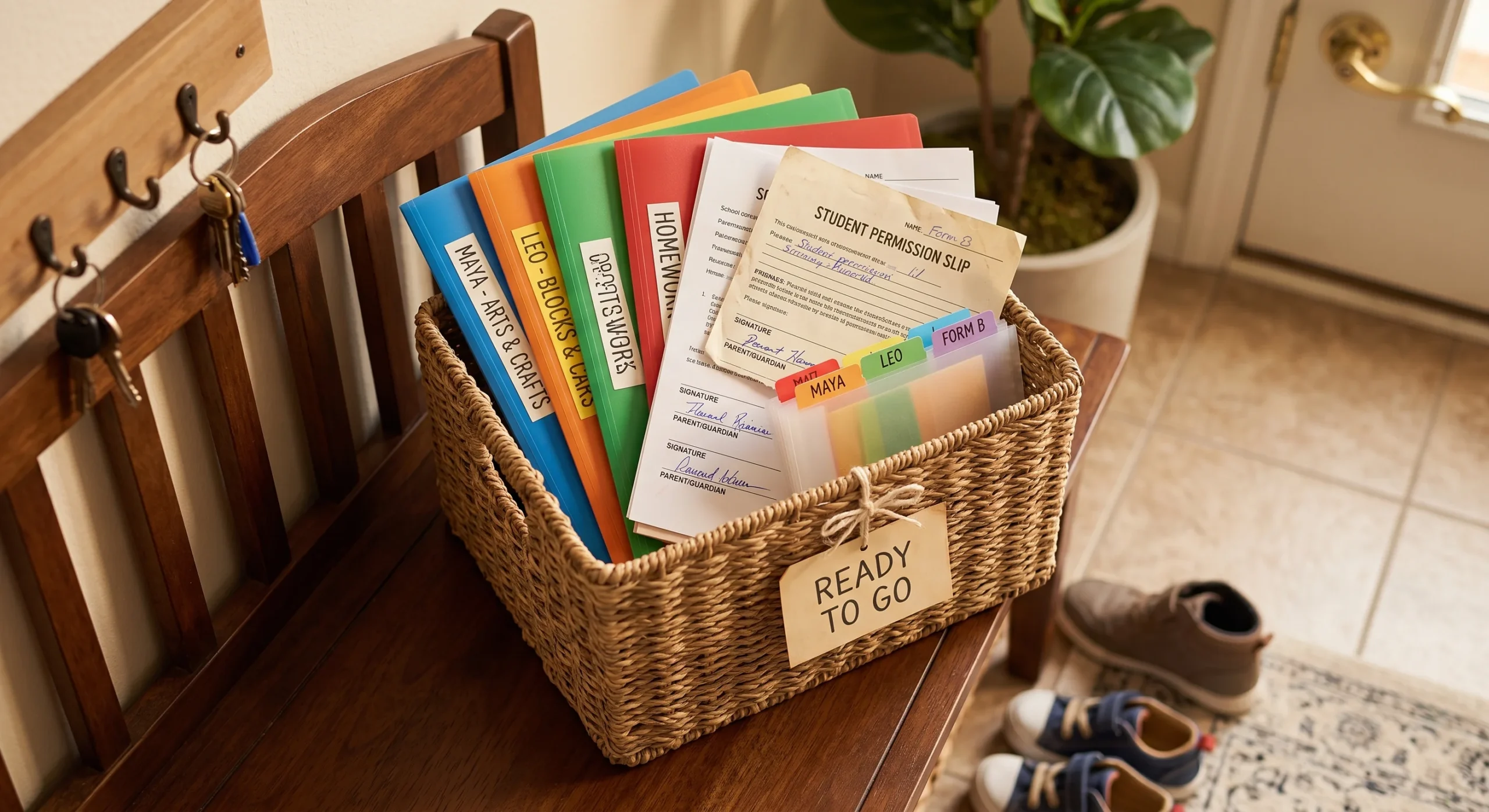
- A single basket by the door holds anything that needs to leave the house the next morning.
- This prevents the frantic last-minute search for a permission slip or completed homework packet.
- Everyone in the household uses the same basket, keeping the system genuinely simple to maintain.
- Checking the basket the night before catches missing items while there’s still time to fix them.
A turn-in basket system, positioned right by the front door, holds anything that needs to physically leave the house the next morning — a completed homework packet, a signed permission slip, a library book due back. This mirrors the turn-in tray every classroom relies on, where a single designated spot means nothing gets lost in the chaos of backpacks and folders scattered across a bedroom floor the night before it’s actually needed the next morning. This one small habit alone prevents a genuinely disproportionate amount of morning stress.
This single system genuinely prevents the frantic, familiar last-minute search for a specific paper five minutes before the school bus arrives, since everything that needs to leave already lives in one predictable, consistent spot near the door. Having every family member use the exact same basket, rather than each person keeping their own separate pile somewhere different, keeps the whole system genuinely simple enough to maintain long-term. Checking it together the night before catches anything still missing while there’s real time left to fix it.
Visual Daily Schedule
- Picture cards showing each step of a routine reduce the need for constant verbal reminders.
- Removable, velcro-attached cards let a child physically move a completed step, adding a satisfying action.
- This works especially well for younger kids or any child who benefits from visual structure.
- A consistent morning and evening schedule reduces the daily negotiation over what happens next.
- Involving a child in creating the schedule builds genuine buy-in rather than a rule handed down.
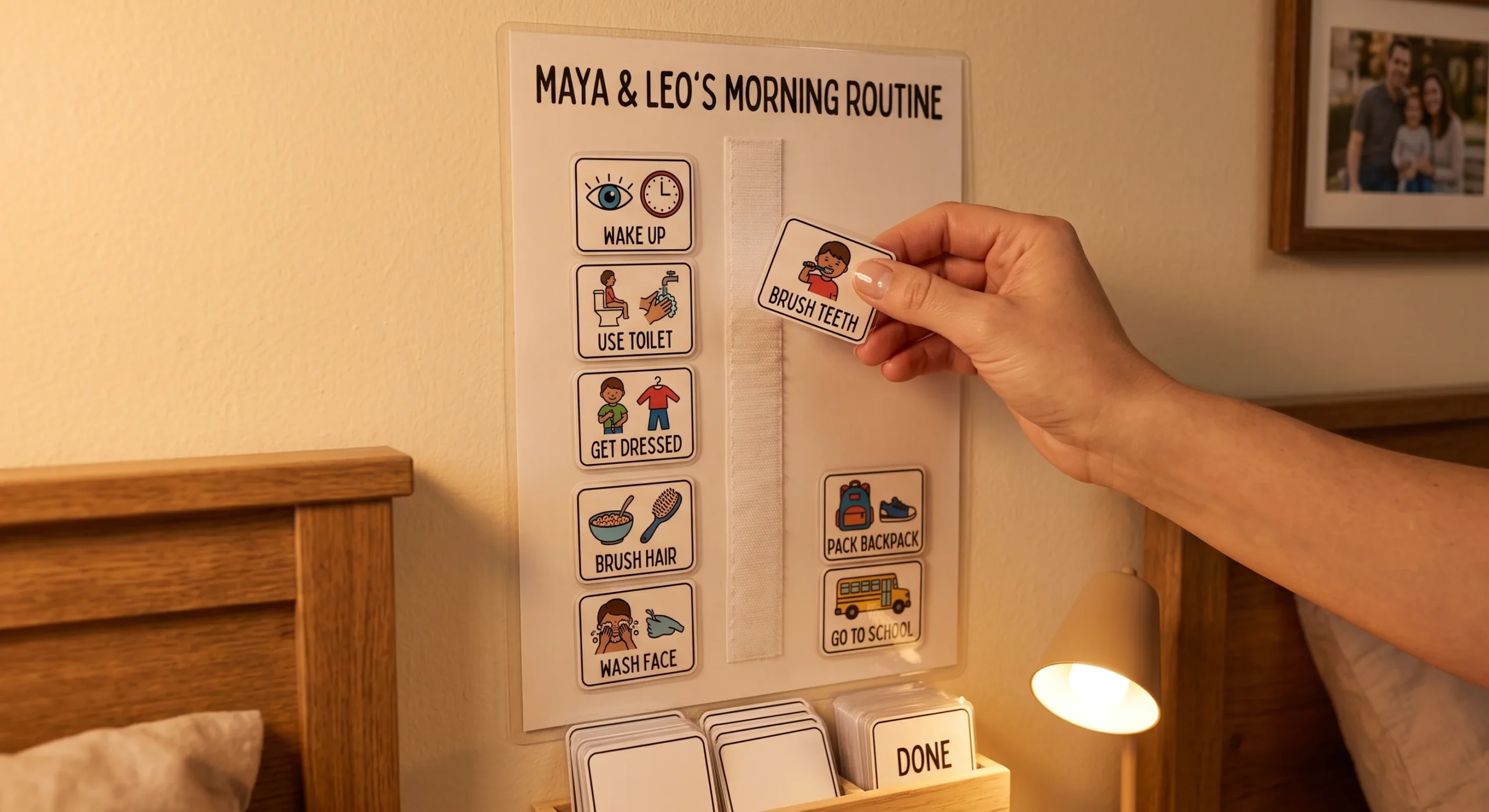
A visual daily schedule, built from simple picture cards showing each step of a routine in sequence, reduces the need for constant verbal reminders about what happens next, the same structure that helps a classroom transition smoothly between activities without a teacher narrating every single step out loud. At home, this might cover a morning routine — wake up, get dressed, eat breakfast, brush teeth — laid out visually where a child can reference it independently, without needing an adult standing nearby to narrate every single step.
Removable, velcro-attached cards let a child physically move a completed step to a done pile, adding a small, satisfying physical action that reinforces the sense of real progress through the routine. This works especially well for younger kids or any child who genuinely benefits from visual structure over purely verbal instruction, reducing the daily negotiation over what comes next. Involving a child directly in creating their own schedule builds real buy-in, rather than a routine simply handed down from above without any real input or say in how it works.
Cubby-Style Storage
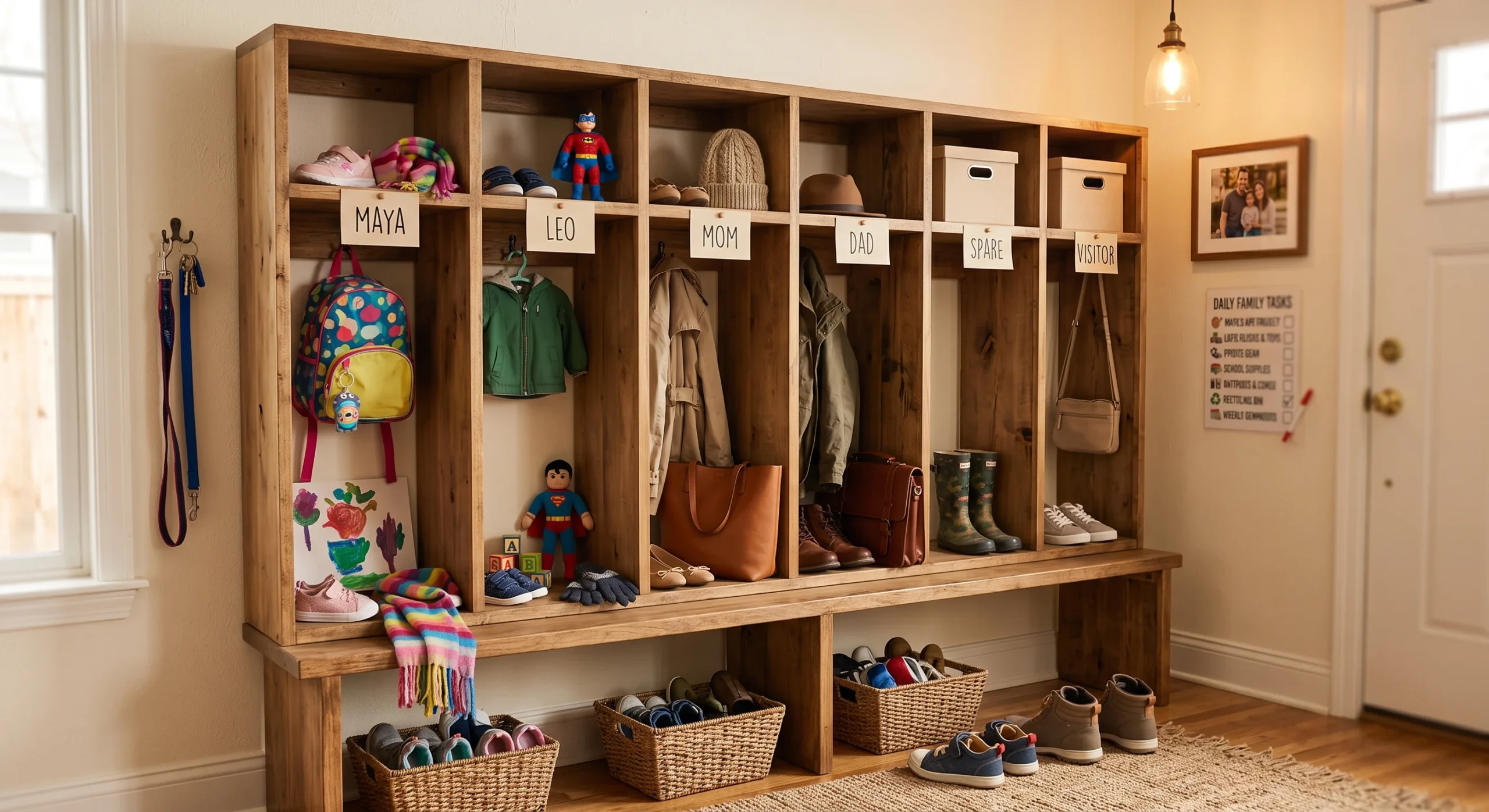
Cubby-style storage gives each family member an individual, clearly labeled compartment, mirroring the personal cubby every classroom uses to keep a room full of shared space from turning into one undifferentiated pile of belongings. At home, this typically works best near an entryway, where shoes, bags, and jackets otherwise accumulate into a genuinely chaotic heap that makes finding a specific item before leaving the house considerably harder than it genuinely needs to be most mornings. A cubby gives each item a home tied to a specific person, not just a general category.
This system works especially well for daily-use items that get grabbed and dropped constantly, since each person’s cubby stays visually distinct from everyone else’s without requiring any complicated sorting system to maintain. Individual cubbies also make it immediately obvious whose items are missing before everyone actually heads out the door, catching a forgotten backpack or a single missing shoe before it becomes a frantic search happening right as the car is genuinely supposed to already be pulling out of the driveway with everyone inside it.
- Individual cubbies, one per family member, give everyone a defined spot for personal daily items.
- This works well for shoes, bags, and jackets, keeping the entryway from becoming one large pile.
- Cubbies make it immediately visible whose items are missing before heading out the door.
Rotating Chore Chart
- A rotating chart cycles chore assignments automatically, removing the need to reassign tasks manually each week.
- This keeps chores feeling fair, since every family member eventually rotates through every listed task.
- A simple spinning wheel or sliding chart format makes the rotation visually clear and genuinely fun.
- This works well paired with the reward token system covered elsewhere for extra motivation.
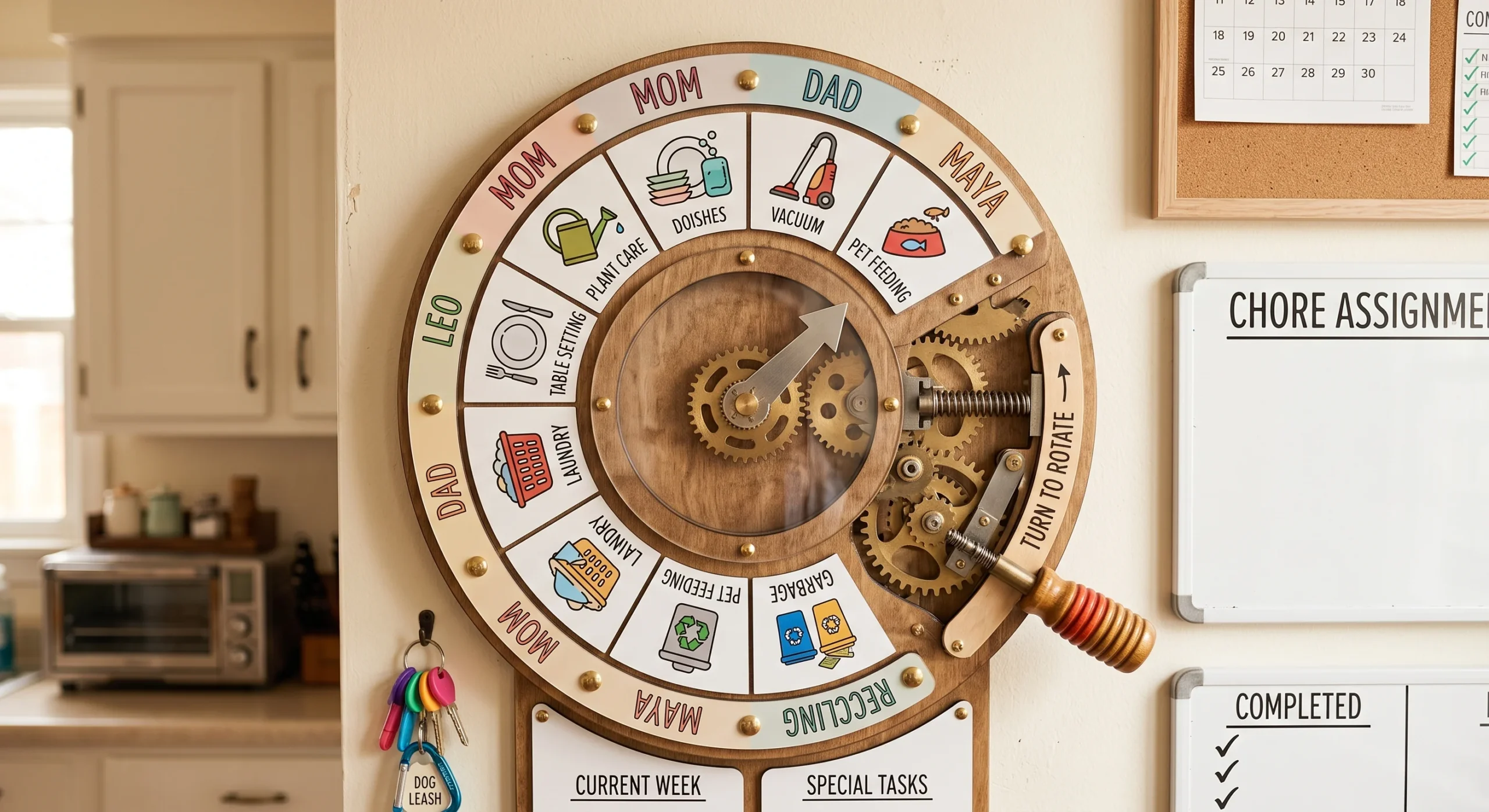
A rotating chore chart cycles task assignments automatically on a set schedule, removing the need for a parent to manually reassign chores each week, similar to how a classroom rotates classroom jobs like line leader or plant waterer among students on a predictable, fair schedule. This structure removes the recurring argument over who did what chore last week, since the rotation itself handles that question automatically, without anyone needing to keep track manually or renegotiate it fresh every single week, month after month, all year long.
This keeps chores feeling genuinely fair over time, since every family member eventually rotates through every listed task rather than one person consistently getting stuck with the least appealing job indefinitely. A simple spinning wheel or a sliding card format makes the rotation visually clear at a glance and genuinely a little fun to interact with each week. This system works especially well paired with a small reward element, turning a routine obligation into something with a bit more genuine engagement and anticipation built in each week.
Book Return Bin
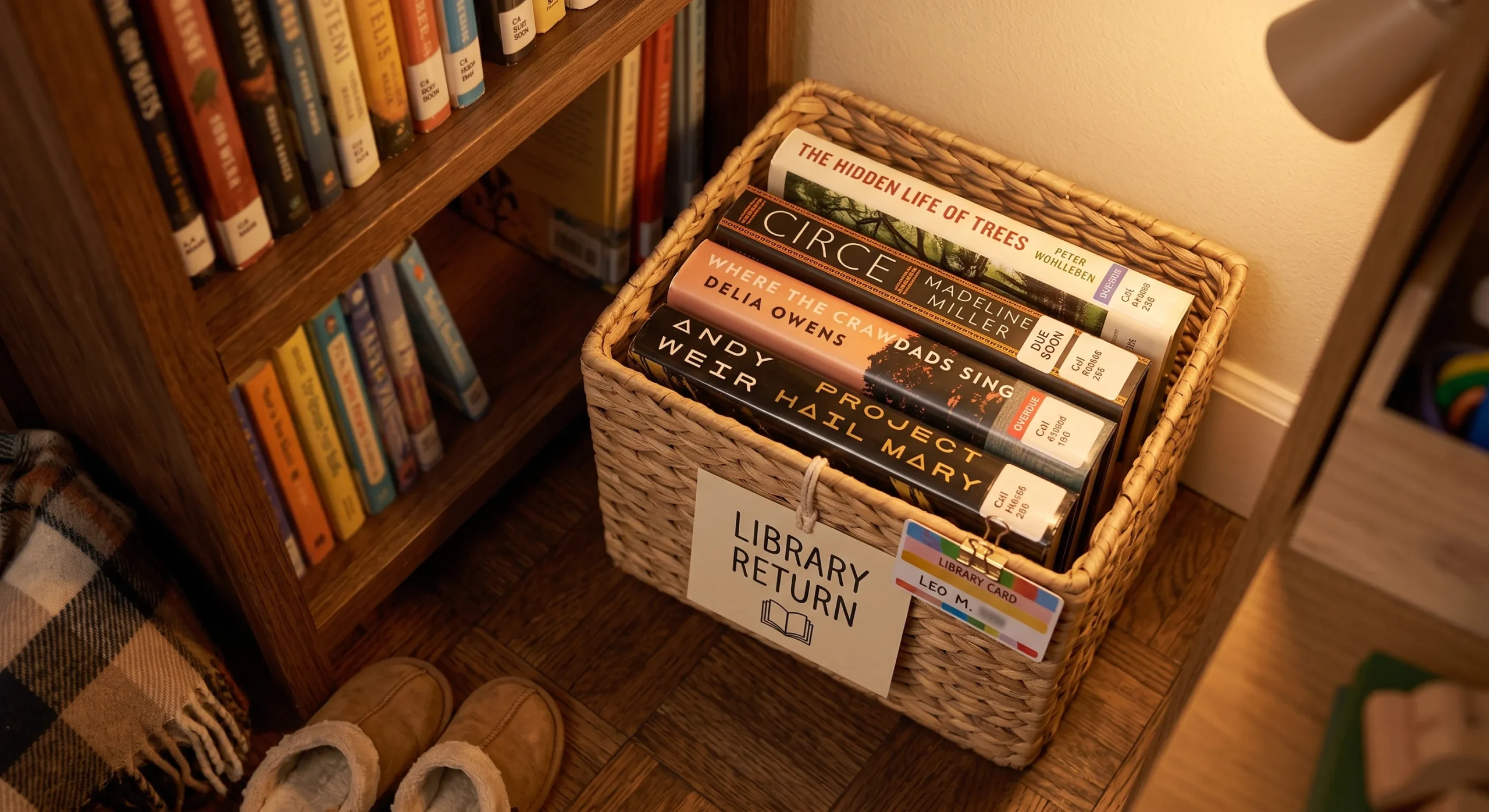
A book return bin gives library books a temporary, dedicated home separate from a child’s personal book collection, mirroring the classroom library’s own dedicated return shelf that keeps borrowed books from accidentally blending into a student’s own desk supplies. At home, this small bin sits near the main bookshelf, holding anything currently checked out and due back, so those specific books never accidentally get shelved alongside the family’s own permanent collection and quietly forgotten there for weeks. This tiny separation makes a genuinely bigger difference than it might initially seem.
This makes packing for library day considerably faster, since every book due for return is already gathered together in one predictable place rather than scattered across bedrooms and needing to be tracked down individually at the last minute. A visible due-date reminder card kept nearby helps avoid late fees or the frantic search that otherwise happens the morning a return is actually due, turning what could otherwise be a stressful scramble into a quick, simple, genuinely stress-free grab-and-go step for everyone involved that morning, rather than a source of real, avoidable stress.
- A dedicated bin for outgoing library books prevents them from getting lost among a child’s own books.
- This makes packing for library day fast, since every due book is already gathered in one place.
- A visible due-date reminder card nearby helps avoid late fees or a frantic last-minute search.
Command Center Wall
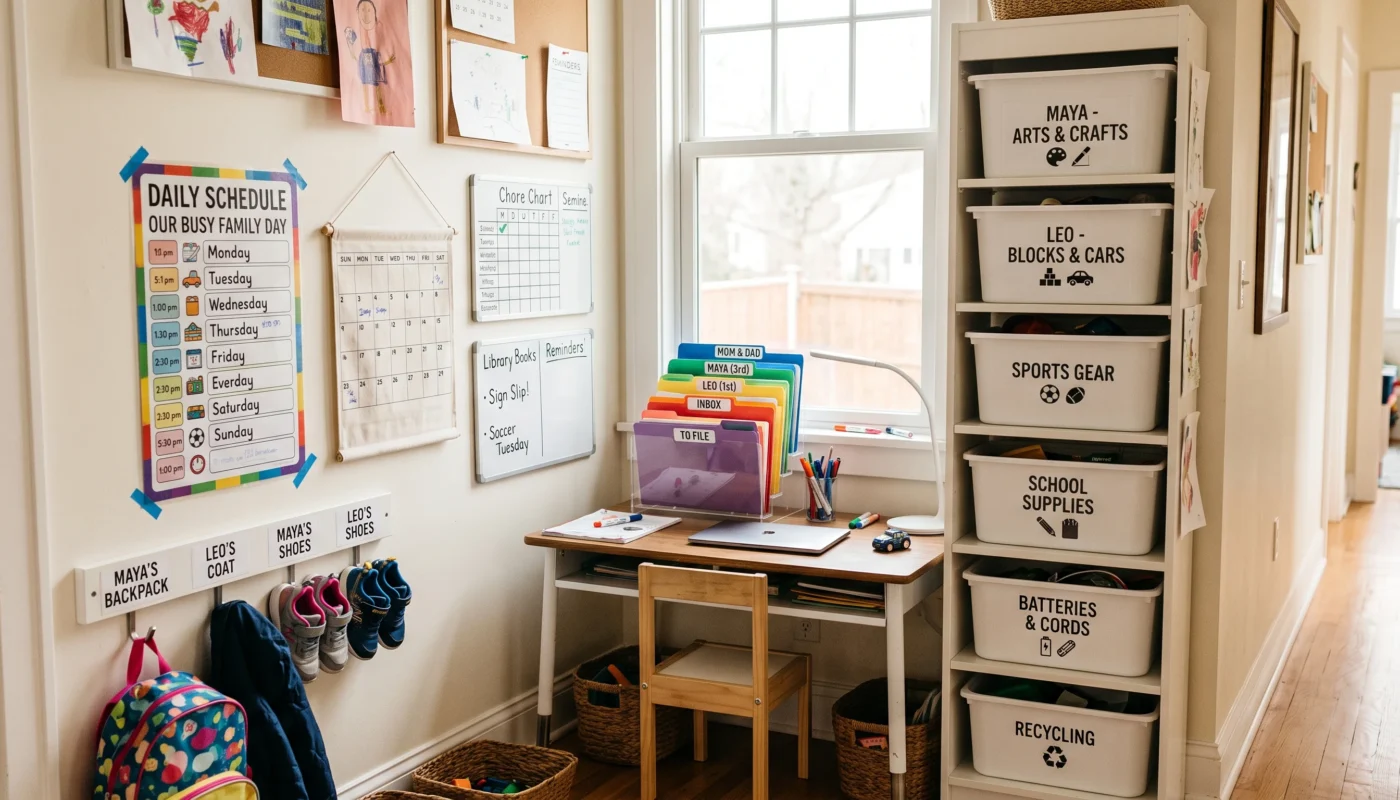
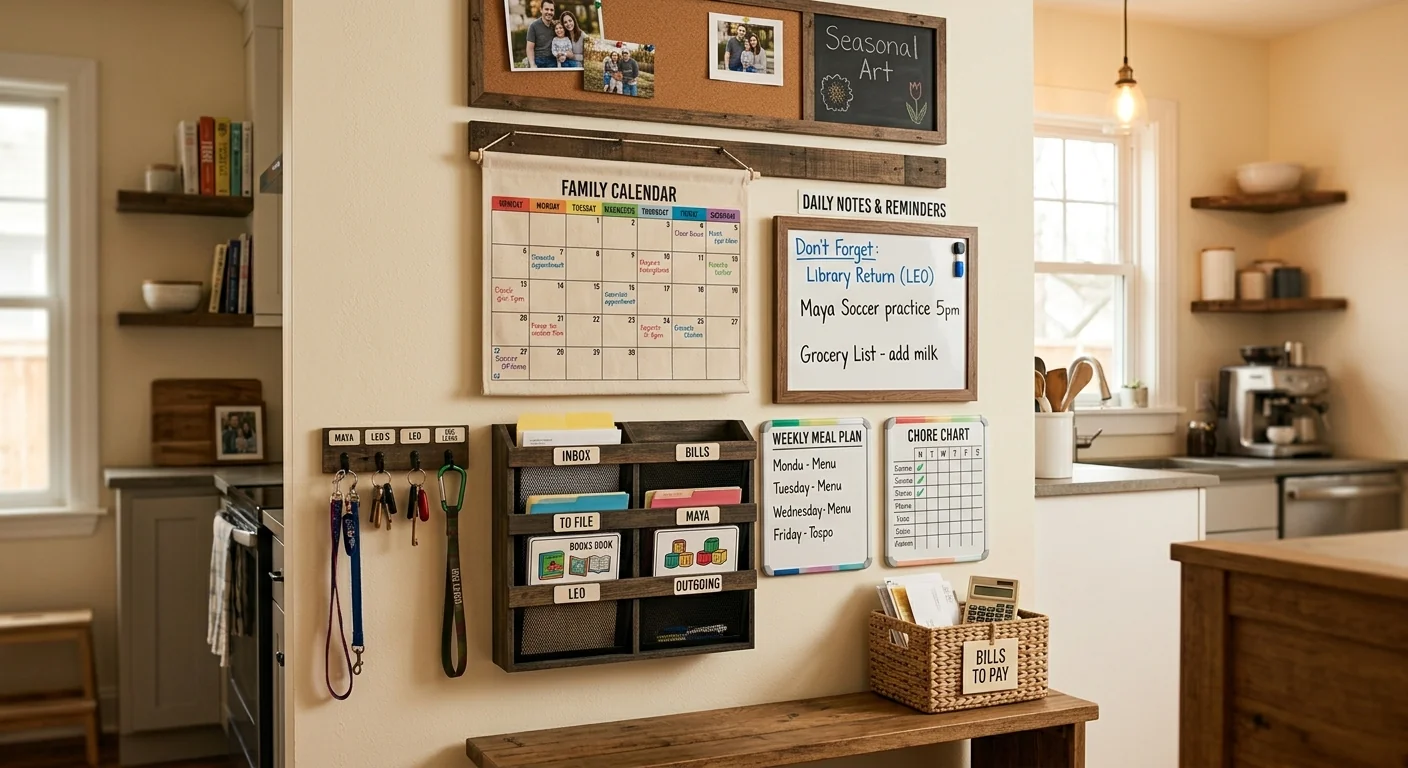
A command center wall gathers a household’s shared, recurring information — a calendar, a mail sorter, a small whiteboard for reminders — into one consistent location, the same way a classroom’s front wall consolidates the daily schedule, class rules, and important announcements into a single spot every student knows to check. Without a designated spot like this, household information scatters across kitchen counters, refrigerator doors, and random sticky notes that inevitably get lost, misplaced, or simply ignored entirely by everyone until something important is genuinely missed.
In my years of teaching, students consistently checked one familiar spot on the classroom wall without being reminded to, simply because that location had become the reliable, expected place for that kind of information over time. A home command center works the same way once it’s established consistently — everyone learns to check that one wall for the week’s schedule or an upcoming reminder, rather than relying on someone verbally repeating it multiple times throughout an already busy, distracted week full of other things to remember.
Weekly Planner Station
- A visible week-at-a-glance layout helps the whole family anticipate what’s coming rather than reacting daily.
- This reduces the number of times a parent has to answer ‘what’s happening today’ from scratch.
- Color-coding each family member’s events on the same planner keeps everyone’s schedule visible at once.
- A dry-erase or reusable format keeps this sustainable without buying new planners every single week.
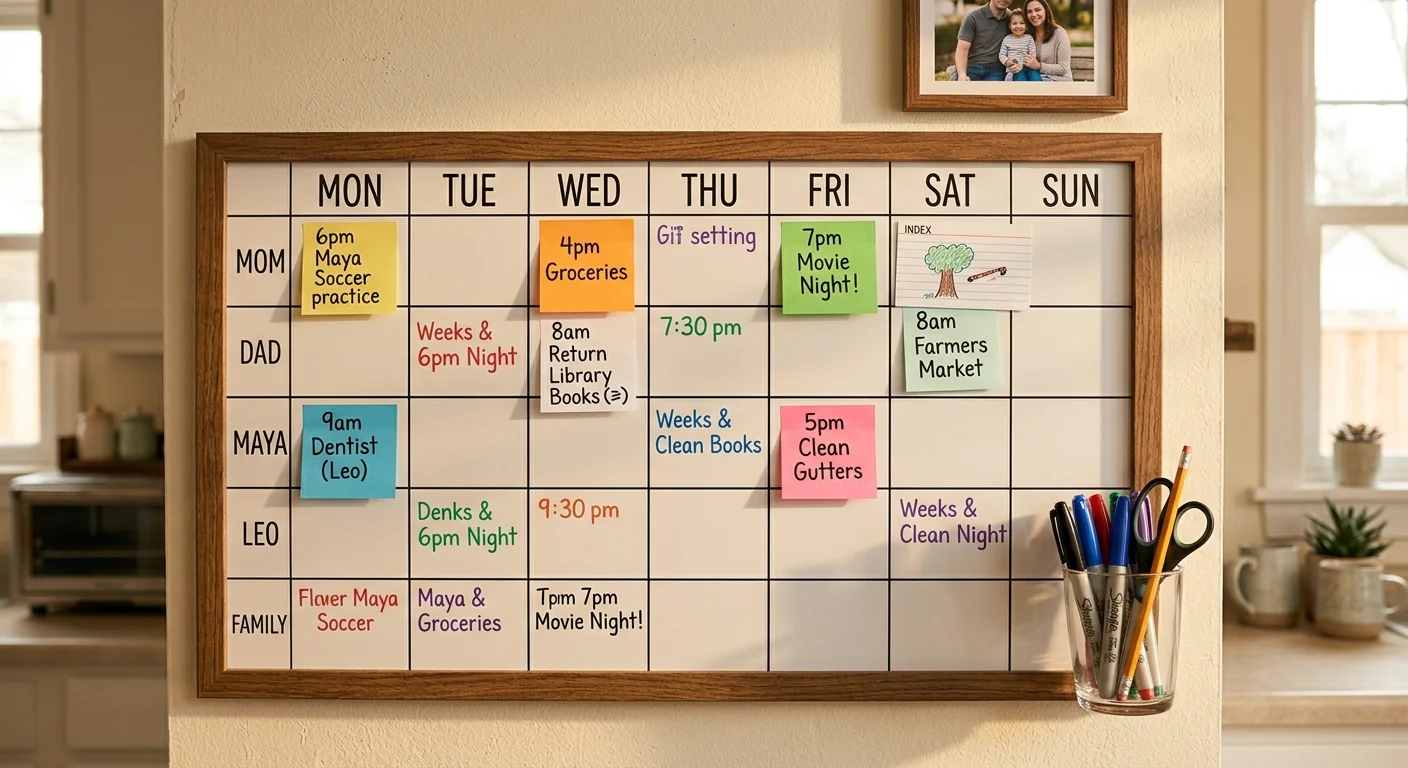
A weekly planner station, mounted somewhere visible like a kitchen wall, gives the whole household a week-at-a-glance view of what’s coming, the same forward-looking structure a classroom’s weekly agenda provides so students can anticipate an upcoming test or field trip rather than being surprised by it the morning it happens. This shifts a family from constantly reacting to each day as it arrives toward genuinely anticipating what’s ahead with a bit of real, useful lead time built in each week, rather than everything arriving as a last-minute surprise.
This noticeably reduces how many times a parent has to answer “what’s happening today” from scratch, since the answer is already posted somewhere everyone can check independently without needing to ask out loud. Color-coding each family member’s events on the same shared planner keeps every individual schedule visible at once, without needing several separate calendars scattered across different rooms. A reusable dry-erase format keeps this sustainable long-term, without needing a fresh paper planner purchased and set up again from scratch every single week of the year.
Reward Token System
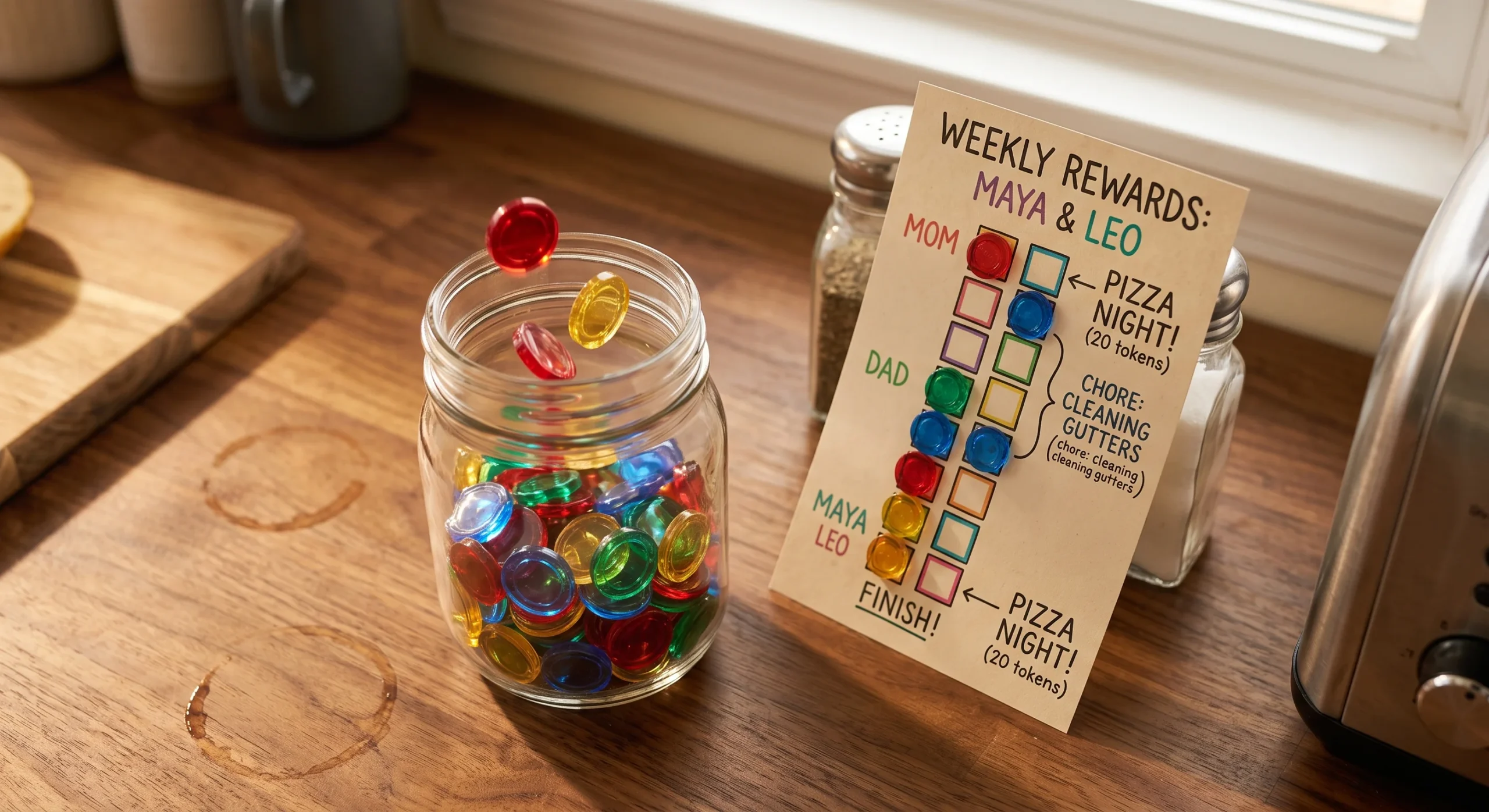
A reward token system gives immediate, tangible feedback for completed tasks or good choices, mirroring the token economies many classrooms use to reinforce positive behavior with something more concrete than a verbal “good job” that fades from memory within minutes. A simple jar that fills with tokens for completed chores or kind behavior, working toward a small agreed-upon reward once it’s full, gives a child something genuinely visible to track rather than an abstract promise about eventual, distant consequences that feel far away and hard to actually picture.
This works best when the reward stays genuinely small and the system stays consistent, since an overly elaborate or inconsistently enforced system tends to lose its motivating power fairly quickly in both a classroom and a home. In my years of teaching, the token systems that worked longest were the simplest ones, clear rules, immediate tokens, a modest and achievable reward, rather than anything requiring complicated tracking, spreadsheets, or frequent renegotiation of what actually counts toward earning one properly each week, month after month, without exception.
Clutter-Free Desk Rule
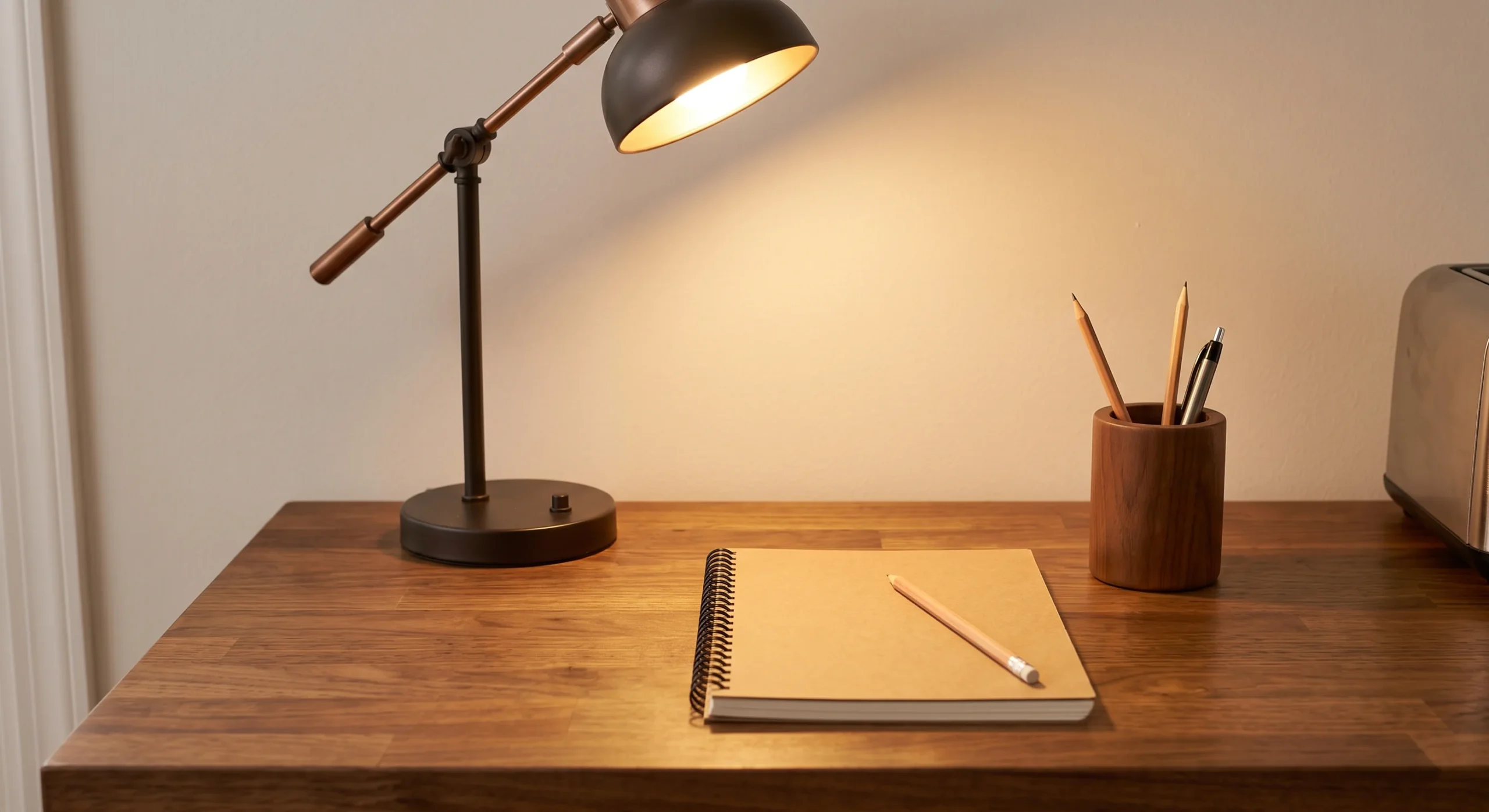
Most people assume a messy desk is just a personality quirk, but a clutter-free desk rule keeps a homework or work surface limited to only what’s needed for the current task, mirroring a classroom desk policy that clears away unrelated materials before a lesson begins, specifically because visual clutter measurably competes for a child’s limited attention even when it isn’t the thing being actively used at that moment. A desk covered in unrelated toys, old papers, and random objects genuinely pulls focus away from the actual task at hand, whether or not a child consciously notices it happening.
This doesn’t mean an entirely bare desk at all times, just a habit of clearing away anything unrelated to the current task before starting, then returning those items to their own designated storage spot once work begins. In my own experience with a classroom full of desks, the students who kept theirs cleared consistently finished assignments measurably faster than those working around a pile of unrelated distractions competing for the same limited space and attention span each day, week after week, throughout the entire school year.
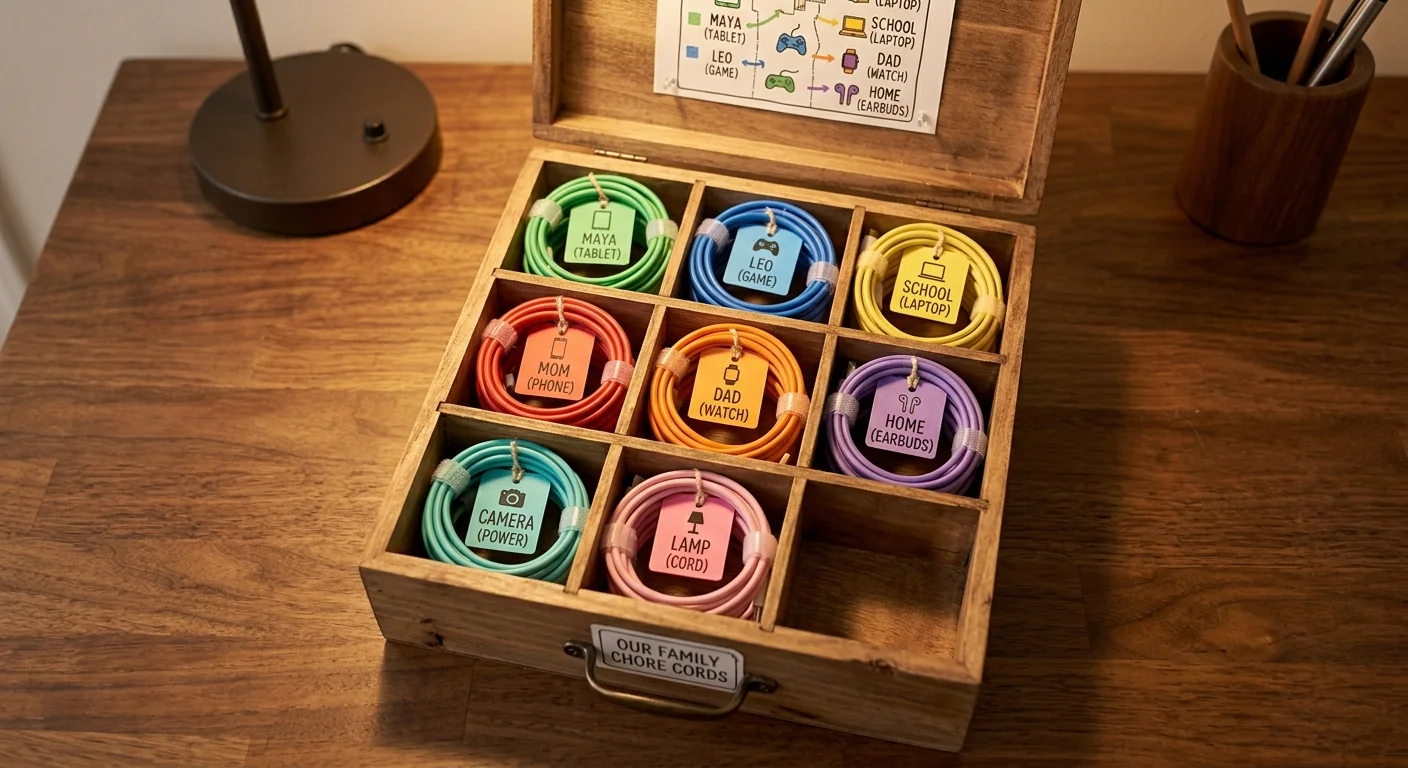
Labeled Cord Organizers
Labeled cord organizers give every charging cable and cord a specific, identified home, solving a problem that shows up just as often at home as it does in a classroom full of shared devices and tangled charging stations. A small labeled box or a designated drawer section, with each cord tagged by which device it belongs to, prevents the daily tangle-and-search that happens when cords pile up loose and unidentified in a drawer or scattered across various surfaces around the entire house without any real system holding them together.
This is a genuinely small system compared to some of the others on this list, but it removes a surprisingly frequent, disproportionately annoying source of daily friction, especially in a household with multiple devices needing to charge at once. Keeping cords in one consistent, labeled spot also means a specific cord is actually there the next time it’s needed, rather than being borrowed, moved, and never quite returned to wherever it actually started out in the first place, week after week, month after month, without any real inconsistency creeping back in.
- Labeling each cord by device prevents the daily tangle-and-search that happens with an unlabeled pile.
- A small designated box or drawer keeps cords from migrating to random spots around the house.
- This is a small system, but it removes a surprisingly frequent source of daily frustration.
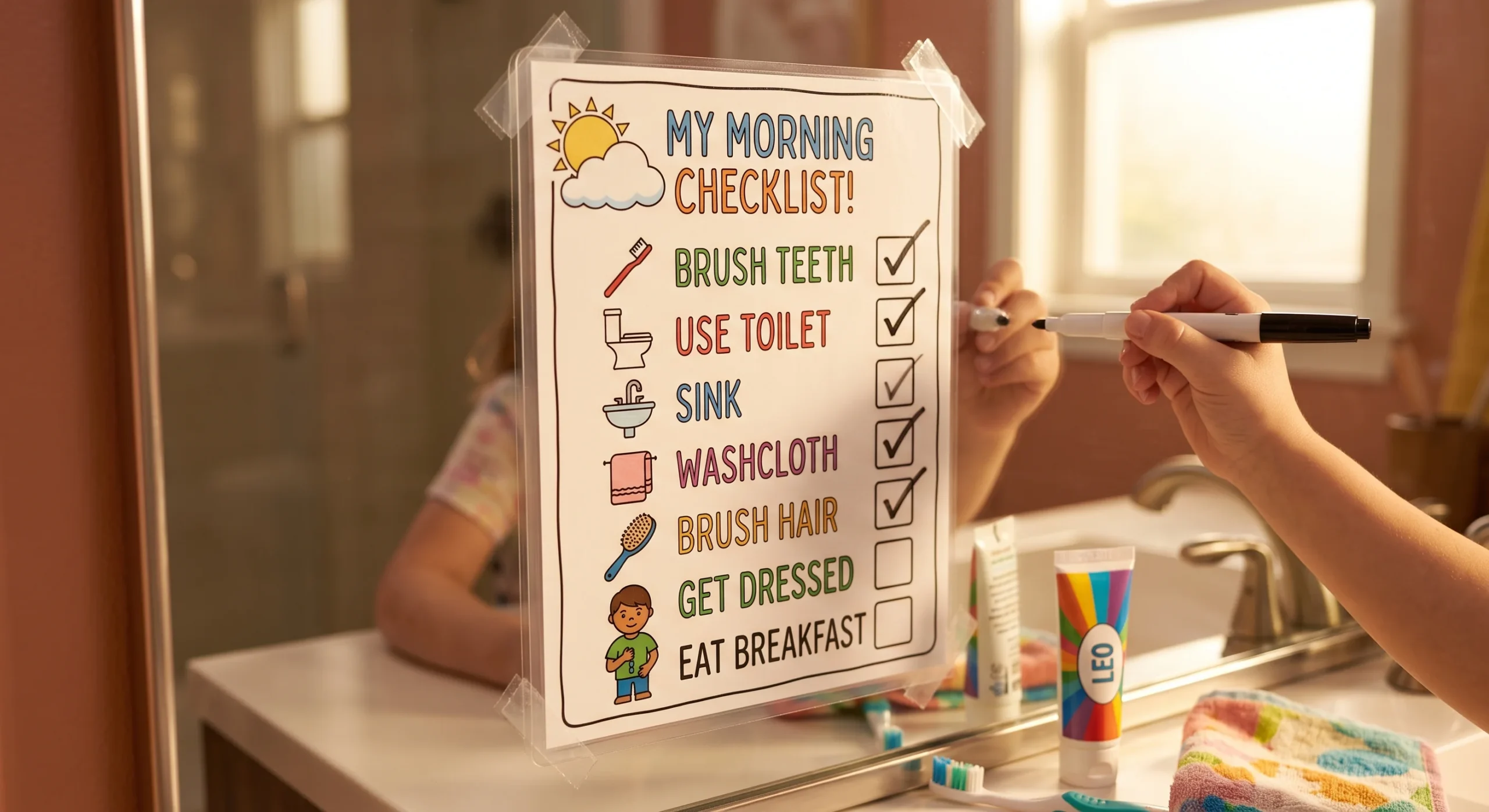
Morning Routine Checklist
A morning routine checklist, posted somewhere a child sees automatically like a bathroom mirror or bedroom door, removes the need for a parent to verbally walk through the same sequence of steps every single morning before school. This mirrors the posted morning routine many classrooms use for arrival, letting students independently move through unpacking, turning in homework, and settling in without a teacher narrating each individual step for every student, every single morning of the school year, from the very first day to the very last.
This independence matters just as much at home, where a repetitive verbal morning routine tends to wear down a parent’s patience considerably faster than a posted checklist a child can simply reference and follow on their own. In my years of teaching, the mornings that ran smoothest were never the ones with the most reminders given out loud — they were the ones where the routine itself had become genuinely automatic through consistent, unremarkable repetition of the exact same visible steps morning after morning, without a single reminder ever needing to be repeated out loud.
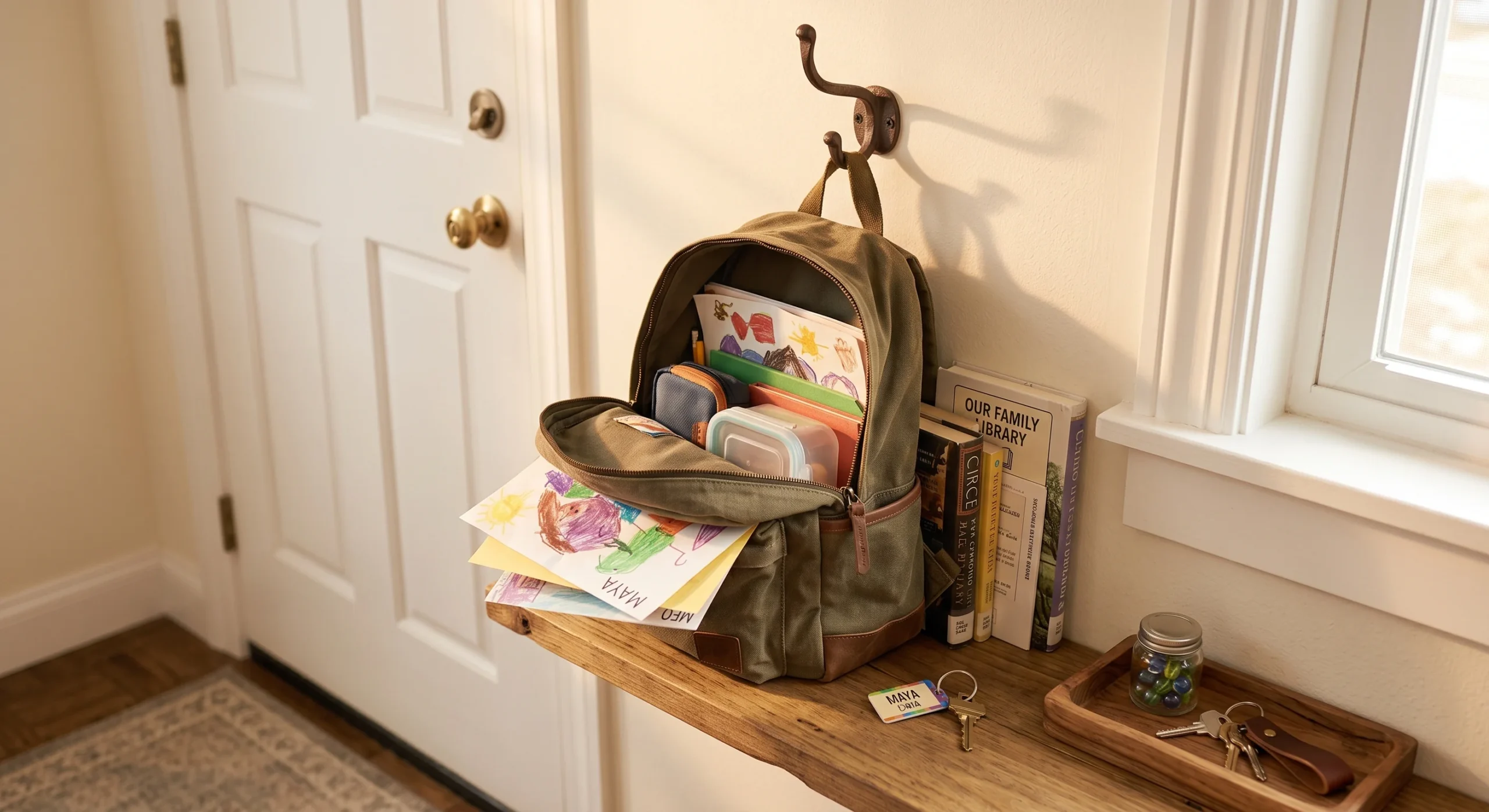
Backpack Unpacking Station
- Unpacking a backpack immediately after arriving home prevents papers from getting buried and forgotten inside it.
- A designated hook and nearby shelf make this a quick, consistent step rather than an occasional one.
- This catches important papers — permission slips, graded work — while they’re still fresh and relevant.
- Making this a non-negotiable daily habit prevents the backpack from becoming a black hole of lost items.
A backpack unpacking station makes emptying a backpack immediately after arriving home a quick, consistent daily habit, rather than something that happens sporadically whenever a parent remembers to check or a specific paper is urgently needed. A designated hook for the backpack itself, paired with a nearby shelf or bin for its contents, turns this into a genuinely fast step built directly into the after-school routine, rather than a separate task competing for attention against snacks, play, or homework once everyone’s finally home for the day.
This catches important papers — permission slips, graded assignments, notes from a teacher — while they’re still fresh and genuinely relevant, rather than discovered a week later crumpled at the bottom of a bag well past any useful deadline. Making this a consistent, non-negotiable daily habit prevents the backpack from slowly becoming what every teacher recognizes as a genuine black hole of lost permission slips, half-eaten snacks, and papers that genuinely needed a parent’s signature two full weeks ago and never actually made it home in time.
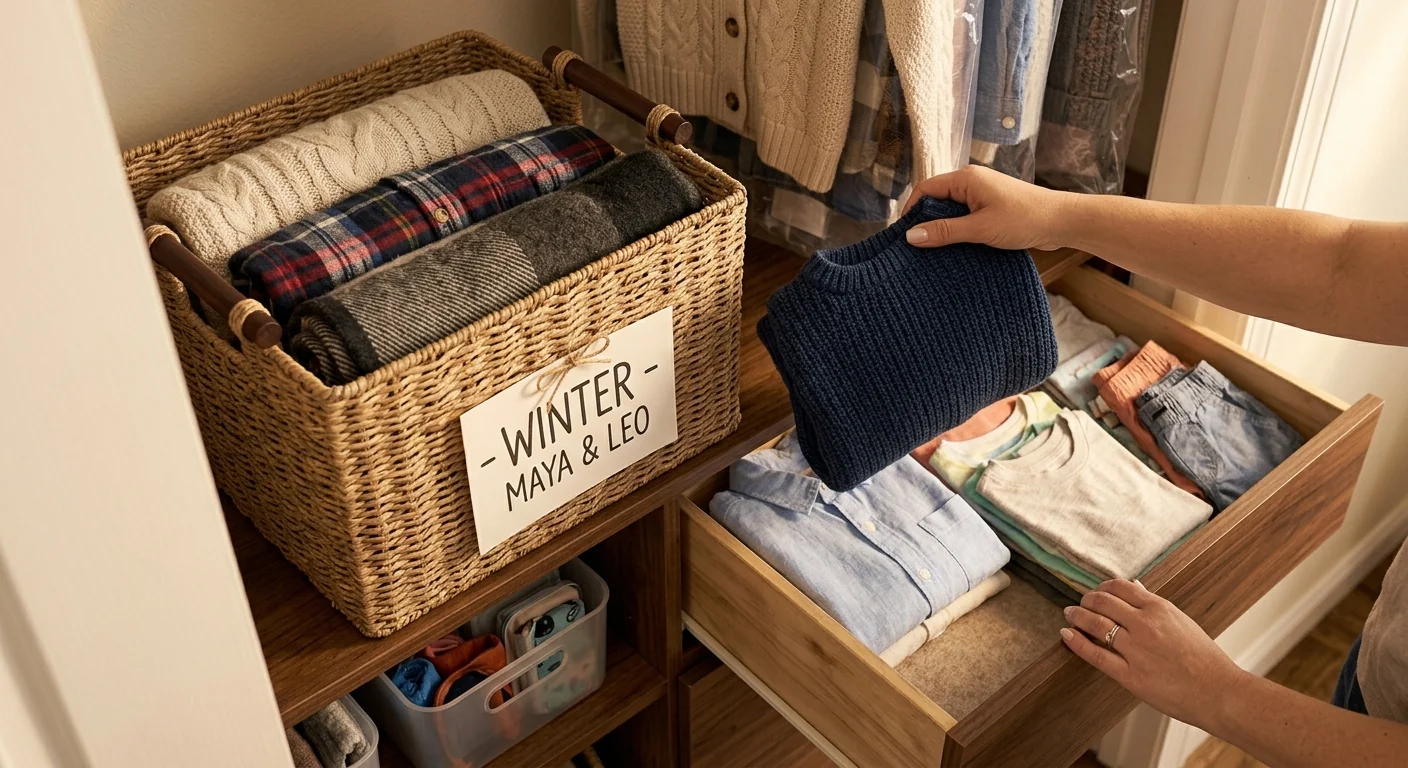
Seasonal Rotation System
A seasonal rotation system swaps out-of-season items, like winter coats in summer or summer sports gear in winter, into storage, keeping only what’s currently relevant within easy everyday reach. This mirrors how a well-run classroom rotates seasonal materials and decorations, storing what isn’t currently needed rather than letting every past unit’s leftover materials permanently crowd a shared, limited space that has to serve the whole rest of the school year efficiently. The same logic applies directly to a closet trying to hold every season’s wardrobe simultaneously.
A simple twice-yearly rotation, done at the start of each major season, prevents closets, shelves, and drawers from becoming permanently overcrowded with items that only get used for a few months out of the entire year. This also makes the items currently in use considerably easier to find, since they’re no longer competing for the same limited space with things that genuinely won’t be needed again for several more months. It’s a small, twice-a-year habit with a real, lasting impact on everyday accessibility and general household calm.
- Rotating seasonal items in and out of storage keeps only currently relevant items in everyday reach.
- This mirrors how a classroom rotates materials, keeping only what’s currently needed easily accessible.
- A simple twice-yearly rotation prevents closets and shelves from becoming permanently overcrowded year-round.
End-of-Day Reset
An end-of-day reset closes out this list because it’s the habit that makes every other system on it actually sustainable over time, rather than gradually falling apart within the first couple of weeks. This mirrors the classroom routine of tidying up before dismissal, returning every material to its designated spot so the room starts fresh the next morning instead of accumulating a slow, compounding mess day after day that eventually becomes genuinely overwhelming to face all at once on a single weekend, week after week, all year round.
A ten-minute reset each evening, returning toys, papers, and supplies to the labeled homes established throughout this list, prevents the small daily disorder from ever compounding into an overwhelming weekend cleanup that nobody actually looks forward to tackling. In my years of teaching, the classrooms that stayed genuinely organized all year were never the ones that got a single deep clean, they were the ones that reset consistently, every single day, without exception, no matter how genuinely busy or exhausting that particular day had actually turned out to be.
FAQ
My child resists these systems at first — is that normal?
Completely normal, and it usually fades within a week or two once the system genuinely becomes routine rather than a new, unfamiliar rule. Involving your child in setting up the system, rather than simply announcing it, usually speeds up that buy-in considerably.
Do these systems really work in a small space with limited storage?
Yes — most of these scale down easily, since the underlying idea is a designated spot for each category, not a specific amount of space. A single labeled shelf or a small stackable bin set works just as well as a full closet system.
How do I keep a system going once the initial excitement wears off?
Consistency matters more than enthusiasm here — the end-of-day reset habit specifically is what keeps every other system from slowly falling apart. A quick family check-in once a week to notice what’s slipping is often enough to catch small breakdowns before they become bigger ones.
Which of these ideas should I start with if I only try one?
Labeled supply bins and the turn-in basket system tend to produce the fastest, most noticeable daily relief, since they directly solve the two most common sources of morning chaos. Start there, let it become genuinely automatic, and add another system once that first one feels solid.
Conclusion
Good classroom organization ideas work at home for the same reason they work in a classroom: they’re built around real, predictable behavior rather than an idealized version of how a family might organize itself under perfect conditions. Every system on this list solves one specific, recurring source of daily friction, and none of them require an elaborate overhaul to get started. Pick just one or two to set up this week, let them become genuinely automatic before adding more, and watch how much quieter the daily routine gets. Save this guide to Pinterest, and share it with another parent who could use a calmer household too.