
Most study tips for students circulating online sound reasonable but don’t actually hold up once you watch what happens in a real classroom. In my years of teaching, I’ve graded enough quizzes to notice a clear pattern: the students who scored highest weren’t the ones who reread their notes the most, they were the ones using a handful of specific, slightly uncomfortable techniques most students avoid by instinct. This list gathers twenty of those genuinely effective strategies, the ones backed by both classroom observation and actual learning research, not just what feels productive in the moment. Each one is explained plainly enough to start using tonight.
Start Here: Active Recall Practice
This is the single technique with the strongest research backing and the biggest visible difference in test scores — if a student only changes one habit from this entire list, this should be it.
Active Recall Practice
- Closing the book and trying to recall information from memory builds far stronger retention than rereading.
- This feels harder and less comfortable than rereading, which is exactly why it works better.
- Testing yourself on flashcards, past quiz questions, or blank recall sheets all count as active recall.
- Even getting an answer wrong during practice strengthens memory more than passively rereading the correct one would.
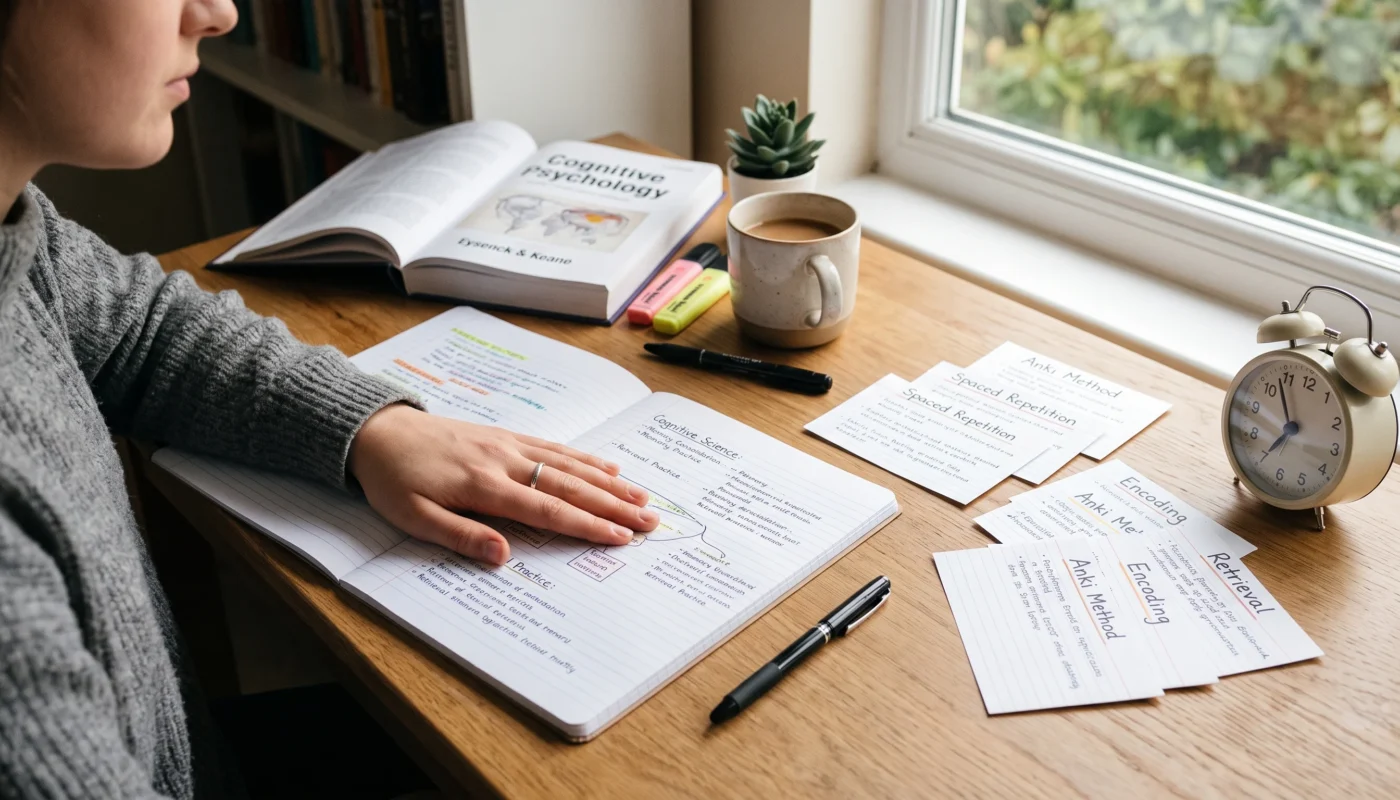
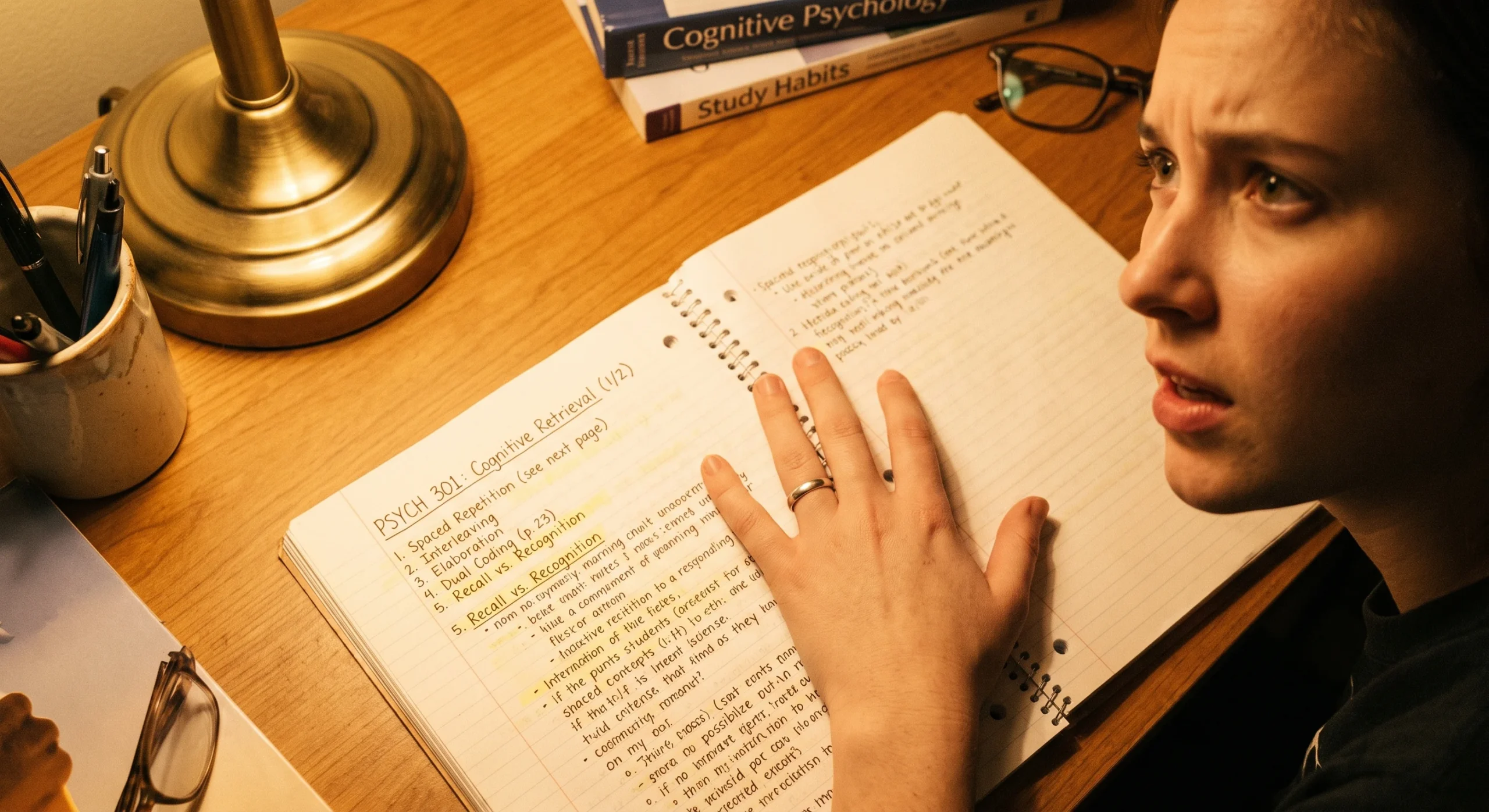
Active recall means closing the book and forcing yourself to retrieve information from memory, rather than simply reading it again and feeling a false sense of familiarity. In my years of grading unit tests, the students who consistently scored highest weren’t the ones who reread their notes the most times — they were the ones who tested themselves constantly, even when it felt uncomfortable and slow compared to just rereading a highlighted page one more time before closing the notebook for the night entirely and calling it done.
This discomfort is actually the entire point: the mental effort of retrieving a fact from memory, rather than simply recognizing it on a page, is what builds a durable, lasting memory trace. Even getting an answer wrong during practice strengthens the eventual correct memory more than passively rereading the right answer ever would, which surprises most students the first time they hear it. Flashcards, blank recall sheets, and old quiz questions all work well here, as long as the book genuinely stays closed the entire time, not just at the start.
Spaced Repetition Schedule
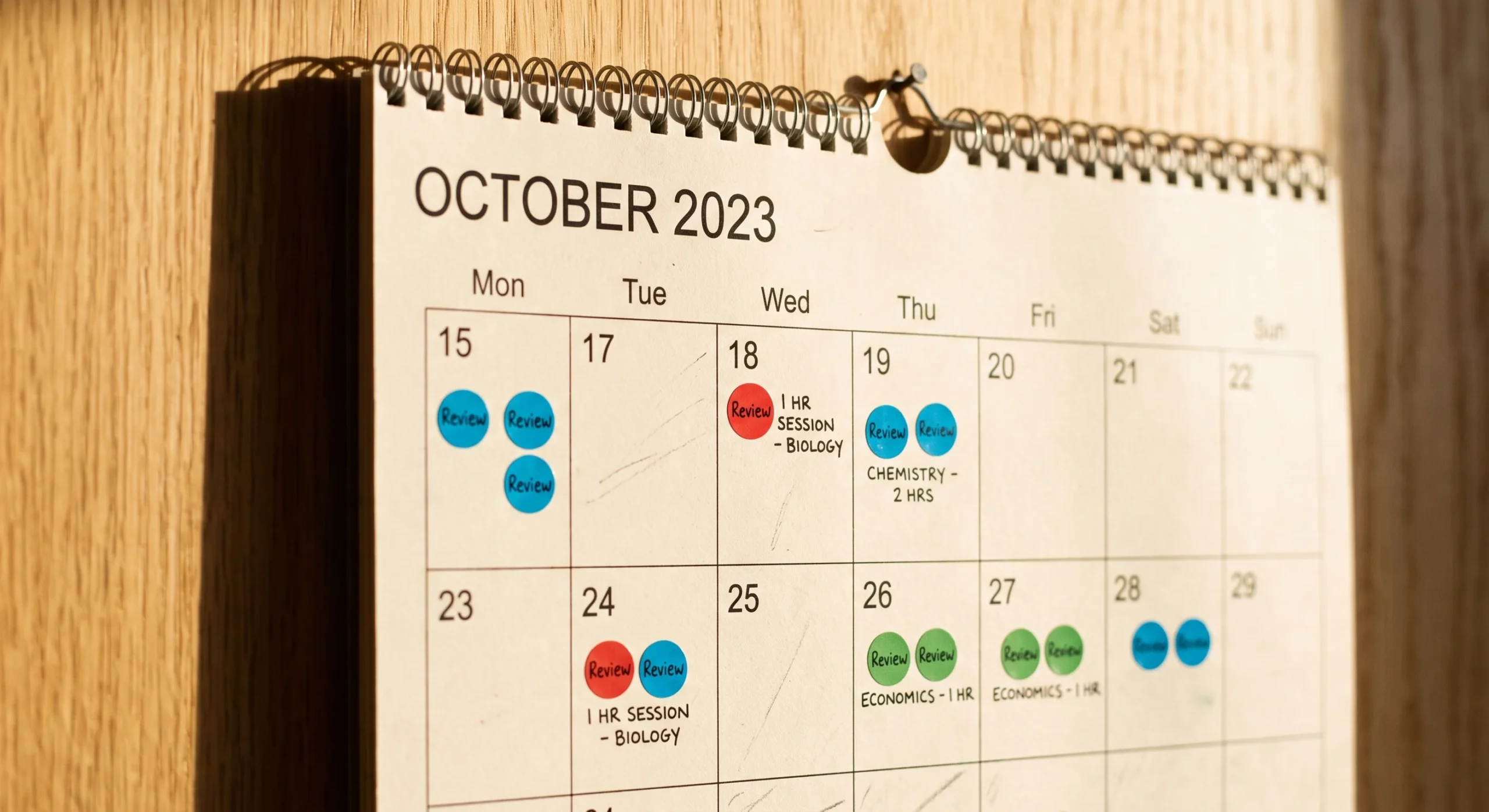
Spaced repetition spreads review sessions out across several days or weeks, rather than cramming everything into one long session the night before a test. This matters because memory naturally fades over time, and reviewing material right as it’s about to be forgotten strengthens that memory far more effectively than reviewing something still fresh in mind. A simple schedule — a first review after one day, then three days later, then again after a week — covers most material without requiring elaborate tracking tools or apps of any kind.
This approach requires planning ahead of a test date rather than waiting until the pressure builds, which is honestly the main reason most students default to cramming instead, even when they genuinely know spacing works better. Setting calendar reminders for review sessions removes the need to remember on your own, turning a good intention into an actual habit. Students who commit to this consistently tend to walk into a test with real, earned confidence rather than the last-minute panic that cramming usually produces instead, night after night.
- Reviewing material across several spaced-out sessions builds stronger long-term retention than one long cram session.
- A simple schedule — review after one day, then three days, then a week — works well for most subjects.
- This requires planning ahead, which is the main reason most students default to cramming instead.
Teach It Back
- Explaining a concept to someone else exposes gaps in understanding that simply reading over notes hides.
- The listener doesn’t need to know the subject — a younger sibling or even a pet works fine.
- Struggling to explain a step clearly is a genuine signal that step needs more review.
- This works especially well right after first learning something new, while the material is still fresh.
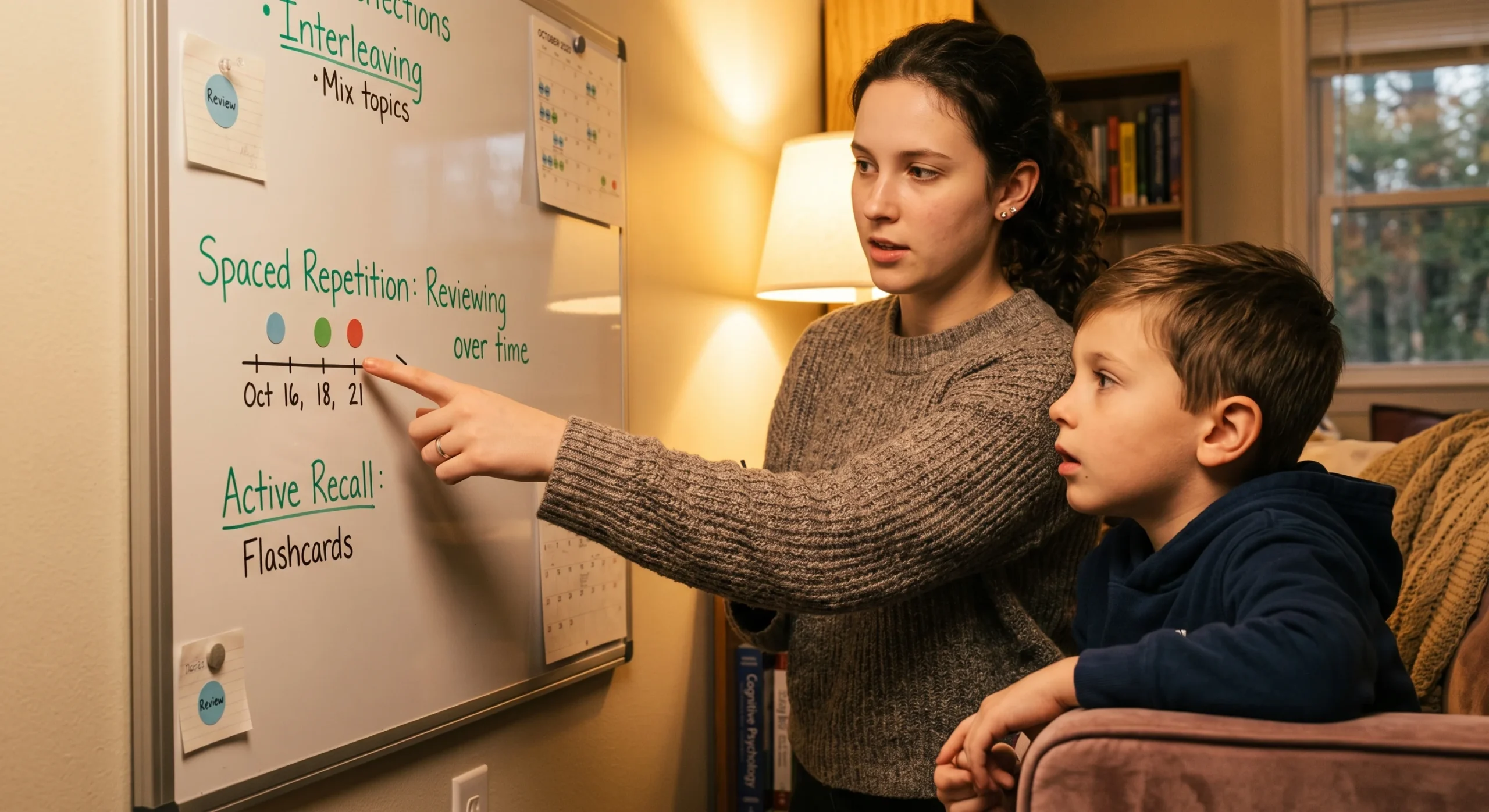
Teaching a concept to someone else, even an imaginary audience, forces a level of clarity that simply reading through notes never quite demands. This is sometimes called the protégé effect, and it works because explaining requires organizing information into a coherent sequence, which exposes exactly where your own understanding gets fuzzy or incomplete in a way that passive review conveniently lets you skip past without ever really noticing. Most students genuinely assume they understand something right up until the moment they actually try to explain it clearly to someone else.
The listener genuinely doesn’t need to know anything about the subject — a younger sibling, a parent, or even a stuffed animal propped on a desk all work equally well for this purpose. Struggling to explain a particular step clearly is a real, useful signal that this exact step needs more review, which is valuable diagnostic information a student wouldn’t have gotten just by rereading the same paragraph silently one more time before moving on to the next section. In my own classroom, this simple exercise revealed gaps students genuinely had no idea they were carrying.
Practice Testing Yourself
Practice testing goes one step further than basic active recall by simulating the actual conditions of a real exam — timed, without notes, under a bit of genuine pressure. This matters because a student can feel confident reading through material calmly at a desk, only to blank out completely under real test conditions, which is a mismatch that practice testing catches well before the actual exam day arrives to turn it into a genuinely costly surprise. Recreating that pressure ahead of time, even imperfectly, prepares a student far better than calm review alone ever could.
Old homework problems, end-of-chapter review questions, and previous quizzes all work well as practice material, and none of it requires anything beyond what’s already sitting in a backpack or folder. This approach reveals exactly which specific topics genuinely need more review, rather than relying on a vague, often inaccurate feeling of confidence built from simply having looked at the material recently. It’s a far more honest gauge of actual readiness than any amount of calm, confident-feeling review ever manages to provide on its own before test day.
- Taking a practice test simulates the actual pressure and format of a real exam ahead of time.
- Old homework problems, textbook review questions, and past quizzes all work well as practice material.
- This reveals exactly which topics need more review, rather than guessing based on how confident you feel.
Interleave Different Subjects
- Mixing different subjects or problem types within one study session builds more flexible, adaptable understanding.
- This feels less organized than studying one subject at a time, but it genuinely works better.
- Switching between subjects forces the brain to actively identify which approach a given problem actually needs.
- This works especially well for math and science, where similar-looking problems require genuinely different methods.
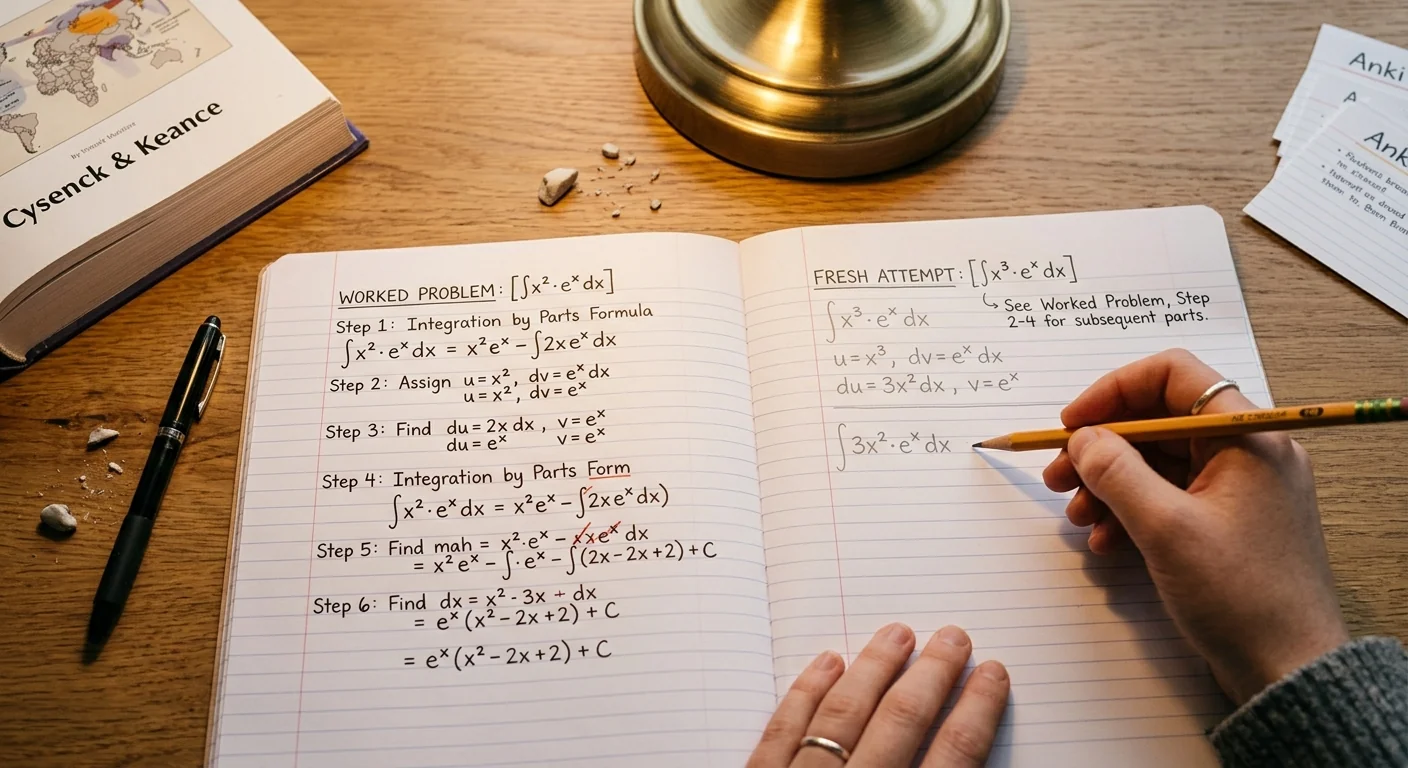
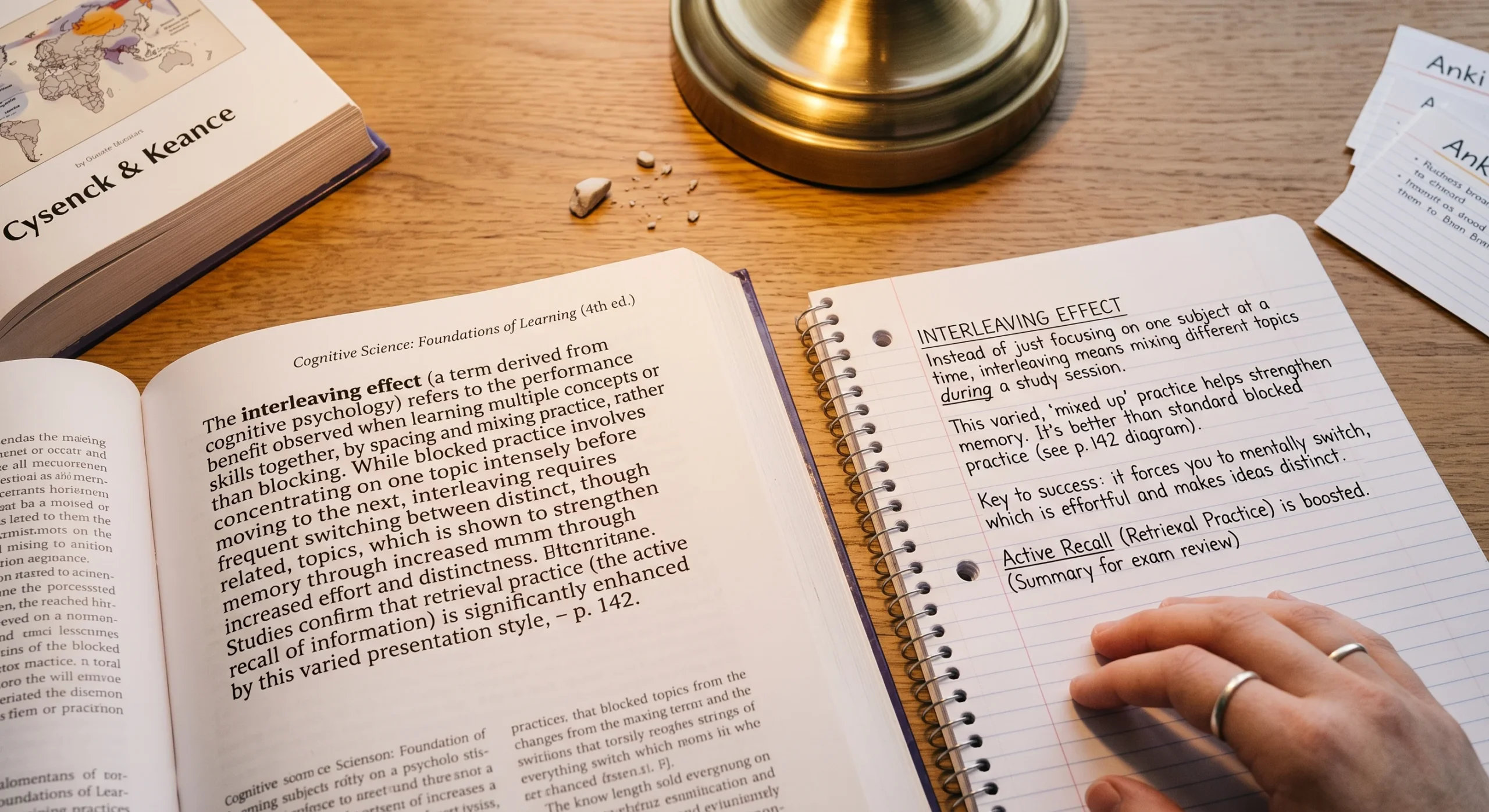
Interleaving means mixing different subjects or problem types within a single study session, rather than the more intuitive approach of finishing all of one subject before starting the next. This feels considerably less organized in the moment, and most students resist it at first because blocked, single-subject practice simply feels more productive, even though research consistently shows interleaved practice produces stronger, more flexible long-term understanding of the actual material involved. Most students need real reassurance the first few times, since the discomfort genuinely feels like a sign something is going wrong rather than working.
Switching between subjects or problem types forces the brain to actively identify which approach a given problem actually needs, rather than passively applying the same method repeatedly because it’s already the one loaded into working memory. This works especially well for math and science, where similar-looking problems on the surface often require genuinely different solving methods underneath. A mixed practice set, even just ten problems pulled from a few different chapters at once, builds this skill directly and noticeably faster than blocked practice alone ever does.
Handwrite Key Notes
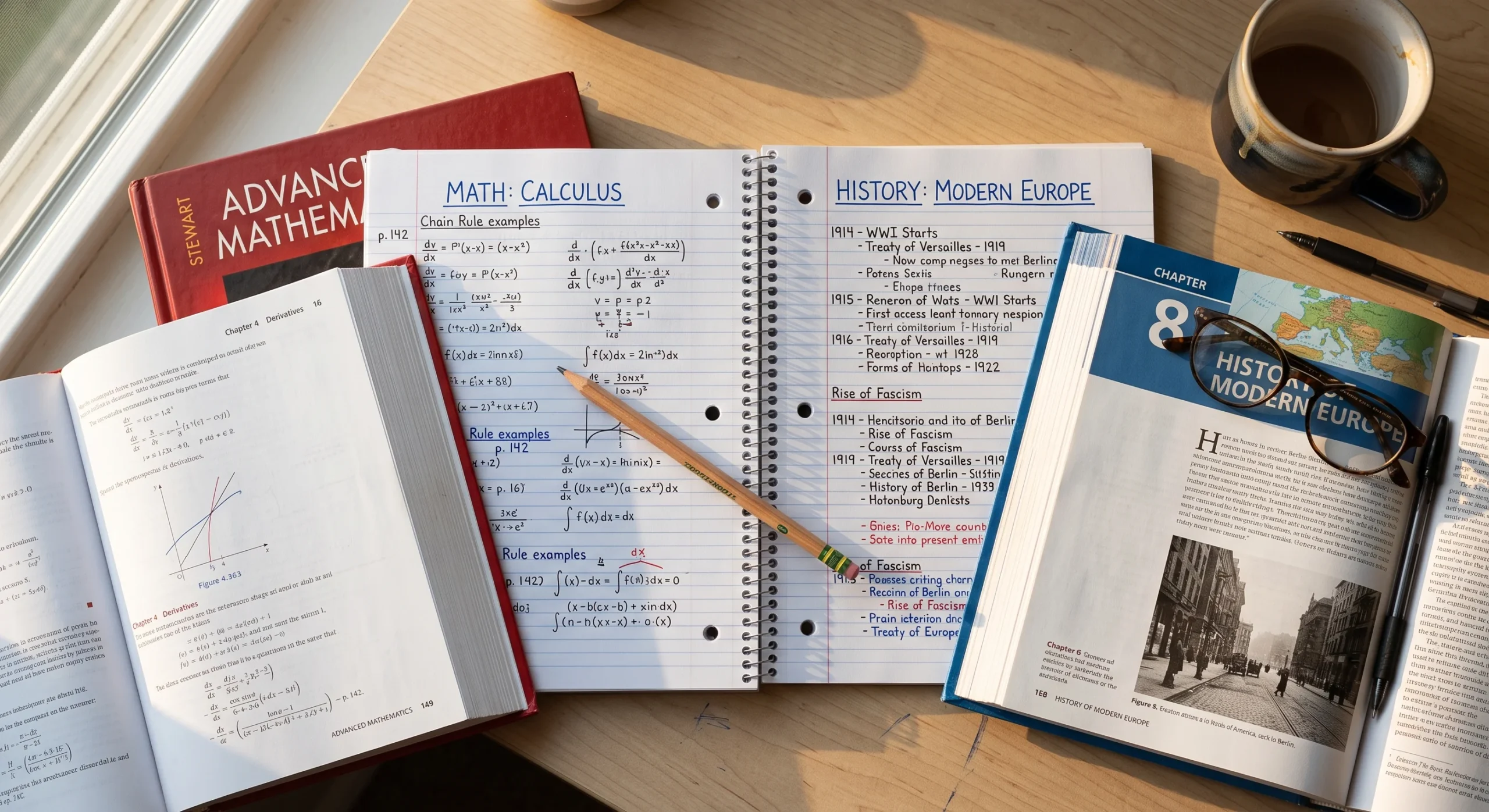
Handwriting notes rather than typing them forces a genuine act of summarizing, since most people can’t physically write as fast as a lecturer speaks, which means a choice has to be made about what actually matters enough to write down. Typing, by contrast, often becomes near-verbatim transcription, which feels productive but actually bypasses the mental processing that makes note-taking useful as a learning tool in the first place, rather than just a passive record-keeping exercise done for its own sake. Students who type notes word for word often struggle later to recall much of what they actually wrote down.
This slower pace paradoxically improves retention, since the mental work of condensing and paraphrasing information happens in real time rather than being deferred to some later review session that may or may not actually happen. This matters most for the initial encounter with new material specifically — typing still works fine for later tasks like organizing finished notes or writing a formal essay, where speed genuinely matters more than that important first-pass mental processing step described above, which has already happened well before that point in the process.
- Handwriting notes, rather than typing them, forces genuine summarizing instead of verbatim transcription.
- This naturally slows down note-taking, which paradoxically improves how much actually gets remembered.
- This matters most for the initial encounter with new material, not for later review sessions.
Study in Short Bursts
- Studying in focused twenty to thirty minute blocks maintains sharper concentration than one long, unbroken session.
- Short bursts with real breaks between them prevent the mental fatigue that quietly erodes long study sessions.
- This structure makes starting feel less daunting, since twenty-five minutes is a genuinely manageable commitment.
- A checklist of completed blocks provides visible, motivating progress across a longer study day.
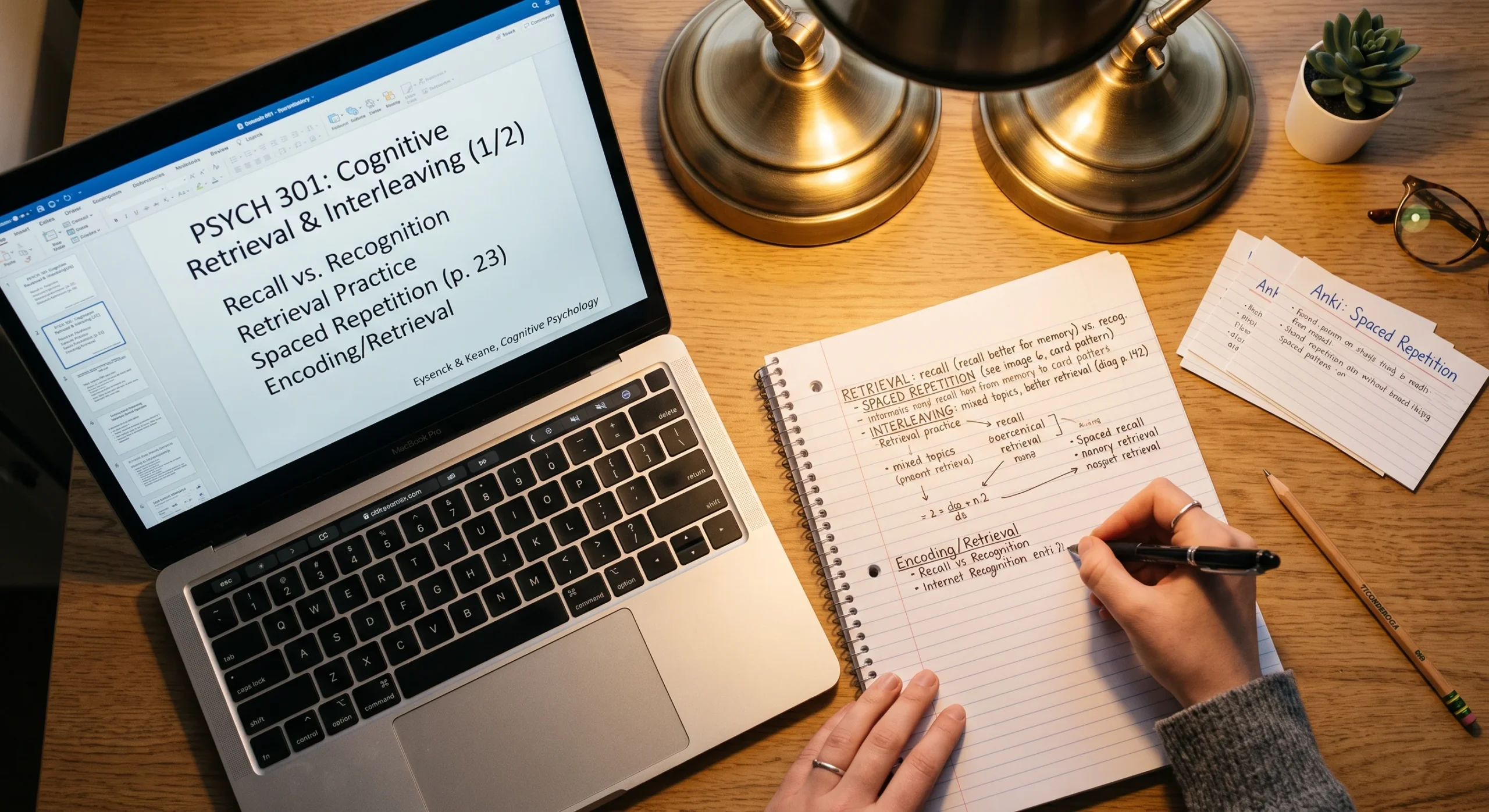
Studying in focused twenty to thirty minute blocks, with a genuine break in between each one, maintains noticeably sharper concentration than pushing through one long, unbroken session that gradually loses effectiveness as fatigue quietly builds. This technique, often called the Pomodoro method, works because attention naturally has limits, and respecting those limits with a real break produces more actual learning per hour than simply grinding through exhaustion in the name of looking productive. Pushing past that natural limit rarely adds much real retention, even though it can feel like genuine dedication in the moment.
This structure also makes starting feel considerably less daunting, since committing to twenty-five focused minutes feels genuinely manageable in a way that an open-ended, unstructured study session with no defined edges simply never quite manages to feel. A checklist tracking completed blocks provides visible, motivating progress across a longer study day, turning an abstract goal like “study for three hours” into a concrete, countable series of small, achievable wins that build real momentum across the day, block by block, checkmark by checkmark, until the whole session is genuinely and visibly, satisfyingly finished.
Use Retrieval Cues
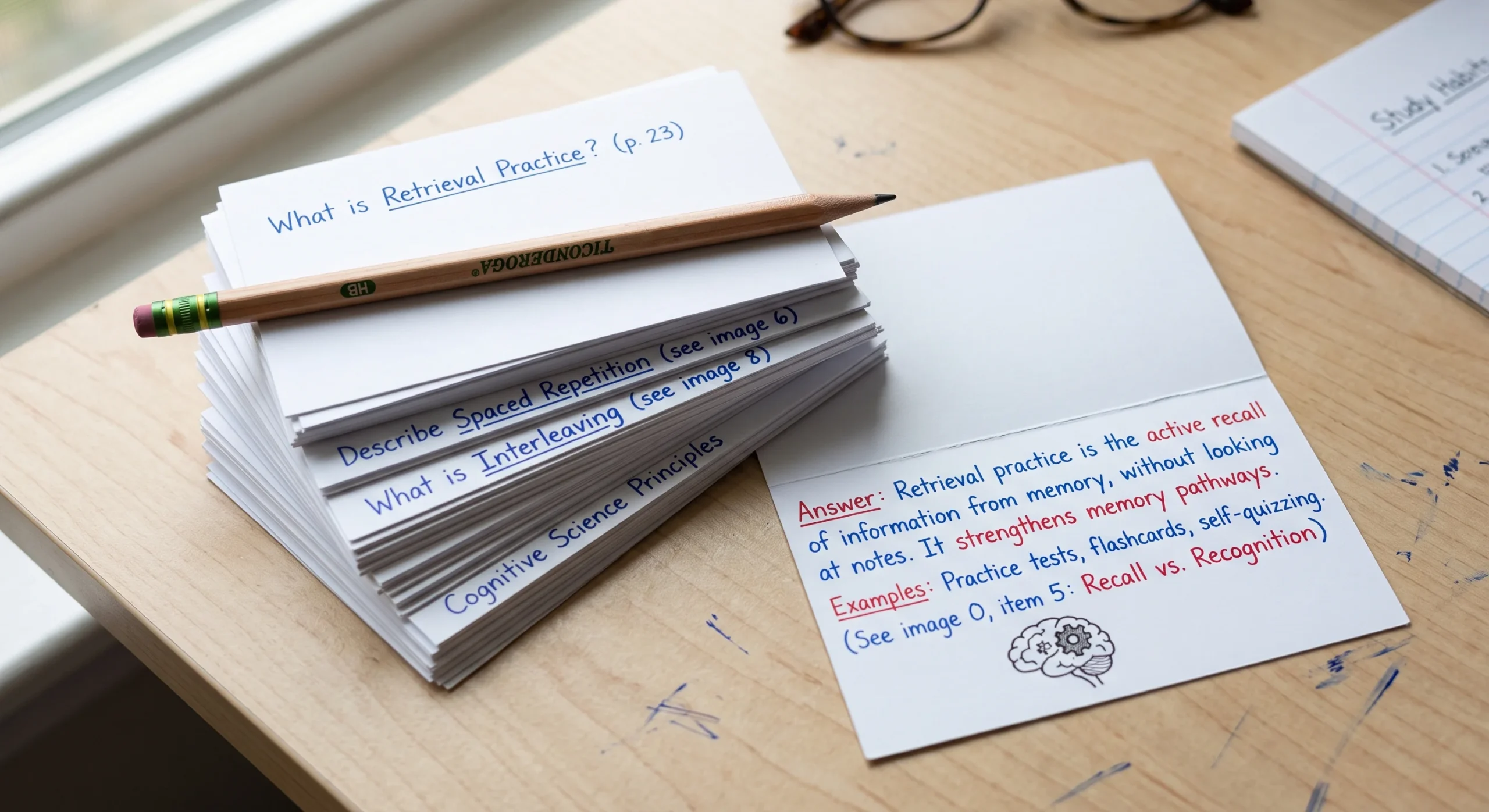
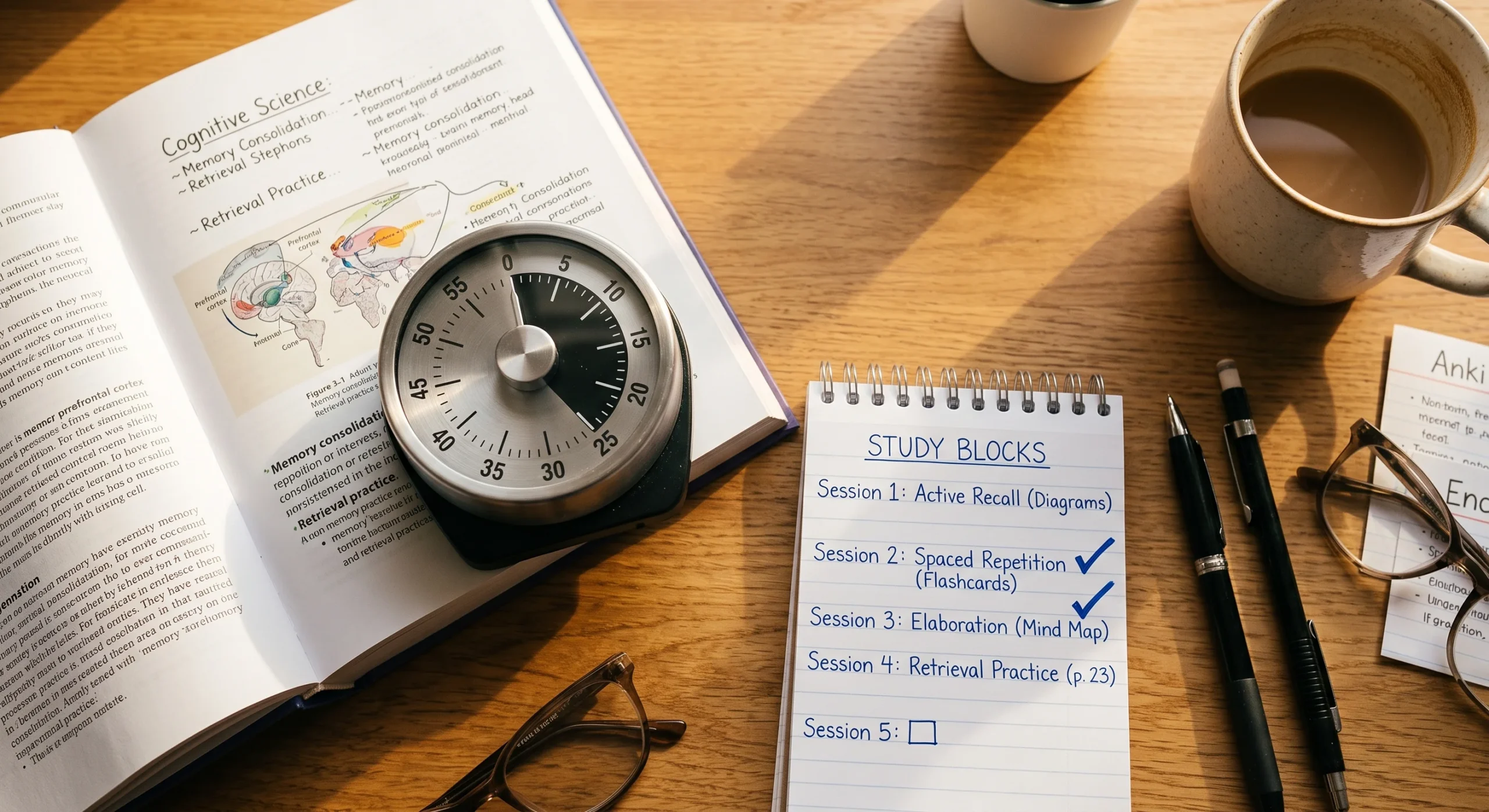
Retrieval cues are short prompts, often just a single keyword or brief phrase, designed to trigger fuller recall of a larger block of information without spelling out the entire question in detail. This mimics real exam conditions more closely than a fully written-out practice question does, since an actual test often gives only a brief prompt and expects a complete, detailed response built entirely from memory rather than recognition of familiar wording on a page. Practicing this exact gap, between a small cue and a full answer, closes one of the most common weak spots students run into.
Creating your own cues, rather than relying on pre-made flashcards or a textbook’s built-in review questions, adds a genuinely valuable extra layer of active recall to the process, since deciding what the cue itself should say requires already engaging with the material at a deeper level. A single word like “mitosis” or “supply curve” on one side of a card, with a full explanation on the back, is often all a strong retrieval cue actually needs to work well, without any additional detail crowding the front of the card.
- A single keyword or short phrase on one side of a card prompts fuller recall than a full question.
- This mimics real test conditions, where a brief prompt has to trigger a complete, detailed answer.
- Creating your own cues, rather than using pre-made ones, adds a valuable extra layer of active recall.
Create Mnemonic Devices
- Acronyms, rhymes, and vivid mental images all help lock in information that’s otherwise hard to remember.
- The sillier or more vivid a mnemonic is, the more memorable it actually tends to be.
- This works especially well for ordered lists, sequences, or information with no inherent logical structure.
- Creating your own mnemonic works better than borrowing someone else’s, since the creation process itself aids memory.
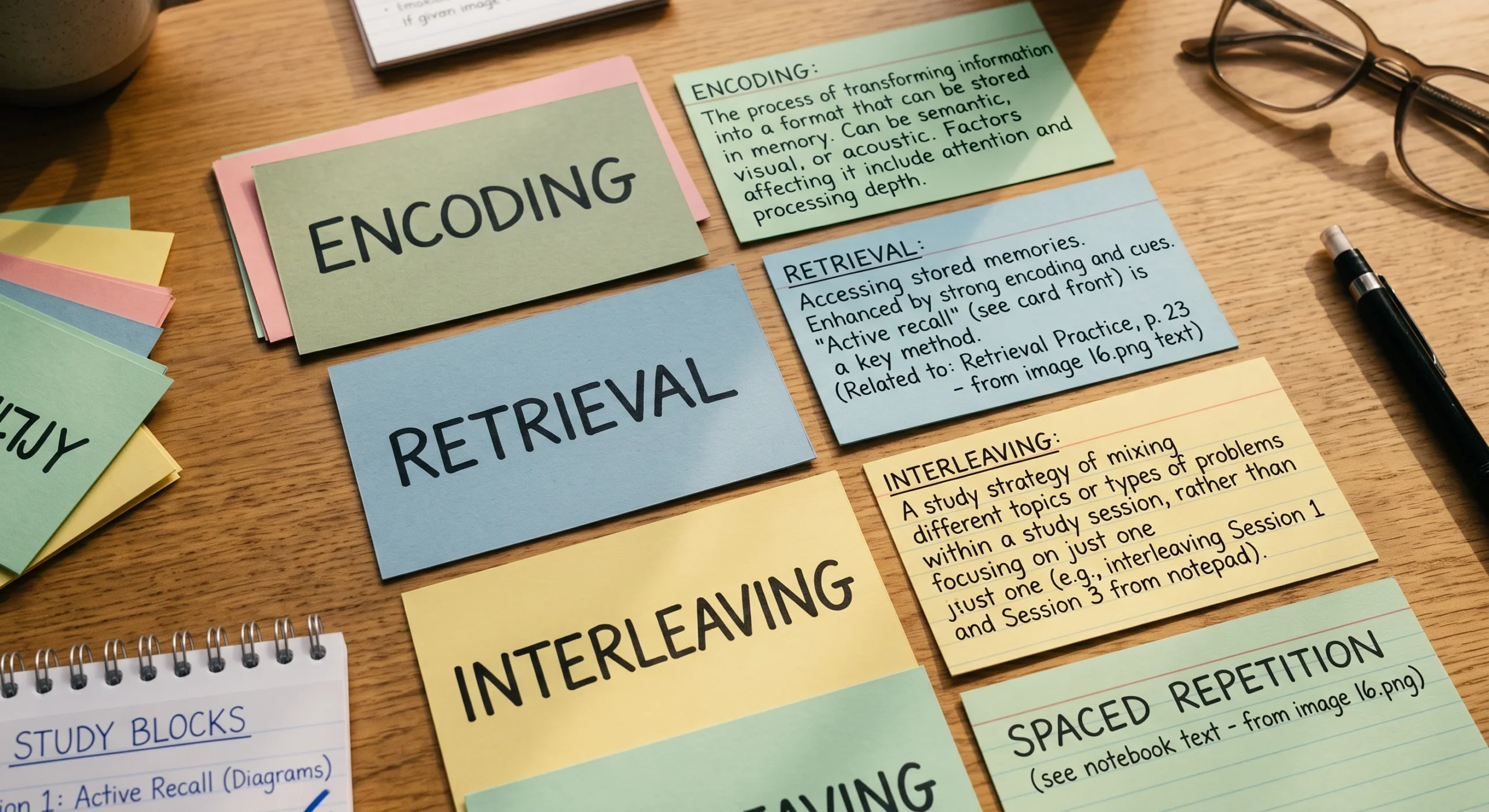
Mnemonic devices — acronyms, rhymes, vivid mental images — help lock in information that has no natural logical structure to hang onto otherwise, like an ordered list of historical events or the specific sequence of steps in a chemical process. The brain genuinely remembers vivid, unusual, or emotionally engaging images far better than plain abstract facts, which is exactly why a slightly ridiculous mental picture often outperforms a straightforward, sensible one when it comes to actual recall later, sometimes years after the original mnemonic was created.
This is precisely why the sillier or more exaggerated a mnemonic is, the more memorable it tends to become over time, even though it can feel a little silly to invent one in the first place. This technique works especially well for ordered sequences or arbitrary lists with no inherent logic connecting the pieces together. Creating your own mnemonic, rather than borrowing someone else’s ready-made version, works better still, since the act of creating it is itself a genuine form of active engagement with the material.
Study Right Before Sleep
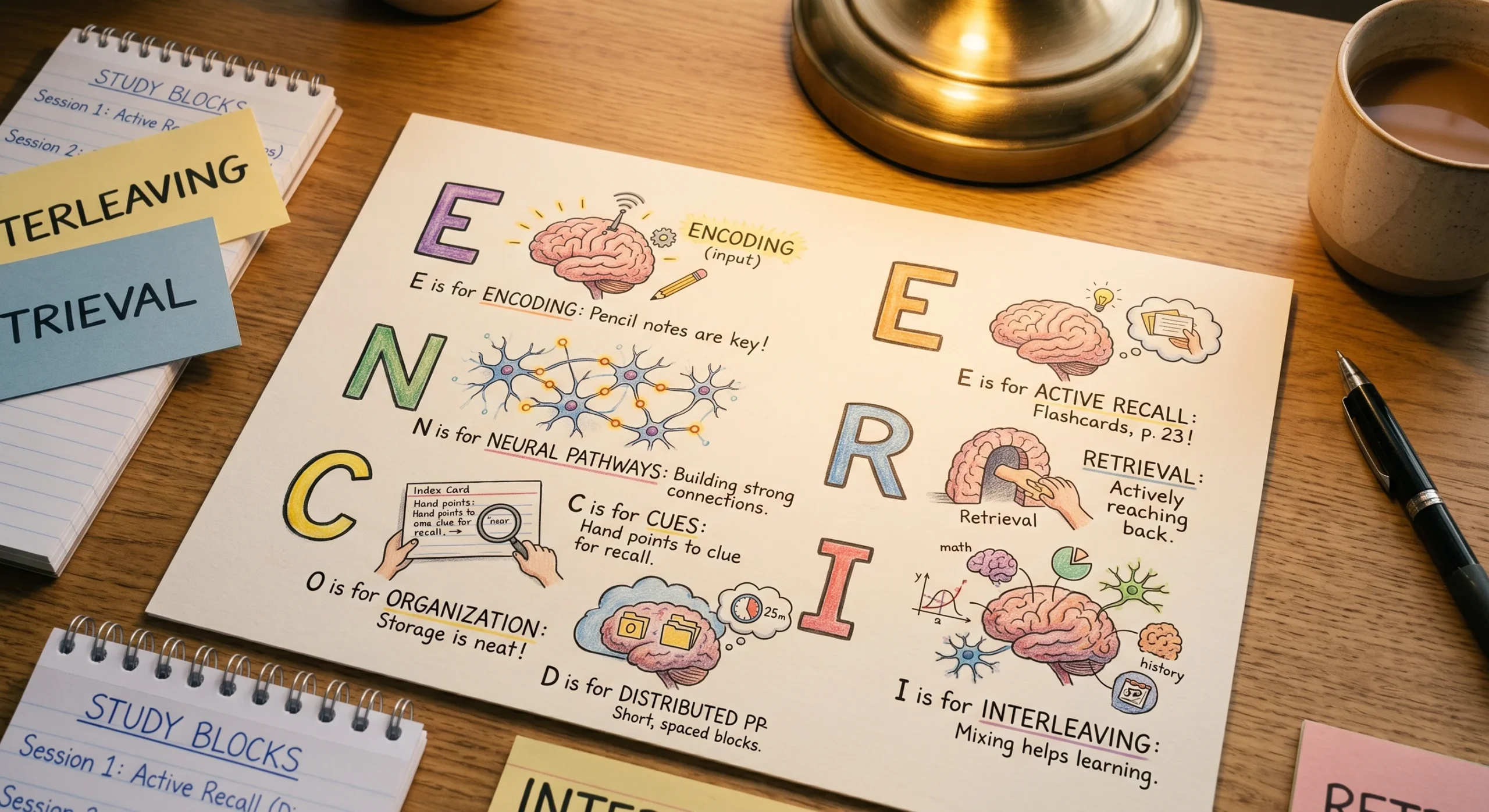
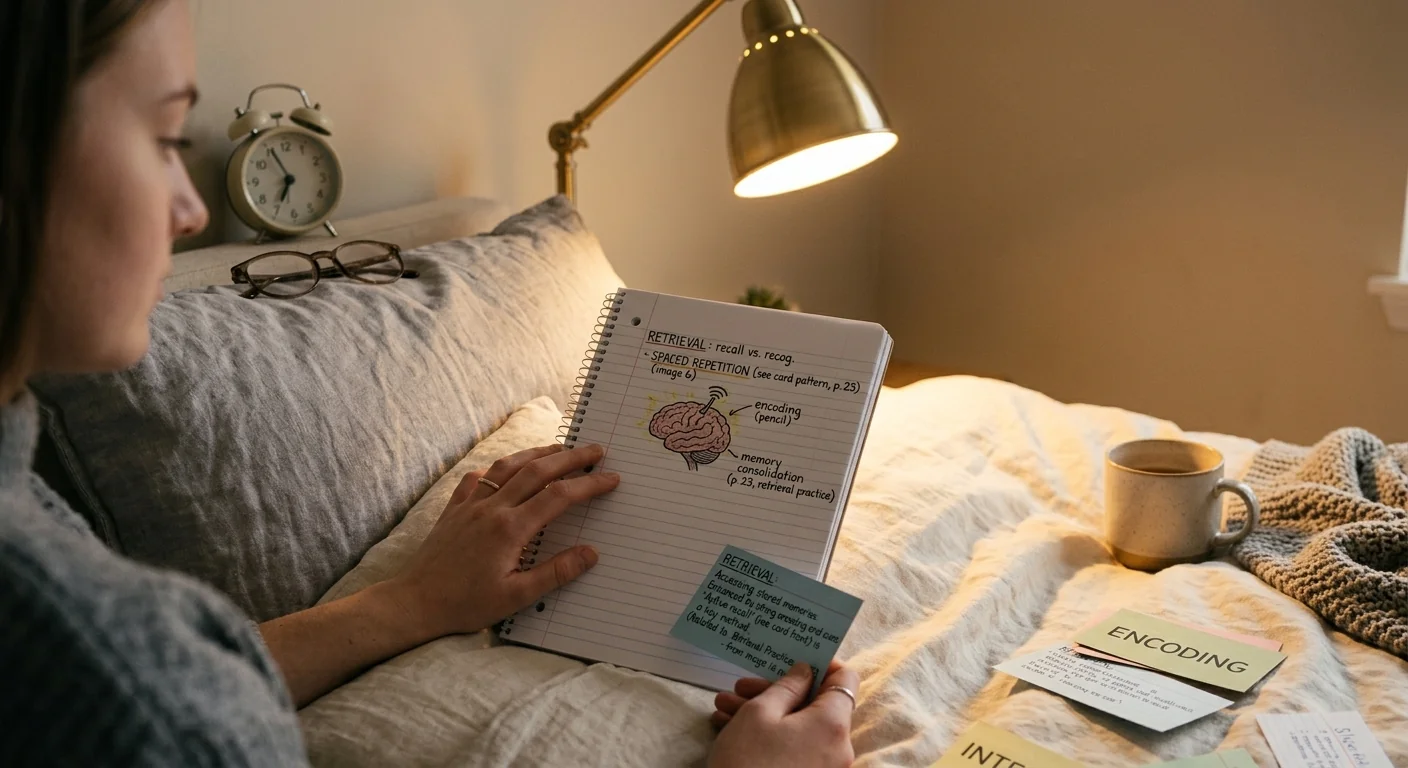
Studying a brief, focused review right before sleep takes advantage of something genuinely counter-intuitive: memory consolidation, the process where the brain organizes and strengthens new information into longer-term storage, happens largely during sleep itself. Material reviewed shortly before bed tends to get prioritized during that consolidation process, which is part of why a short, calm review session late in the evening can outperform a longer, more frantic session earlier in a busy, distracted day. This timing effect genuinely surprises most students, who tend to assume evening review is simply less effective than daytime study.
This doesn’t mean cramming until the very last possible minute before turning off the light, which tends to spike stress and actually interfere with the calm, relaxed state sleep consolidation seems to favor. A brief, ten-minute review of the day’s most important points, done calmly rather than anxiously, tends to work best here. In my years of teaching, students who mentioned doing this consistently often described feeling noticeably more confident and considerably less anxious walking into a test the very next morning, well rested and clear-headed.
Explain Out Loud
- Speaking an explanation out loud engages a different kind of processing than silently reading the same material.
- Pacing or moving while explaining adds a physical element that some students find genuinely helps memory.
- This works well as a final check before a test, revealing any concepts still shaky under pressure.
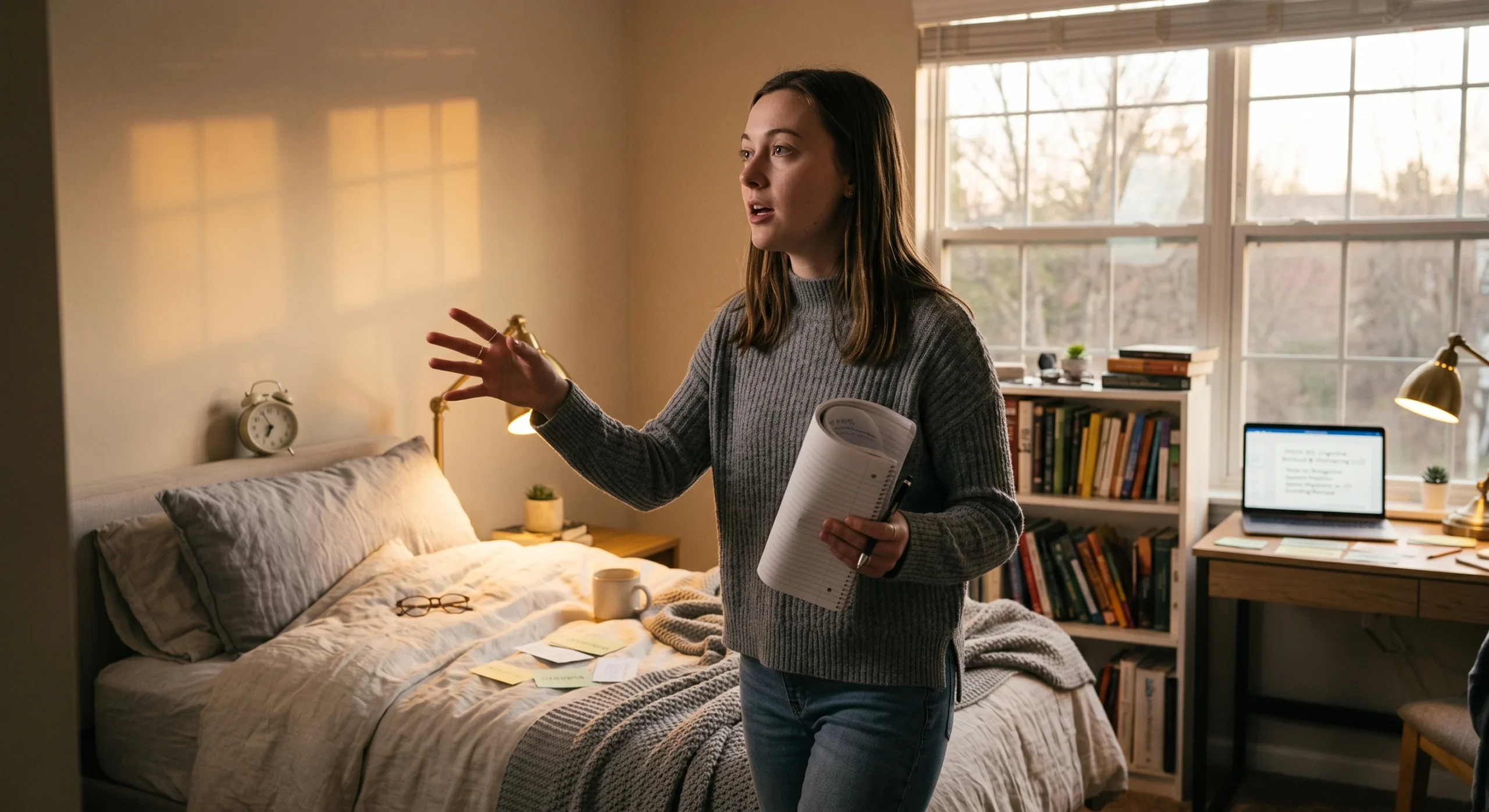
Explaining material out loud, even alone in an empty room, engages a genuinely different kind of cognitive processing than silently reading the same content off a page one more time. Hearing your own voice articulate an explanation forces a level of sequential, organized thinking that silent reading simply doesn’t require, which is why students who talk through material out loud often catch confusing gaps they hadn’t noticed while reading quietly to themselves moments earlier. Something about hearing your own voice stumble over a step reveals exactly where the real confusion actually lives.
Pacing or moving around the room while explaining adds a physical element that some students find genuinely helps anchor memory further, tying a specific idea to a specific spot in the room or a particular gesture made while saying it. This works especially well as a final check the night before a test, revealing exactly which concepts still feel shaky under the added pressure of speaking them aloud clearly and confidently, without any notes nearby to quietly fall back on when things suddenly get genuinely hard to explain out loud.
Change Study Locations
Changing study locations occasionally, rather than always studying in exactly the same spot, is a genuinely counter-intuitive strategy that research on memory context has supported repeatedly. Memory forms connections not just to the material itself but to the environment surrounding it, and studying the same content in a couple of different locations creates multiple retrieval paths to that same memory, rather than tying it to just one specific desk, chair, or room that genuinely might not be available on the actual day of the test itself.
This doesn’t mean constant location changes are necessary or even helpful — a consistent primary study spot still supports the routine-building covered elsewhere in study advice generally. But occasionally reviewing the same material in a library, a kitchen table, or outdoors genuinely strengthens recall compared to reviewing it in the identical spot every single time. This is a small, low-effort variation worth trying periodically, especially during a longer review period leading up to a major exam or final test at the end of a term.

Chunk Information Together
- Grouping related pieces of information into smaller clusters makes a large amount of material easier to hold in mind.
- This is the same principle behind why phone numbers are grouped into small sets rather than one long string.
- Chunking works especially well for vocabulary lists, formulas, or any material with a large raw volume.
- Organizing information by theme or category before studying it does much of this chunking work automatically.
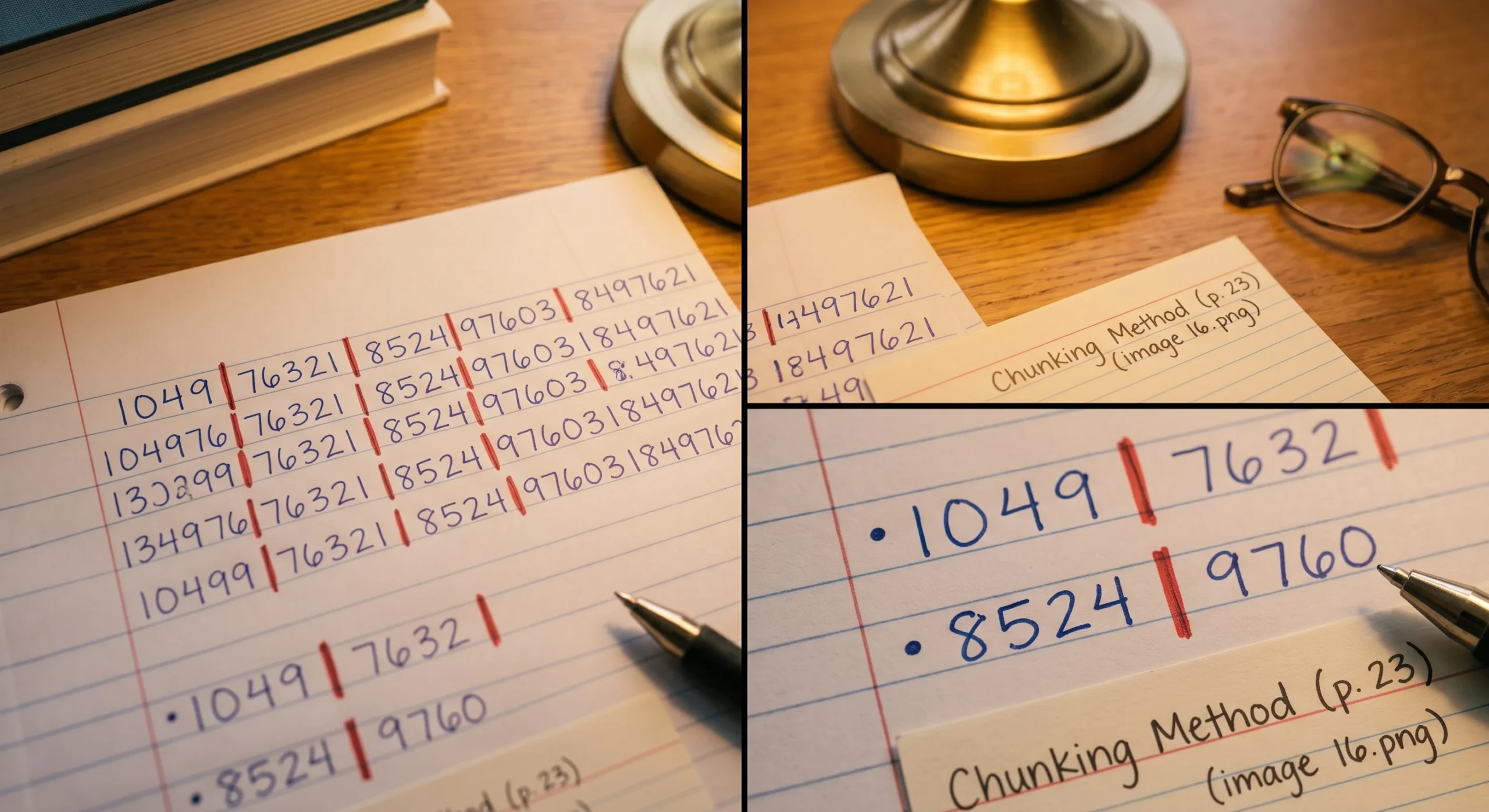
Chunking groups related pieces of information into smaller, organized clusters, making a large amount of raw material considerably easier to hold in working memory at once. This is the same underlying principle behind why a phone number gets grouped into small sets of digits rather than presented as one long, undivided string — the brain handles a handful of organized chunks far more easily than the same information scattered without any clear grouping to lean on for support. Chunking essentially reduces how much raw effort working memory has to spend just holding information in place.
This technique works especially well for vocabulary lists, chemical formulas, or any subject involving a large raw volume of individual facts that don’t obviously connect to each other on their own. Organizing information by theme or category before sitting down to study it does much of this chunking work automatically, turning an intimidating list of forty seemingly unrelated items into four manageable groups of ten that actually relate to each other in some genuinely meaningful, memorable way worth remembering long after the test is over.
Use Practice Problems
Working through practice problems builds a specific kind of procedural skill that reading alone simply cannot develop, no matter how carefully a formula or method gets reviewed on the page beforehand. Math, chemistry, and similar subjects require actually applying a method under slightly varied conditions repeatedly before it becomes genuinely automatic, and that application step is precisely what separates a student who merely recognizes a concept from one who can reliably execute it under real, timed test pressure. Recognition alone rarely translates into the kind of speed and accuracy an actual exam genuinely demands.
Starting with a few fully worked examples before attempting problems independently builds real confidence and clarifies the method before full independence is expected, rather than throwing a student into unfamiliar problems cold with no reference point. Mixing genuinely easy and appropriately hard problems within the same practice session also prevents a false sense of overconfidence that comes from only ever practicing the comfortable, already-mastered end of a skill range, rather than the parts still genuinely in progress and not yet fully mastered by that point in the material.
- Working through practice problems builds the specific procedural skill that reading alone simply can’t develop.
- Starting with worked examples before attempting problems independently builds confidence before full independence.
- Mixing easy and hard problems in one session prevents overconfidence from only practicing the easy ones.
Summarize in Your Own Words
- Rewriting a concept in your own words forces genuine understanding rather than passive recognition of familiar phrasing.
- If a concept can’t be summarized simply, that’s a clear signal it isn’t fully understood yet.
- This works well right after reading a section, while the material is still fresh in mind.
- Keeping summaries genuinely short — a few sentences — forces real prioritization of what matters most.
Rewriting a concept in your own words forces genuine understanding, rather than the passive sense of familiarity that comes from simply recognizing a textbook’s original phrasing without actually being able to reproduce that meaning independently. This is closely related to the Feynman technique, named after physicist Richard Feynman, which holds that if you can’t explain something simply, in your own plain language, you don’t yet understand it as thoroughly as you might have assumed before actually trying to put it into words. This gap between recognizing and explaining shows up constantly, even among genuinely strong students.
If a concept resists being summarized simply, that difficulty itself is genuinely useful information, pointing directly to exactly which part still needs more review before moving on to the next section. This works best done right after reading a section, while the material is still fresh enough to paraphrase accurately without needing to flip back and check constantly. Keeping the summary genuinely short, just a few sentences, forces real prioritization of what actually matters most in that section rather than restating everything indiscriminately, word for word.
Avoid Highlighting Alone
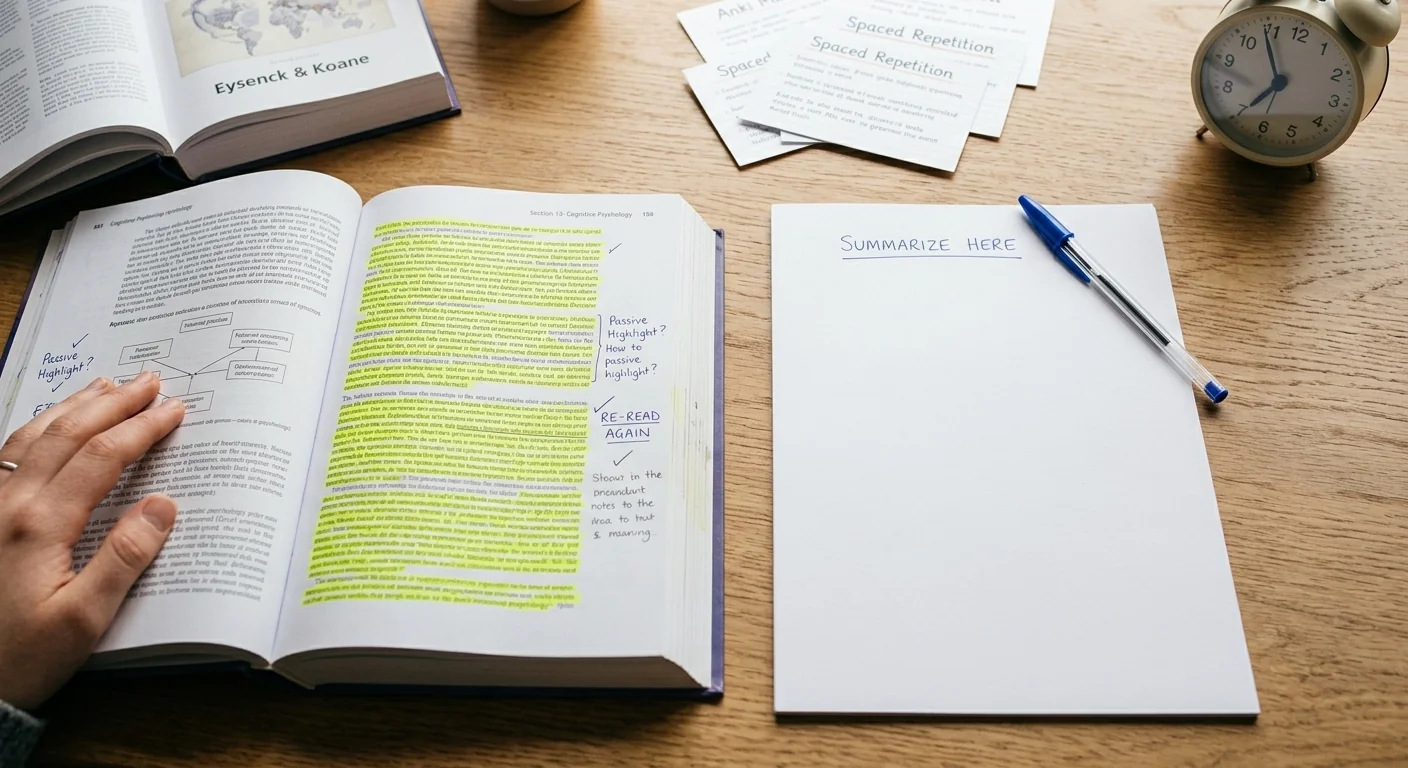
Highlighting a textbook feels productive, but research on study methods consistently ranks it among the least effective techniques when used on its own, largely because it’s a passive activity that creates only the illusion of engagement rather than genuine processing of the material. Most people who highlight excessively end up marking too much of the page, which defeats the entire purpose of trying to identify what’s actually most important in the first place. A page that’s mostly yellow provides essentially no useful signal about what genuinely deserves attention later.
This doesn’t mean highlighting is entirely useless — it works reasonably well as a first pass for identifying key material, as long as it’s followed immediately by a genuinely active step like summarizing or testing yourself on the highlighted content. In my years of teaching, the students who highlighted heavily but never did anything with those highlights afterward consistently underperformed compared to students who did far less highlighting but genuinely paired it with active recall right afterward, every single time without exception or shortcut taken.
Set Specific Study Goals
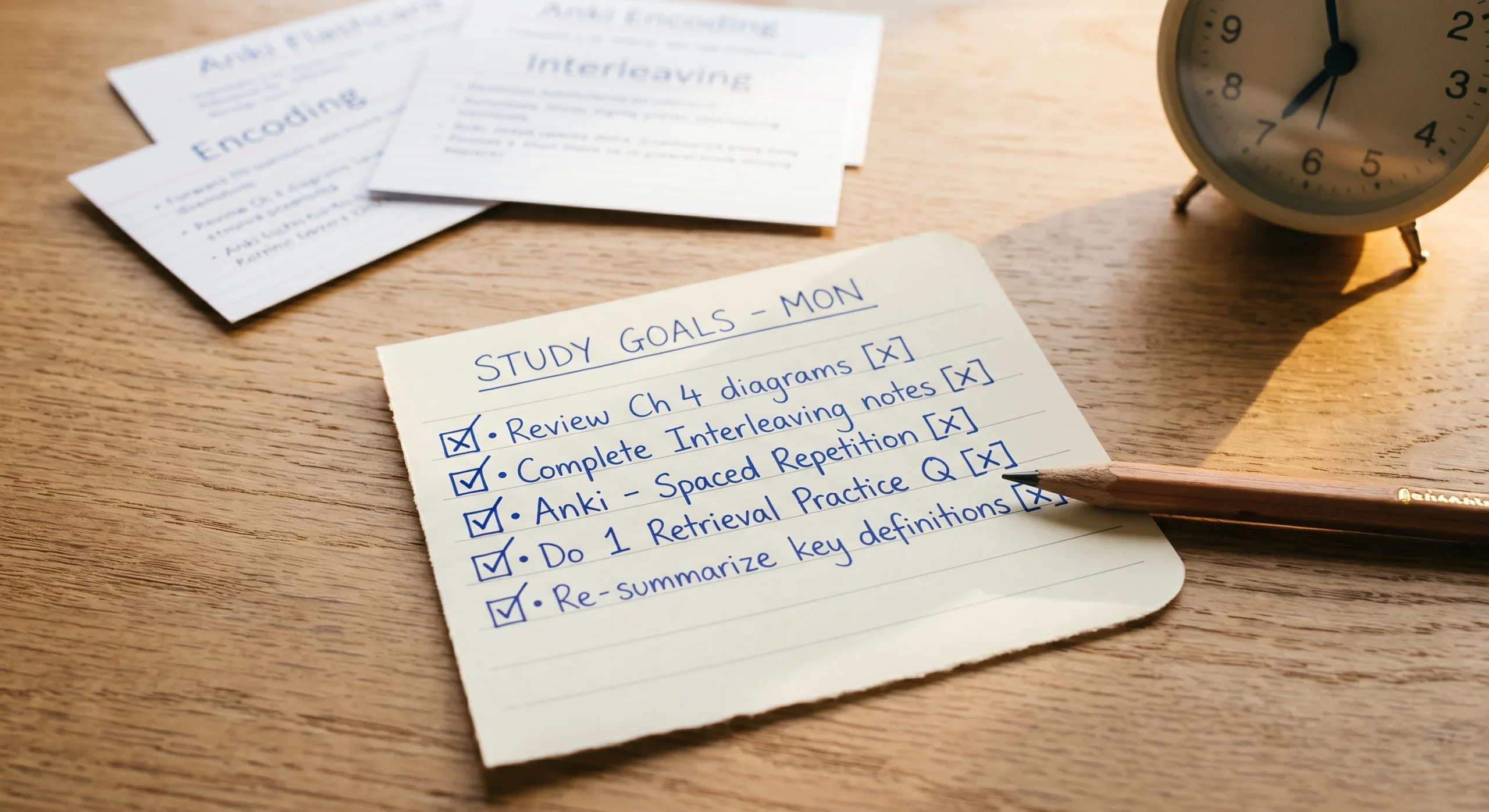
- A specific goal like ‘master these ten vocabulary words’ focuses effort far better than a vague plan to study.
- Specific goals also make it genuinely clear when a study session is actually finished.
- Writing the goal down beforehand, rather than deciding as you go, improves real follow-through.
A specific goal, like “master these ten vocabulary words” or “solve fifteen practice problems correctly,” focuses effort considerably more effectively than a vague plan to simply “study chemistry for a while” without any clear endpoint in mind. Vague goals tend to produce vague effort, drifting between activities without a clear sense of what actually needs to happen before the session can genuinely be considered complete and successful. A student with a vague plan often ends up busy without ever quite feeling finished, which is a genuinely draining place to be stuck.
Specific goals also make it genuinely clear when a study session has actually finished, rather than the open-ended feeling that leads many students to either stop too early or study well past the point of real diminishing returns. Writing the goal down before starting, rather than deciding what to focus on as you go, noticeably improves real follow-through, since there’s a concrete, specific target to check real progress against throughout the entire study session, start to finish, rather than guessing when it’s actually time to stop.
Take Real Breaks
A real break means genuinely stepping away from studying entirely, not simply switching from a textbook to scrolling a phone, which keeps the brain in a similarly passive, distracted state without actually providing the mental rest a real break is meant to deliver. Movement — a short walk, some stretching, stepping outside for a few minutes — restores focus considerably better than passive scrolling ever does, since it genuinely changes both mental and physical state, rather than just shifting from one screen to another without any real change at all.
Breaks scheduled in advance, tied to a timer rather than decided in the moment, are noticeably easier to actually stick to than open-ended breaks that tend to run longer than intended once they begin. Skipping breaks entirely tends to reduce total study effectiveness rather than increase it, despite feeling more disciplined and productive in the moment. In my years of teaching, the students who studied longest without any real breaks weren’t necessarily retaining the most information by the time the whole session actually ended late that night.
- A real break means stepping away entirely, not switching to a different screen or scrolling a phone.
- Movement — a short walk, stretching, stepping outside — restores focus better than passive scrolling does.
- Breaks scheduled in advance, tied to a timer, are easier to actually stick to than open-ended ones.
- Skipping breaks entirely tends to reduce total study effectiveness, not increase it, despite feeling more productive.

Study With a Partner
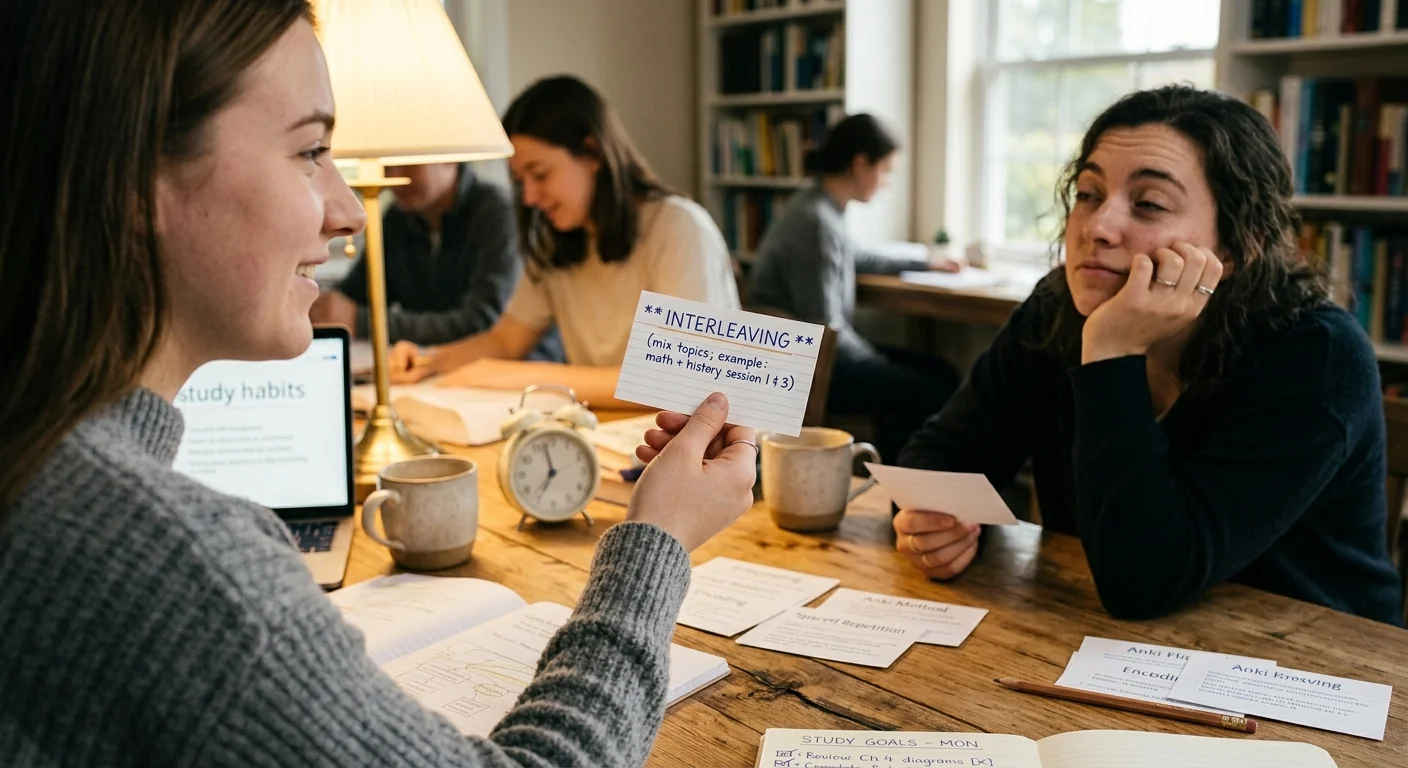
Studying with a partner works well specifically when it stays structured around actual quizzing or explaining, rather than drifting into a purely social session that produces little genuine review by the end of it. Taking turns quizzing each other with flashcards, or each explaining a different section of material to the other, combines active recall and the teach-it-back method covered earlier into one session, doubling up on two genuinely effective techniques at once rather than relying on just one method by itself for the entire session.
This works best with a partner at a similar academic level, someone motivated enough to actually stay on task rather than turning the session into an extended conversation about anything but the material at hand. Setting a specific agenda beforehand — which chapters, how much time, what format — keeps a partner study session genuinely productive rather than just pleasant company. Done well, this combines real accountability with the cognitive benefits of active recall and explaining concepts aloud, all within a single shared session together.
Review Mistakes Deliberately
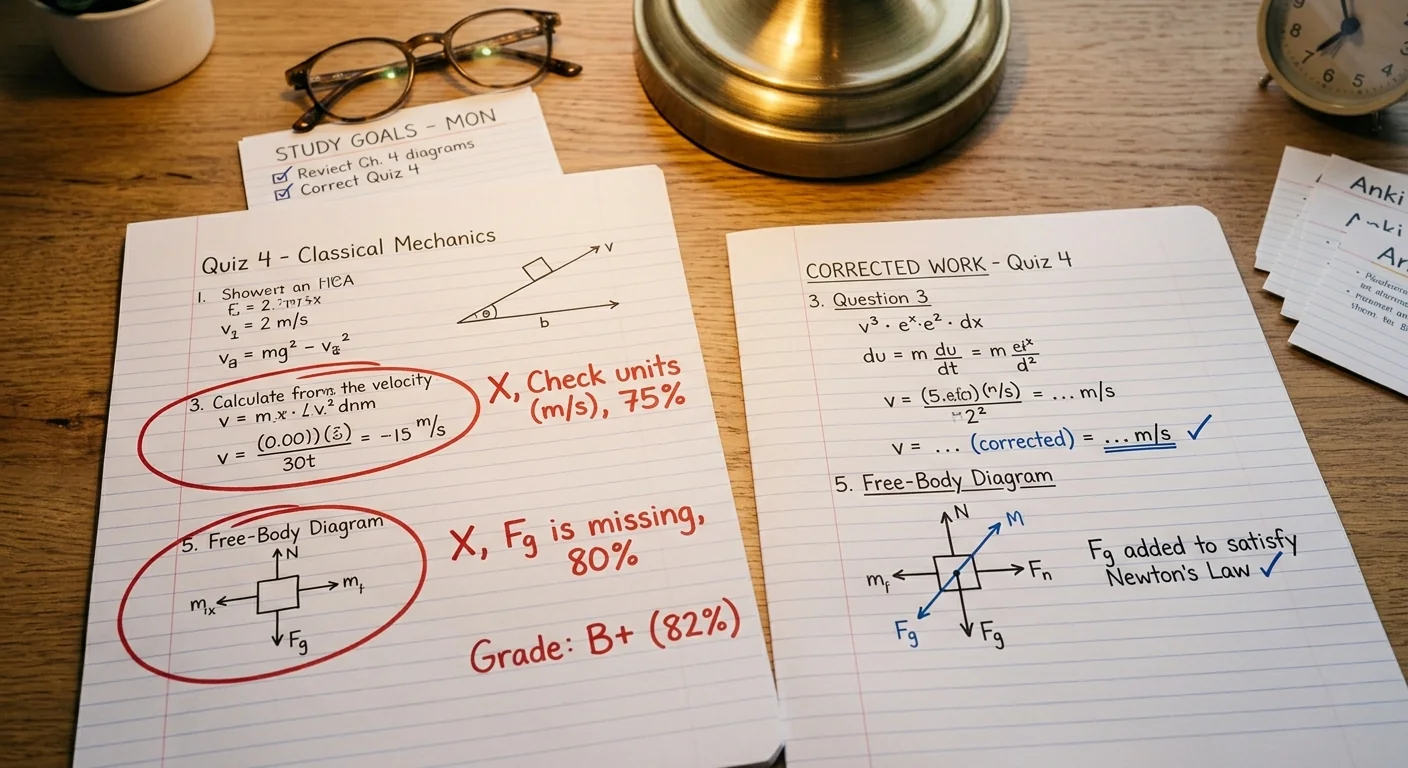
Reviewing mistakes deliberately closes out this list because it’s genuinely one of the most skipped steps, even by students who diligently follow every other strategy covered above. A graded quiz or practice test gets filed away or thrown out the moment a grade is checked, when it actually contains some of the most valuable, specific information available about exactly which concepts still genuinely need more work before the real exam actually arrives. Throwing that information away is essentially throwing away a personalized study guide written just for you.
In my years of teaching, the students who reviewed every wrong answer and figured out precisely why it was wrong, not just what the correct answer should have been, consistently improved faster than students who simply moved on to new material without looking back. This closing habit turns every practice test or quiz into a genuine diagnostic tool rather than just a score, which is really the underlying purpose behind every other strategy covered throughout this entire list, from the very first one to this final one.
FAQ
How long should a typical study session actually last?
Twenty to thirty minutes of focused work, followed by a genuine break, tends to work better than one long unbroken session. Several of these shorter blocks across an evening usually produce more actual learning than a single three-hour marathon.
Do these tips work for every subject, or just certain ones?
Most of them genuinely apply across subjects, though a few lean more toward specific areas — practice problems matter more for math and science, while summarizing in your own words tends to help reading-heavy subjects most. Active recall and spaced repetition are useful almost everywhere.
My child insists highlighting and rereading work fine for them — should I push back?
It’s worth gently testing that belief rather than arguing against it directly — comparing a practice quiz score after highlighting alone versus after active recall usually settles the question quickly and convincingly. Most students genuinely change their mind once they see the actual results side by side.
How do I get a reluctant student to actually try these techniques?
Start with just one, not the whole list at once, and pick whichever feels most achievable rather than most impressive. Active recall or the five-minute version of practice testing tend to be the easiest entry points, since the results usually show up fast enough to build genuine buy-in for trying another strategy next.
Conclusion
None of these twenty study tips for students require special tools or a complete personality overhaul — just a willingness to trade a comfortable, familiar habit like rereading for a slightly harder one that actually works better. Start with just one or two from this list, active recall and spaced repetition are usually the strongest place to begin, and build from there as they become genuine habits rather than one-time experiments. Save this guide to Pinterest before the next big test, try one technique this week, and share it with another student or parent who’s ready to study smarter instead of just longer.