
Packing for two weeks in Europe is less about fitting everything in and more about choosing the right things in the first place. This europe packing list focuses on the twenty items that genuinely earn their space in your bag, covering multiple cities, unpredictable weather, and long days of walking without overpacking or underpreparing. Each item here solves a real problem travelers run into — a dead phone battery, a bulky wardrobe, a missing adapter at a hostel outlet — rather than padding the list with things you’ll never actually use. By the end, you’ll have a genuinely practical foundation for building your own bag.
Packing Cubes System
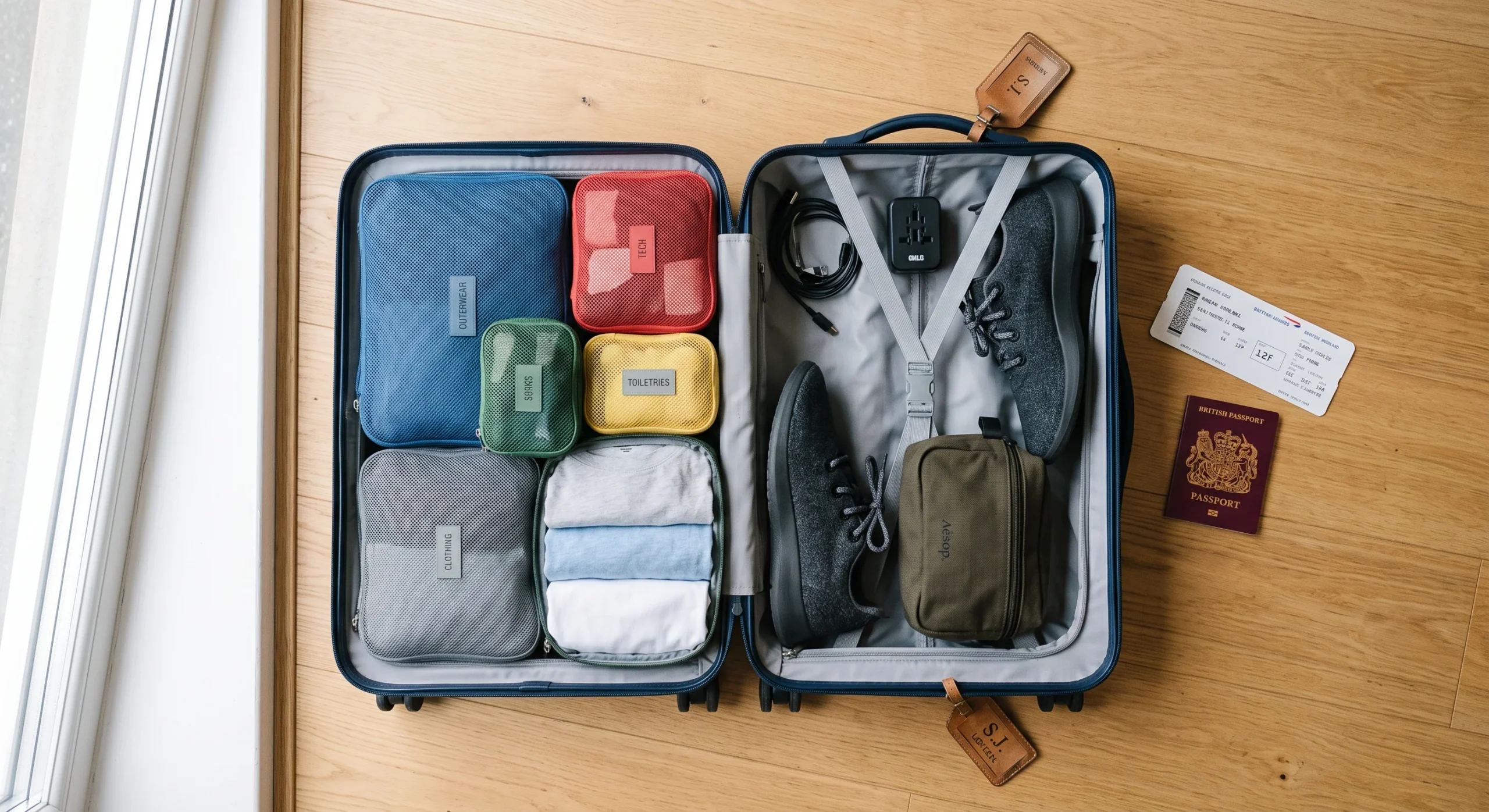
- Packing cubes separate clothing by type or by day, making it much faster to find things without unpacking everything.
- Compression-style cubes save extra space for bulkier items like jackets or a second pair of shoes.
- Color-coding cubes by category — tops, bottoms, layers — speeds up repacking at each new hotel or hostel.
- A set of four to six cubes typically covers a two-week trip without needing extra pieces.
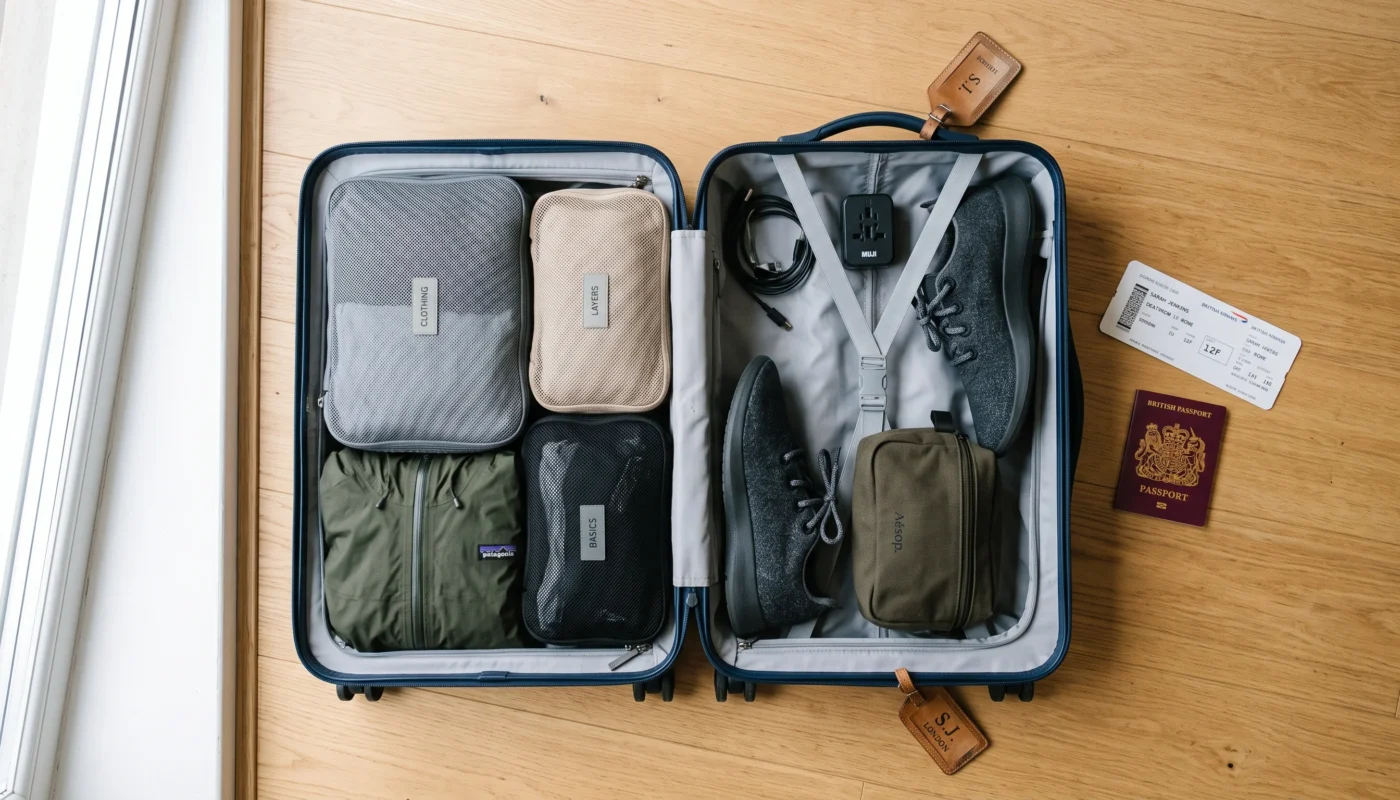
A packing cubes system is one of those upgrades that sounds minor until you’ve actually used one on a multi-city trip. Instead of one large jumbled suitcase, cubes break your clothing into separate, labeled sections, which makes finding a specific item — a swimsuit, a warm layer, clean socks — take seconds instead of minutes of digging. For a two-week Europe trip involving several hotel or train station changes, this organization genuinely reduces daily stress more than almost any other single packing choice on this list. It also keeps a suitcase looking tidy even by day ten of a busy itinerary.
A common approach is assigning one cube per category rather than per day, since categories tend to hold up better across a trip with unpredictable weather or plan changes along the way. Compression cubes, which zip down to squeeze out extra air, are worth the small extra cost if you’re packing bulkier items like a light jacket or a second pair of shoes. This system also makes airport security checks faster, since cubes lift out cleanly if a bag needs a manual inspection.
Versatile Capsule Wardrobe
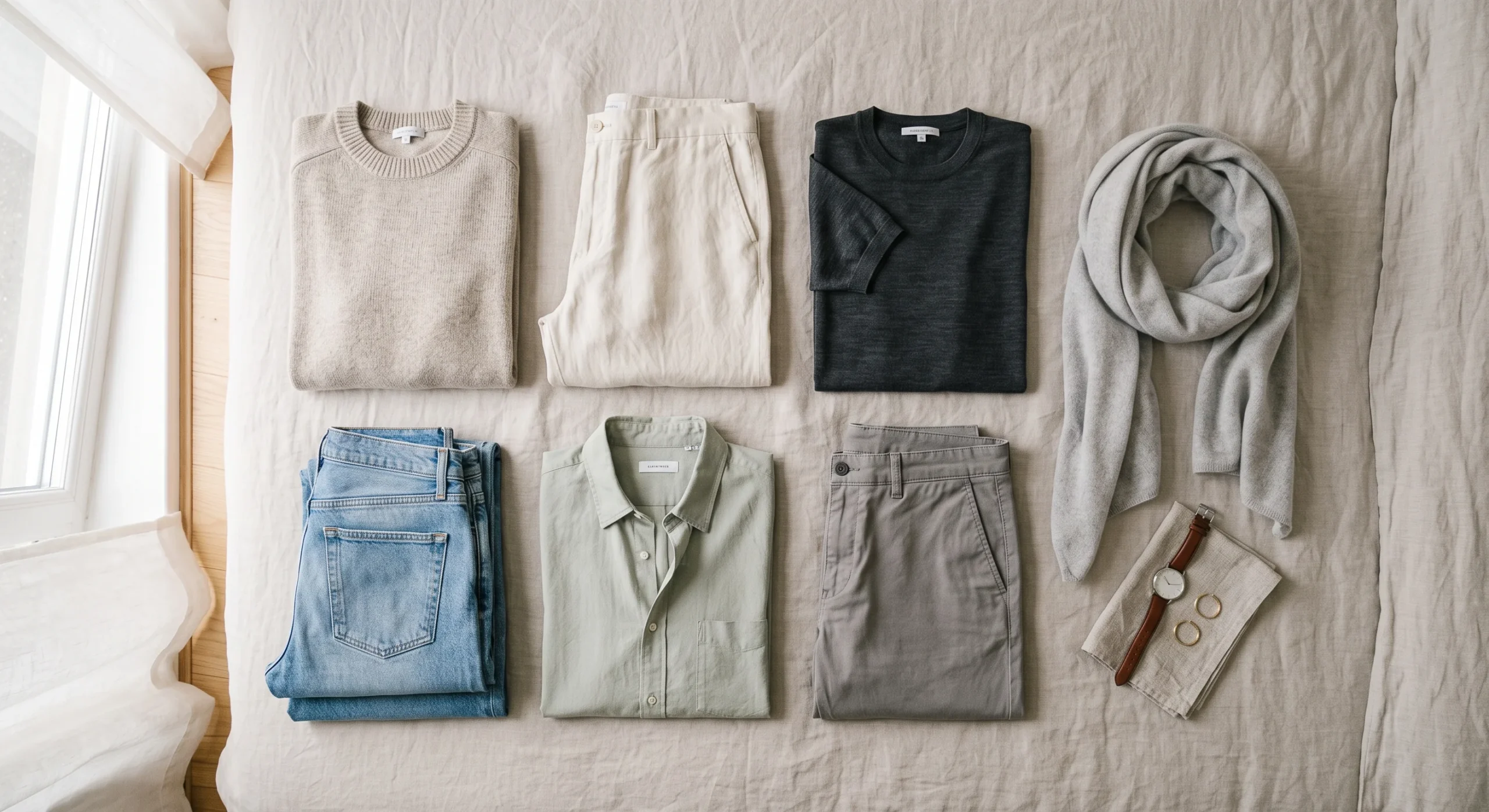
- A capsule wardrobe means choosing pieces that mix and match, so fewer items create more outfit combinations.
- Stick to two or three coordinating colors to keep everything interchangeable across the whole trip.
- Prioritize layering pieces over single-use outfits, since Europe’s weather can shift noticeably within one day.
- Aim for roughly seven to ten clothing pieces total for a two-week trip, plus a few basics.
Building a capsule wardrobe is the single biggest factor in how manageable your luggage feels for the rest of the trip. The idea is straightforward: choose a small number of pieces that all coordinate with each other, so seven or eight items can realistically produce well over a dozen different outfit combinations across two weeks. Sticking to two or three coordinating colors, rather than a wardrobe of unrelated pieces, makes this mixing and matching actually work in practice rather than just in theory. It also means fewer decisions each morning, which matters more than it sounds like on a long trip.
A practical tip worth remembering: Europe’s weather can shift meaningfully within a single day, especially moving between regions, so prioritizing layering pieces over one-off outfits pays off repeatedly. A lightweight base layer, a mid-layer sweater, and one weatherproof outer layer generally cover far more scenarios than several separate single-purpose outfits would. This approach also leaves genuine room in your bag for souvenirs or a few purchases along the way, which a fully packed suitcase simply doesn’t allow for on a two-week international trip. It’s a genuinely freeing way to travel once you’ve seen how well seven well-chosen pieces actually perform.
Comfortable Walking Shoes
- Cobblestone streets and long museum days make comfortable, broken-in shoes more important than stylish ones.
- Pack no more than two pairs — one everyday walking shoe and one slightly dressier backup option.
- Break in new shoes well before the trip; day one of a two-week trip is the wrong time to test them.
- Choose a neutral color that pairs with most of your capsule wardrobe pieces.
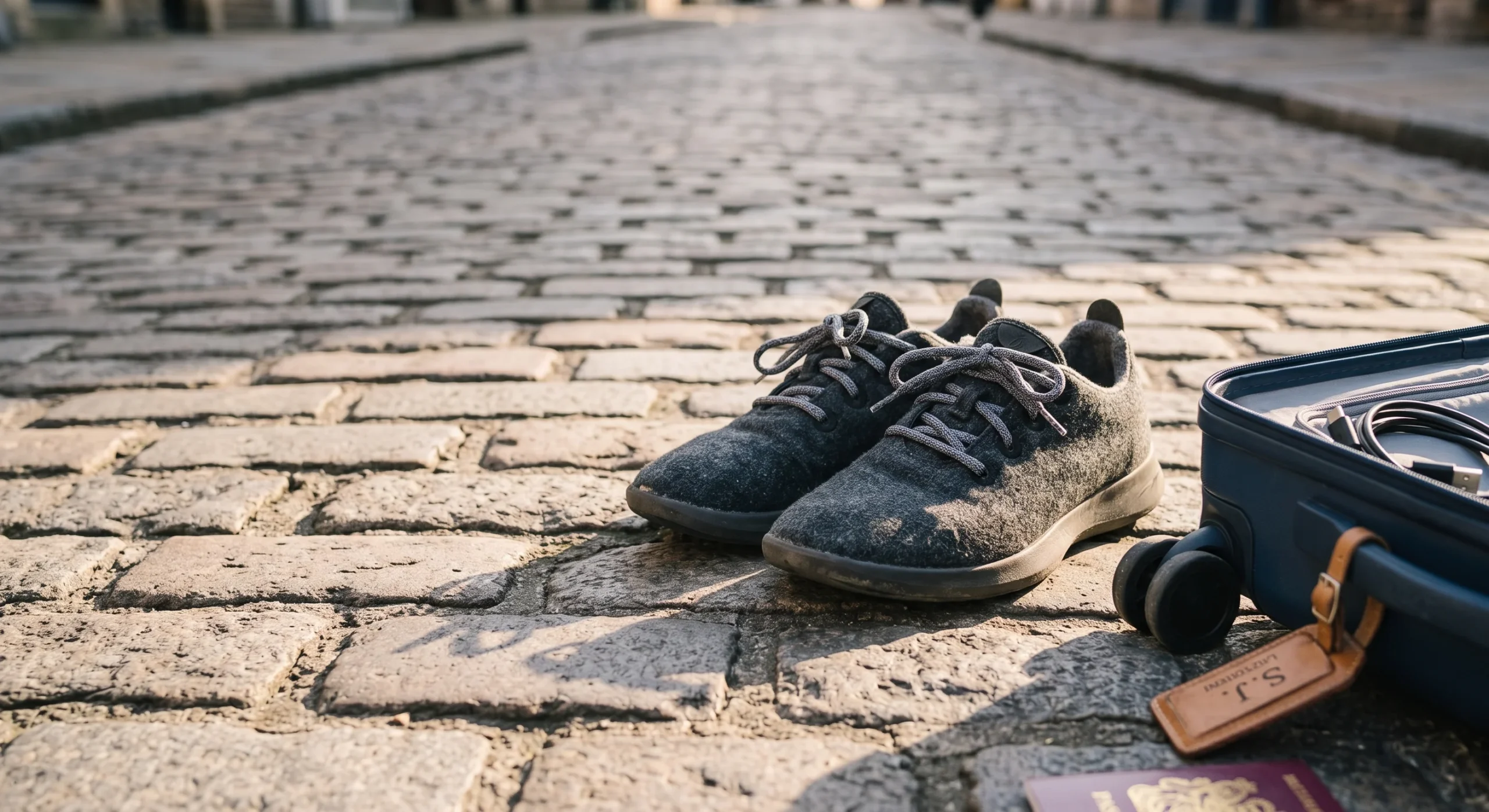
Comfortable walking shoes matter more on a two-week Europe trip than almost any clothing item on this list, given how much genuine walking most itineraries involve. Cobblestone streets, long museum hallways, and full days of sightseeing add up to distances that surprise a lot of first-time visitors by the end of day one. A well broken-in pair, rather than something new straight out of the box, avoids the blisters and discomfort that can genuinely derail an otherwise great travel day. Comfort here should outweigh style, even though a neutral, versatile design still pairs easily with most outfit combinations.
A practical rule worth following: two pairs of shoes is usually the sweet spot for a trip this length — one reliable everyday walking shoe and one slightly dressier option for evenings out. Bringing more than that adds real weight and bulk without much added benefit for most travelers making this trip. Testing shoes on shorter walks well before departure, rather than breaking them in during the trip itself, is a small step that prevents a genuinely common and avoidable travel problem from ruining the first few days.
Lightweight Rain Jacket
- European weather can turn quickly, especially in spring and fall, making a packable rain layer a real necessity.
- Choose a jacket that packs down small rather than a bulky option that eats up suitcase space.
- Look for one with a hood, since carrying a separate umbrella adds extra weight and hassle.
- A rain jacket also works as a wind layer on cooler evenings, adding more use per item packed.
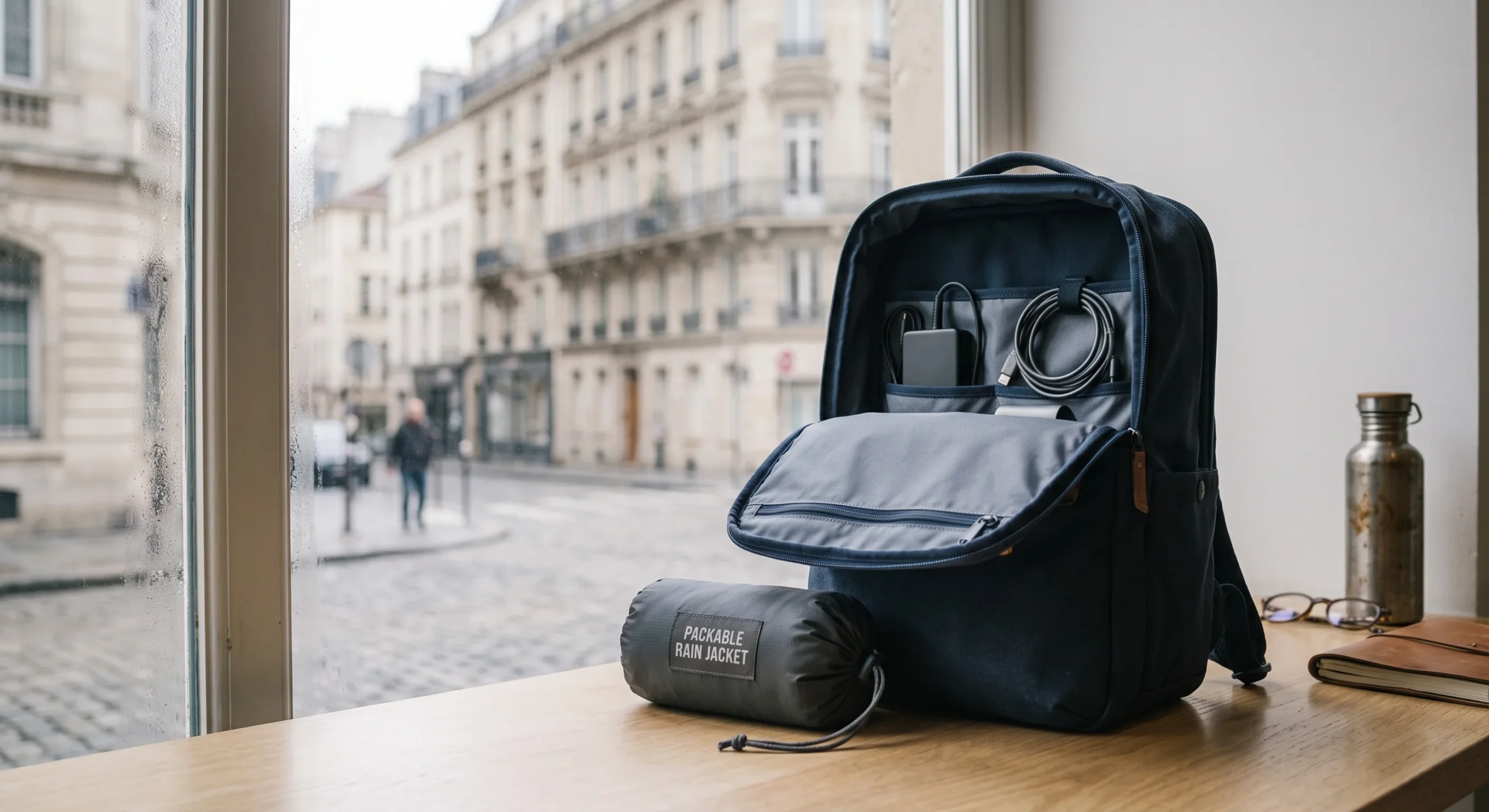
A lightweight rain jacket earns its place on this list because European weather, particularly outside the peak summer months, has a genuine habit of shifting from sunny to wet within a single afternoon. Rather than packing a bulky raincoat that takes up a disproportionate amount of suitcase space, a packable, foldable version does the same job while compressing down to roughly the size of a water bottle. This is the kind of item that sits unused for days at a time, then becomes the single most important thing in your bag the one afternoon it actually rains.
A hood built into the jacket removes the need for a separate umbrella, which is one less item to carry, track, and inevitably leave behind at a café table somewhere along the trip. Beyond rain, a lightweight jacket also functions as a wind layer during cooler evenings, particularly in coastal or northern European cities where evening temperatures drop faster than expected. This dual function is exactly the kind of practical value this whole packing list prioritizes: one item, genuinely useful in more than one situation, rather than something packed for a single narrow purpose.
Universal Travel Adapter
- European outlets vary by country, so a universal adapter avoids needing several different single-country versions.
- Choose one with multiple USB ports built in, so several devices can charge from a single outlet.
- Check the adapter’s voltage compatibility if packing higher-wattage devices like hair styling tools.
- Keep it in an easy-to-reach pocket, since it’s needed the moment you arrive at your first hotel.
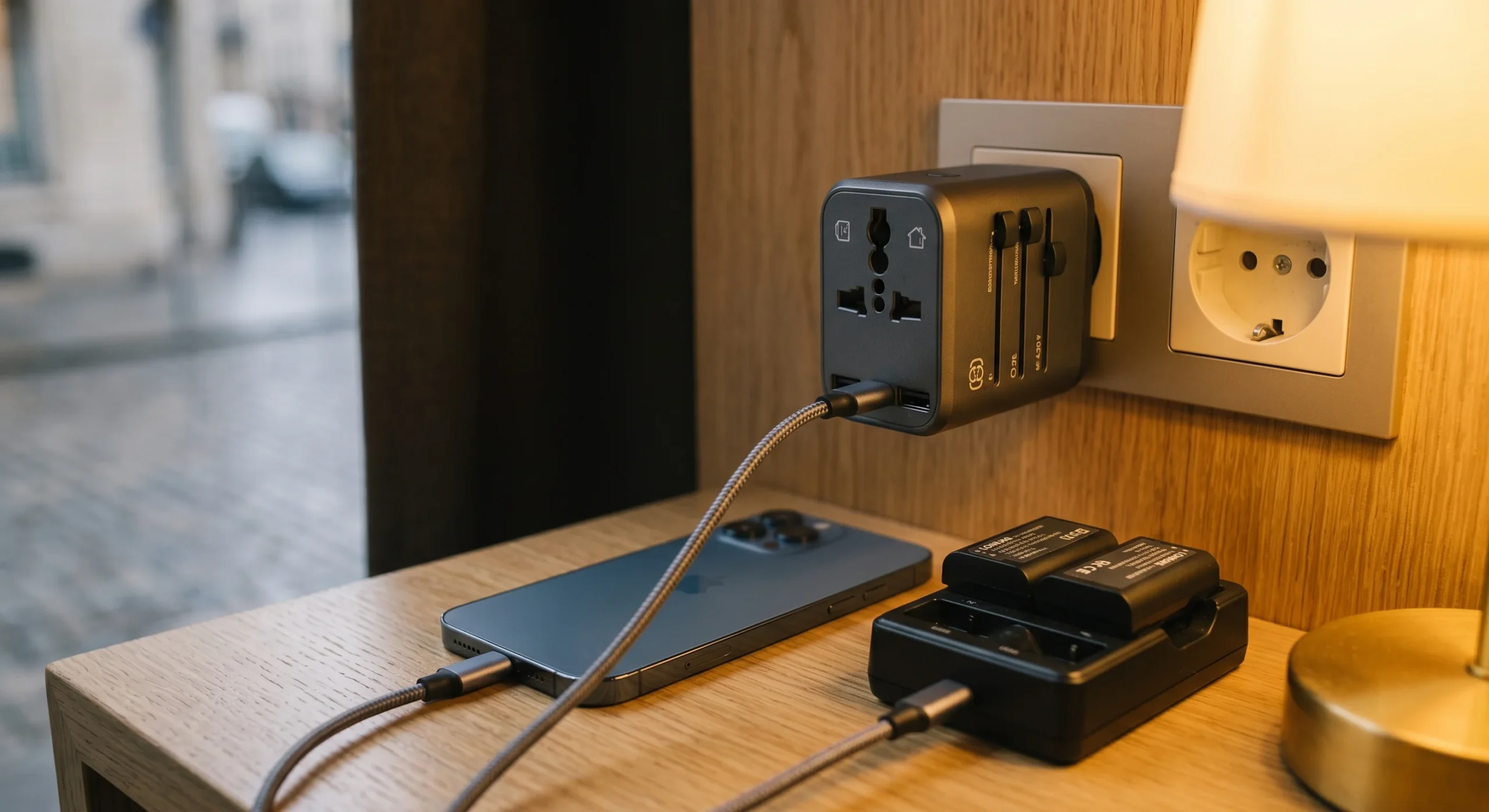
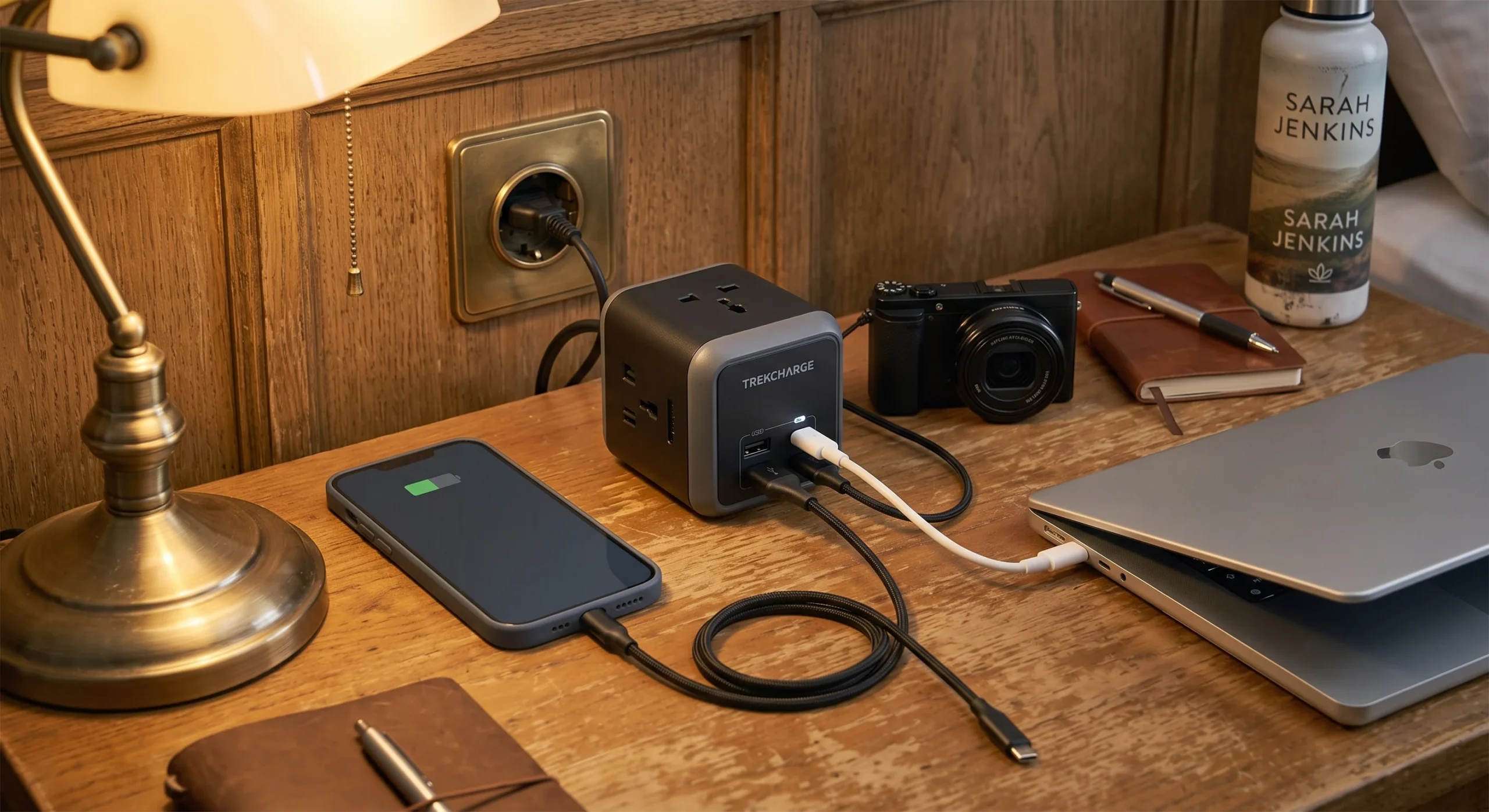
A universal travel adapter is one of the most practical, least glamorous items on this entire packing list, and also one of the easiest to forget until you’re standing in a hotel room with a dead phone and no way to charge it. European outlet types genuinely vary by country, so a single universal adapter is far more efficient than researching and buying separate country-specific versions for a multi-country itinerary. Models with built-in USB ports are worth the small price difference, since they let a phone, camera, and portable charger all draw power from one outlet simultaneously.
A useful habit is packing this near the top of your bag or in an easily accessible pocket, since it’s genuinely one of the first things you’ll need after checking into your first accommodation. For travelers bringing higher-wattage devices like hair styling tools, it’s worth double-checking voltage compatibility specifically, since not every adapter handles that safely without an additional converter. This is a small, inexpensive item, but forgetting it creates a disproportionately large inconvenience on day one of a two-week trip, right when you’re already tired from travel and least equipped to solve it.
Portable Phone Charger
- A portable charger keeps your phone usable through long sightseeing days without hunting for an outlet.
- Choose one with enough capacity for at least one full phone charge, ideally two.
- Pack the matching charging cable in the same pocket so the two never get separated.
- This becomes essential on travel days, when your phone doubles as a map, ticket, and camera at once.
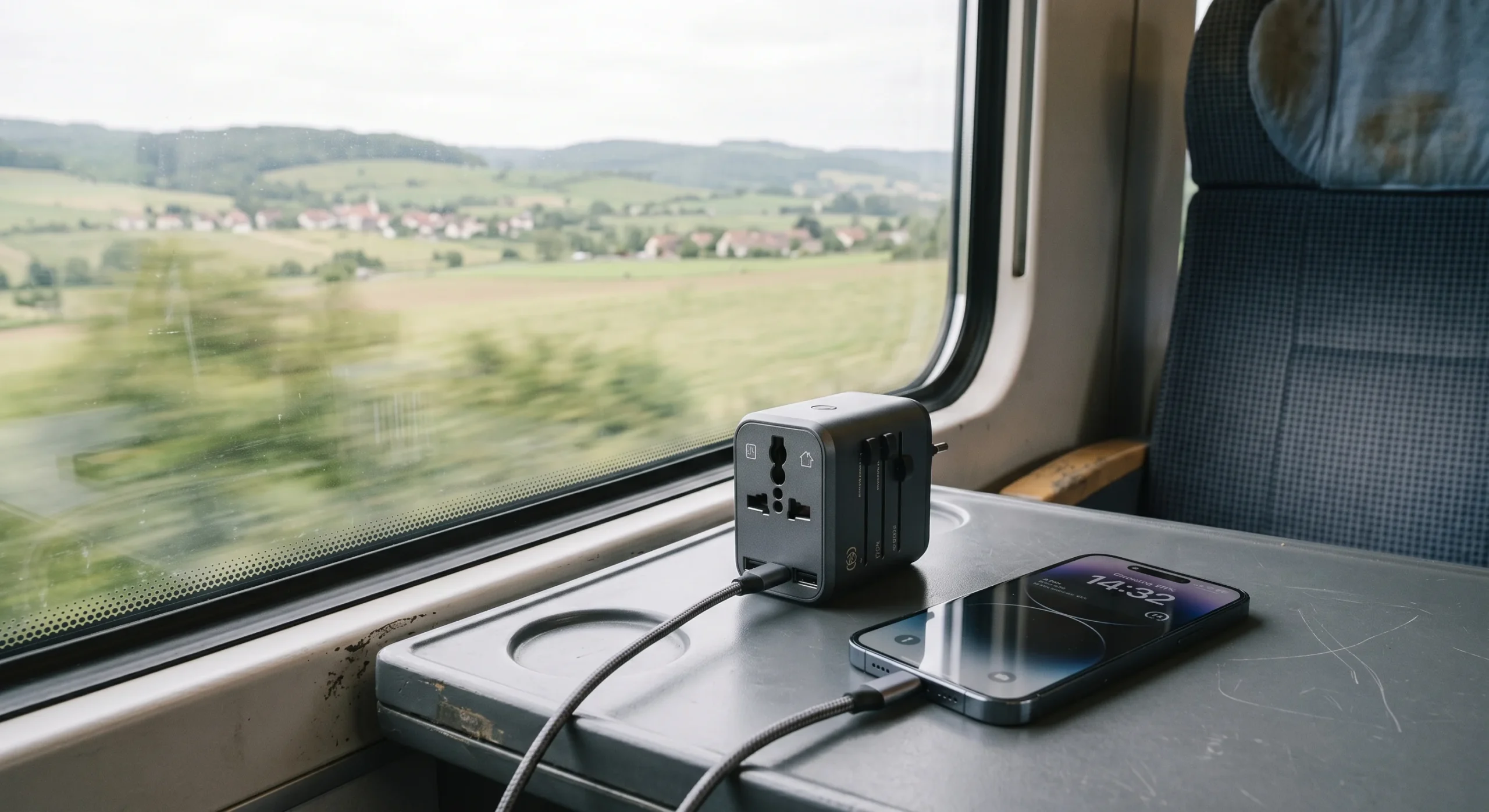
A portable phone charger solves a problem that’s easy to underestimate before a trip: your phone works harder on travel days than it typically does at home, running maps, translation apps, tickets, and photos often at the same time. A single day of heavy use can drain a battery well before evening, right around the time you actually need it to find your way back to your accommodation. Choosing a charger with enough capacity for at least one full charge, ideally closer to two, covers most full sightseeing days without needing to hunt for an outlet mid-afternoon.
A small but genuinely useful habit is keeping the charger and its matching cable in the same pocket at all times, since the two becoming separated defeats the entire purpose of carrying either one. This item earns its weight especially on travel days between cities, when a phone effectively becomes your map, boarding pass, and camera rolled into one device. For a two-week Europe trip covering multiple cities, this is one of the more genuinely indispensable items on the whole list, not just a nice-to-have extra.
Quick-Dry Travel Towel
- A compact quick-dry towel packs far smaller than a standard bath towel and dries overnight.
- Useful for hostels that don’t provide towels, or for beach and pool stops along the itinerary.
- Microfiber versions dry the fastest, which matters when repacking the next morning after a shower.
- Pack it in an outer pocket so it can air out rather than staying damp inside the bag.
A quick-dry travel towel is a small, often overlooked item that solves a real problem for anyone staying in budget accommodation or moving between multiple stops on a two-week trip. Standard bath towels take up significant suitcase space and can stay damp for days if there’s no proper place to hang them between uses. A compact microfiber version packs down to roughly the size of a folded shirt and dries substantially faster overnight, which matters when you’re repacking and moving to a new city the following morning.
This item is especially useful for anyone staying in hostels that don’t provide towels as standard — or for spontaneous beach and pool stops that come up along a longer itinerary. A practical habit is packing it in an easily accessible outer pocket rather than buried inside the main suitcase, since airing it out between uses prevents the slightly musty smell a damp towel can develop when sealed away. It’s inexpensive, lightweight, and one of those items you won’t think about until the exact moment you genuinely need it.

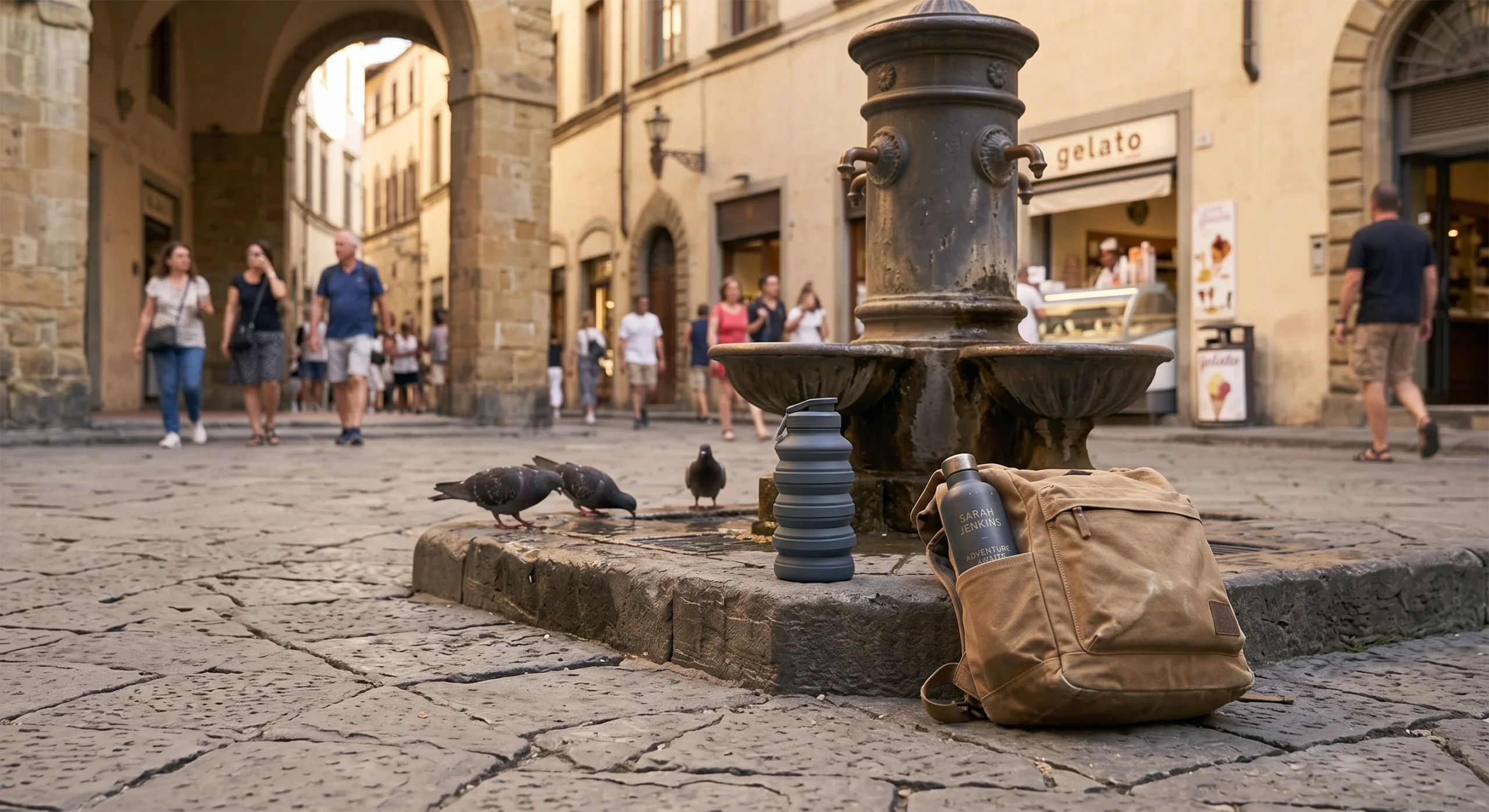
Reusable Water Bottle
- Many European cities have public fountains with drinkable water, making a reusable bottle genuinely cost-effective.
- Choose a collapsible or lightweight option to save space when the bottle isn’t in use.
- Refilling instead of buying bottled water repeatedly adds up to real savings across two weeks.
- An insulated version keeps water cool during long walking days in warmer months.
A reusable water bottle is a simple item that pays for itself surprisingly quickly on a longer European trip, particularly in cities known for public drinking fountains like Rome, Paris, or Vienna. Buying bottled water repeatedly throughout each day adds up to real, avoidable cost across a full two-week itinerary, especially in tourist-heavy areas where prices run higher than elsewhere. A lightweight or collapsible bottle takes up minimal space in a daypack when empty, which matters when that same bag is also carrying a camera, a jacket, and other daily essentials.
Staying properly hydrated also matters more than most travelers expect during long walking days, particularly in warmer months when a full day of sightseeing can be more physically demanding than anticipated. An insulated bottle keeps water noticeably cooler for longer, which becomes genuinely appreciated by early afternoon on a hot day without much shade available. Beyond the practical savings, refilling from a fountain rather than buying plastic bottles repeatedly is also a small, easy way to reduce waste across the length of a longer trip.
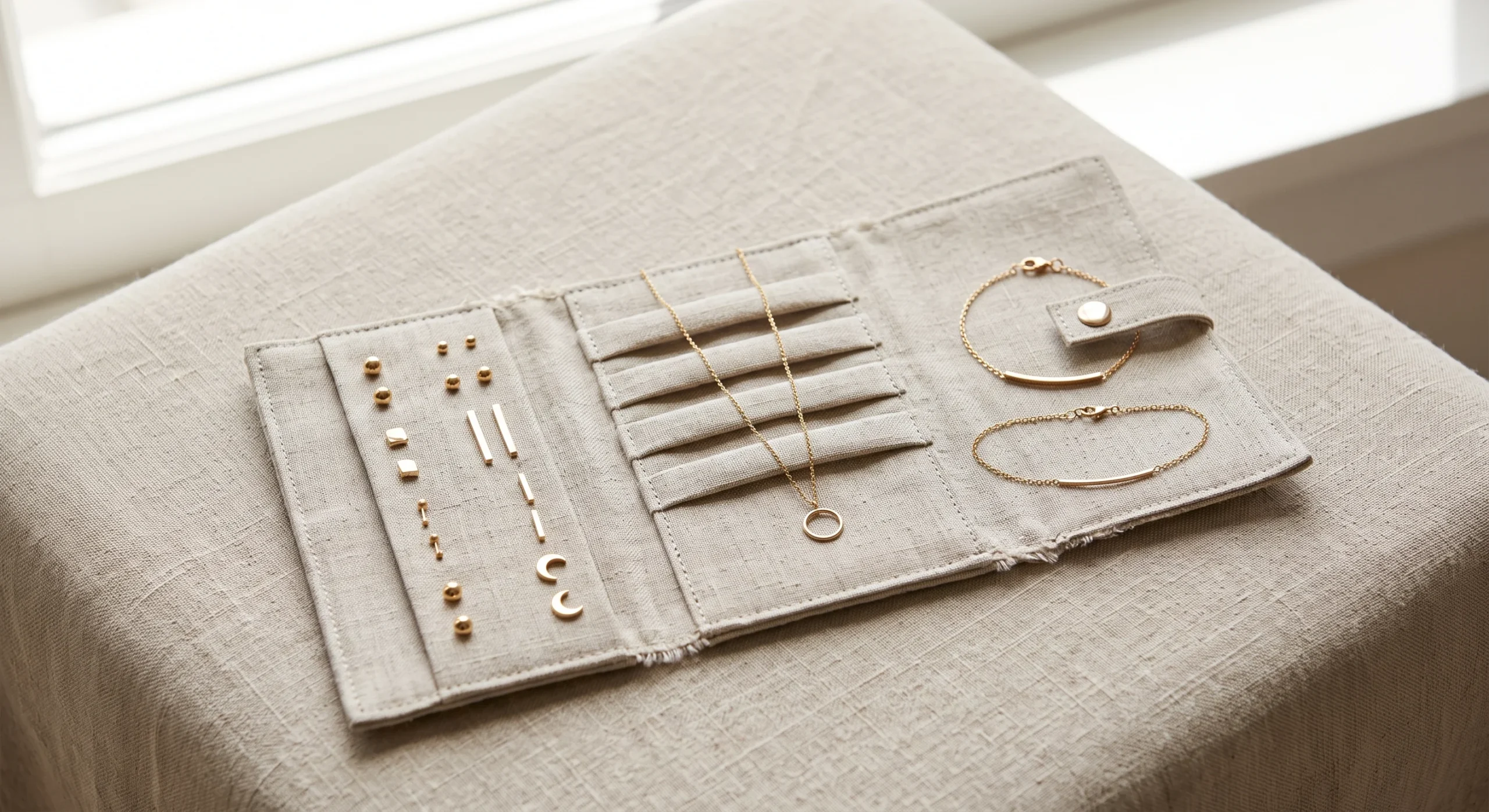
Minimalist Jewelry Set
- A few interchangeable pieces work across your whole capsule wardrobe instead of packing outfit-specific jewelry.
- Leave valuable or sentimental pieces at home — theft and loss risk is genuinely higher while traveling.
- A small jewelry roll or pouch keeps pieces from tangling loose in your bag.
- Simple gold or silver-tone basics photograph well and match nearly everything in a neutral wardrobe.
A minimalist jewelry set follows the same logic as the capsule wardrobe: a small number of interchangeable, neutral pieces work across every outfit rather than packing something different for each individual look. Simple studs, a thin chain, and one versatile bracelet or watch typically cover the range of situations a two-week trip involves, from casual sightseeing days to a slightly dressier dinner out. Keeping this collection small also means less to manage, track, and worry about losing across a trip spanning multiple hotels and train changes.
A genuinely important practical note: valuable or sentimental jewelry is safer left at home, since the risk of loss or theft is real while traveling, particularly in crowded tourist areas and on public transit. A small jewelry roll or zippered pouch keeps the pieces you do bring from tangling together loose inside a bag, which saves frustration when getting ready each morning. Simple gold or silver-tone basics also tend to photograph well against most backdrops along the trip.
Scarf as Layering Piece
- A large scarf works as a light layer, a travel blanket on flights, or a head covering at religious sites.
- Choose a neutral or versatile print that pairs easily with multiple outfits in your capsule wardrobe.
- A lightweight cotton or cotton-linen blend works across more weather conditions than a heavier wool version.
- This is one of the lightest, most flexible items on this entire list relative to how often it gets used.
A scarf might seem like a small styling detail, but on a two-week Europe trip it quietly becomes one of the most functional items in the entire bag. Beyond the obvious styling use, a large scarf doubles as a light layer on a cooler evening, a makeshift blanket during a long flight or train ride, and a head covering at the many European churches and religious sites that require one for entry. Few other items on this list serve this many genuinely different purposes while taking up so little suitcase space.
Choosing a neutral tone or a versatile print, rather than something that only matches one specific outfit, means this single item pairs easily across most of your capsule wardrobe throughout the trip. A lightweight cotton or cotton-linen blend tends to work across more weather conditions than a heavier wool version, which can feel too warm during unexpectedly mild days. This is genuinely one of the lightest, most flexible additions to a packing list relative to how frequently it actually gets used across two full weeks of travel.

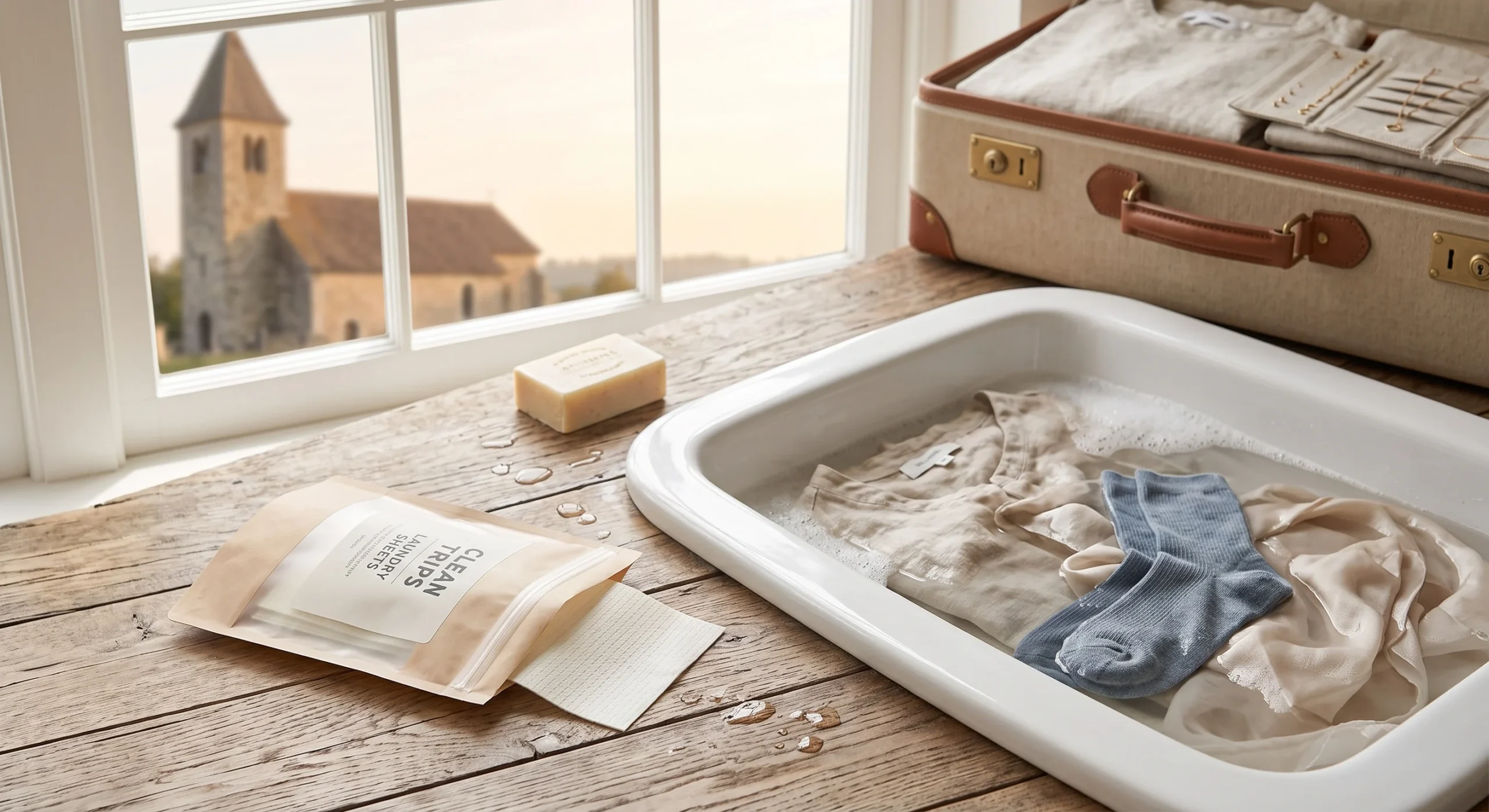
Laundry Sheets Pack
- Small laundry detergent sheets let you wash clothes in a sink without packing bulky liquid detergent.
- Useful for a mid-trip refresh instead of packing enough outfits for the entire two weeks.
- Sheets dissolve fully in cold water, making them practical for a quick hotel or hostel sink wash.
- Pack a handful in a small zip pouch rather than the full original packaging.
Laundry sheets are one of the more underrated items on this list, directly enabling the smaller capsule wardrobe recommended earlier in this guide. Instead of packing enough clothing to avoid ever doing laundry across two full weeks, a handful of lightweight detergent sheets lets you wash a few key items in a sink partway through the trip. Each sheet dissolves completely in cold water, so no measuring or spilling liquid detergent is involved, which matters when you’re working with a small hotel bathroom sink rather than a proper washing machine.
A practical approach is packing roughly one sheet per planned wash, tucked into a small zip pouch rather than carrying the full original box, which saves meaningful space and weight. This idea directly supports the lighter capsule wardrobe strategy covered earlier, since knowing you can refresh a few items mid-trip removes the pressure to pack extra outfits just in case something runs out. It’s a small, inexpensive habit that meaningfully reduces overall luggage weight across a longer international trip, without ever leaving you short on clean clothes.
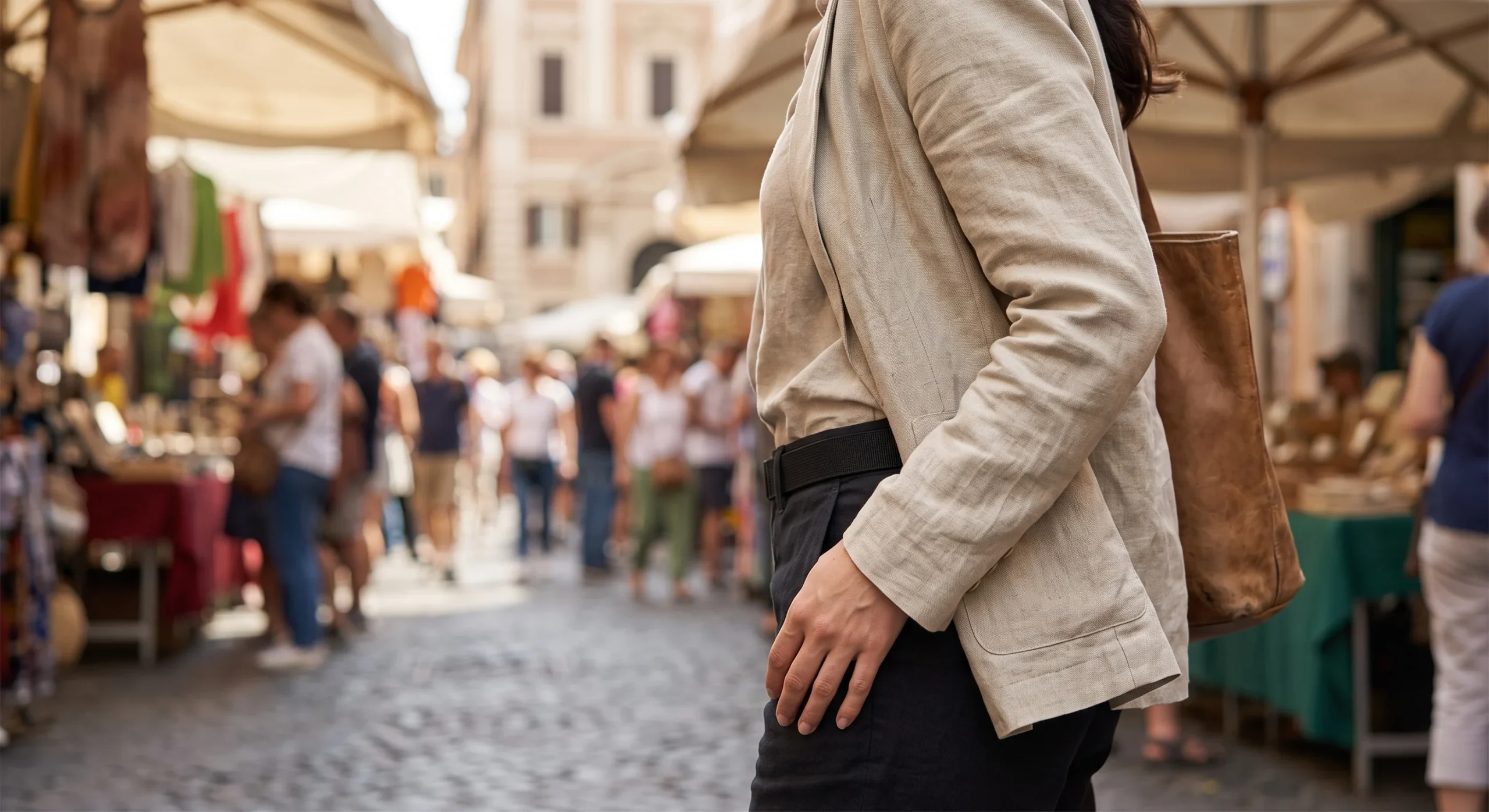
Money Belt Security
- A money belt worn under clothing keeps passports, cards, and cash secure in crowded tourist areas.
- Choose a slim, breathable design rather than a bulky one that shows visibly under clothing.
- Use it for backup cash and documents, keeping a smaller amount in an easily accessible bag for daily use.
- Pickpocketing is a genuine, common risk in busy European tourist areas and train stations.
A money belt addresses one of the more practical safety concerns of traveling through busy European cities: pickpocketing, which remains a genuine and fairly common issue in crowded tourist areas, train stations, and popular markets. Worn under clothing rather than as a visible accessory, it keeps a passport, backup cards, and extra cash secured against your body rather than in an easily accessible bag pocket. This isn’t about assuming the worst everywhere you go, but rather a sensible, low-effort precaution that removes one genuine source of travel anxiety for the length of the trip.
A slim, breathable design matters here, since a bulky money belt tends to show visibly under clothing and can actually draw more attention than it prevents in the first place. A practical approach is keeping only backup documents and extra cash in the belt, while a smaller, more accessible amount stays in a daypack for daily spending throughout the day. This two-tier system means losing a wallet or a bag pocket to a pickpocket doesn’t put your entire trip’s documents and funds at risk all at once.
Digital Document Backup
- Photograph or scan your passport, itinerary, and insurance documents before leaving, storing copies in the cloud.
- Email copies to yourself as a simple backup that’s accessible from any device with internet access.
- Keep one physical printed copy separate from your main bag as an additional layer of backup.
- This step takes minutes but genuinely simplifies replacing a lost document while abroad.
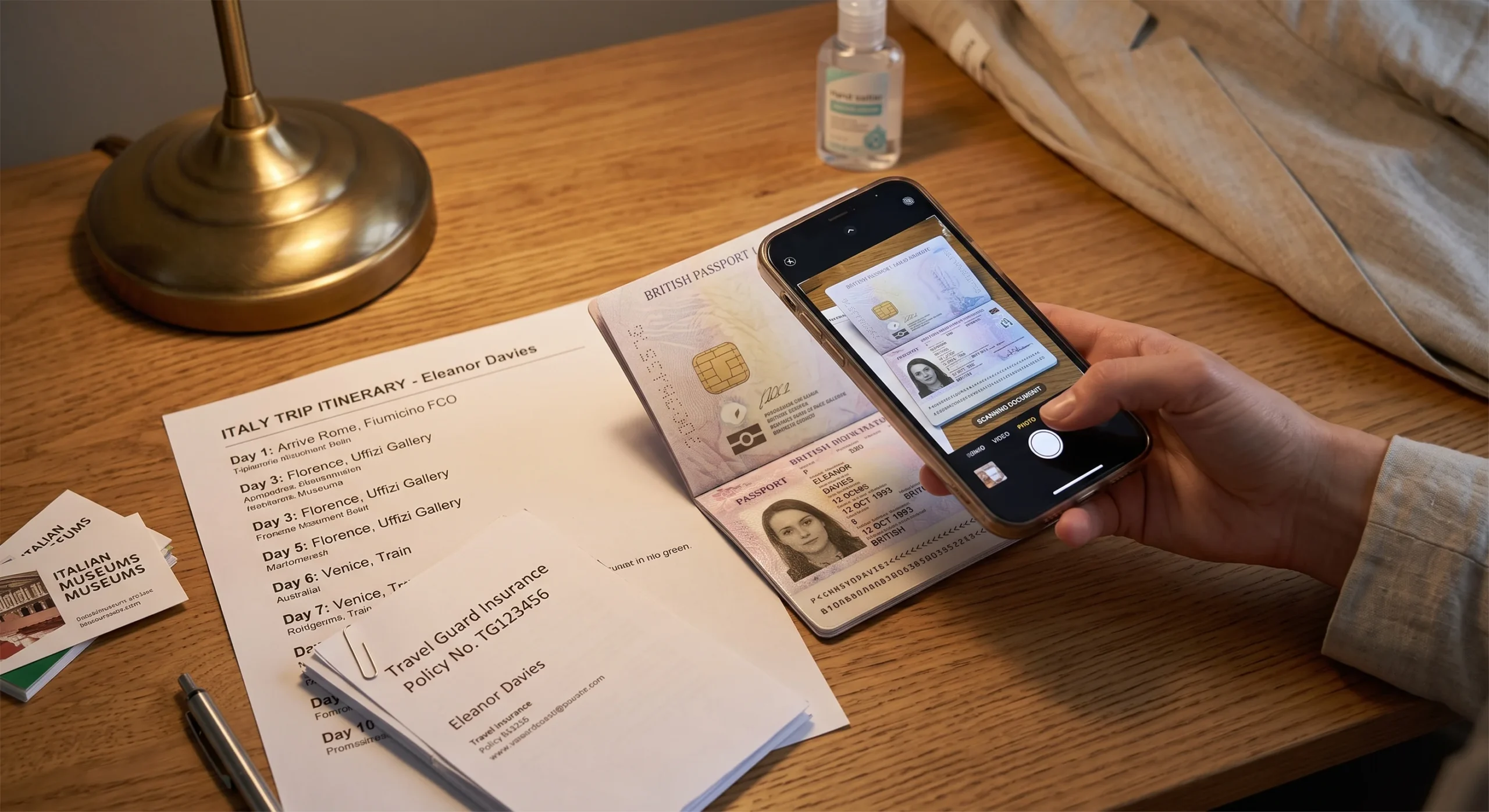
A digital document backup isn’t a physical item to pack, but it belongs on this list because it’s one of the most genuinely important preparations for a longer international trip. Before leaving, photographing or scanning your passport, travel insurance details, and full itinerary, then storing copies somewhere accessible like a cloud drive or email, takes only a few minutes but meaningfully reduces the stress of a lost or stolen document while abroad. This is the kind of step that costs nothing and feels unnecessary right up until the moment it genuinely isn’t.
A useful habit is emailing copies to yourself specifically, since that version stays accessible from literally any device with internet access, including a borrowed phone or a hotel business center computer in an emergency. Keeping one physical printed copy separate from your main bag, perhaps in a daypack or a different piece of luggage, adds a further layer of backup in case a phone is also lost or stolen at the same time. It’s a small precaution that meaningfully speeds up replacing a passport at an embassy if the worst genuinely happens.
Compact First-Aid Kit
- A small kit with bandages, pain relievers, and blister care covers most minor travel mishaps.
- Include any personal prescription medication in its original labeled packaging to avoid issues at customs.
- Blister plasters are especially worth including given how much walking a European itinerary usually involves.
- Keep the kit small — this is meant for minor issues, not a full pharmacy in your bag.
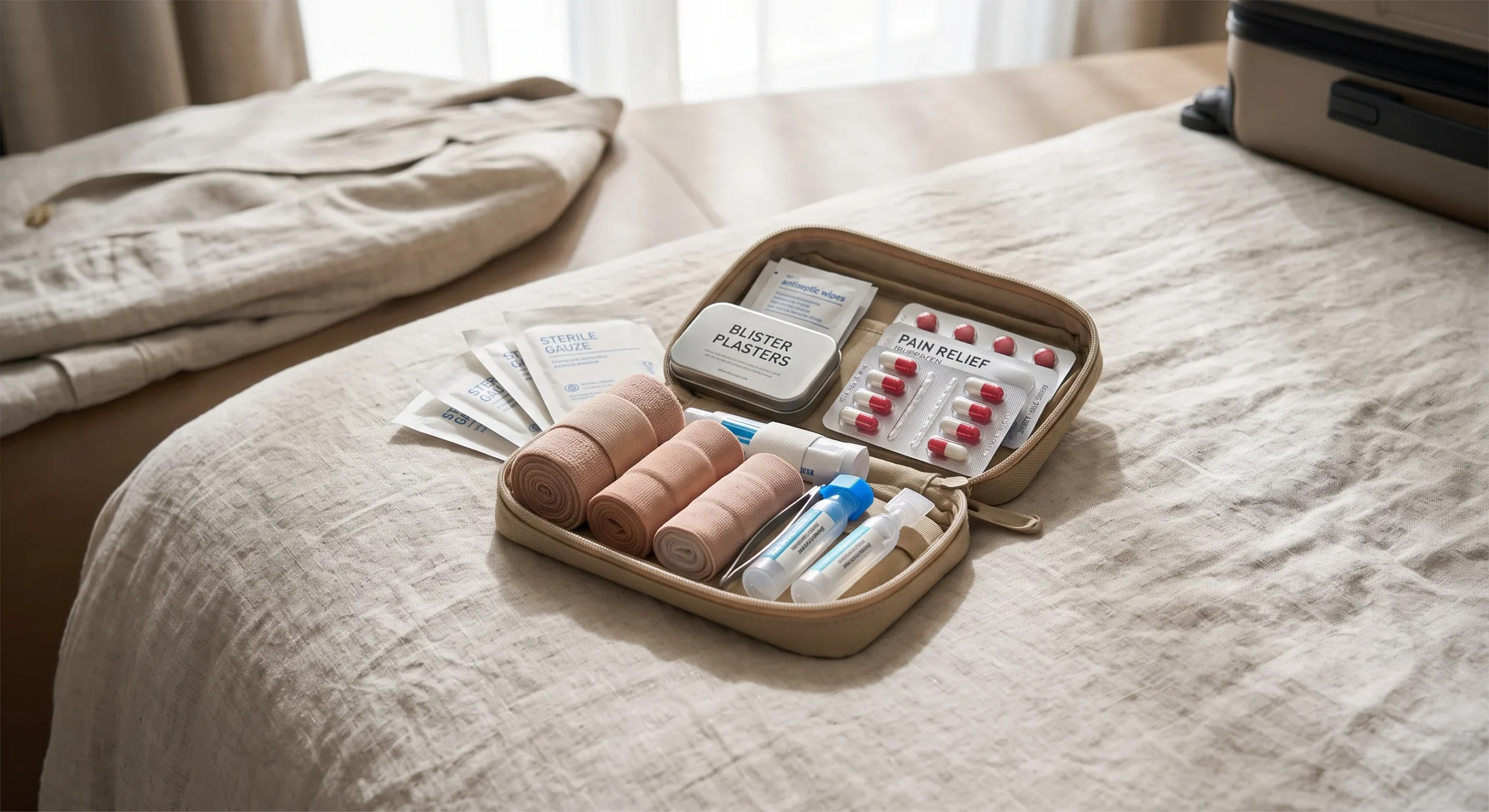
A compact first-aid kit covers the kind of small, common issues that come up on almost every longer trip, even a well-planned one: a headache, a minor cut, or the blisters that inevitably show up after several consecutive days of heavy walking. Packing a small kit with basic bandages, pain relievers, and blister-specific plasters means you’re not searching for an open pharmacy in an unfamiliar city late at night over something genuinely minor. This is a small, lightweight addition that solves real, common problems rather than an overly cautious just-in-case item.
Anyone taking regular prescription medication should pack enough for the full trip in its original, clearly labeled packaging, since this avoids potential issues at customs or airport security checks along the way. Blister care specifically deserves extra attention on a European itinerary, given how much walking most two-week trips genuinely involve across cobblestone streets and long museum days. The goal here is a small, practical kit for minor issues, not a comprehensive medical bag, so keeping it compact matters more than trying to prepare for every possible scenario.
Crossbody Daypack
- A crossbody bag keeps hands free for photos, maps, and tickets during full days of sightseeing.
- Look for a design with a zippered main compartment for basic security in crowded areas.
- A slim profile is easier to navigate through tight museum crowds and narrow European streets.
- This becomes your primary daily bag, so comfort over several walking hours matters more than style alone.
A crossbody daypack becomes the single most-used bag on a European trip, carrying everything from a water bottle and phone charger to a map, snacks, and the day’s purchases. Worn across the body rather than over one shoulder, it keeps both hands free for photos, tickets, and navigating crowded streets, while also sitting more securely against pickpocketing attempts than a loosely worn shoulder bag. A zippered main compartment adds a basic but genuinely useful layer of security in busy tourist areas, train stations, and crowded markets where bags see the most exposure.
A slimmer profile matters more than it might seem, since a bulky bag becomes genuinely awkward to navigate through tight museum crowds, narrow old-town streets, and full metro cars during peak hours. Because this bag gets worn for hours at a stretch on most days, comfort — padded straps, breathable material, a reasonable weight when full — should outweigh style when choosing between options. This is worth spending a little more on relative to some other items on this list, given just how much daily use it genuinely gets.

Foldable Tote Bag
- A packable tote takes up almost no space empty but expands for groceries, laundry, or souvenirs.
- Useful as an extra carry-on for the flight home if you’ve picked up more than expected.
- Choose a sturdy fabric rather than an ultra-thin one that tears easily under real weight.
- Doubles as a beach or picnic bag on any warmer-weather stops along the itinerary.
A foldable tote bag is one of the smallest, lightest items on this entire list, yet it consistently proves useful in ways that are hard to predict before the trip actually starts. Packed down, it takes up barely any space at all, but unfolded it handles grocery runs, a laundry load to a nearby laundromat, or the inevitable extra souvenirs picked up partway through a two-week trip. It’s the kind of item that sits unused in the bottom of your bag for days, then suddenly earns its spot completely on one specific afternoon.
A sturdier fabric is worth prioritizing over an ultra-thin, flimsy version, since a tote that tears under real weight defeats the entire purpose of carrying one in the first place. Many travelers find this becomes an essential extra carry-on for the flight home specifically, once accumulated souvenirs and purchases no longer fit neatly back into the original suitcase. On warmer-weather stops along a European itinerary, it also doubles easily as a casual beach or picnic bag, adding yet another use to an item that costs very little and weighs almost nothing.

Travel-Size Toiletries
- Reusable silicone travel bottles let you bring favorite products without buying new travel-size versions each trip.
- Check airline liquid restrictions before packing, since limits vary slightly between different carriers and regions.
- A hanging toiletry bag saves counter space in smaller European hotel bathrooms.
- Solid alternatives like shampoo bars skip liquid restrictions entirely and save space in a carry-on.
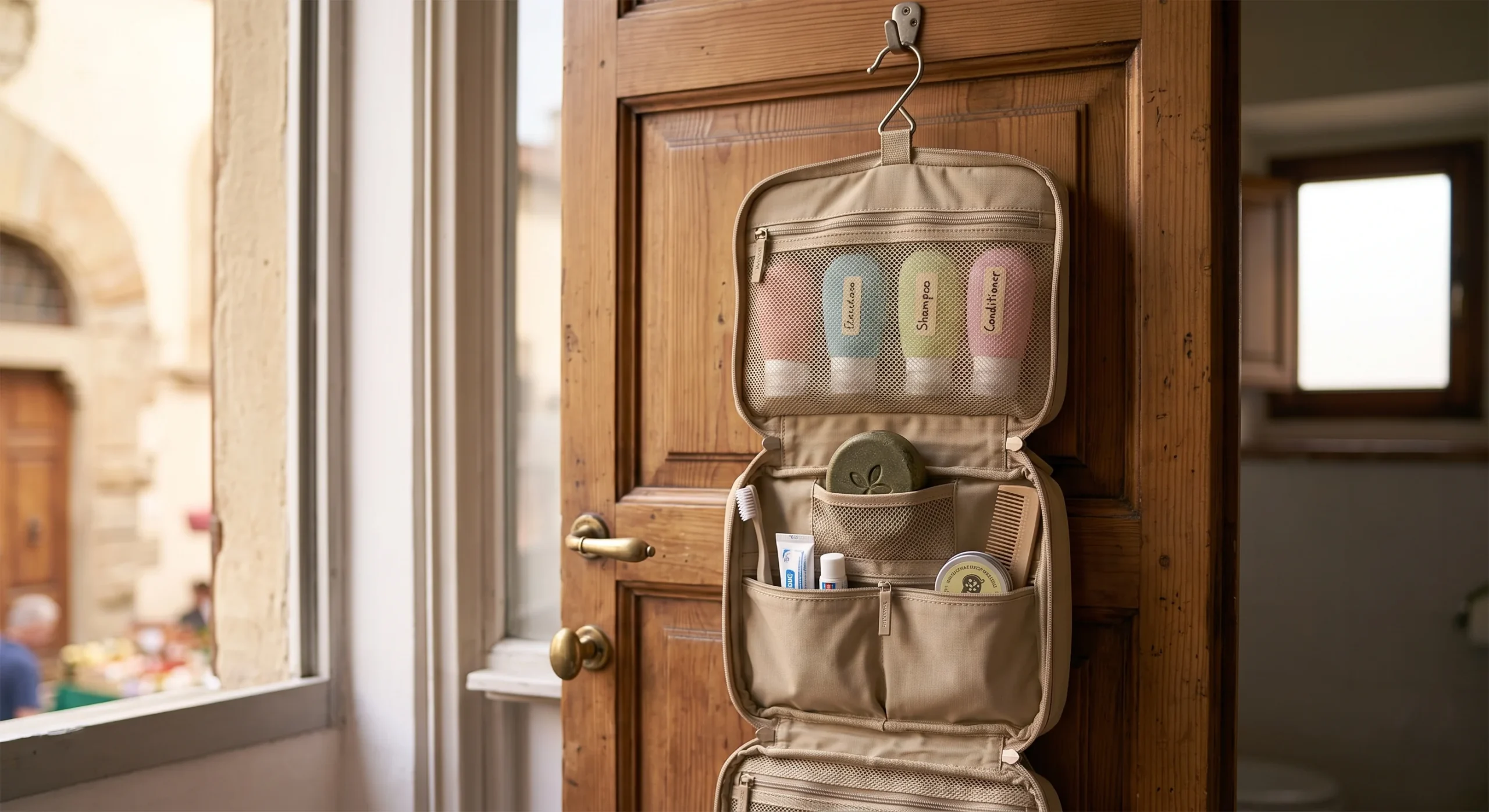
Travel-size toiletries solve a genuinely practical space problem, especially for anyone flying with only a carry-on for a two-week trip across multiple cities. Reusable silicone travel bottles let you bring your actual preferred products from home rather than buying new, less familiar travel-size versions before every trip, which adds up in both cost and unnecessary plastic waste over time. Checking your specific airline’s liquid restrictions before packing is worth the two minutes it takes, since limits vary slightly between carriers.
A hanging toiletry bag is a small but genuinely useful upgrade for European hotel bathrooms, which tend to run smaller than what many travelers are used to, with limited counter space for laying items out. Solid alternatives, like a shampoo bar or solid deodorant, skip liquid restrictions entirely and take up noticeably less space than their bottled equivalents across a full toiletry kit. This is an area where a bit of upfront planning genuinely pays off daily, rather than fumbling through a disorganized bag every morning of the trip.
Entertainment for Transit
- Downloaded shows, podcasts, or e-books make long train rides and flights pass considerably faster.
- Download content before departure, since wifi on trains and in transit isn’t always reliable.
- A physical book is a reliable backup for anyone who prefers avoiding screens during travel days.
- Noise-canceling or basic earbuds make a real difference on longer, noisier train journeys.
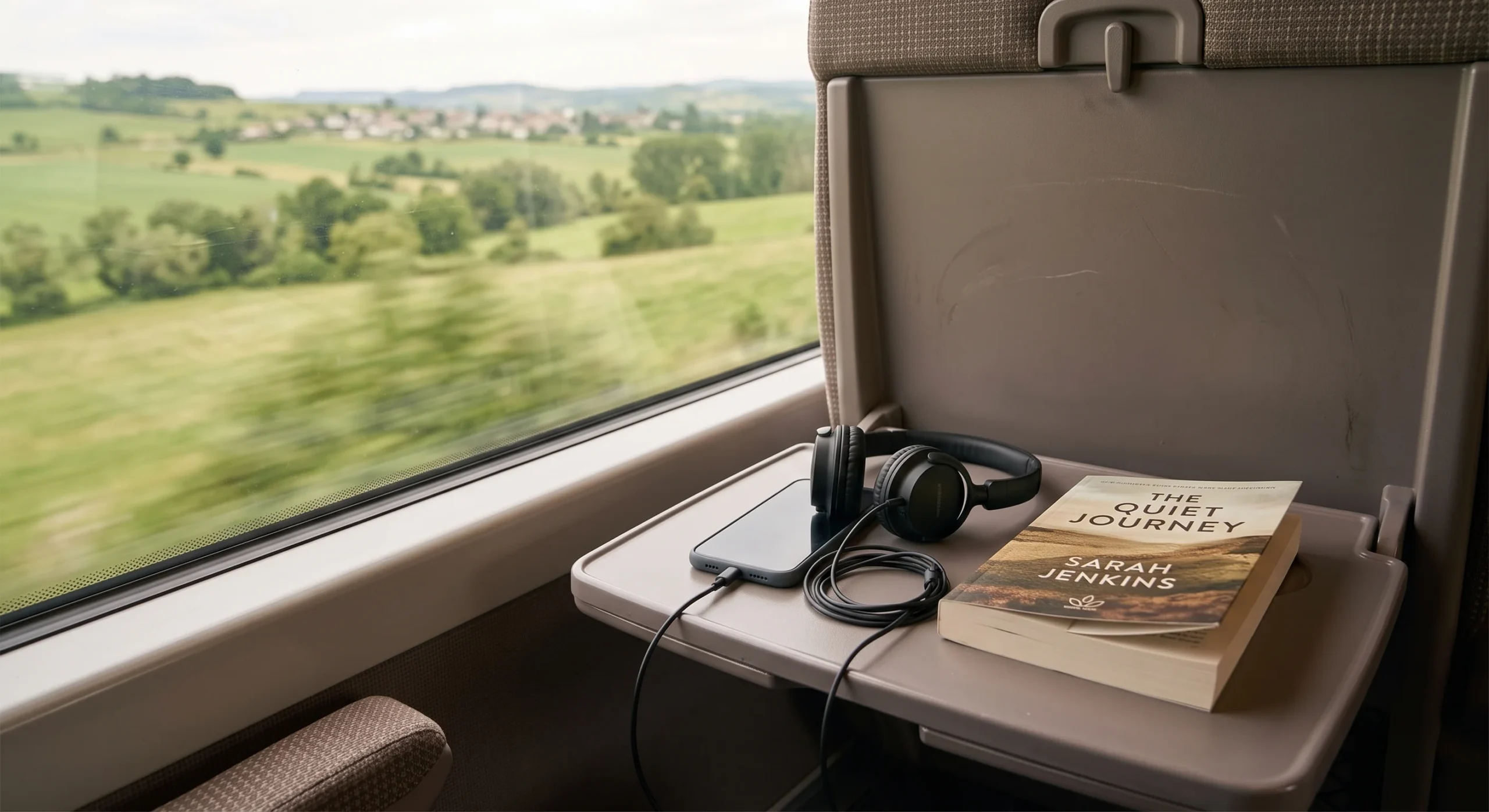
Entertainment for transit matters more on a two-week Europe trip than it might initially seem, given how much time is genuinely spent on trains and occasional flights moving between cities. Long train rides through the countryside are part of the appeal, but several hours can still feel considerably longer without something downloaded and ready to go beforehand. Podcasts, downloaded shows, or e-books all work well, and downloading content before departure matters specifically because train and airport wifi isn’t always reliable enough to stream.
A physical book remains a genuinely solid backup option for anyone who’d rather avoid screens during travel days, and it doesn’t rely on battery life the way digital entertainment does. Basic or noise-canceling earbuds make a real, noticeable difference on longer or noisier train journeys, particularly on routes that pass through several stations with frequent announcements along the way. This is a small category of preparation, but it meaningfully changes how several multi-hour travel days actually feel across the full two weeks of the trip.
Spare Outlet Strip
- A small outlet strip lets multiple devices charge from a single adapter in hotel rooms with few outlets.
- Useful in older European hotels and hostels, which often have fewer outlets than modern accommodations.
- Choose a compact, lightweight version designed for travel rather than a bulky home power strip.
- Pair it with just one universal adapter instead of needing multiple separate adapters for each device.
A spare outlet strip solves a specific, common frustration: many hotel rooms and hostels, especially older buildings across Europe, simply don’t have enough outlets for a phone, a laptop, a camera battery, and a portable charger all at once. Rather than packing several individual travel adapters, a compact travel power strip paired with just one universal adapter lets multiple devices charge simultaneously from a single outlet. This is a small item most first-time travelers don’t think to pack, but it noticeably reduces the nightly scramble for available outlets in a shared or older room.
Choosing a compact, genuinely travel-designed version matters here, rather than repurposing a bulky home power strip that adds unnecessary weight and takes up too much suitcase space. This item pairs particularly well with the universal adapter covered earlier on this list, since together they solve both the plug-shape and outlet-quantity problems that so often come up in European accommodations. It’s an inexpensive addition that consistently proves its worth by the second or third hotel of a longer, multi-city trip, saving small daily frustrations that add up over two full weeks.
Emergency Cash Stash
- A small amount of local currency, kept separate from your main wallet, covers situations where cards don’t work.
- Useful for smaller markets, older transit systems, or rural stops where card readers aren’t always reliable.
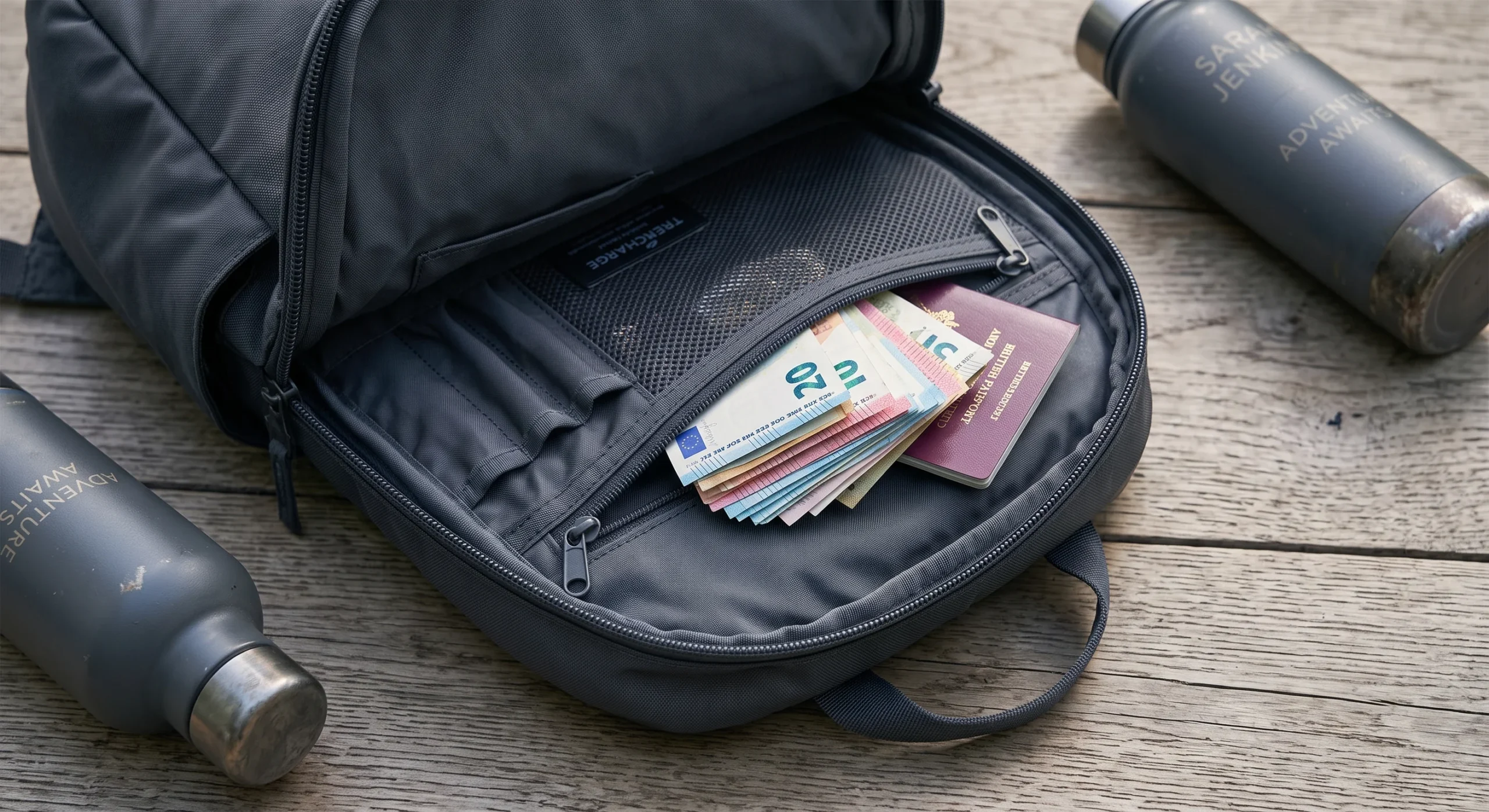
- Split it between your daypack and money belt rather than keeping it all in one place.
- This isn’t your main spending money — just a genuine backup for unexpected situations.
An emergency cash stash is a small, easily overlooked addition that solves a real problem: cards don’t always work everywhere, particularly in smaller markets, older transit systems, or more rural stops that a two-week itinerary might include beyond the major cities. Keeping a modest amount of local currency separate from your main wallet or spending money means you’re never fully stuck if a card reader fails or an ATM is temporarily out of service in an unfamiliar town. This isn’t meant to replace cards as your primary payment method, just a genuine backup for the situations where they don’t work.
A practical approach is splitting this emergency cash between your daypack and the money belt covered earlier on this list, rather than keeping the full amount in one single place. This way, losing one bag or pocket doesn’t mean losing access to backup funds entirely for the rest of the trip. It’s a small, low-effort precaution that genuinely earns its place among the more essential items on this list, even though it’s the kind of thing most travelers hope they never actually need to use.
FAQ
How many outfits do I actually need for two weeks in Europe?
With a proper capsule wardrobe and access to laundry sheets mid-trip, seven to ten clothing pieces genuinely covers a two-week trip comfortably. Trying to pack a separate outfit for every single day usually just adds unnecessary weight without adding much real value.
Do I really need a money belt if I’m just visiting major cities?
Even in well-known, heavily touristed cities, pickpocketing remains a common and genuine risk, particularly around major attractions and crowded public transit. A money belt is a low-effort precaution rather than an overreaction, and it’s worth using even on a fairly relaxed, low-risk itinerary.
Should I check a bag or travel carry-on only for a two-week trip?
This list is built with carry-on travel in mind, since it genuinely makes moving between multiple cities faster and removes the risk of lost checked luggage entirely. A well-chosen capsule wardrobe and compression bags make carry-on-only realistic even for a full two weeks.
What’s the one item people most often forget to pack?
A universal adapter is the most commonly forgotten item, usually because it’s easy to assume phone chargers alone will work fine at the destination. It’s worth double-checking this is packed before leaving, since replacing one abroad often means paying a premium at an airport shop.
Conclusion
Packing well for two weeks in Europe isn’t about bringing more — it’s about bringing the right twenty things and trusting that to be enough. This europe packing list is built around real problems travelers actually run into: dead batteries, missing outlets, sudden rain, and a suitcase that’s simply too full by day three. Start with the capsule wardrobe, layer in the practical extras, and leave the rest behind with confidence. Save this list to Pinterest before your next trip, pack what actually earns its space, and share it with anyone you know who’s about to over-pack for their own European adventure.