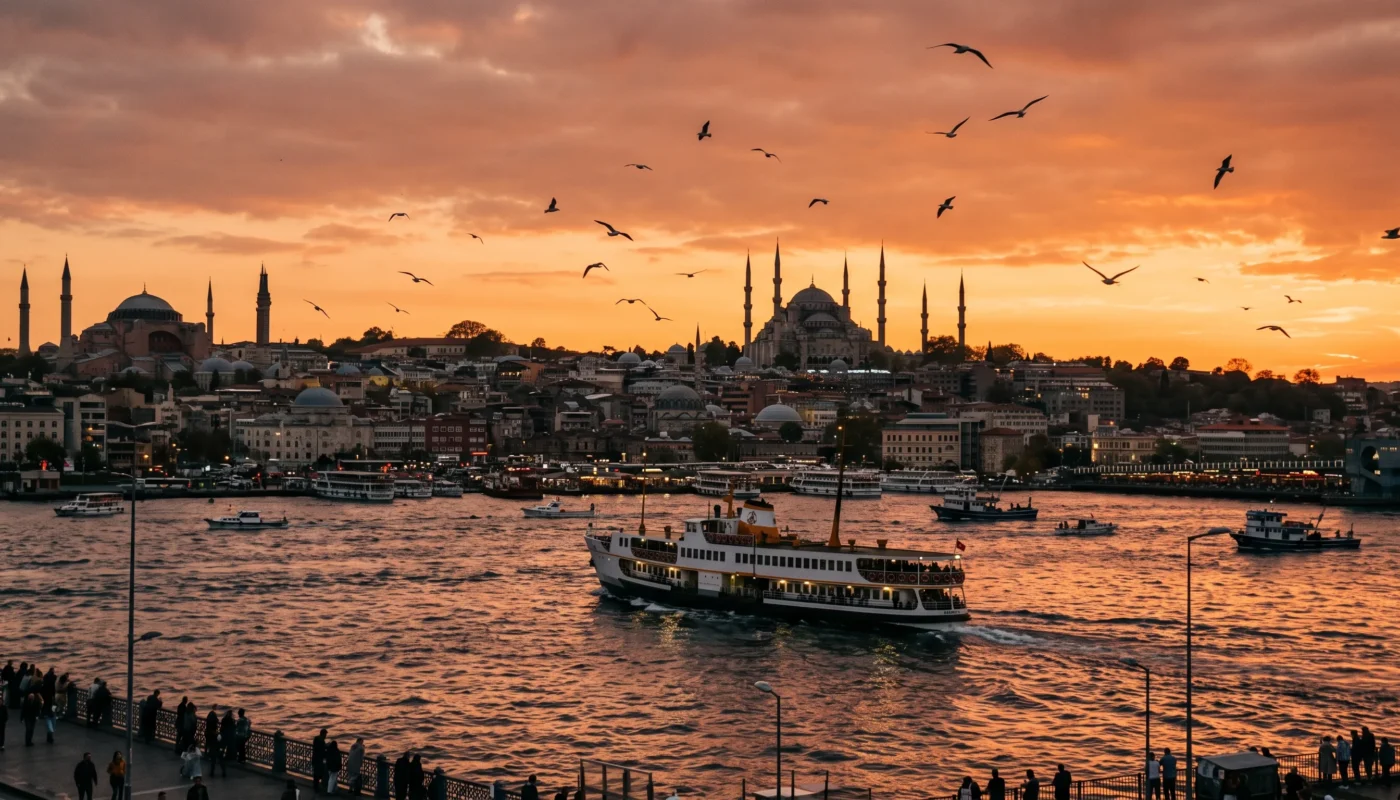

A weekend in Istanbul sounds short for a city with this much history, but two focused days can genuinely cover the highlights without feeling rushed if the itinerary is planned with intention. This ultimate weekend itinerary for Istanbul splits the trip across Sultanahmet’s major monuments on day one and the bazaars, waterfront neighborhoods, and local cafes of Beyoğlu on day two. Along the way, it breaks down whether the Istanbul Museum Pass is worth buying for just two days, how the Istanbulkart transit system actually works, and which single scheduling mistake can quietly undo an otherwise well-planned weekend in this city.
Start Here: Museum Pass Math
Deciding this before the trip starts determines how the rest of day one gets scheduled, and getting it wrong either wastes money on unused pass days or costs more in separate ticket lines.
Sultanahmet Morning Start
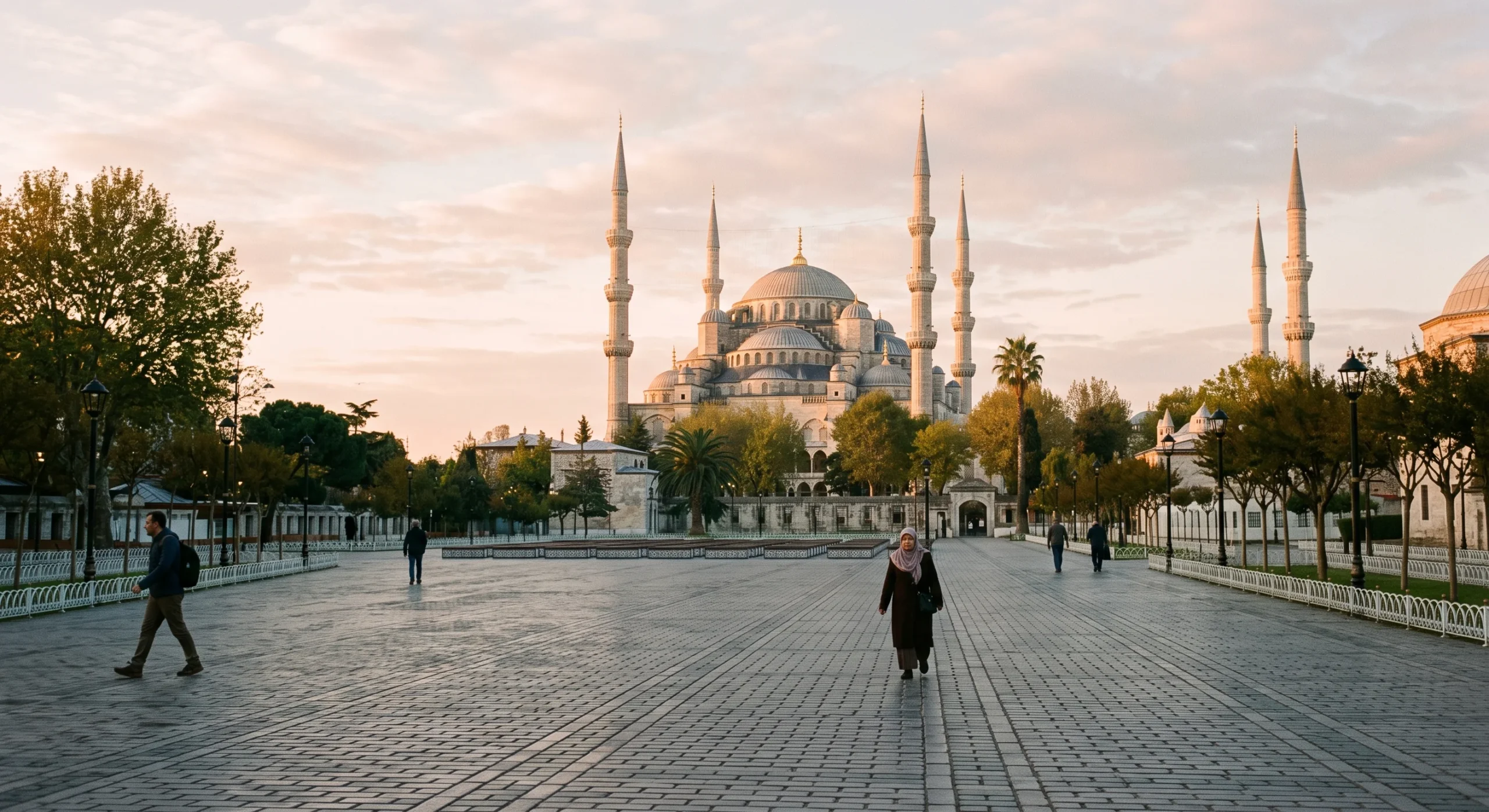
Sultanahmet Square is the natural starting point for a weekend in Istanbul, since nearly every major historic site on this itinerary sits within easy walking distance of it. Arriving early, ideally by 8:30 in the morning, matters more here than in most cities, since the tour groups that arrive later in coach buses can turn a quiet, contemplative visit into a genuinely crowded one within an hour or two. Starting the day standing in the square itself also gives a useful first orientation point, with both the Blue Mosque and Hagia Sophia visible from roughly the same spot.
A light breakfast picked up near the square, rather than a longer sit-down meal, keeps the morning schedule intact for the packed list of sights planned across the rest of day one. Comfortable walking shoes are worth confirming before leaving the hotel, since the day’s total walking distance between Sultanahmet’s monuments, the palace grounds, and the eventual Bosphorus stop adds up to several kilometers by evening. This early start is what makes the rest of the tightly scheduled first day genuinely workable within daylight hours.
- Arriving in Sultanahmet by 8:30am gets ahead of the tour bus groups that arrive later.
- Starting at the square itself gives a clear view of both major mosques before crowds build.
- A light breakfast near the square keeps the morning moving without a long sit-down delay.
- Comfortable shoes matter immediately, since the day’s walking distance adds up quickly from the start.
Blue Mosque Visit
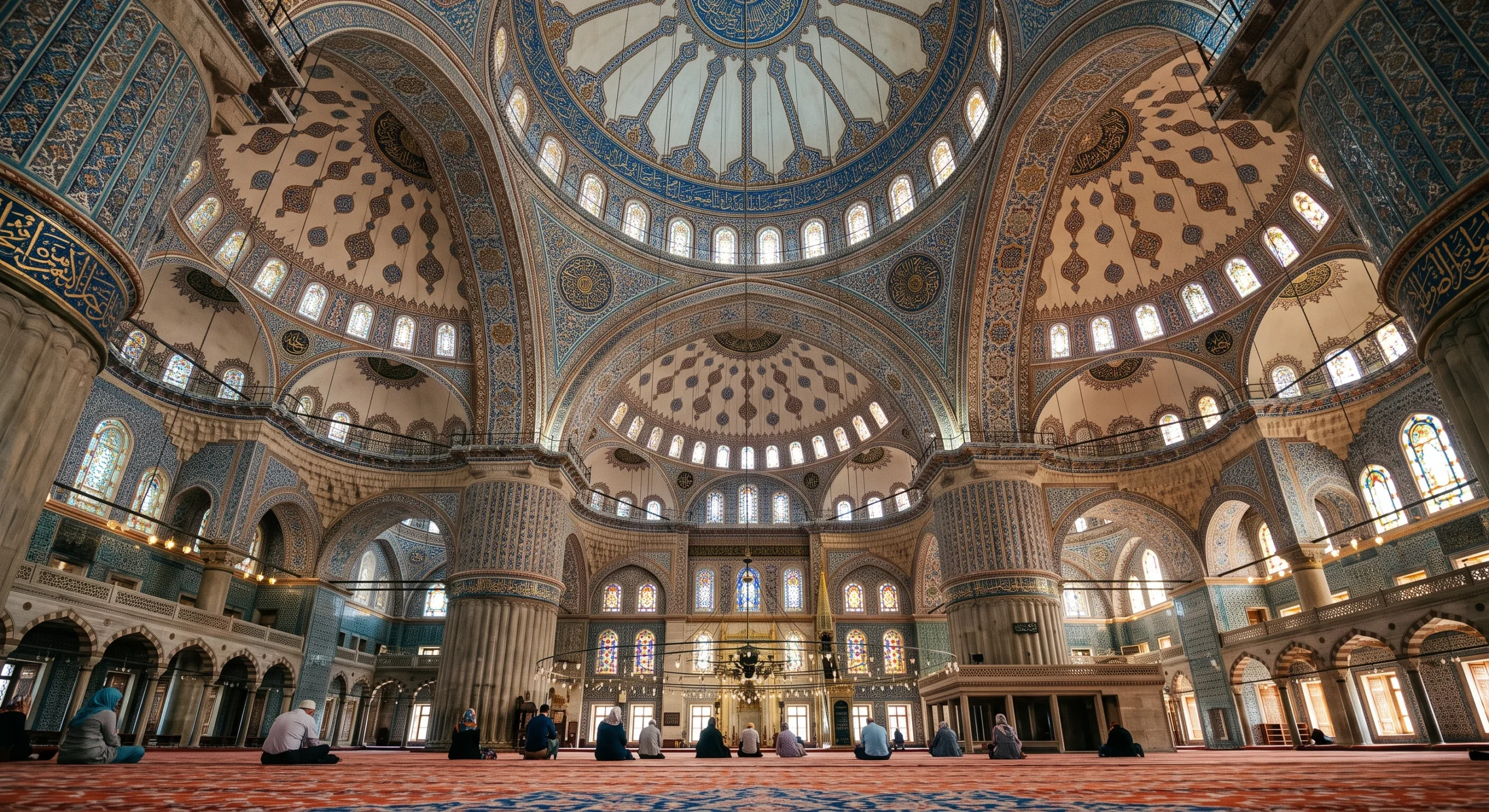
The Blue Mosque remains free to enter, which makes it a natural first stop on a budget-conscious weekend itinerary, though visitors should plan around prayer times, when the mosque closes briefly to tourists several times throughout the day for active worship. Modest dress is required for entry, meaning shoulders and knees covered for everyone, and head coverings for women, though scarves are typically available to borrow at the entrance for visitors who arrive at the entrance without one already packed in their travel bag for the day.
The interior’s blue Iznik tilework and layered domes are genuinely worth the unhurried few minutes it takes to look upward properly rather than rushing through for a quick photo and leaving. Shoes come off before entering, and a designated area near the entrance holds them during the visit, so carrying a small bag for loose items makes the process smoother. Visiting early in the Sultanahmet morning window, before the midday prayer closure and the heavier tourist crowds, gives the calmest, most unhurried version of this stop.
Hagia Sophia Basics
- The main ground floor prayer hall is free to enter for all visitors.
- The upper gallery, with the famous mosaics, requires a separate paid ticket.
- The Museum Pass does not cover Hagia Sophia’s upper gallery ticket.
- Modest dress rules apply here in the same way they do at the Blue Mosque.
- Visiting right after the Blue Mosque keeps the morning’s walking route efficient.
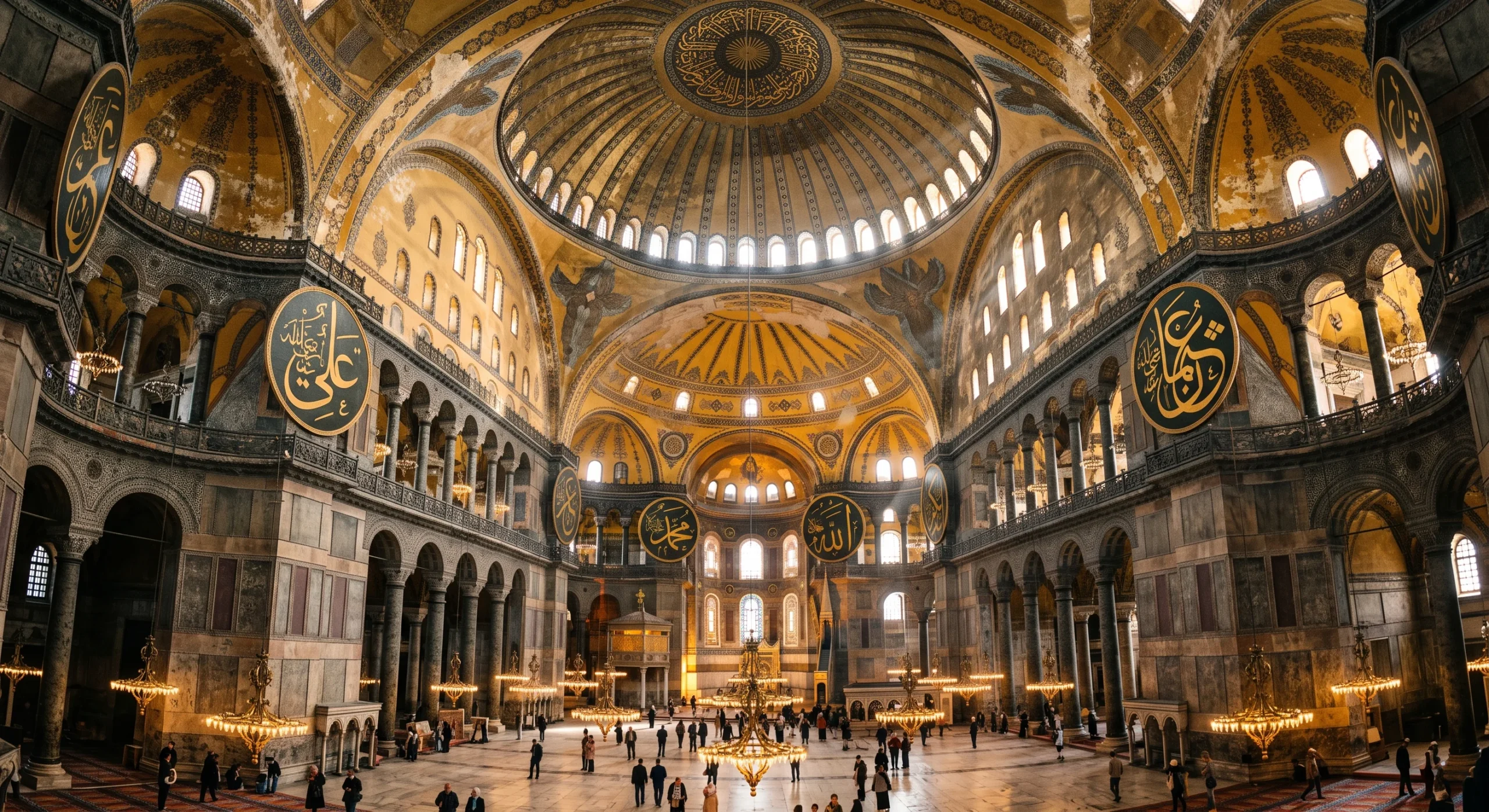
Hagia Sophia’s status has shifted more than once over the centuries, and its current setup as a functioning mosque with a separately ticketed upper gallery surprises visitors who expect the same free-entry model as the nearby Blue Mosque. The ground floor prayer hall remains open to visitors at no cost, but the upper gallery, where the building’s famous Byzantine mosaics are best viewed, requires purchasing a separate ticket at the entrance, and this specific ticket sits outside the coverage of the Istanbul Museum Pass entirely.
Budgeting for this ticket separately, rather than assuming a pass will cover it, avoids an unexpected cost or a confusing moment at the entrance gate after already committing to the pass purchase elsewhere in the itinerary. The building’s scale is genuinely difficult to appreciate from photos alone, and the mix of Christian mosaics and Islamic calligraphy medallions sharing the same walls tells a layered history that’s worth the entrance fee on its own. Pairing this stop directly after the Blue Mosque keeps the morning’s walking route short and efficient.
Basilica Cistern Walk
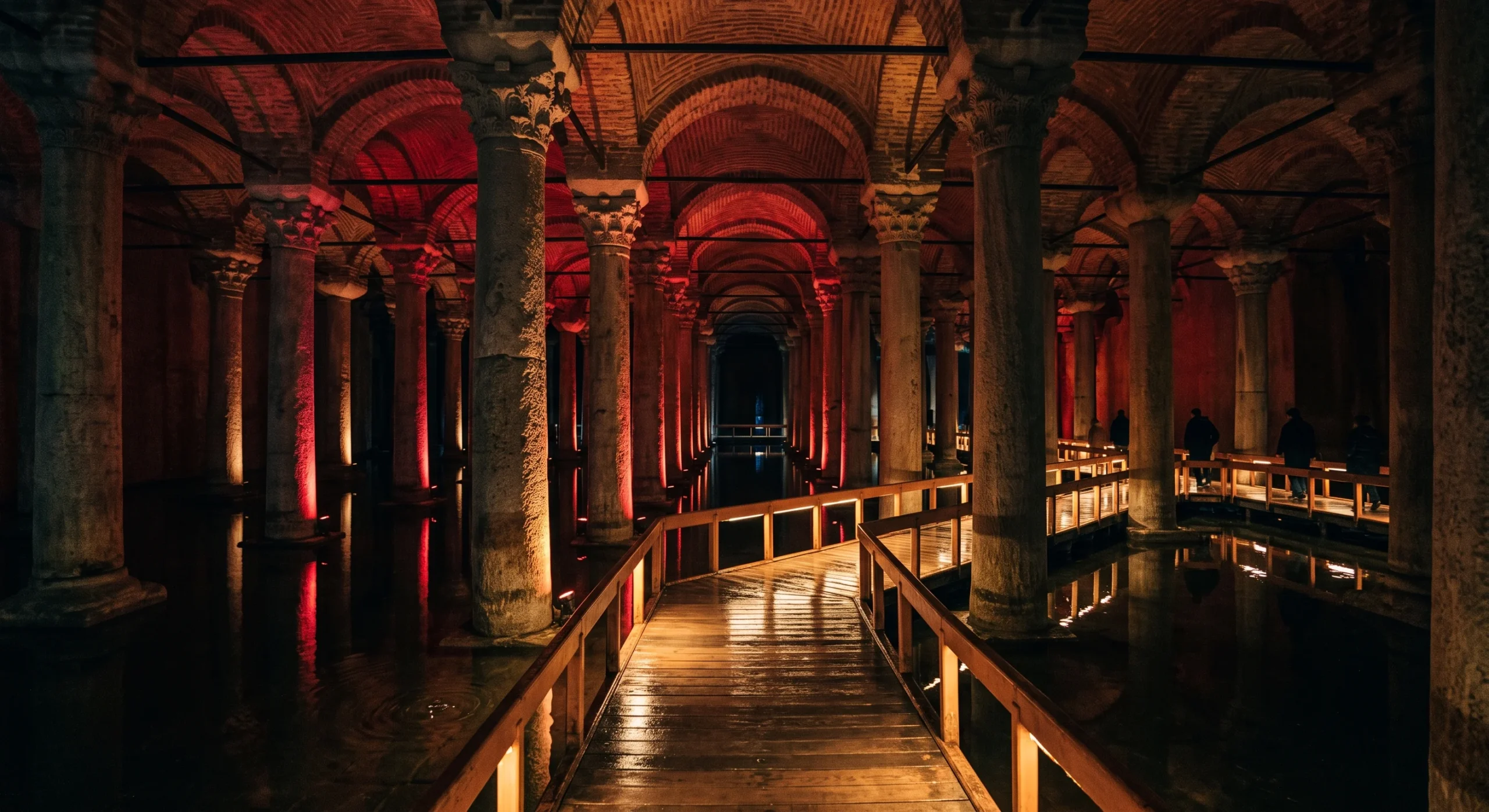
The Basilica Cistern offers a genuinely different atmosphere from the bright, open mosques and palace grounds covered earlier in the day, and its cool, dim underground setting makes it a natural midday break from the sun during a busy first day of walking through the city. Rows of ancient stone columns rise from still, shallow water lit dramatically from below, and the wooden walkway winding through the space takes roughly thirty to forty minutes to explore at an unhurried pace without feeling rushed or crowded.
Tickets are sold separately from the Museum Pass at this particular site, so it’s worth checking current pricing and pass coverage before arriving, since policies here have shifted more than once in recent years across different providers. The famous carved Medusa head column bases near the far end of the walkway are a genuine highlight worth seeking out specifically, since they’re easy to miss without knowing roughly where to look for them. This stop fits naturally between the morning’s mosque visits and an afternoon spent at Topkapi Palace.
Topkapi Palace Grounds
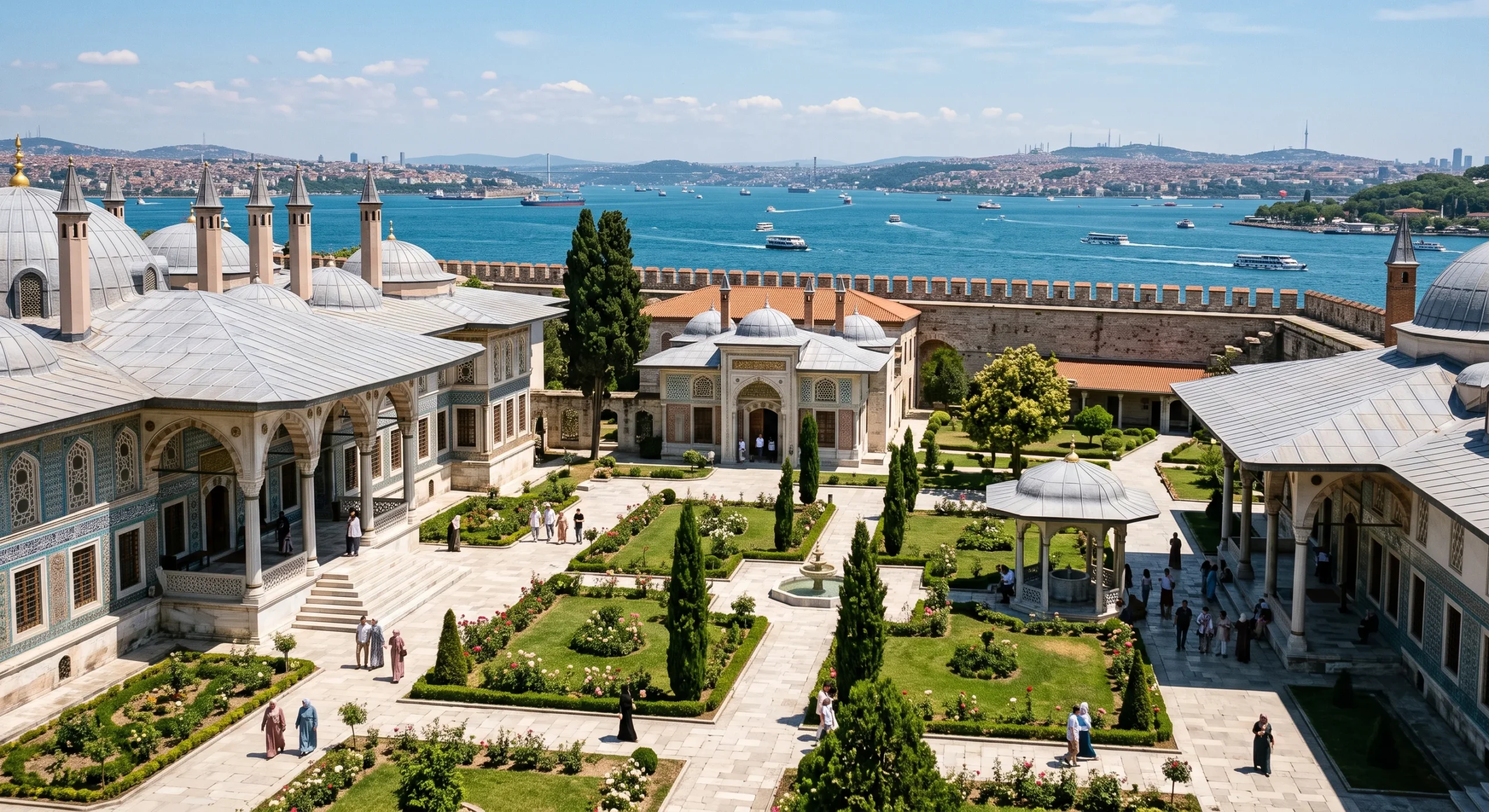
Topkapi Palace served as the Ottoman sultans’ residence for centuries, and its sprawling courtyards, treasury, and gardens make it one of the more time-intensive stops on this itinerary, worth allocating a genuine two hours rather than a rushed half-hour pass-through between other sights on a busy schedule. The palace grounds offer some of the best Bosphorus views in the entire city, and the treasury section houses jewels and artifacts that draw understandably long, slow-moving lines during the busier midday hours of a typical weekend visit to the site.
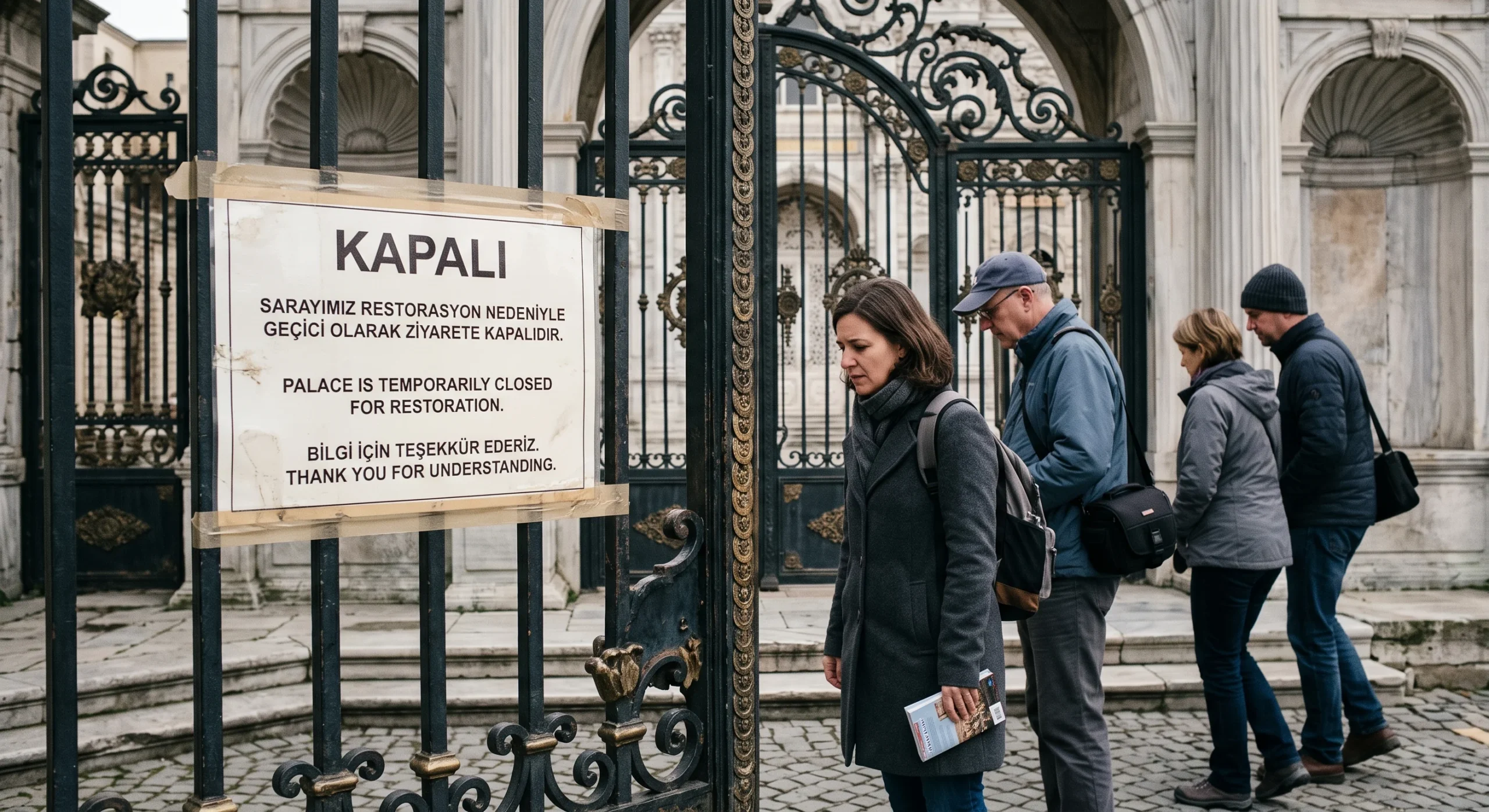
The Harem, the private quarters once reserved for the sultan’s family, requires a separate ticket beyond general admission, and while it’s optional, it adds a genuinely different, more intimate perspective on palace life beyond the grander ceremonial halls seen elsewhere in the complex and its public courtyards. One detail worth planning around well in advance: the palace closes entirely on Tuesdays, which means any weekend itinerary landing on a Tuesday needs this entire day restructured around a different sequence of stops instead of the original plan.
- The palace is closed entirely on Tuesdays, which requires rescheduling the whole day around it.
- The Harem section requires a separate, additional ticket beyond general palace admission.
- Allowing at least two hours gives enough time to see the main courtyards properly.
Bosphorus Sunset Cruise
- Shorter public ferry routes offer a budget-friendly alternative to a dedicated tourist cruise.
- Sunset timing gives the best light for photos of the skyline from the water.
- Sitting on the upper deck, when available, gives an unobstructed view in both directions.
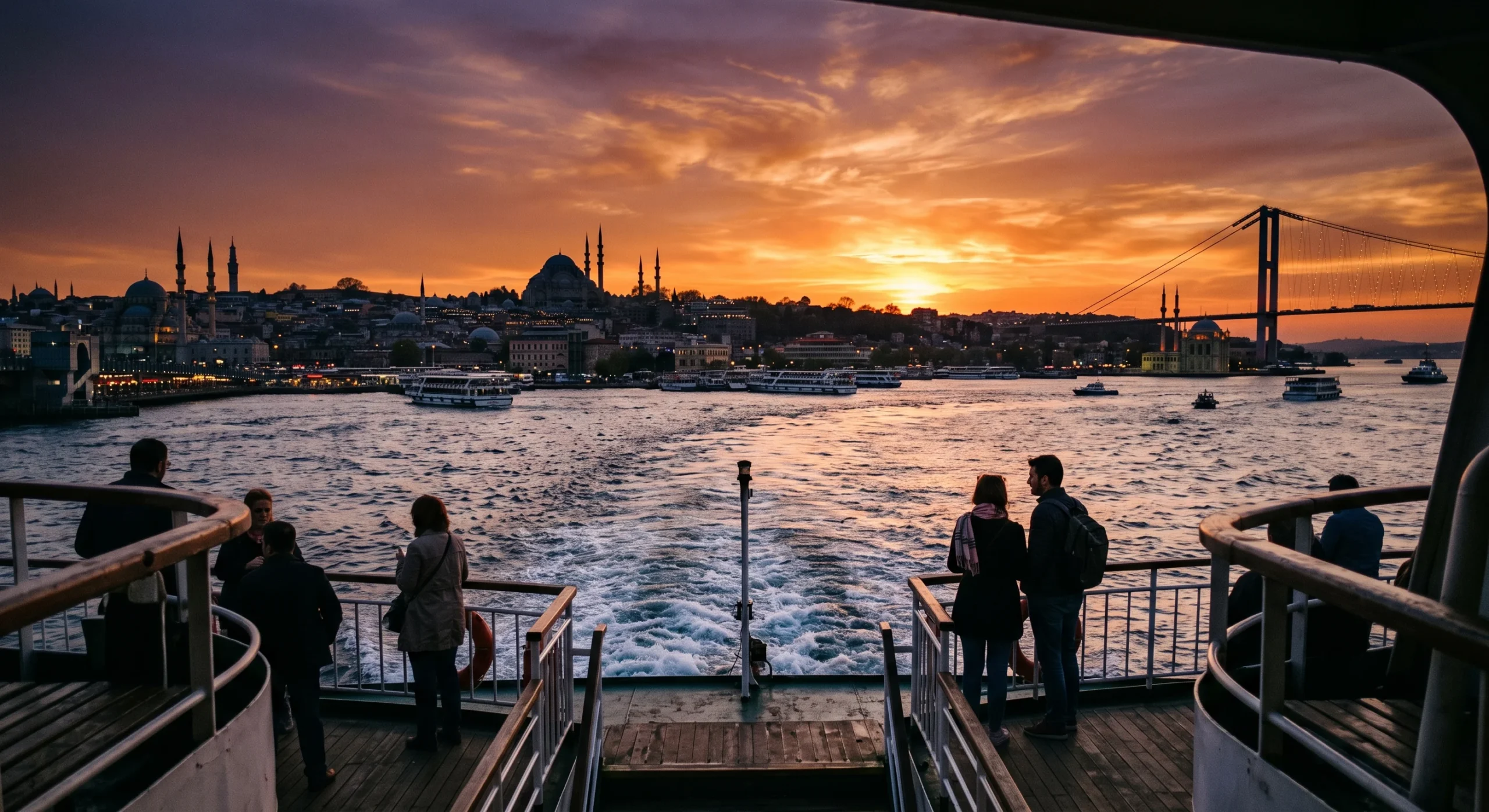
Closing out day one with time on the water gives a genuinely different perspective on a city that’s easy to experience entirely on foot otherwise, and it also provides a welcome rest for legs that have covered considerable ground since the early Sultanahmet start. A dedicated tourist cruise offers guided commentary and sometimes food, but a regular public ferry crossing the Bosphorus covers much of the same visual territory at a fraction of the cost, making it the more budget-friendly option for a weekend itinerary already covering paid entry to several major sites.
Timing this for sunset turns a simple ferry crossing into one of the more memorable moments of the entire weekend, as the mosque silhouettes and the Bosphorus Bridge catch the last light against a shifting sky. Checking the specific sunset time for the visit dates in advance helps with timing the day’s earlier stops so there’s no rush to make it to the water before the light fades. This is also a natural, low-effort way to end a physically demanding first day without needing to plan anything further that evening.
Museum Pass Math
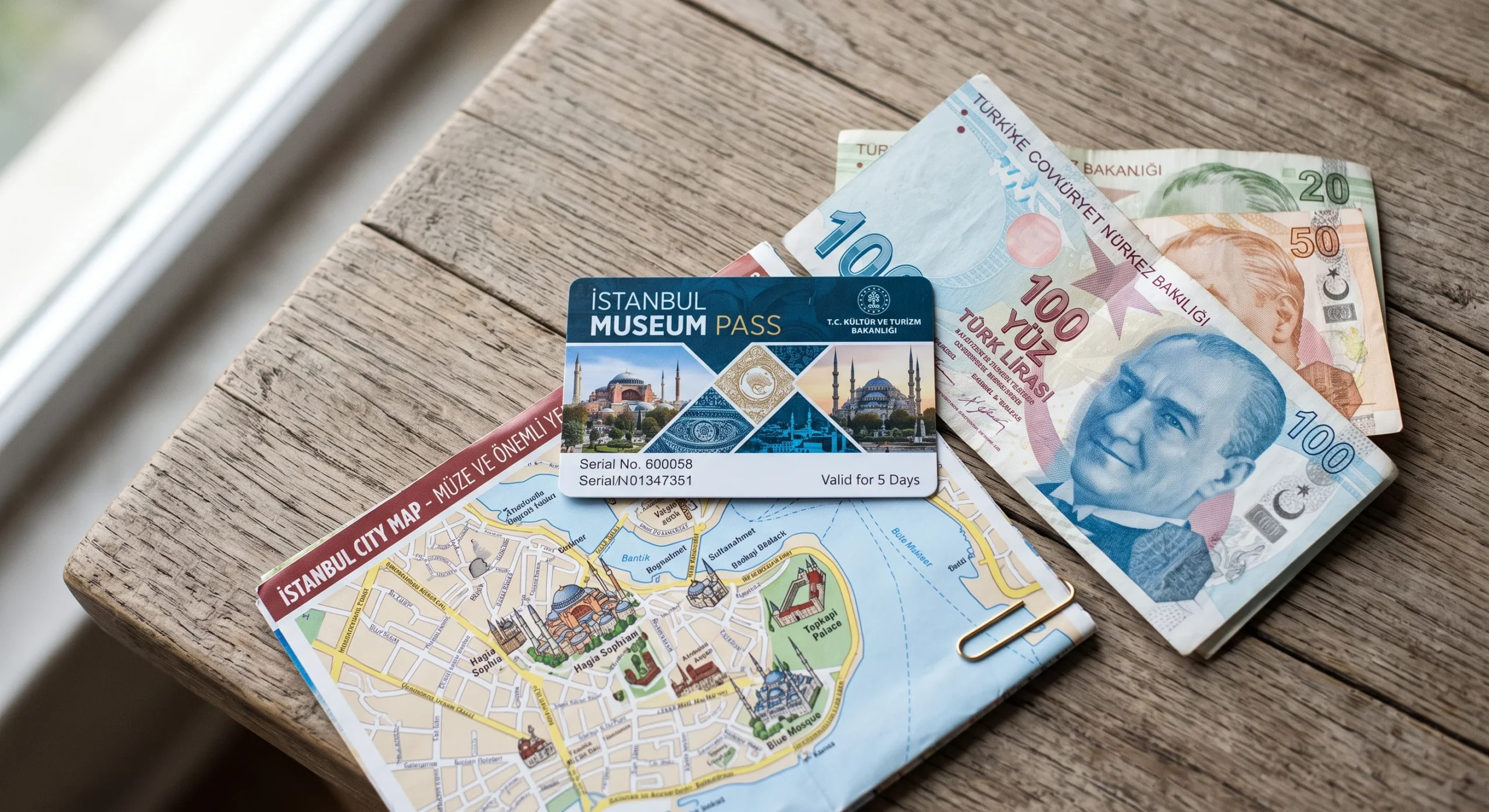
The Istanbul Museum Pass is often assumed to be an automatic good deal, but for a two-day weekend trip specifically, it’s worth running the actual numbers rather than buying it purely out of habit or general assumption. The pass grants five days of validity once first activated, which is more time than a short weekend itinerary will use, so the real question isn’t how long it lasts but whether the combined ticket price of the specific sites planned, mainly Topkapi Palace and its Harem section, already exceeds what the pass itself costs upfront.
For most weekend visitors following an itinerary similar to this one, visiting Topkapi Palace alone, combined with even one or two additional covered museums, tends to make the pass worthwhile, since Topkapi’s own admission price sits close to a meaningful share of the pass cost on its own. Current pricing and the exact list of covered sites are published directly on the official Directorate of Culture and Tourism site at https://muze.gen.tr/MuseumPasses, which is worth checking against the specific day-by-day plan before purchasing anything in advance of the trip.
- The pass covers roughly 5 days of validity once activated, more than a two-day weekend needs.
- Visiting Topkapi Palace and two or three other sites often already justifies the pass cost.
- Hagia Sophia’s upper gallery and the Basilica Cistern are sold separately, outside the pass.
- Buying online in advance through the official site avoids a queue at the first museum entrance.
- A weekend trip should compare the pass price against just the specific sites actually planned.
Istanbulkart Transit Tips
- The card is sold at kiosks near major tram and metro stations across the city.
- Top-ups can be done at the same kiosks or at machines inside larger stations.
- A single Istanbulkart can be shared between two travelers tapping in one after another.
- Fares stay meaningfully cheaper than single-use tokens purchased separately for each individual ride.
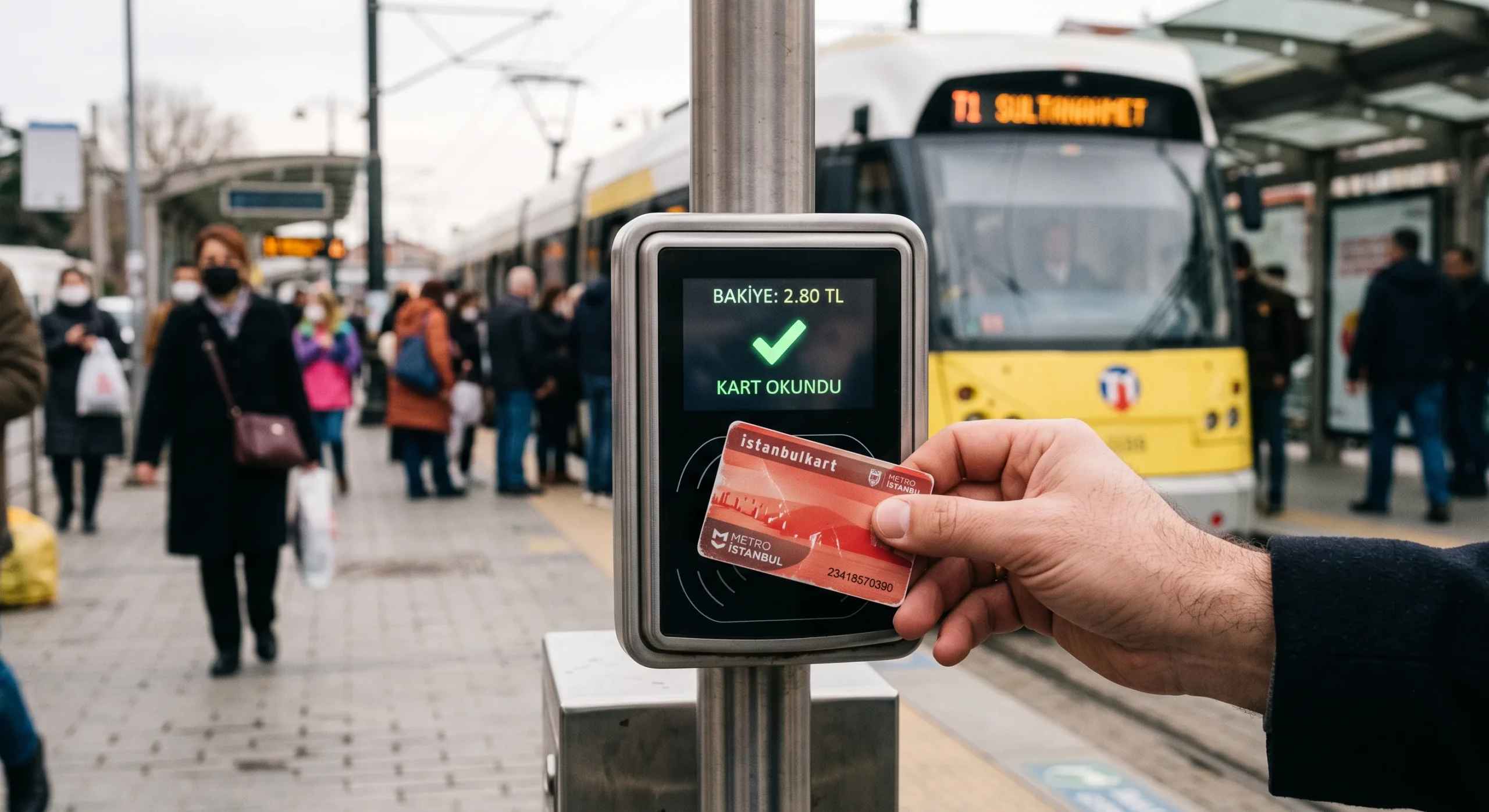
An Istanbulkart removes most of the friction from getting around Istanbul’s tram, metro, ferry, and bus network, and picking one up shortly after arrival is worth doing before relying on single-use tokens for every ride across the weekend. The card is sold at small kiosks near most major transit stations, and topping it up takes only a minute at the same machines, which matters in a city where the historic sites, the bazaars, and the waterfront stops covered across this itinerary aren’t all within comfortable walking distance of each other.
Fares paid through the card run noticeably cheaper than buying individual tokens for each separate ride, and the same card works seamlessly across trams, the metro, buses, and even the public ferries used for the Bosphorus crossing covered earlier in this itinerary. Two travelers can share a single card by tapping in one after the other at the gate, which simplifies group logistics considerably. Keeping a rough sense of the remaining balance avoids getting stuck at a turnstile with an empty card during a busy commute.
Grand Bazaar Browsing
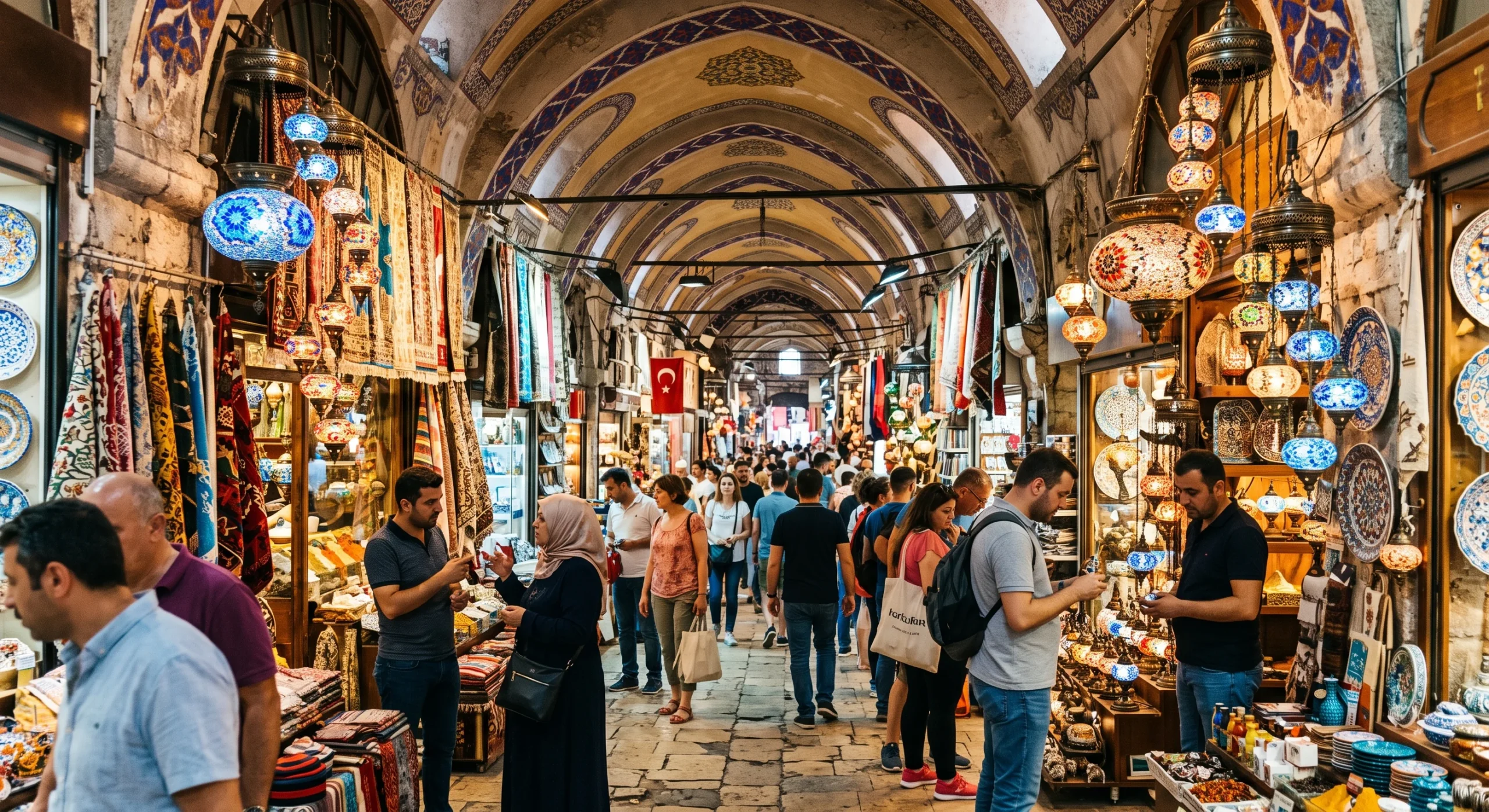
The Grand Bazaar’s thousands of shops under one sprawling covered roof can feel overwhelming without some kind of loose plan, so treating the visit as a browsing experience rather than a fixed shopping list tends to produce a more relaxed morning on day two of the trip. Prices here are almost always negotiable, and a starting offer well below the asking price is standard practice rather than rude, though a friendly, unhurried tone tends to get noticeably better results than an aggressive one throughout the exchange.
Getting genuinely lost in the side alleys away from the main thoroughfares often turns up quieter, less tourist-focused shops with more reasonable pricing than the busier main lanes typically see during peak hours. Arriving earlier in the morning, shortly after opening, avoids both the heaviest crowds and the more persistent sales approach some vendors take once the day gets busier later on. This stop pairs naturally with the Spice Bazaar covered next, since the two markets sit a short, pleasant walk apart from each other.
Spice Bazaar Stop
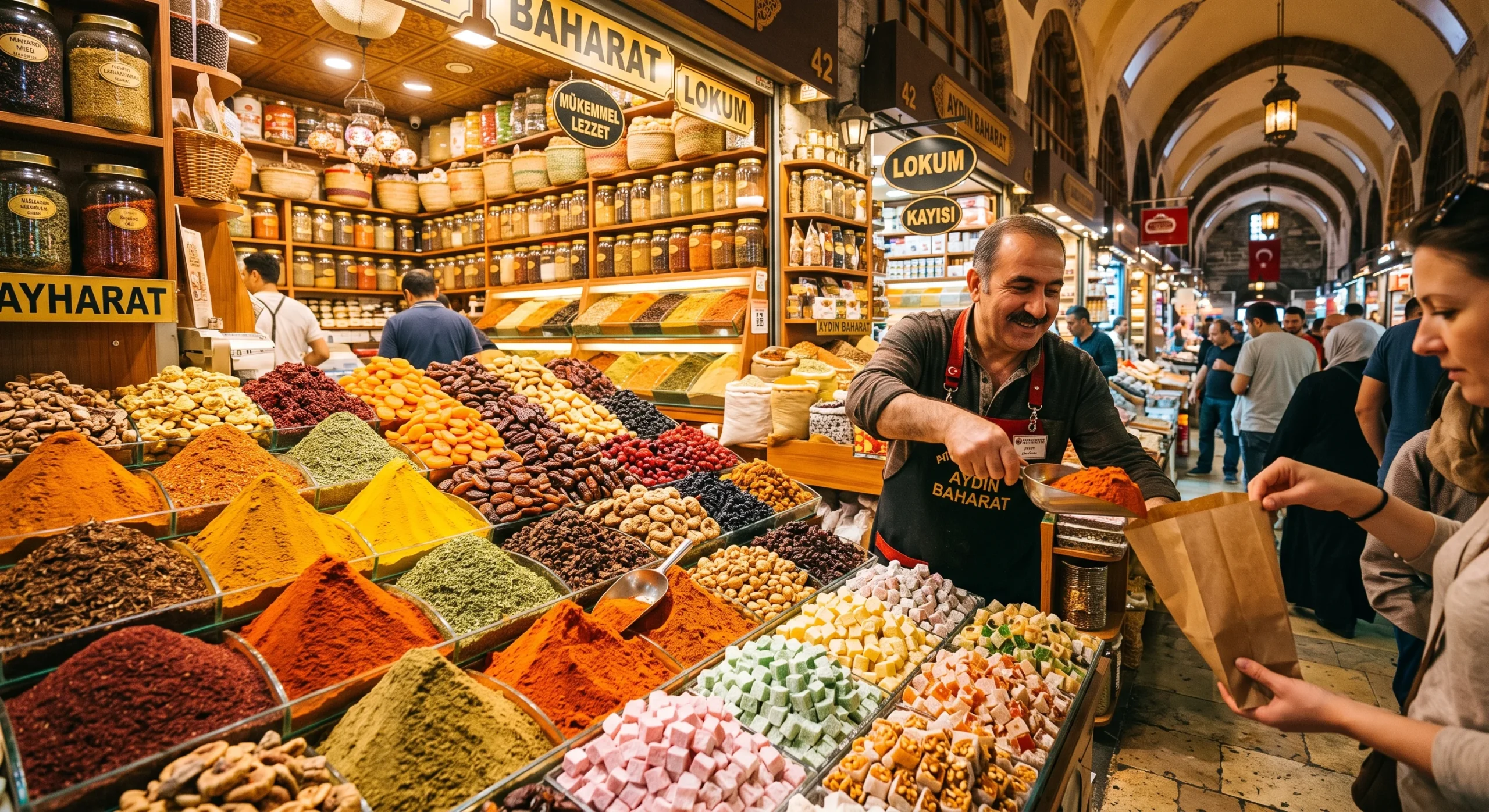
The Spice Bazaar offers a more compact, easier-to-navigate alternative to the sprawling Grand Bazaar, and its concentrated rows of spices, teas, and Turkish delight make for a genuinely pleasant half-hour stop rather than requiring the fuller morning the larger bazaar deserves on this itinerary. The building itself, with its arched stone ceilings and steady stream of both locals and visitors, has a noticeably different, slightly less touristy energy than the more famous Grand Bazaar just a short, easy walk away across the busy neighborhood streets.
Sampling items before buying is standard practice here and genuinely welcomed by most vendors, which makes it easy to compare a few stalls before settling on where to actually spend money on tea, spices, or Turkish delight for the trip home. Packing items lightweight and well-sealed matters for the journey back, especially for anything edible passing through airport security or customs checks along the way. This stop works well positioned right after the Grand Bazaar, before continuing toward the afternoon’s neighborhood walks in Balat and Cihangir.
- Turkish delight and dried fruit make lightweight, easy-to-pack souvenirs for the trip home.
- Sampling before buying is generally expected and welcomed at most stalls.
- Prices here are somewhat more fixed than at the Grand Bazaar, though light negotiation still works.
Suleymaniye Mosque View
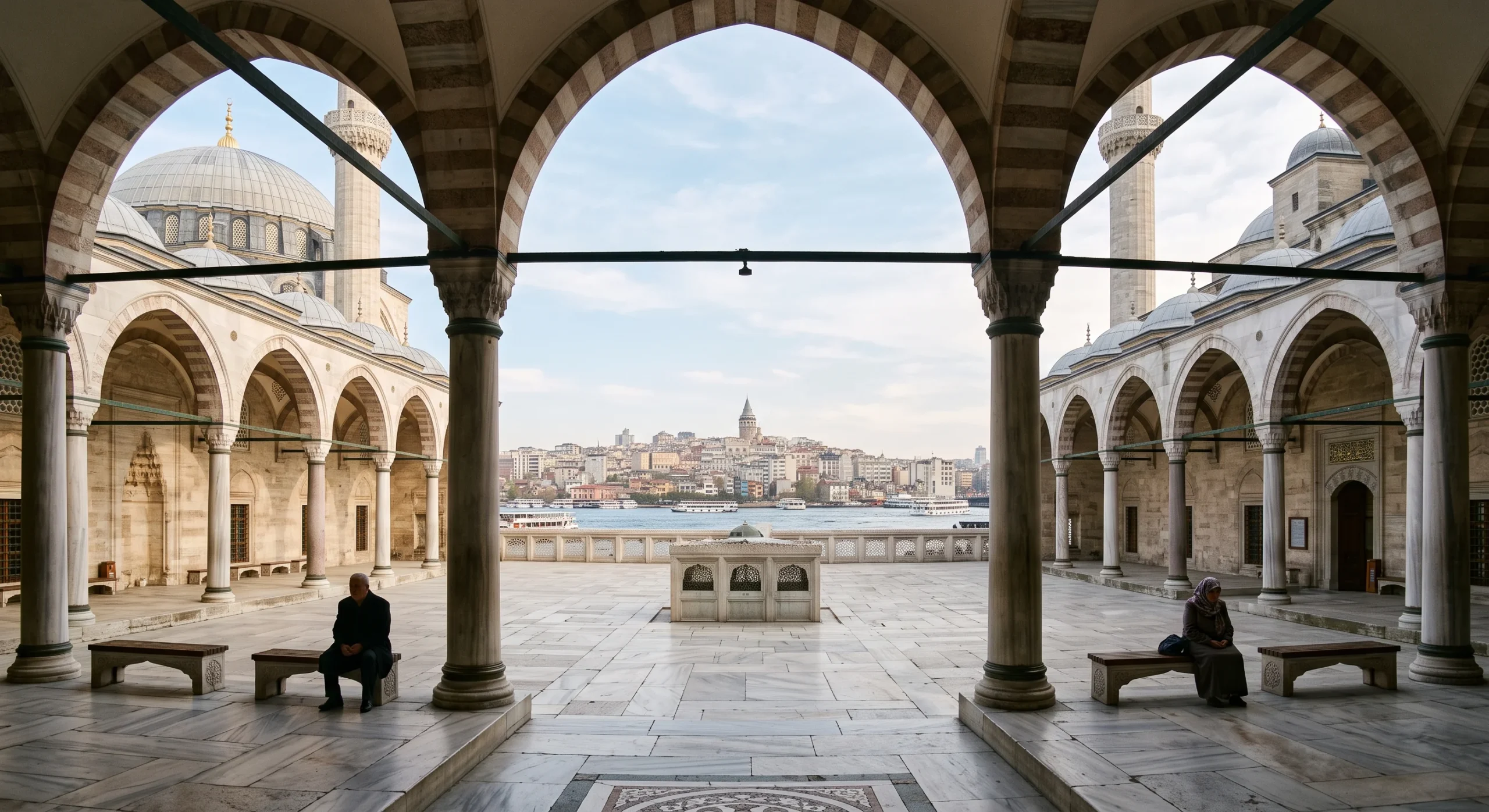
Suleymaniye Mosque sits on a hilltop with one of the best panoramic views over the Golden Horn anywhere in the city, and it draws noticeably fewer tourists than the more famous Blue Mosque, which makes for a quieter, more contemplative visit at almost any time of day. The mosque itself, designed by the renowned architect Mimar Sinan, is considered by many to be his masterwork, and its proportions and interior calm reward the short, quiet uphill walk it takes to reach from the surrounding streets nearby.
The surrounding gardens and courtyard offer a genuinely peaceful spot to rest partway through a busy second day, with benches positioned to take in the water view without needing to enter the mosque itself for those short on time on a packed schedule. Visiting in the late morning, after the Grand Bazaar and Spice Bazaar stops but before the afternoon’s neighborhood walking, breaks up the day’s pace naturally between busy market energy and the quieter residential streets planned for much later in that same afternoon.
Balat Neighborhood Walk
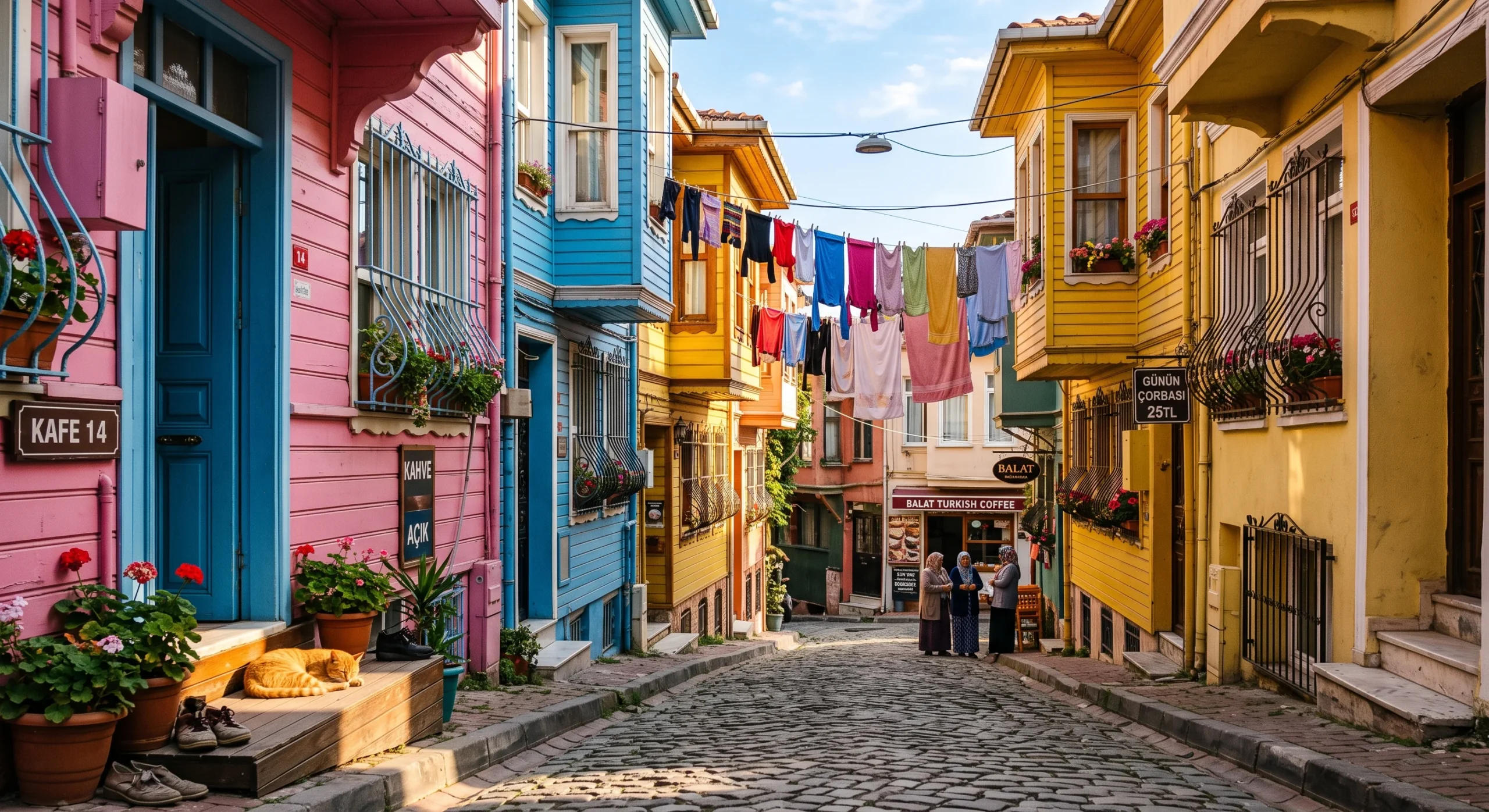
- Balat’s colorful houses make for some of the most photogenic streets in the entire city.
- The neighborhood rewards slow wandering more than a fixed route between specific points.
- Small local cafes throughout the area offer a genuine break from tourist-priced options nearby.
- Comfortable shoes matter again here, given the neighborhood’s steep, uneven cobblestone streets.
Balat’s steep, narrow streets lined with brightly painted houses in pink, blue, and faded yellow have become one of Istanbul’s most photographed residential neighborhoods, and the area rewards unhurried wandering considerably more than following a fixed checklist of specific addresses. Historically home to a mix of Greek, Jewish, and Armenian communities, the neighborhood still carries visible traces of that layered history in its architecture, its small synagogues and churches tucked between residential buildings, and the general texture of daily life still visibly happening on these same streets today.
Comfortable shoes matter here more than almost anywhere else on this itinerary, given the neighborhood’s genuinely steep, uneven cobblestone streets that can be tiring after a full day of walking elsewhere in the city already before arriving. Small, independently run cafes throughout Balat offer a welcome, often better-value break from the more tourist-priced options found closer to the major bazaars and monuments visited earlier. Setting aside an unhurried hour or two here, rather than rushing through for photos alone, is what makes this stop genuinely worthwhile.
Cihangir Cafe Break
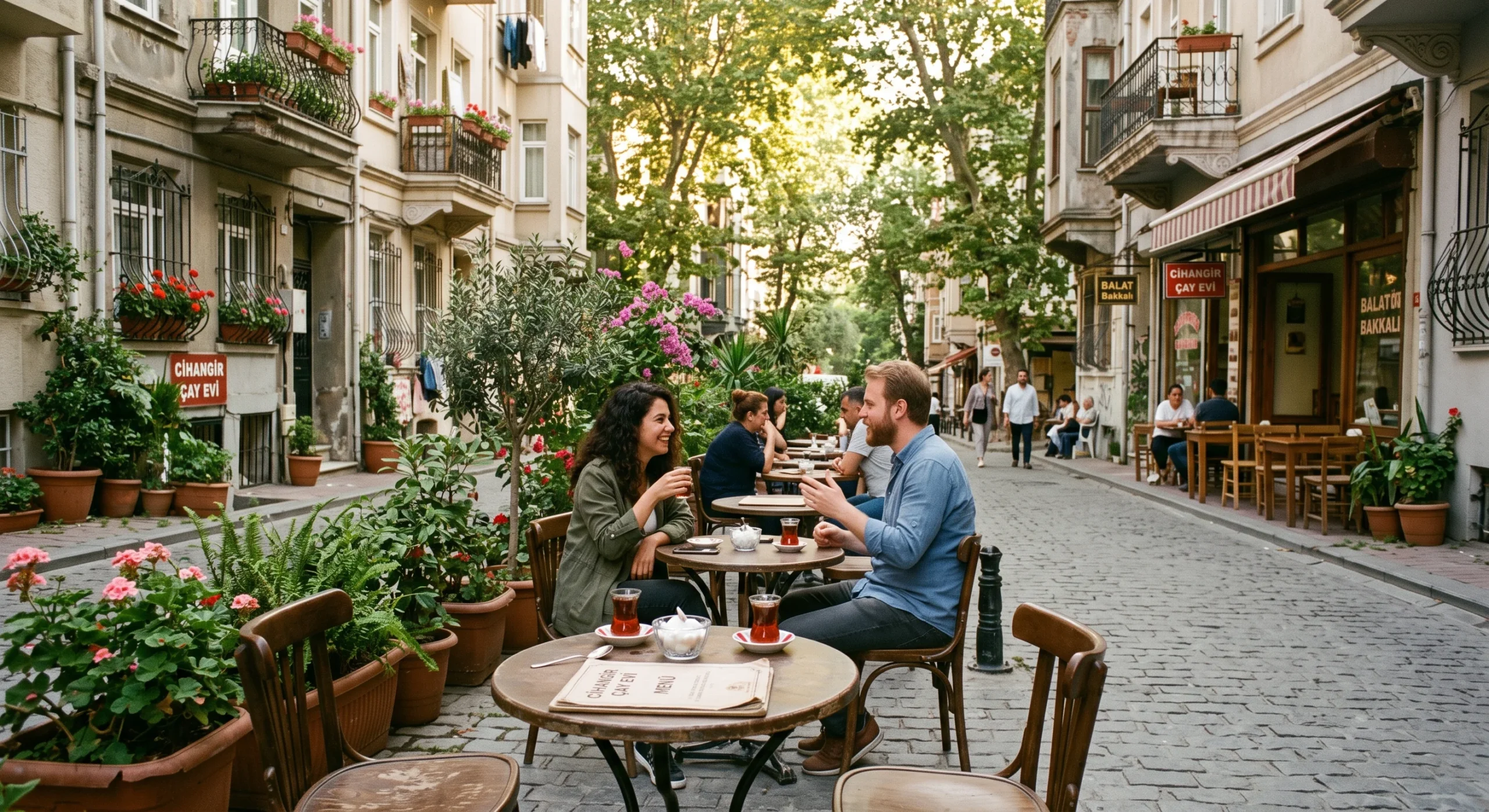
Cihangir offers a genuinely different mood from the historic monuments and busy bazaars covered earlier in the weekend, with tree-lined streets, independent bookshops, and a noticeably artistic, laid-back atmosphere that draws a mix of local residents and longer-term expats rather than day-tripping tourists passing through quickly. The neighborhood’s cafes are well suited to an unhurried afternoon break, and sitting outside with a glass of Turkish tea for half an hour genuinely adds something different to a weekend otherwise built entirely around moving between scheduled sights.
This is a good point in the itinerary to simply slow down rather than push toward the next planned stop immediately, since Cihangir’s whole appeal lies in its unhurried pace rather than any single must-see attraction within its borders. Wandering the surrounding streets without a fixed destination for twenty or thirty minutes often turns up a small gallery, a secondhand bookshop, or a quiet viewpoint that wouldn’t appear on a standard tourist map of the neighborhood at all, which is genuinely part of the charm.
Turkish Breakfast Spot
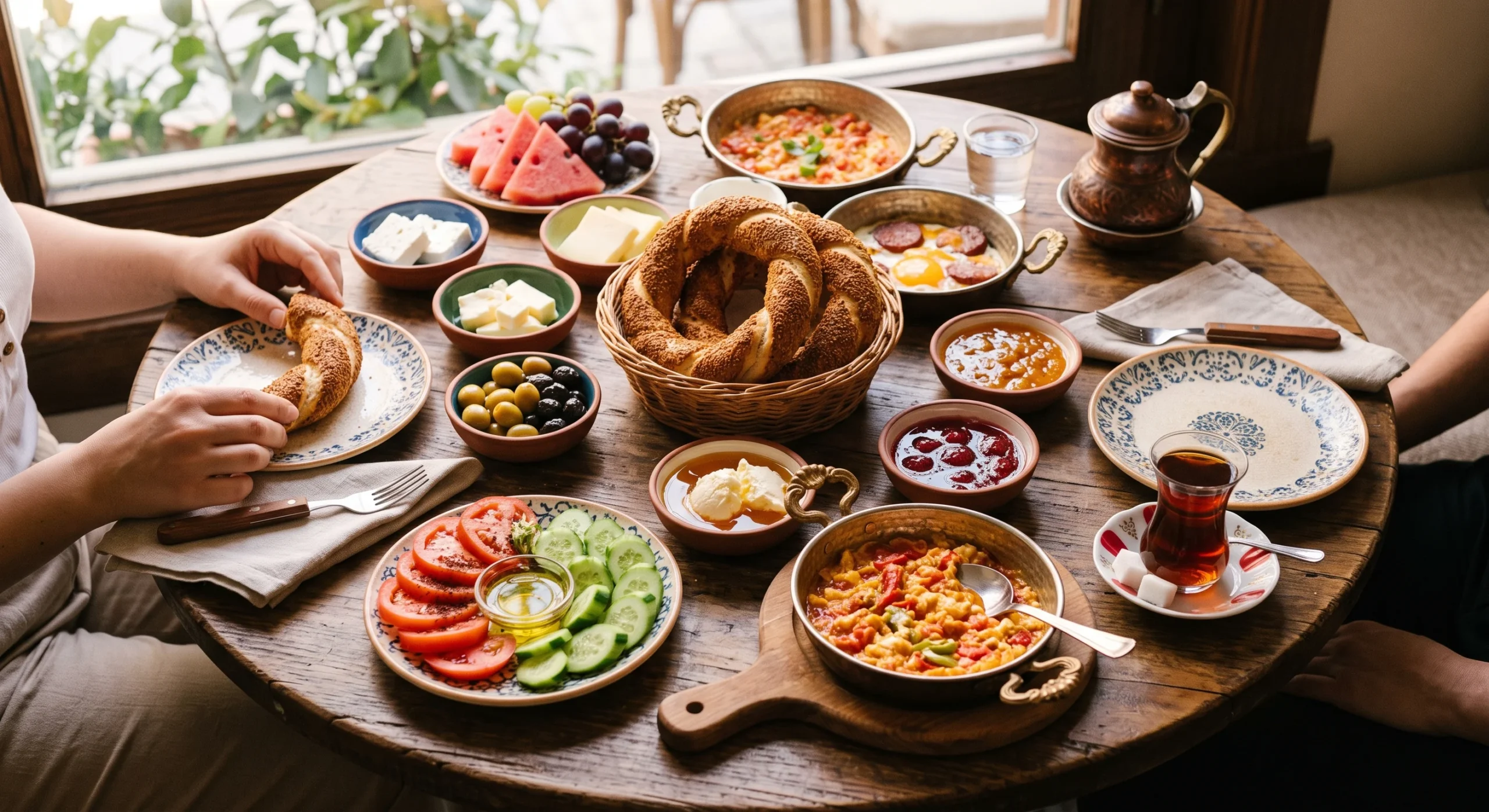
A traditional Turkish breakfast is worth building into the itinerary as a proper sit-down meal rather than a quick grab-and-go stop, since the format itself, a wide spread of small plates meant to be shared slowly, doesn’t really work when rushed through. A typical spread includes several cheeses, olives, tomatoes, cucumbers, honey, jam, and fresh bread, served alongside eggs and often a small pan of sizzling sujuk sausage, all meant to be sampled gradually across a genuinely unhurried hour rather than finished quickly before moving on.
Turkish tea, served in small tulip-shaped glasses rather than mugs, traditionally accompanies the entire meal and gets refilled steadily throughout rather than served once and left to go cold. Scheduling this for either the start of day two, before the bazaars, or as a mid-morning break between Balat and Cihangir works well depending on how the rest of the day’s timing shakes out. This meal is as much about the unhurried pace as the food itself, and rushing through it defeats much of the point.
- A proper Turkish breakfast spread typically includes cheeses, olives, tomatoes, honey, and fresh bread.
- Turkish tea, served in small tulip-shaped glasses, traditionally accompanies the entire meal.
- Setting aside a full hour, rather than rushing, matches how the meal is meant to be eaten.
Rooftop Dinner View
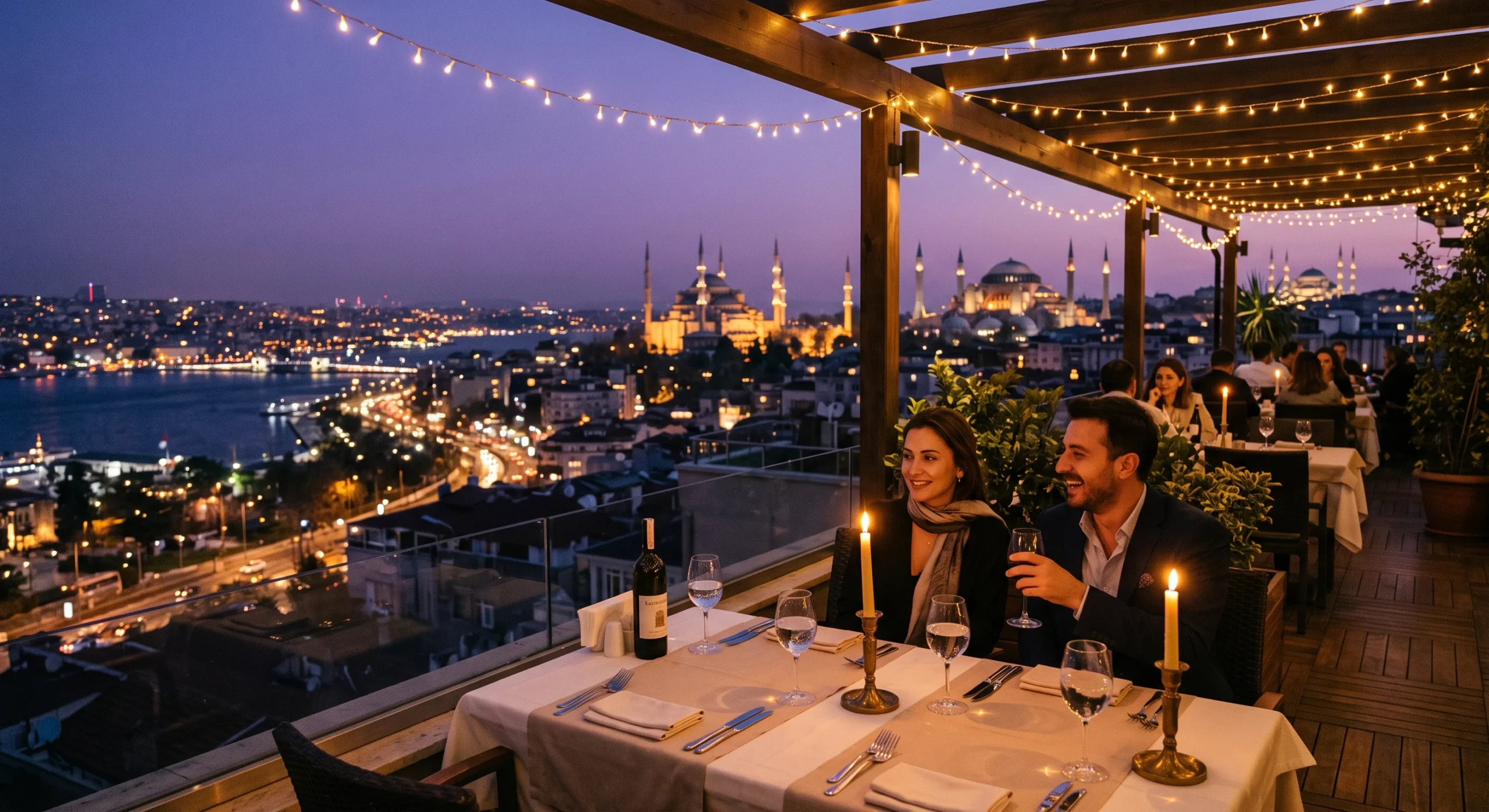
- Rooftop restaurants in Sultanahmet and Beyoğlu both offer strong skyline views at dinner.
- Booking ahead for sunset seating avoids being placed at a table without the view.
- Prices at rooftop spots run higher than street-level restaurants, worth budgeting for separately.
Closing out the weekend with a rooftop dinner gives one more strong visual payoff before the trip wraps up, and Istanbul has no shortage of restaurants positioned specifically to take advantage of the skyline views built up across both mosque-dense Sultanahmet and the more modern rooftops scattered through Beyoğlu. Booking a table in advance, specifically requesting sunset-timed seating near the view rather than an interior table, matters more at these particular restaurants than it typically does for a standard dinner reservation elsewhere in the city.
Prices at rooftop restaurants with dedicated skyline views run noticeably higher than equivalent food at street level, so budgeting this meal separately from the trip’s other dining costs avoids an unpleasant surprise on the final bill after an otherwise reasonably priced weekend of travel. The view itself, mosque silhouettes lit against the evening sky with the Bosphorus visible beyond them, is genuinely worth the premium as a way to close out two genuinely packed days before an early departure the following morning back home again.
Tuesday Closure Warning
This single scheduling detail causes more disrupted Istanbul itineraries than almost anything else on this list, and it’s worth flagging clearly before finalizing a day-by-day plan: Topkapi Palace closes entirely on Tuesdays, while most of the other major sites covered in this itinerary, including the mosques and bazaars, stay open as usual. A weekend trip that happens to land on a Tuesday for its palace day needs that portion of the schedule restructured well before arrival, not discovered at the closed gate itself after already walking there.
Checking each planned site’s specific weekly closure day during the initial planning stage, rather than assuming everything follows the same schedule, prevents this exact situation from derailing a tightly planned two-day trip through the city. If a Tuesday can’t be avoided, swapping the palace slot for an extra bazaar visit, a longer neighborhood walk through Balat, or additional time at Hagia Sophia and the Basilica Cistern keeps the day full without losing the overall shape of the itinerary that was originally planned around it in advance.
- Topkapi Palace closes entirely on Tuesdays, unlike most other major sites on this list.
- A weekend trip landing on a Tuesday needs day one restructured around this closure.
- Checking each site’s specific closure day in advance avoids this exact scheduling problem.
- The palace grounds can be swapped for an extra bazaar or neighborhood stop instead.
Packing for Istanbul
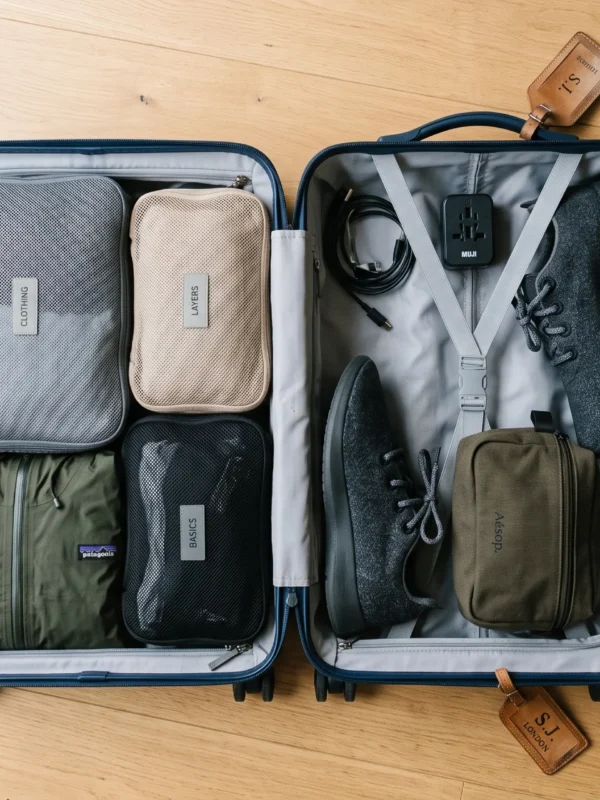
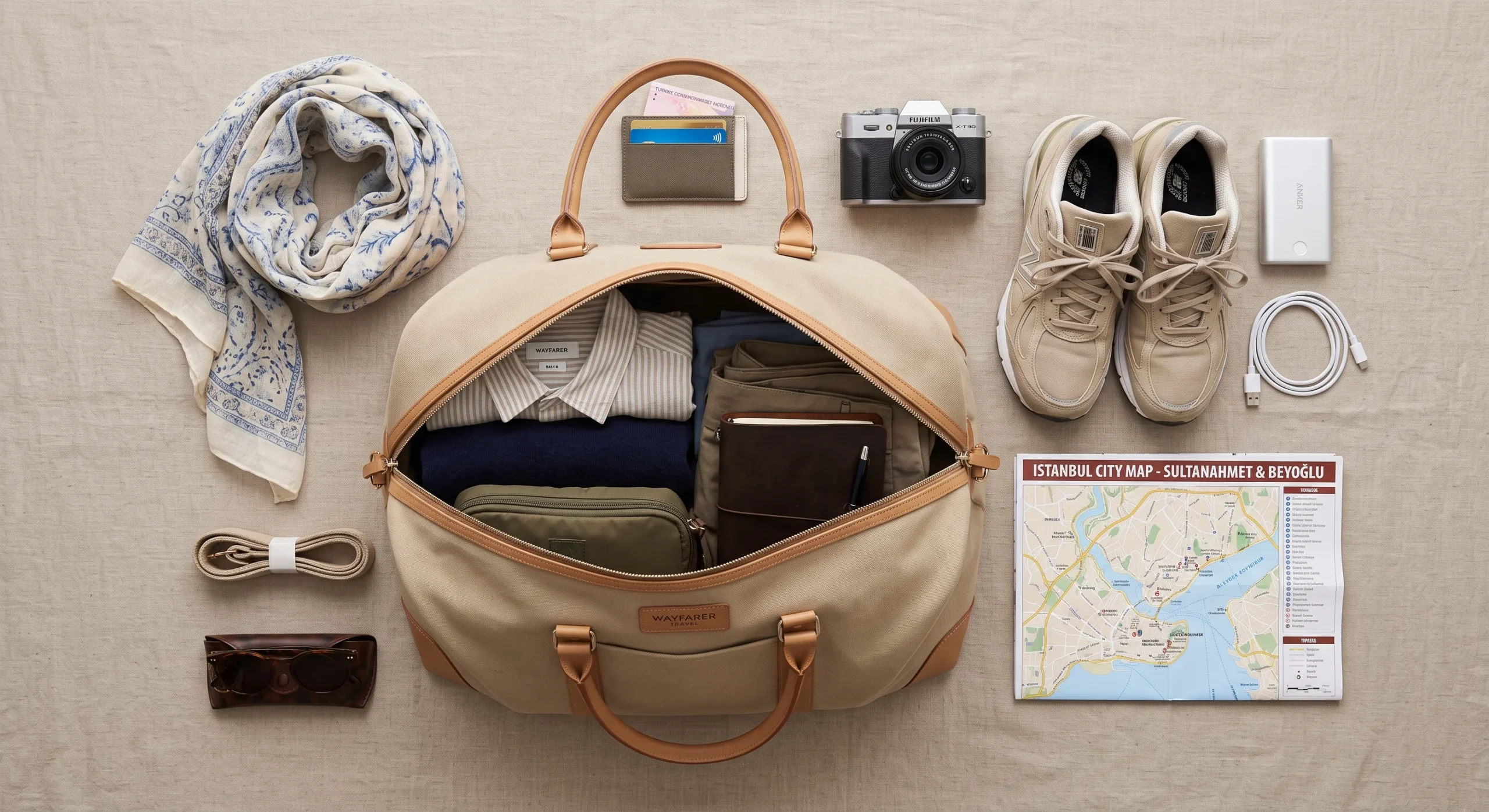
A weekend itinerary built around heavy daily walking and mosque visits makes two packing items more important than the rest of a standard travel list: genuinely comfortable walking shoes, given the cobblestone streets and steady daily distances covered across both days, and a lightweight scarf, useful for both mosque visits requiring modest dress and the occasional cooler evening near the water. Layering matters generally, since temperatures can shift noticeably between a sunny midday bazaar visit and a breezier evening ferry crossing later the same day.
A portable phone charger earns its space given how much the day relies on maps, transit apps, and the Istanbulkart’s digital balance checks throughout two fully scheduled days of movement across the city on foot. Packing light overall makes sense for a trip this short, since a single weekend doesn’t require much beyond a few days of clothing, the practical items already mentioned, and space left over for anything picked up at the Grand Bazaar or Spice Bazaar along the way home to eventually unpack.
FAQ
Is two days really enough time to see Istanbul?
Two focused days cover the major highlights well, as this itinerary shows, though it won’t feel leisurely. Splitting Sultanahmet’s monuments across day one and the bazaars and neighborhoods across day two, rather than trying to mix both areas each day, keeps the walking distances manageable and avoids backtracking across the city repeatedly.
Is the Istanbul Museum Pass worth it for a weekend trip?
It depends on which sites are actually planned, as covered in the Museum Pass Math section above. Visiting Topkapi Palace plus one or two additional covered sites typically justifies the cost, but a lighter itinerary skipping the palace may not need the pass at all.
What should I know before visiting the Blue Mosque and Hagia Sophia?
Both require modest dress, shoulders and knees covered, with head coverings for women at the entrance if needed. The Blue Mosque is free throughout, while Hagia Sophia’s ground floor is free but its upper gallery mosaics require a separate paid ticket not covered by the Museum Pass.
How does the Istanbulkart work for a short visit?
It’s a rechargeable card sold at kiosks near major transit stations, usable across trams, the metro, buses, and public ferries. For a two-day trip, a single card with a modest initial top-up comfortably covers all planned transit, and it can be shared between two travelers tapping in one after the other.
What’s the biggest planning mistake for a short Istanbul trip?
Not checking Topkapi Palace’s Tuesday closure before finalizing the itinerary, as covered in the Tuesday Closure Warning section. A second common mistake is assuming the Museum Pass covers everything, when both Hagia Sophia’s upper gallery and the Basilica Cistern are ticketed separately.
Conclusion
A weekend in Istanbul is genuinely enough time for a memorable, well-paced trip once the itinerary respects the city’s geography and a few key scheduling details. Sultanahmet’s monuments on day one, the bazaars and neighborhoods of Beyoğlu on day two, and a clear answer on whether the museum pass actually pays off all add up to two days that feel complete rather than rushed. Save this weekend Istanbul itinerary to Pinterest before booking flights, try building the day-by-day plan around the Tuesday closure warning above, and share it with anyone else planning their first short trip to the city.