

Three days in Bali sounds impossibly short until you have an itinerary that actually works. This 3 day Bali itinerary is built for first-time visitors who want to see the island’s best sides — rice terraces, temples, beaches, and local food — without the stress of over-planning or the regret of missing something special. Every stop here is chosen for how realistically it fits into a short trip, factoring in Bali’s traffic, distances between regions, and the pace a first-timer can actually enjoy. By the end, you’ll have a clear day-by-day plan plus the practical tips that make the whole trip smoother.
Ubud Rice Terraces
- Start day one early — the terraces get busy and hot by mid-morning, especially once tour buses arrive after 9am.
- Tegallalang is the most famous option, but Jatiluwih offers a quieter, less touristy version of the same view.
- Wear real shoes, not sandals — the paths are narrow, uneven, and can get muddy after rain.
- Bring cash for the small entrance donations that many terrace paths request from visitors.
Rice terraces are one of those Bali images you’ve probably already seen a hundred times, but nothing quite prepares you for standing at the edge of one in person. The layered green fields cascade down the hillside in a way that feels almost architectural, each tier carved by hand generations ago using a traditional irrigation system called subak. Arriving early, ideally before 8am, means you get the terraces with soft morning light and far fewer people crowding the viewpoints. It’s a genuinely calm way to start a short trip, before the island’s busier stops take over the rest of the day.
A common approach is pairing the terraces with a short walk through the surrounding rice paddies rather than just snapping a photo from the main viewpoint and leaving right away. Local farmers still work these fields daily, so keeping a respectful distance and staying on marked paths matters more than it might seem at first glance. If you only have one morning for rice terraces, this is worth prioritizing over the more crowded alternatives near central Ubud. The visual payoff, especially in early light, is one of the more memorable moments of a first Bali trip for most travelers.

Tegallalang Swing Spot
- Swing spots are popular but pricey — expect an entrance fee plus a per-swing charge at most locations.
- Go right after the rice terrace visit, since most swings cluster in the same general area.
- Choose a slightly less famous swing spot nearby to skip the long lines at the main entrance.
- Wear something you don’t mind getting a little dusty — the platforms sit right above the fields.
The jungle swings scattered around Tegallalang have become one of the most photographed Bali experiences, and while they can feel a little touristy, there’s a reason they’re still worth doing on a first visit. Swinging out over a rice terrace or a jungle canyon genuinely delivers a rush that photos alone don’t capture, especially on the larger swings positioned above a real drop. Prices vary a lot between operators, so it’s worth checking two or three nearby options rather than committing to the first one you see near the main road.
A practical tip that saves both time and money: the smaller, family-run swing spots just off the main strip tend to be less crowded and often cheaper than the well-known ones everyone tags on social media. Staff usually handle the safety harness for you, but it’s worth double-checking the strap yourself before swinging out. Budget around thirty minutes here — it’s a quick stop, not a half-day activity, which makes it easy to fit into an already full first morning.

Sacred Monkey Forest
- Keep sunglasses, hats, and loose jewelry secured — the monkeys are known for grabbing anything within reach.
- Avoid carrying food or visible plastic bags, since it tends to attract attention fast.
- The forest itself is genuinely beautiful, with moss-covered temple ruins worth slowing down for beyond the monkeys.
- Entrance fees go toward conservation, so this stop supports the sanctuary rather than just a photo opportunity.
The Sacred Monkey Forest Sanctuary sits right in central Ubud, making it an easy add-on to a rice terrace morning without much extra travel time. Beyond the monkeys themselves, the forest holds genuinely striking stone temple structures wrapped in moss, giving the whole space an atmosphere that feels older and quieter than its popularity suggests. It’s worth budgeting more than a quick walk-through, since the paths wind further back than most first-time visitors expect going in. A common approach is treating it as a forty-five-minute cultural stop rather than rushing straight to the exit after the first monkey sighting.
Safety-wise, the monkeys here are used to visitors but still wild animals, so keeping a respectful distance and following posted staff guidance matters more than it might seem on a busy day. Loose items genuinely do get grabbed with some regularity, so a zipped bag is a smarter choice than an open tote for this particular stop. The entrance fee is modest and goes toward the sanctuary’s upkeep, which makes this one of the more responsible tourist stops on a short Bali trip rather than a purely photo-driven detour.

Ubud Morning Yoga
- Many Ubud studios offer drop-in classes, so no advance booking is required for a single morning session.
- Look for a class with an open-air or jungle-view setting for a more distinctly Bali experience.
- Bring a light layer — early morning classes can feel cooler before the day’s heat sets in.
- This works well as a slower alternative on day two if day one felt especially packed.
Ubud has built a real reputation around wellness tourism, and a single drop-in yoga class is an easy way to experience that side of the island without committing to a full retreat. Several studios offer open-air platforms overlooking jungle or rice field views, which turns an ordinary class into something considerably more memorable than a typical gym session back home. Morning slots tend to be quieter and cooler, making them the more comfortable option before Bali’s midday heat and humidity really set in. It’s a gentle way to ease into a travel day rather than jumping straight into sightseeing.
For a first-time visitor without much prior yoga experience, a beginner or all-levels class is the safer choice over a specialized style that assumes prior practice already. Most studios rent mats on-site, so packing your own isn’t necessary for just one session during a short trip like this. This idea works particularly well as a counterbalance if your first day involved a lot of walking and heat, giving your body a lighter, more restorative start before the itinerary picks back up in the afternoon. A few studios also offer a light breakfast afterward, which makes the whole morning feel unhurried.

Uluwatu Sunset Temple
- Arrive at least an hour before sunset — the clifftop viewpoints fill up quickly as evening approaches.
- Watch the Kecak fire dance performance if the timing lines up, since it’s held right at the temple.
- Monkeys live around this temple too, so keep sunglasses and loose items secured here as well.
- Wear a sarong if you don’t have one — most temples require covered legs, and rentals are usually available on-site.
Uluwatu Temple perches dramatically on a limestone cliff above the ocean, and watching the sunset from here is one of the more genuinely spectacular moments a short Bali trip can offer. The temple itself dates back centuries and holds real religious significance, so moving through it with a bit of quiet respect goes a long way, even during the busier tourist hours. Positioning yourself along the clifftop path roughly an hour before sunset secures a decent viewing spot without the frustration of a fully blocked view once the crowd builds closer to golden hour.
A common approach for first-timers is combining the temple visit with the traditional Kecak fire dance, performed most evenings right as the sun goes down behind the ocean horizon. It’s a striking, chant-heavy performance that adds real cultural context to what could otherwise just be a scenic photo stop along the cliffs. Because this spot draws a genuine crowd, arriving with reasonable expectations about shared viewpoints — rather than an empty, private cliff — makes for a smoother, less frustrating experience overall for anyone visiting for the first time.

Padang Padang Beach
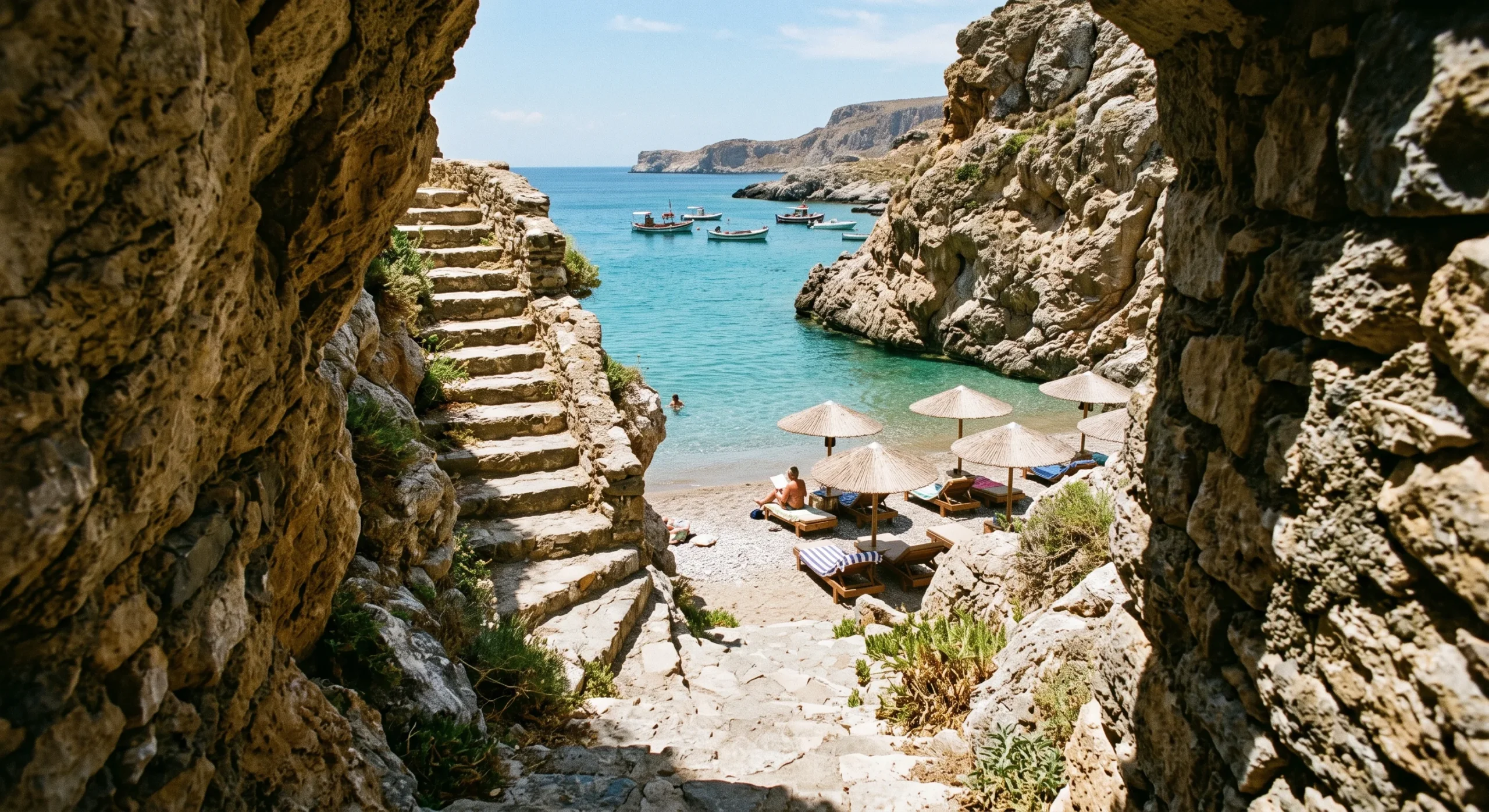
- The entrance is a narrow staircase carved through rock — arrive early to avoid a bottleneck getting down.
- Small, calm coves make this a nicer swimming beach than some of Bali’s larger surf beaches nearby.
- A few casual beachside warungs nearby are worth a stop for a cold drink after the walk down.
- This pairs naturally with an Uluwatu visit, since both sit along the same southern coastline.
Padang Padang Beach is smaller and more sheltered than many of Bali’s beaches, tucked behind a rock formation that you access through a narrow carved staircase. That entrance alone gives the whole spot a slightly hidden, discovered feeling, even though it’s become well known among visitors in recent years. The cove’s calmer water makes it a genuinely nicer swimming spot than some of the bigger surf beaches further along the coast, which tend to have stronger currents better suited to experienced swimmers than casual first-time visitors passing through.
Because the entrance is narrow, this beach can feel crowded during peak midday hours, so an early morning or late afternoon visit tends to be more comfortable overall for most visitors. It fits naturally into a southern coastline day alongside Uluwatu, since the two spots sit only a short drive apart along the same stretch of coast. Pack reef-safe sunscreen if you plan to swim, since the water here is clear enough that chemical runoff is a genuine concern for the surrounding coral just offshore.
Seminyak Beach Clubs
- Most beach clubs have a minimum spend rather than an entry fee, which usually covers food or drinks.
- Book a sunbed in advance during peak season, since the popular clubs fill up by early afternoon.
- This is a good lower-key alternative to Uluwatu if you’d rather relax than sightsee on day two.
- Sunset hours get busiest, so arriving mid-afternoon secures a better spot before the crowd builds.
Seminyak’s beach clubs offer a different pace than the temple and rice terrace stops earlier in the itinerary — this is where a short Bali trip can genuinely slow down for an afternoon. Most clubs operate on a minimum spend model rather than a straightforward entry ticket, so ordering food or drinks throughout the afternoon usually covers whatever the venue requires from guests. The upside is a full setup already handled for you: sunbeds, pools, music, and beach access all in one spot, without needing to plan much beyond showing up.
A practical note worth knowing before you go: prices at the well-known clubs run noticeably higher than a typical local warung, so this stop works best as one splurge afternoon rather than a daily habit during a short trip. Choosing a club slightly outside the most famous strip often means a similar experience for less money and a smaller crowd overall. This is a genuinely relaxing counterbalance to the more active earlier days, which matters on a trip this short where burnout can creep in fast.

Canggu Surf Lesson
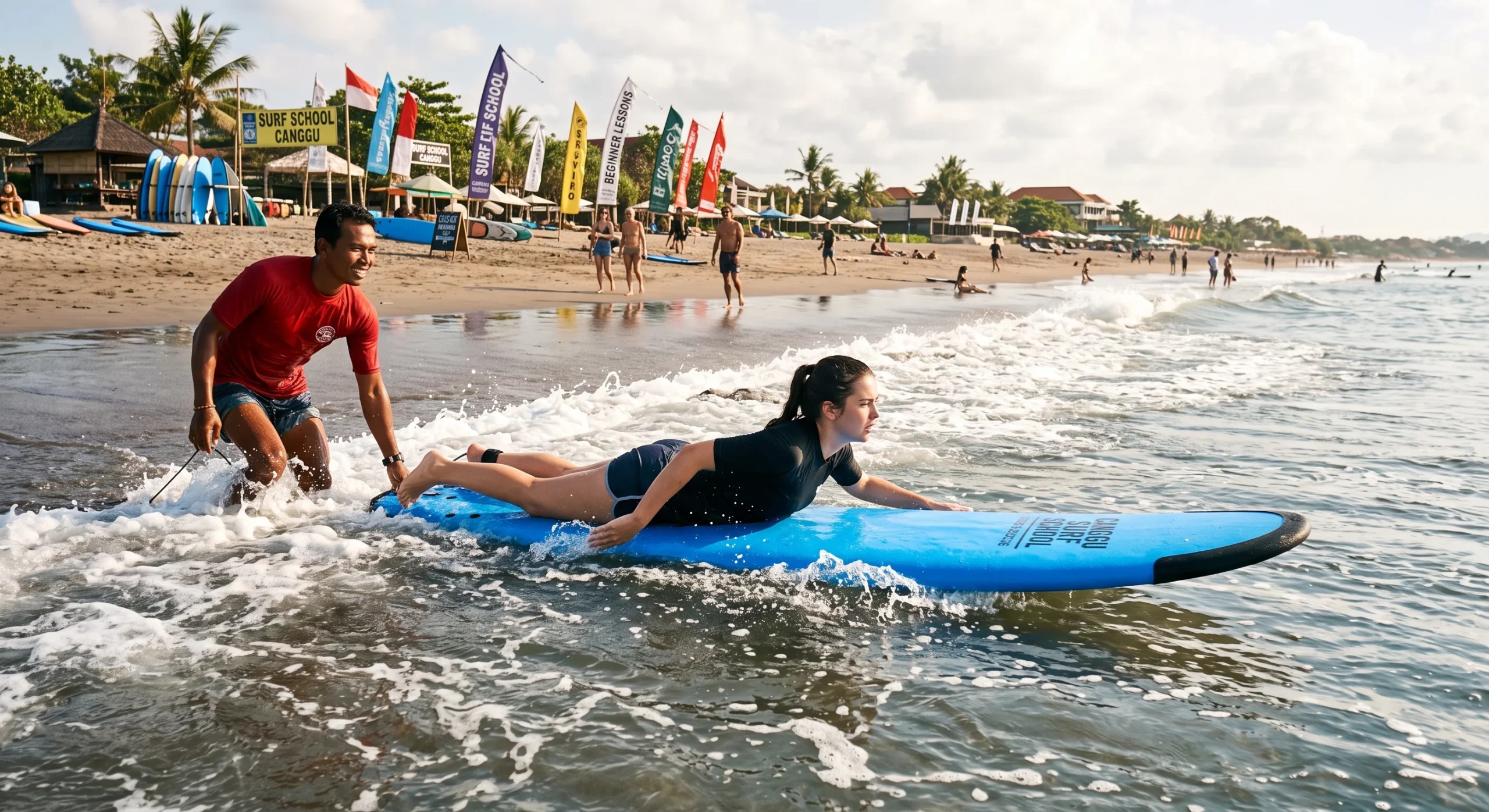
- Canggu’s beach breaks are known for being beginner-friendly compared to some of Bali’s more advanced surf spots.
- Most surf schools include board rental and a wetsuit in the lesson price, so no gear is needed beforehand.
- Morning lessons tend to have calmer conditions than the afternoon, especially for first-time surfers.
- Budget around two hours for a group lesson, including instruction time and actual time in the water.
Canggu has become Bali’s unofficial surf town, and a single beginner lesson here is one of the more genuinely fun, active additions to a first-time itinerary. The area’s beach breaks are gentler than the reef breaks found elsewhere on the island, which makes it a realistic option even if you’ve never stood on a board before. Group lessons typically run for about two hours, split between an on-sand briefing and actual time paddling and catching smaller waves, with an instructor close by the entire time for guidance and safety.
For a first-timer, expecting to actually stand up a few times rather than master the sport in one session sets a more realistic, enjoyable tone for the lesson overall. Morning bookings tend to have calmer water and smaller crowds in the lineup, both of which make learning noticeably easier than a busier afternoon session later on. Afterward, Canggu’s surrounding cafes make for an easy, low-effort lunch stop, so this idea naturally rolls into a relaxed second half of the day without much additional planning required.
Tanah Lot Temple
- This temple sits on a rock formation just offshore, fully surrounded by water during high tide.
- Sunset is the most popular visiting time, so expect a genuinely large crowd during that window.
- You can’t enter the temple itself as a non-worshipper, but the surrounding grounds offer great viewpoints.
- Check the tide schedule beforehand — during low tide, you can actually walk out closer to the rock base.
Tanah Lot is one of Bali’s most photographed temples, sitting dramatically on an offshore rock formation that becomes fully surrounded by water once the tide comes in. It’s a slightly different experience from Uluwatu, more about the striking silhouette against the sunset sky than a cliffside performance, though both spots deliver a genuinely memorable evening. Non-worshippers can’t enter the temple structure itself, but the surrounding grounds and viewpoints still offer a clear, unobstructed view of the whole formation, especially from the slightly elevated paths nearby.
A practical tip that catches a lot of first-timers off guard: this is one of the busier tourist stops on the island, so managing expectations about crowd size ahead of time makes for a smoother visit overall. Checking the tide schedule before heading over is genuinely useful, since low tide allows walking closer to the rock base than high tide does. If your itinerary is already full with Uluwatu, it’s fair to treat this as an optional add rather than a mandatory stop.

Nusa Penida Day Trip
- This requires an early boat departure, usually before 7am, to make the most of a single day.
- Kelingking Beach’s cliffside viewpoint is the most iconic stop, but it involves a steep, strenuous walk down.
- Book a driver for the island itself in advance — distances between viewpoints are longer than they look on a map.
- This is the most physically demanding day of the itinerary, so pace the rest of your trip around it.
A Nusa Penida day trip is genuinely one of the more ambitious additions to a three-day Bali itinerary, and it’s worth being honest about that before committing to it. The island’s cliffside viewpoints, especially the now-famous T-Rex-shaped cliff at Kelingking Beach, deliver some of the most dramatic scenery in the entire region, but reaching them involves real physical effort and a full day of travel. Boat departures typically leave before 7am to allow enough time on the island itself, which makes for an early, demanding start compared to the rest of the trip.
A driver hired for the day on the island itself is close to essential, since the viewpoints sit much further apart than most first-timers expect from looking at a map beforehand. This day tends to leave people genuinely tired by evening, so it’s worth being intentional about keeping the following day lighter rather than packing in more activity right after. For travelers with limited mobility or time constraints, it’s completely fair to skip this stop in favor of a slower, more relaxed final day closer to your accommodation instead.

Local Warung Lunches
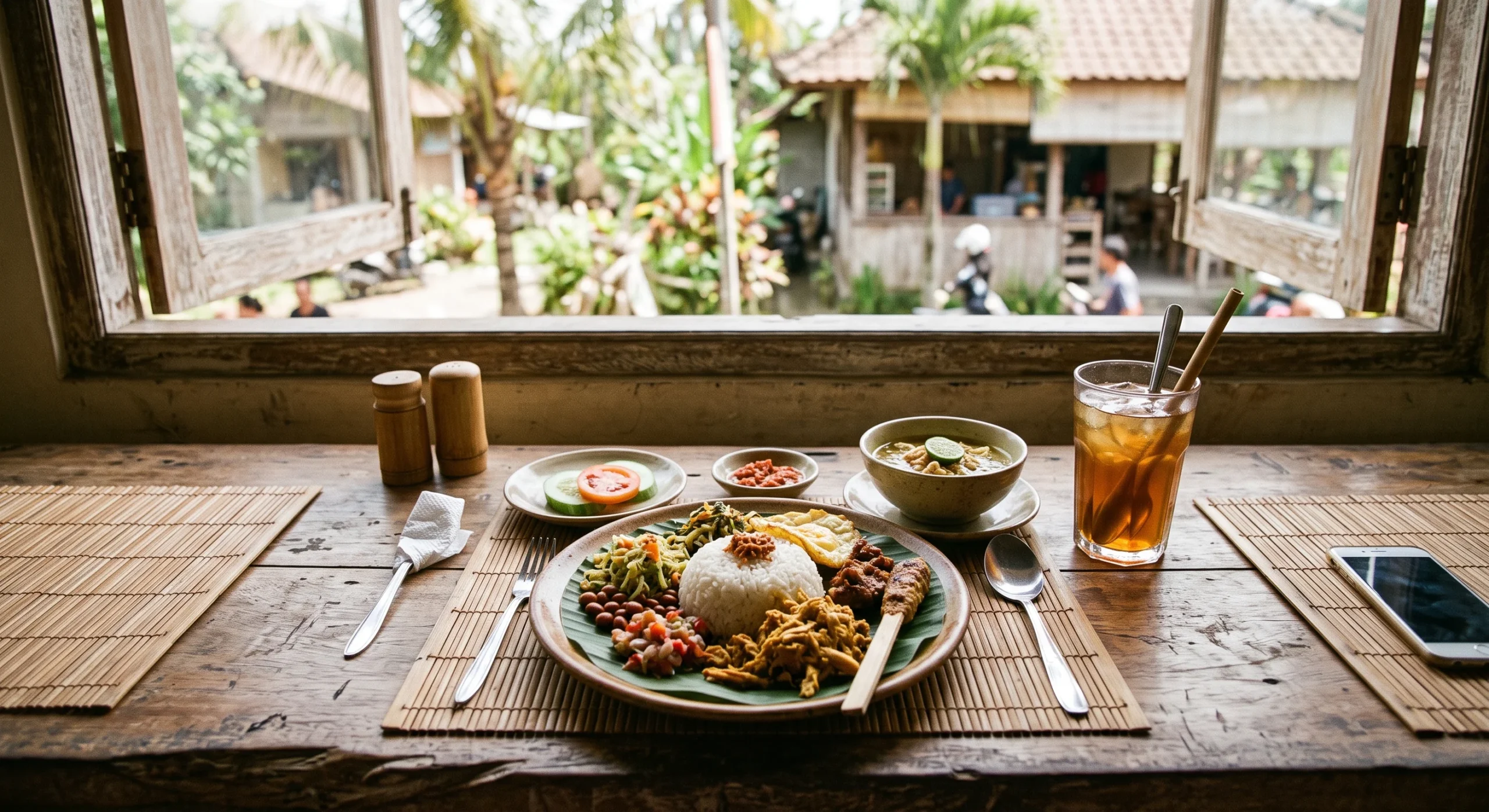
- Warungs are small, family-run local eateries — often the most authentic and affordable food option available.
- Nasi campur and mie goreng are common, approachable dishes for a first-time visitor to try.
- Prices at genuine local warungs run noticeably lower than restaurants aimed at tourists nearby.
- Look for a warung with a steady stream of local customers as a reliable sign of good food.
Eating at a local warung at least once during a short Bali trip gives you a much more genuine sense of the island’s food culture than the tourist-focused restaurants clustered around the main strips. These small, family-run spots typically serve a rotating selection of dishes displayed buffet-style, letting you point at what looks good rather than working through an unfamiliar menu. Nasi campur, a mix of rice with several small side dishes, is a reliable, approachable starting point for a first-timer who isn’t sure what to order yet.
Prices at genuine warungs run considerably lower than restaurants built around tourist traffic, which makes this a practical budget move as much as a cultural one during your trip. A useful, low-risk way to judge quality is checking whether local customers are eating there too, rather than relying purely on a listing’s online rating alone. Working a warung lunch into at least one day of this itinerary, rather than defaulting to cafes every meal, rounds out the trip with a flavor of Bali that’s easy to miss otherwise.
Balinese Spa Afternoon
- A traditional Balinese massage uses long, firm strokes and warm oil, distinct from a typical spa massage elsewhere.
- Spa treatments here cost a fraction of prices back home, making this an easy, affordable addition to the trip.
- Book slightly ahead during peak season, since the well-reviewed local spas can fill up by midday.
- This works well slotted in after a physically demanding day, like the Nusa Penida trip.
A spa afternoon is one of the more genuinely restorative additions to a Bali itinerary, especially if it’s positioned after a physically demanding day like a Nusa Penida excursion or a full day of walking. Traditional Balinese massage uses long, firm strokes combined with warm oil, a technique distinct from the lighter styles more common at spas back home, and it tends to leave people feeling noticeably looser rather than just relaxed afterward. Treatments here also cost a fraction of typical prices elsewhere, which makes this an easy addition rather than a splurge that eats into the rest of the trip’s budget.
A common approach among first-timers is booking a spa afternoon toward the end of the trip, using it as a deliberate wind-down before the flight home rather than an early-trip indulgence. Many local spas also offer package deals combining a massage with a facial or foot scrub, which stretches the value further for a similar overall price point. Checking recent reviews before booking helps filter for cleanliness and consistency, since quality does vary noticeably between the many small spas scattered across Ubud and Seminyak. A brief chat with the front desk about pressure preference beforehand also goes a long way.

Kuta Night Market
- Night markets are the best place for cheap, casual street food and quick souvenir shopping in one stop.
- Bargaining is expected at most stalls — a friendly, low-pressure back-and-forth is normal here, not rude.
- Go hungry and try a few different stalls rather than filling up on the first thing you see.
- Keep valuables close and be mindful of crowds, since markets are a common spot for pickpocketing.
A night market visit is a lively, budget-friendly way to close out an evening, mixing street food, casual shopping, and genuine local atmosphere into one manageable stop. Kuta’s market in particular offers a wide spread of grilled skewers, fresh fruit, and quick local dishes at prices well below any restaurant nearby. The best approach is arriving hungry and sampling from a few different stalls rather than committing to one large meal right away, since half the fun is trying several small bites across the evening.
Bargaining is a normal, expected part of shopping here, and a friendly back-and-forth over price is generally welcomed rather than seen as rude, as long as it stays lighthearted throughout. A useful, practical habit is keeping bags zipped and valuables close, since crowded markets are a fairly common spot for pickpocketing across many destinations, not just Bali specifically. This stop works especially well as a low-effort, low-cost final activity on whichever evening feels the least planned, rounding out the day without requiring reservations or much advance planning at all.

Getting Around Bali
- Hiring a private driver for the day is often more practical than renting a scooter for first-timers.
- Traffic between regions, especially toward Ubud and the south coast, can take far longer than map estimates suggest.
- Ride-hailing apps work in tourist areas but are sometimes restricted near certain markets and temple zones.
- If you do rent a scooter, an international driving permit and real riding experience are genuinely necessary.
Getting around is one of the more practical things to plan before a short Bali trip, since the island’s traffic can eat into your itinerary faster than most first-timers expect. Distances that look short on a map often take considerably longer in practice, especially between Ubud and the southern beach areas during peak traffic hours. A private driver, hired for the full day or split across the trip, tends to be the more comfortable and realistic option for visitors unfamiliar with local roads and riding conditions.
Scooters are everywhere in Bali and can feel like the obvious, adventurous choice, but they come with real risk for anyone without genuine riding experience and a valid international permit. Ride-hailing apps do work well in most tourist-heavy areas, though some zones near markets or temples restrict pickups, so having a driver’s number saved as a backup is a smart habit either way. Planning routes with some buffer time, rather than back-to-back stops, keeps this itinerary realistic rather than a rushed, frustrating scramble between locations.
Where to Stay
- Ubud suits travelers prioritizing rice terraces, wellness, and a quieter, more cultural home base.
- Seminyak and Canggu suit beach-focused travelers who want walkable cafes, surf, and beach clubs nearby.
- For a three-day trip, staying in one base and taking day trips is usually simpler than switching hotels.
- Book accommodation with airport transfer included, since Bali’s airport can be genuinely chaotic for first-timers.
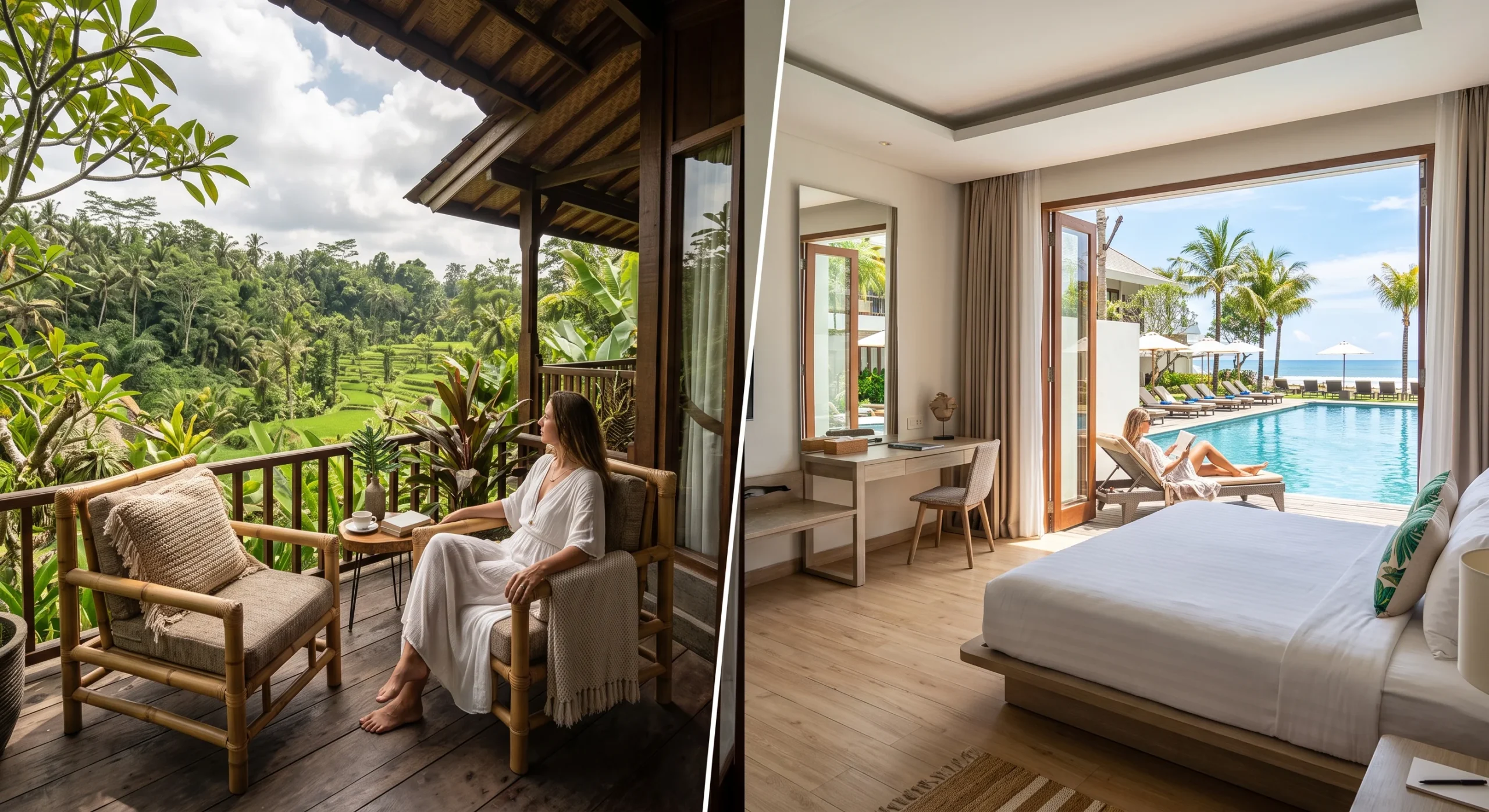
Choosing where to stay shapes the whole feel of a short Bali trip more than people usually expect going in. Ubud offers a quieter, more culturally rooted base, close to rice terraces and wellness spots, while Seminyak and Canggu lean more toward beach clubs, surf culture, and a livelier evening scene. For a trip this short, staying in a single base rather than switching hotels partway through generally saves time and reduces the logistical friction of repacking and re-adjusting to a new area mid-trip. It also means you can unpack once and focus entirely on the itinerary itself.
A practical tip worth knowing ahead of time: booking accommodation that includes an airport transfer removes one of the more stressful parts of arriving in Bali for the first time, since the airport pickup area can feel genuinely overwhelming. Reading a few recent reviews focused specifically on noise and construction is also worth the extra few minutes, since both are common, ongoing realities in Bali’s fast-growing tourist areas. Getting this one decision right early on makes the rest of the itinerary noticeably easier to enjoy overall.
Packing for Bali
- Lightweight, breathable clothing handles Bali’s heat and humidity far better than anything heavier packed by mistake.
- Pack a sarong or scarf specifically for temple visits, since covered shoulders and legs are usually required.
- Reef-safe sunscreen matters here, especially if beach and snorkeling stops are part of your itinerary.
- A dry bag is genuinely useful for beach days, boat trips, and any unexpected afternoon rain.
Packing smart for Bali means planning around heat, humidity, and the mix of beach, temple, and jungle stops a typical itinerary covers. Lightweight, breathable fabrics hold up far better across a full day of walking than anything heavier, and they dry faster if caught in one of Bali’s frequent short afternoon rain showers. A sarong or light scarf earns its space in the bag specifically for temple visits, where covered shoulders and legs are a real requirement rather than a suggestion at most sites on this itinerary.
Reef-safe sunscreen is worth prioritizing over a standard drugstore option, particularly if beach days or a Nusa Penida trip are part of your plan, since regular sunscreen can genuinely harm the surrounding coral reefs over time. A small dry bag protects phones and cameras during boat trips or sudden rain, both of which come up more often than first-timers expect on a Bali trip. Packing a little lighter than usual, with room for a few souvenirs, tends to make the whole three days easier to move through comfortably.

Best Time to Visit
- Dry season, roughly April through October, offers the most reliable weather for a short itinerary like this one.
- Shoulder months like April and September often mean fewer crowds without sacrificing much in terms of weather.
- Peak season around July and August brings the highest prices and busiest temples and beaches.
- Off-season visits still work for a short trip, just with a higher chance of brief afternoon rain.
Timing a first Bali trip well can make a real difference in how smoothly a packed three-day itinerary actually goes from start to finish. Dry season, generally running from April through October, offers the most consistent weather for outdoor stops like rice terraces, beaches, and clifftop temples, with a much lower chance of a rained-out afternoon disrupting your plans. Shoulder months on either edge of that window, particularly April and September, tend to offer a genuinely good balance of decent weather and noticeably thinner crowds compared to the peak summer months.
Peak season around July and August draws the largest crowds and highest accommodation prices, which can make an already tight three-day schedule feel more rushed at popular stops like Uluwatu and Tanah Lot. Traveling during the off-season isn’t a dealbreaker for a short trip like this one, since Bali’s rain typically arrives in shorter afternoon bursts rather than all-day downpours across the island. A common approach is checking the specific week’s forecast once travel dates are close, then simply building a little flexibility into the day-by-day plan.

Budget Breakdown Tips
- Accommodation, food, and activities in Bali generally cost far less than comparable trips in Europe or the US.
- A private driver for a full day is one of the better value additions relative to its actual cost.
- Eating at warungs instead of tourist restaurants meaningfully lowers daily food costs across a three-day trip.
- Set aside a slightly larger buffer for Nusa Penida, since boat tickets and driver fees add up quickly.
Budgeting for a short Bali trip is genuinely more forgiving than many other popular destinations, since accommodation, food, and local transport all tend to cost noticeably less here than comparable options in Europe or the US. A private driver for a full day, while it feels like a splurge upfront, often works out to be one of the better value decisions on this list, given how much time and stress it saves compared to figuring out transport alone. Warung meals keep daily food costs low without sacrificing much in terms of quality.
The one line item worth budgeting more generously for is the Nusa Penida day trip, since boat tickets, a driver on the island, and entrance fees at various viewpoints add up faster than a typical day elsewhere on this itinerary. Setting aside a rough daily budget before the trip, then tracking loosely as you go, helps avoid the kind of end-of-trip surprise that can sour an otherwise great experience overall. A well-planned three-day Bali trip remains one of the more genuinely budget-friendly options for a first international getaway.

FAQ
Is 3 days really enough time to see Bali?
Three days won’t cover the whole island, but it’s genuinely enough for a solid first taste if you pick a focused region rather than trying to cover everywhere. Basing yourself in one area and taking a couple of day trips, like this itinerary does, keeps travel time from eating into your actual sightseeing time.
Do I need to book tours in advance for this itinerary?
Most stops here don’t require advance booking, though the Nusa Penida boat trip and any beach club sunbeds during peak season are worth reserving a day or two ahead. Everything else, including temples and swing spots, can reasonably be figured out once you’ve arrived.
Is Bali safe for first-time solo travelers?
Bali is generally considered a comfortable destination for first-timers and solo travelers, with a well-established tourist infrastructure in the main areas covered by this itinerary. The usual common-sense precautions apply — watch belongings in crowded markets, use a licensed driver, and check road conditions before renting any scooter.
What should I skip if 3 days feels too packed?
If the pace feels like too much, Nusa Penida is the easiest full day to cut, since it demands the most time and physical effort of anything on this list. Trimming one beach club or temple stop and replacing it with unstructured time is usually a better trade than rushing through everything listed here.
Conclusion
Three days is a short window, but this 3 day Bali itinerary proves it’s enough to genuinely fall for the island — rice terraces at sunrise, a clifftop temple at sunset, and a warung lunch somewhere in between. The goal was never to see everything, just the stops that actually earn their place on a first visit. Save this itinerary to Pinterest before you go, pick one or two ideas here to build your own version around, and pass it along to anyone you know planning their first Bali trip. However you shape these three days, they’re enough to make you want to come back.