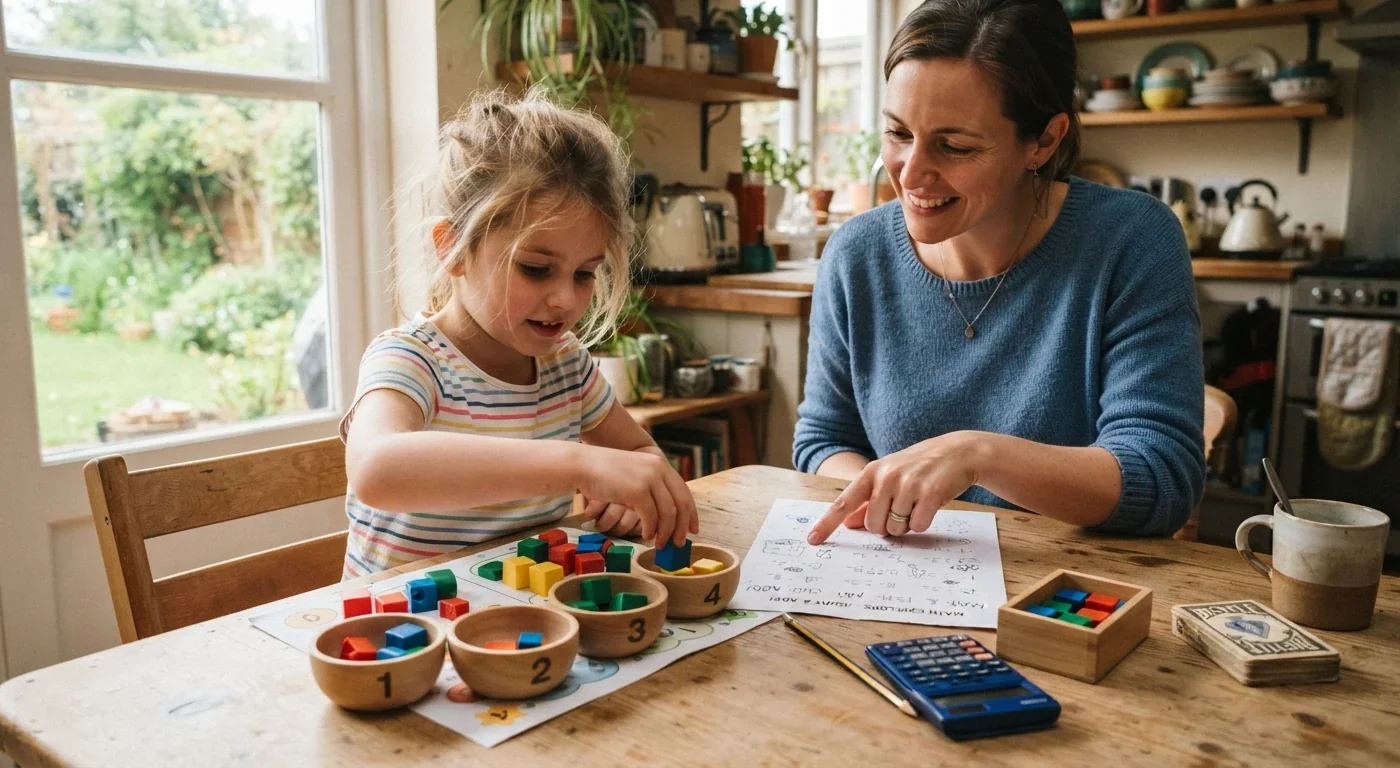

For a lot of kids, math anxiety shows up long before the math itself gets hard. A tense shoulder, a sudden urge to say “I can’t,” a worksheet pushed away before it’s even been read, these are common reactions I’ve seen play out in real classrooms for years. Making math less scary for kids rarely comes down to more practice sheets. It comes down to changing how math shows up in daily life, so it feels like something explored rather than something survived. This list gathers 17 practical, low-pressure ways to rebuild that comfort at home, one small shift at a time.
Start Here: Mistake-Friendly Practice Zone
Fear of getting it wrong is usually the actual root of math anxiety, so building a space where mistakes are expected and safe tends to unlock progress faster than any new worksheet or drill ever could.
Mistake-Friendly Practice Zone
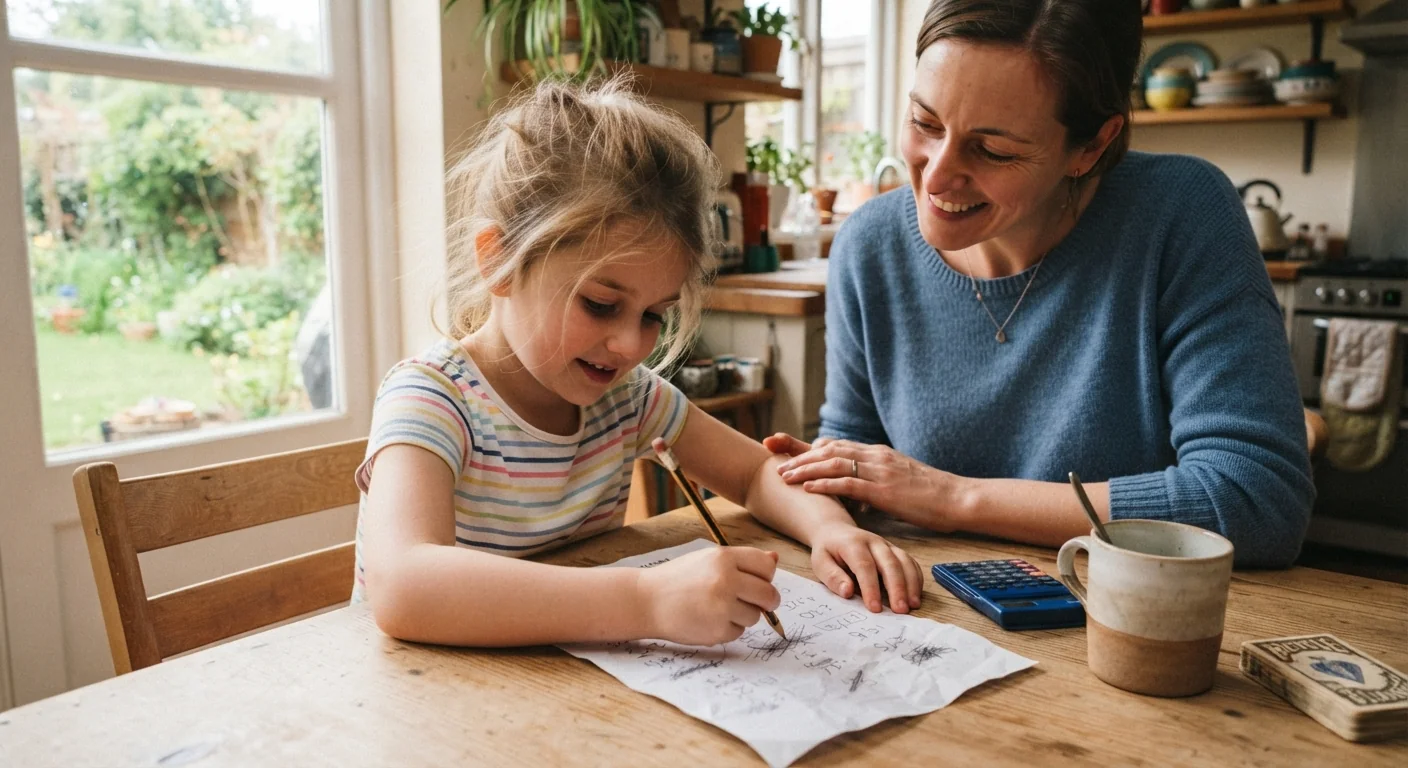
- Set aside scratch paper specifically for messy, mistake-filled practice
- Respond to wrong answers with curiosity rather than correction first
- Say out loud that mistakes are part of how math gets learned
- Avoid grading or timing this practice, it’s exploration, not a test
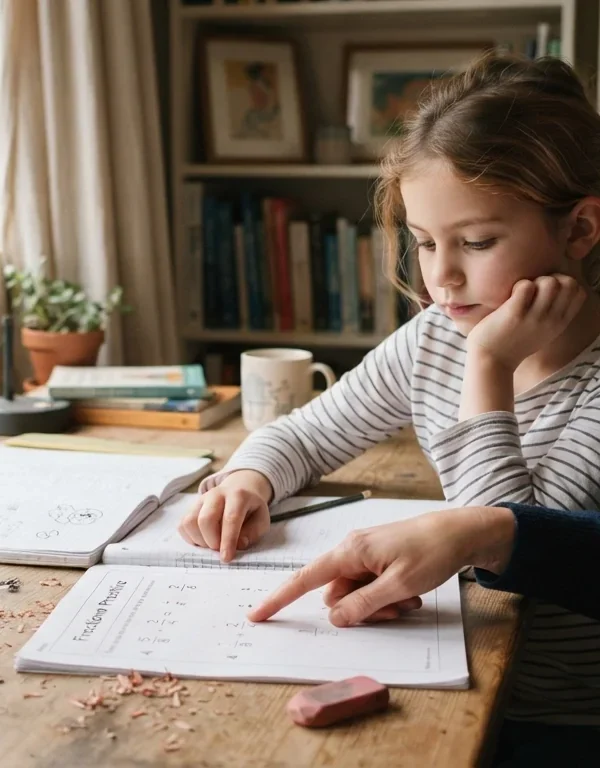
Among the students I have taught, those most afraid of math are almost never the ones behind on skills, but those most afraid of being wrong in front of someone. That fear builds quietly, one red mark or one quick correction at a time, until a child starts avoiding math altogether rather than risk another mistake. A mistake-friendly practice zone flips that pattern by making errors expected and low-stakes from the start, using scratch paper set aside specifically for messy, unfinished, wrong-answer-filled work that nobody is grading.
The tone an adult brings to this space matters more than the paper itself. Responding to a wrong answer with genuine curiosity, asking what the child was thinking rather than immediately supplying the right method, keeps the moment feeling safe instead of exposing. Saying plainly that mistakes are part of how anyone gets better at math, including adults, reinforces that message over time. Kept consistent, this small shift tends to be the single biggest unlock for a child who has started associating math with the fear of getting caught being wrong.
Everyday Math Scavenger Hunts
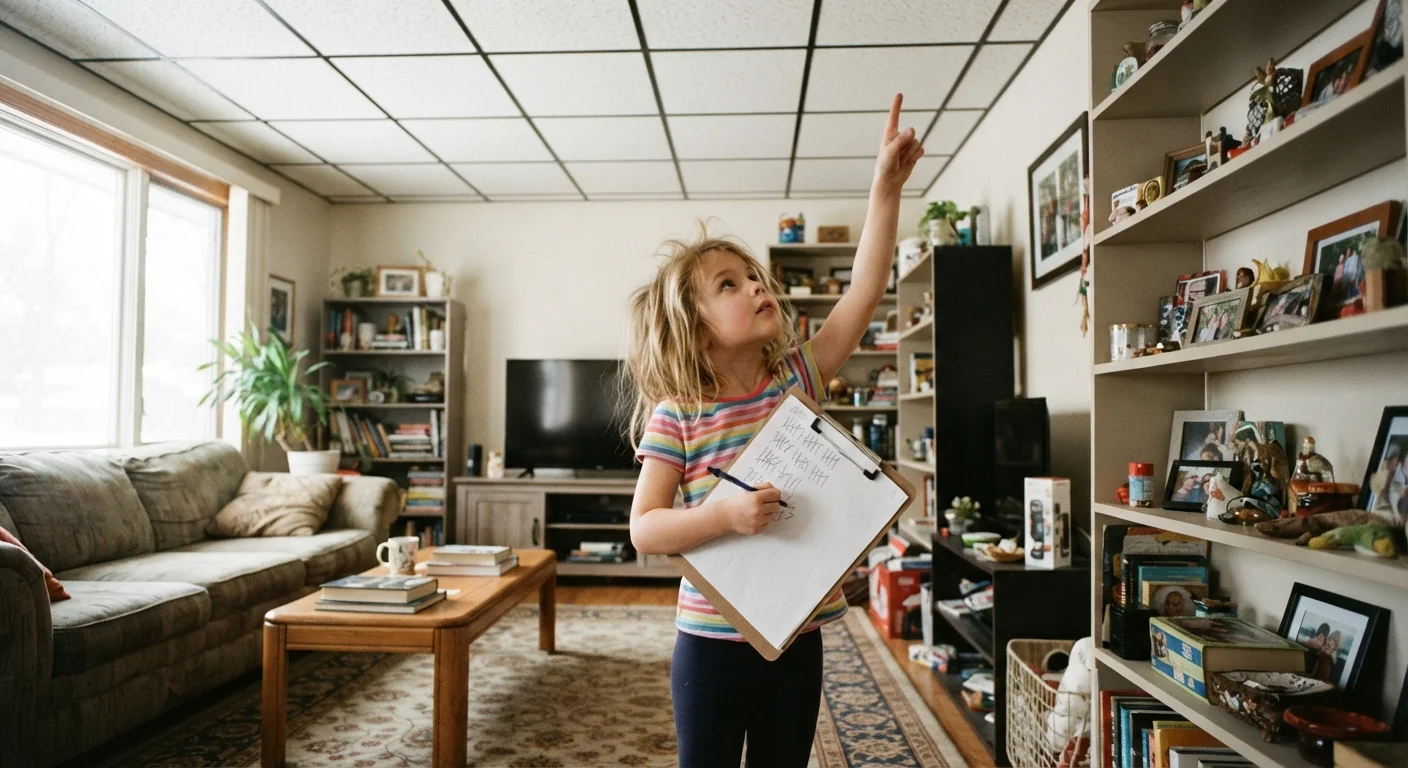
- Send kids hunting for numbers, shapes, or patterns around the house
- Ask them to count items in groups of two, five, or ten
- Turn grocery trips into a hunt for prices, weights, or quantities
- Keep the hunt short, five to ten minutes holds attention best
Math tends to feel abstract and intimidating when it only appears on a worksheet, disconnected from anything a child can touch or see. A scavenger hunt solves that by sending math looking for real objects instead of numbers on a page. Counting ceiling tiles, spotting shapes in furniture, or grouping books on a shelf into even piles all quietly practice the same skills a worksheet would, but wrapped in movement and curiosity instead of pressure. The math is still there, it’s just hidden inside something that feels like play rather than a task.
Grocery store trips work especially well for this because real quantities and prices are everywhere already. Asking a child to spot the cheaper of two similar items, or to estimate how many apples are in a bag before counting to check, turns an ordinary errand into low-stakes number practice. Keeping each hunt brief matters too, five or ten focused minutes holds a child’s attention far better than a drawn-out session, and ending while it’s still fun means they’ll actually want to do it again next time.
Cooking Measurement Practice
- Let kids measure ingredients themselves, even if it slows the recipe down
- Ask them to double or halve a simple recipe together
- Talk through fractions naturally as cups and spoons are used
- Choose recipes with visual, satisfying results like cookies or pancakes
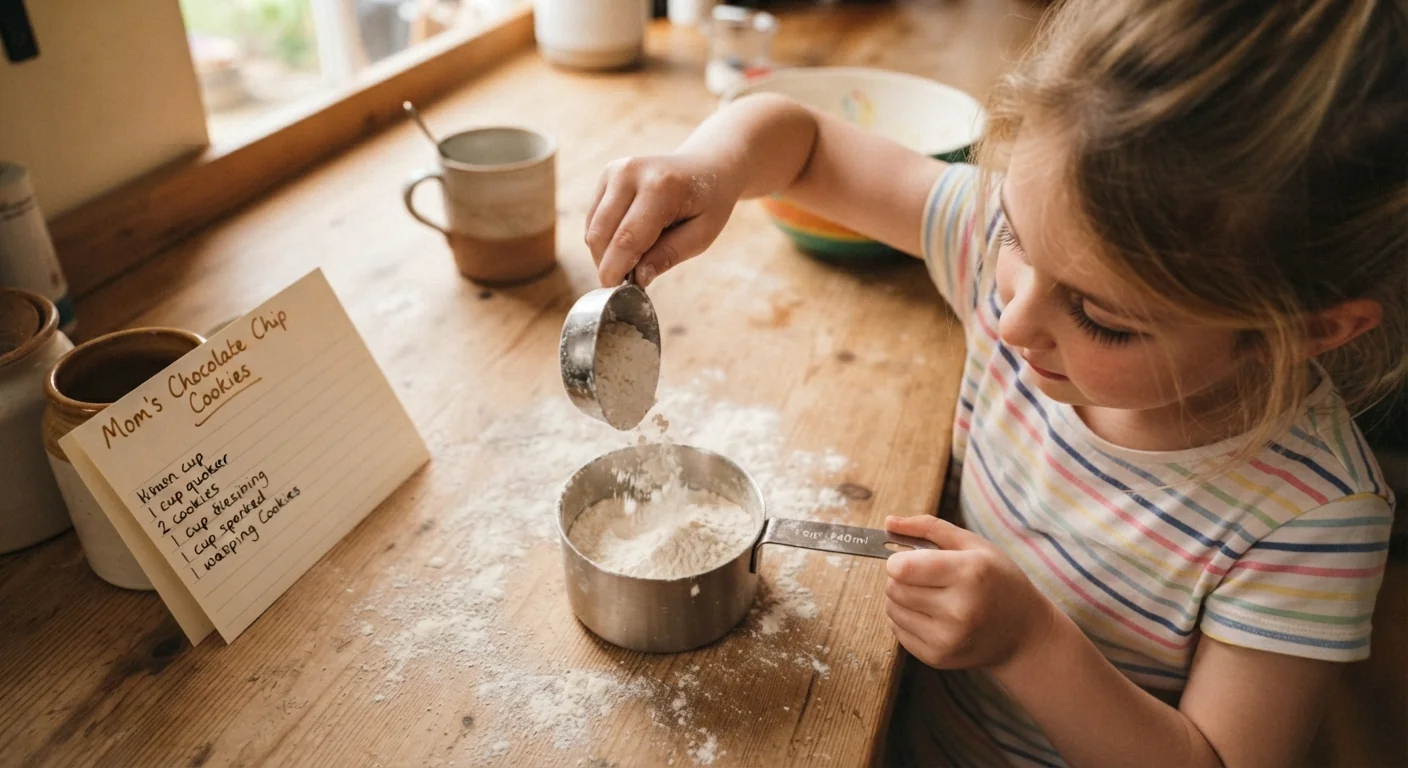
Cooking hides an enormous amount of math inside something that already feels rewarding and fun, which makes it one of the easiest ways to build number comfort without ever mentioning the word math. Measuring cups and spoons are essentially fraction tools in disguise, and a child pouring a half cup of flour or a quarter teaspoon of salt is practicing exactly the kind of fraction sense that trips many students up on paper. The stakes feel low because the goal is cookies, not a correct answer, which takes the usual pressure completely out of the equation.
Doubling or halving a favorite recipe together pushes the practice a step further without it feeling like a lesson at all. A child working out how much sugar is needed when a recipe is cut in half is doing real multiplication and division, just wrapped inside a task they’re already motivated to finish. Choosing recipes with a clear, satisfying payoff, something they can see, smell, and eat at the end, keeps the whole activity rewarding regardless of whether every measurement comes out perfectly precise the first time.
Board Game Number Play
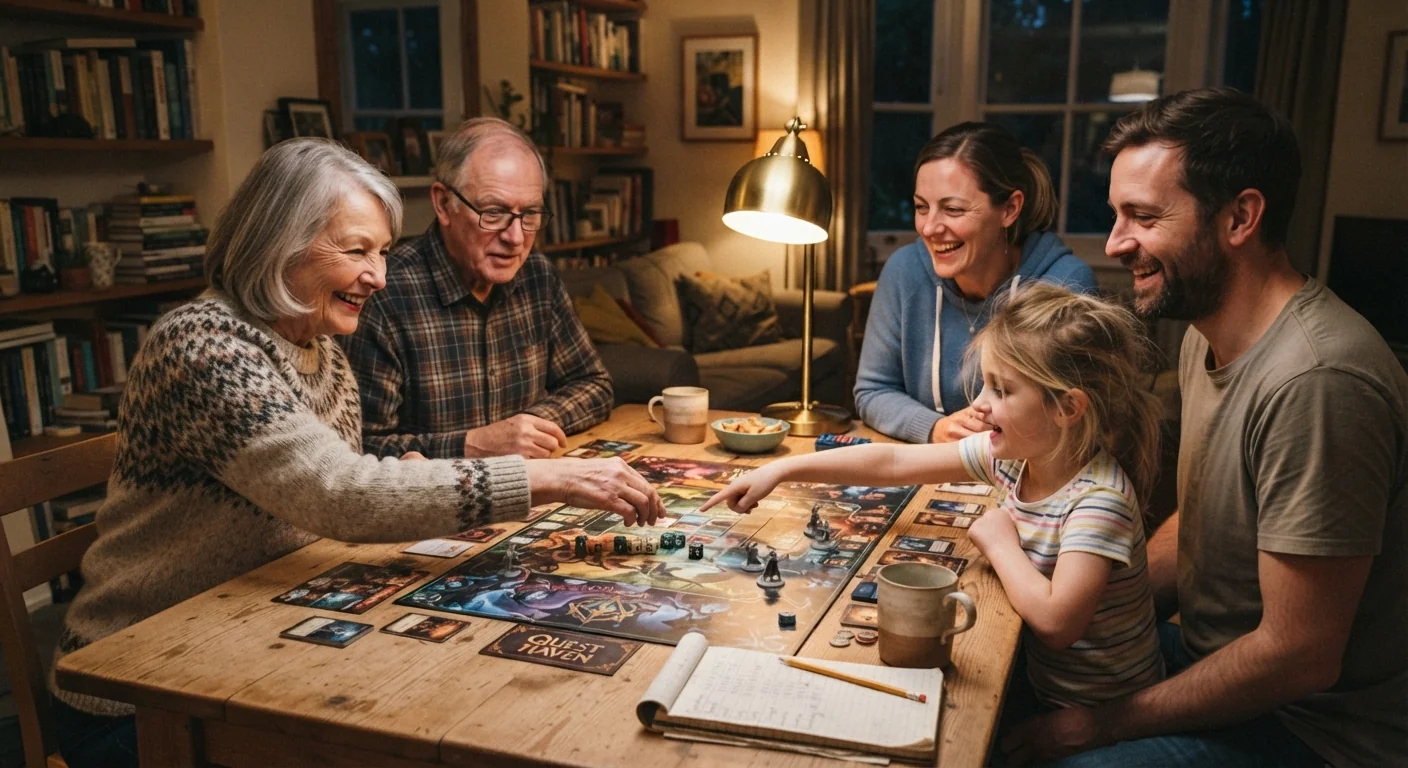
Board games quietly demand a surprising amount of arithmetic, counting dice rolls, tallying points, figuring out how many spaces remain to the finish line, all without ever feeling like schoolwork. That disguise is exactly what makes games so effective for kids who have started to dread anything that looks like math practice. The numbers are there, but the goal in a child’s mind is winning the game or reaching the end of the board, not solving a problem, which removes the emotional weight that so often comes with a worksheet.
Letting a child add up their own score, even slowly, builds more confidence than an adult doing the tallying for them ever will. It might take longer, and the answer might need a gentle double-check, but the practice of working through it themselves is where the real value sits. Playing regularly, rather than saving games for birthdays or rainy days, turns this into consistent low-pressure repetition. Matching the game to a child’s current comfort level also keeps the experience fun instead of frustrating, since a game that’s too far above their skill can undo the confidence it’s meant to build.
- Choose games that involve dice, counting spaces, or keeping score
- Let kids add up their own points instead of doing it for them
- Play regularly rather than saving games for special occasions
- Pick games matched to current skill level so nobody feels lost
Real Coin Counting Games
- Let kids sort a coin jar by value before counting the total
- Play a simple store game using real or play coins
- Ask them to figure out change owed after a pretend purchase
- Praise the strategy used, not just whether the total was correct
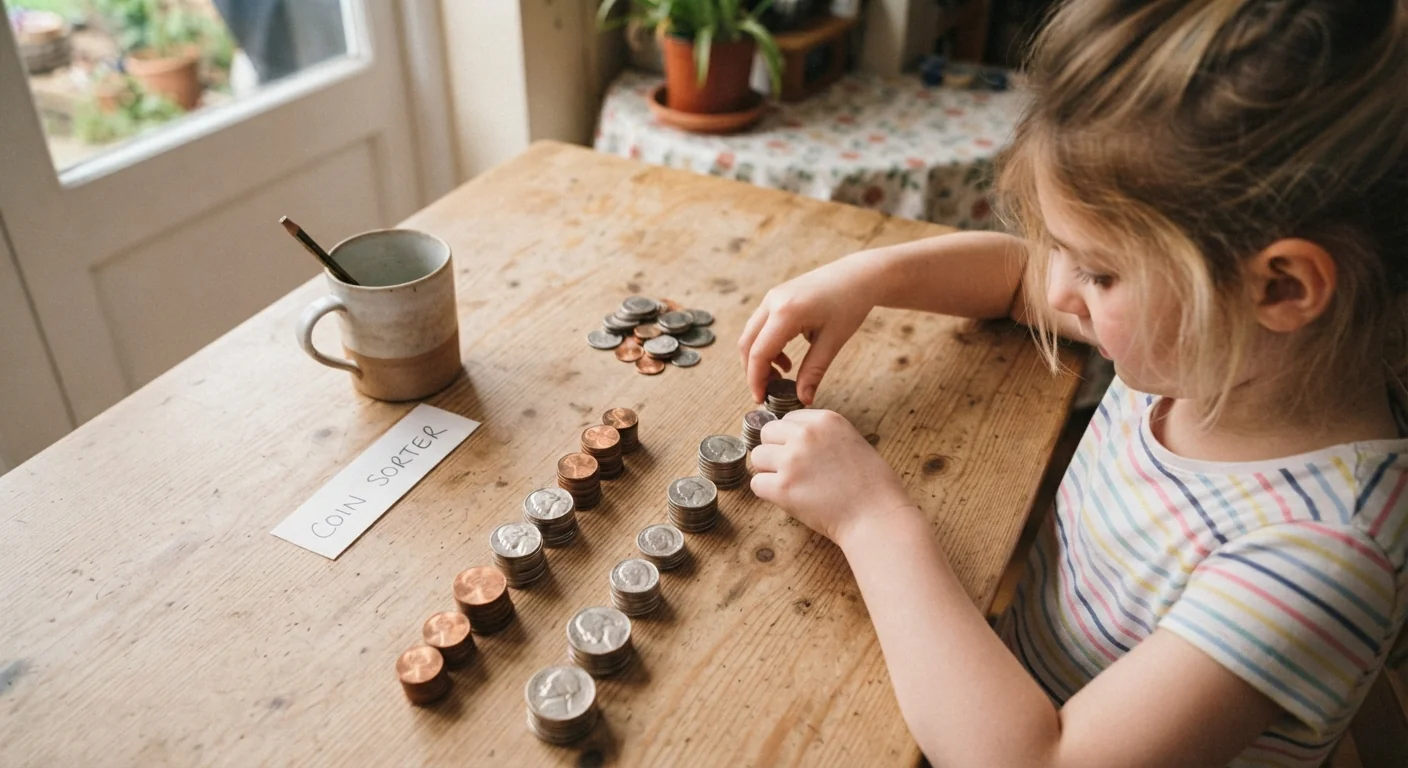
Money is one of the most naturally motivating math tools available at home, mostly because kids tend to already care about it more than they care about an abstract number sentence. Sorting a jar of loose coins by value before counting the total gives a child a concrete, physical way to group and add, the same underlying skill a worksheet would ask for, just with something they can physically stack and rearrange. That tactile piece matters, especially for kids who find pure mental math overwhelming without something to hold onto.
A simple pretend store game pushes this a step further by adding real-world context to the counting. Assigning small prices to household items and asking a child to pay with the right coins, or to figure out how much change is owed, builds subtraction and estimation skills inside a scenario that feels playful rather than academic. Focusing praise on the strategy they used, how they decided which coins to use first, rather than only whether the final total was exactly right, keeps the activity feeling like problem-solving instead of a test they could fail.
Hands-On Math Manipulatives
- Keep a basket of blocks, counters, or number rods easily accessible
- Let kids build a number physically before writing it down
- Use manipulatives for both addition problems and simple fractions
- Follow the child’s pace, some concepts need more hands-on time than others
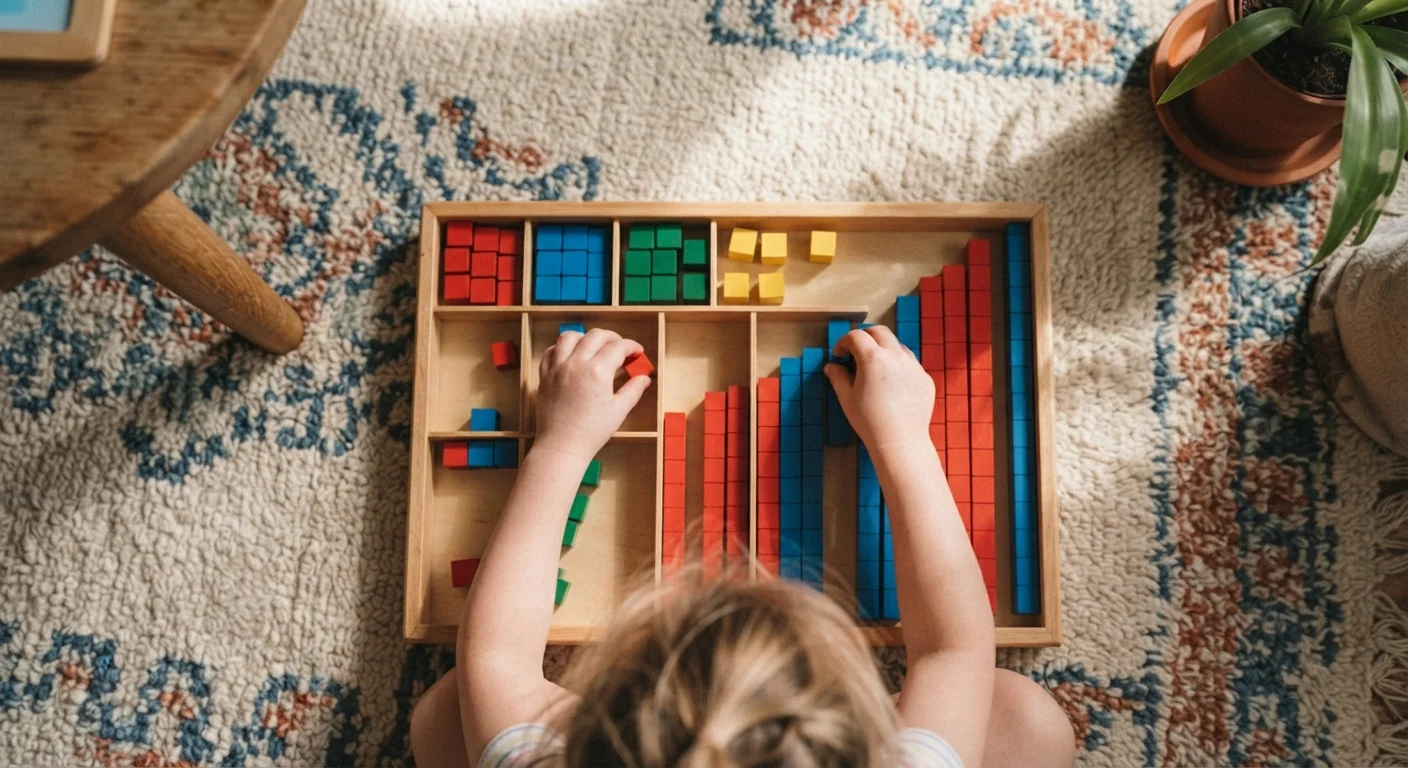
Some math concepts genuinely make more sense when they can be touched before they’re written down, and physical manipulatives exist exactly for that reason. Colorful counting blocks, number rods, or even household items like buttons or dried beans let a child build a quantity with their hands, seeing five as five actual objects rather than an abstract symbol on a page. For kids who feel lost the moment numbers appear only as marks on paper, this physical bridge often makes the difference between confusion and genuine understanding.
Keeping a small basket of these tools within easy reach, rather than packed away and forgotten, matters more than the specific materials chosen. A child who can grab counters on their own, without needing to ask permission or dig through a closet, is far more likely to reach for them when a math problem starts to feel shaky. Letting the pace be set by the child rather than a fixed lesson plan also respects that some ideas, like fractions, often need more repeated hands-on time before they click than others do.
Calm Test-Taking Breathing
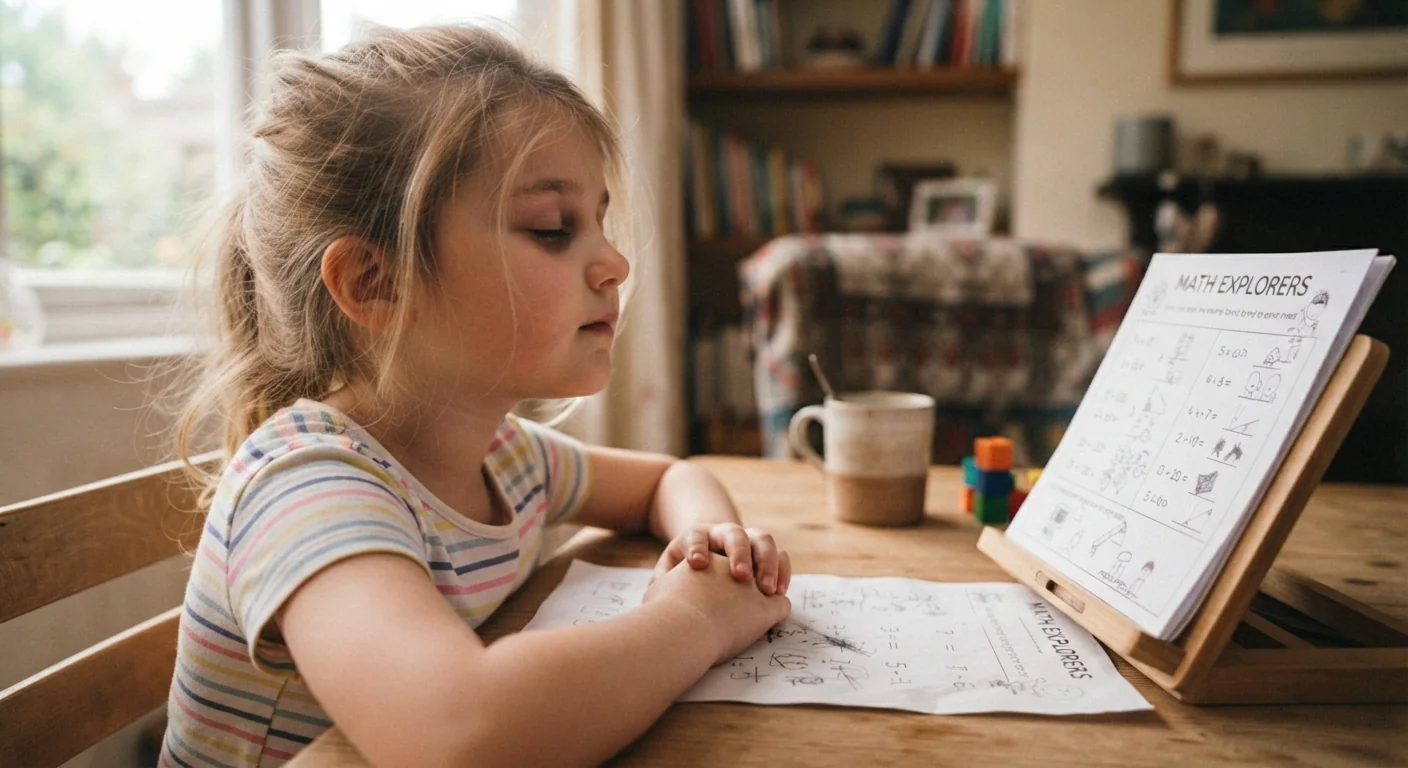
A racing heart or a sudden blank mind right before a math test is one of the clearest physical signs of math anxiety, and it’s a pattern I’ve watched play out in classrooms more times than I can count. Teaching a child a simple breathing pause before starting a timed page can interrupt that spiral before it takes hold. A slow count of four in, hold for four, out for four, done two or three times, calms the nervous system just enough to let the brain access what it already knows instead of freezing up entirely.
This works best when it’s practiced regularly outside of actual test moments, not introduced for the first time in the middle of a stressful one. Trying the breathing pattern during calm, low-stakes homework time first turns it into a familiar tool a child already trusts, rather than one more unfamiliar instruction added on top of an already stressful situation. Framing it simply, as something that helps the brain think more clearly, rather than as a fix for being nervous, also keeps the focus on capability instead of drawing attention to the anxiety itself.
Story-Based Word Problems
- Turn word problems into short, silly stories with the child’s name in them
- Use familiar characters or interests, dinosaurs, pets, favorite shows
- Act the problem out physically when possible instead of just reading it
- Let the child suggest the next twist in the story problem
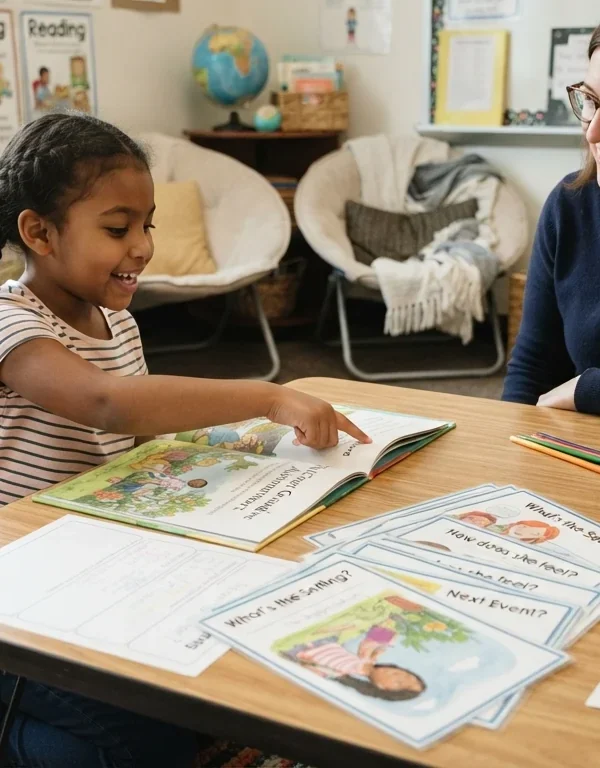
Word problems are often where math anxiety spikes hardest, because reading and math pressure collide at the same moment. Turning a flat textbook word problem into a short, silly story changes that entirely. A problem about “a train leaving the station” becomes far more engaging as a story about the child’s own stuffed animals boarding a rocket, especially when their name gets written into the plot. The math underneath stays exactly the same, but the emotional entry point shifts from intimidating to genuinely fun, which makes a child far more willing to actually attempt it.
Leaning into a child’s specific interests, dinosaurs, a favorite show, a pet, makes the story land even better than a generic one would. Acting the problem out physically when it’s practical, moving toy figures around to represent the numbers, adds another layer of understanding for kids who think better in motion than on paper. Letting the child help decide what happens next in the story also hands them a small sense of control over the problem, which quietly reduces the feeling that math is something being done to them rather than something they’re part of creating.
Pattern Building With Blocks
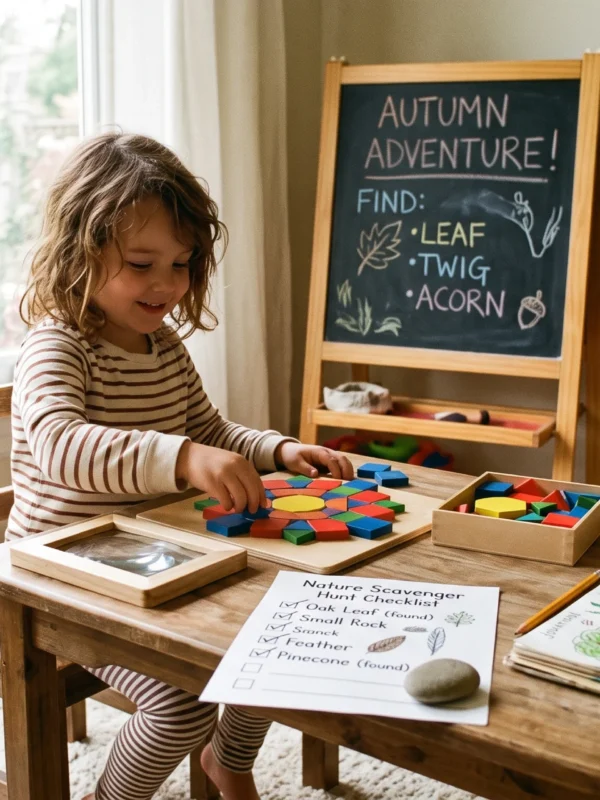
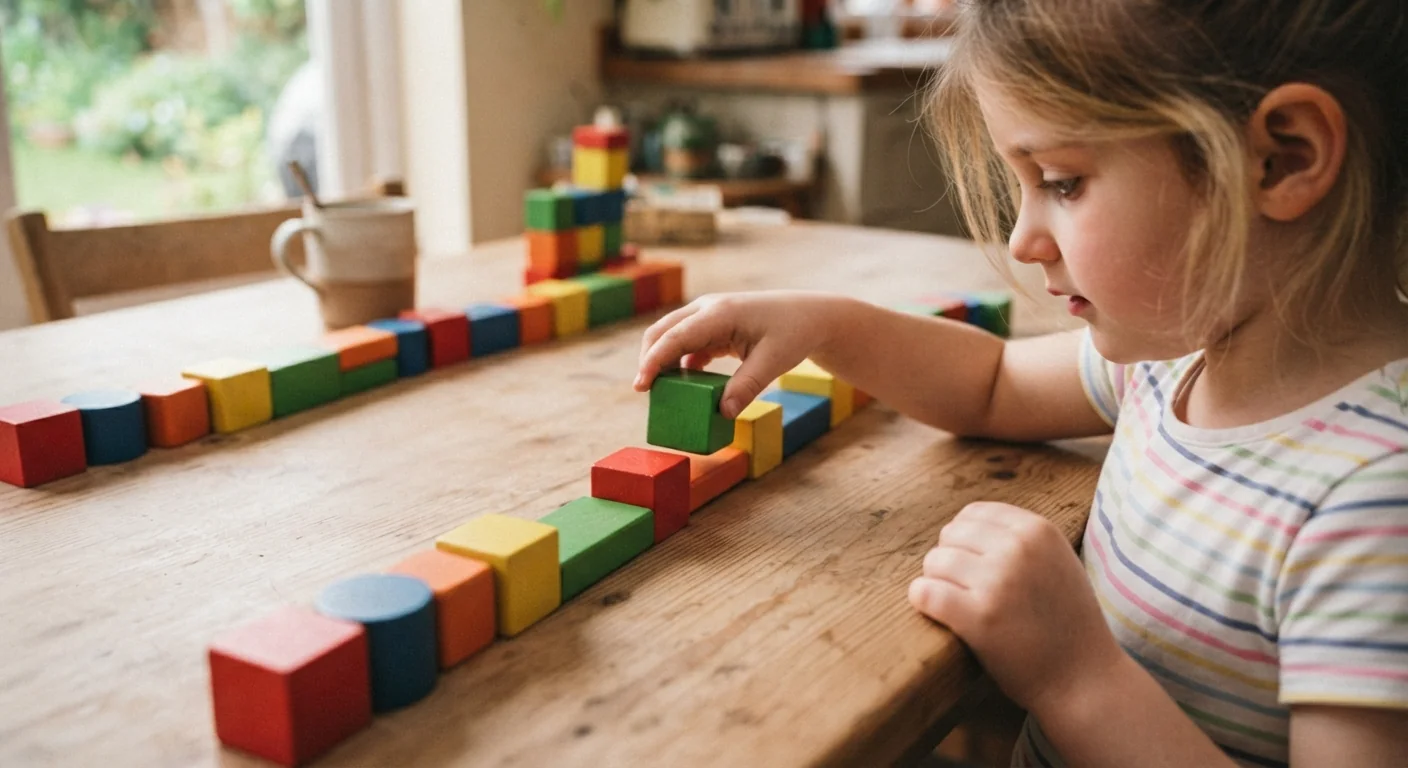
Patterns sit quietly underneath a huge amount of math, from basic sequencing to algebraic thinking years down the road, and building them physically with blocks gives kids an early, low-pressure entry point into that logic. Starting with something simple, red-blue-red-blue, lets a child succeed quickly and builds confidence before more complex patterns are introduced. Predicting what piece comes next in a sequence exercises the same reasoning skill needed later for number patterns and equations, just wrapped in something colorful and hands-on instead of abstract symbols.
Letting the child design their own pattern for someone else to continue adds a layer of ownership and challenge that keeps the activity from feeling repetitive. It also reveals a lot about how confidently they understand the underlying rule, since creating a pattern requires a slightly deeper grasp than simply extending one. Pointing out patterns that already exist in the real world, tile floors, fabric prints, a fence railing, helps a child see that this kind of thinking isn’t confined to a worksheet, it’s something they’re already surrounded by every day.
- Start with simple two-color patterns before adding complexity
- Ask the child to predict what comes next in a sequence
- Let them build their own pattern for someone else to continue
- Connect the pattern to real examples, like fabric or floor tiles
Cooperative Math Challenges
- Frame math tasks as a team challenge rather than a solo test
- Take turns solving parts of a longer problem together
- Celebrate the team’s process, not just the final correct answer
- Avoid comparing performance to siblings or classmates during the activity
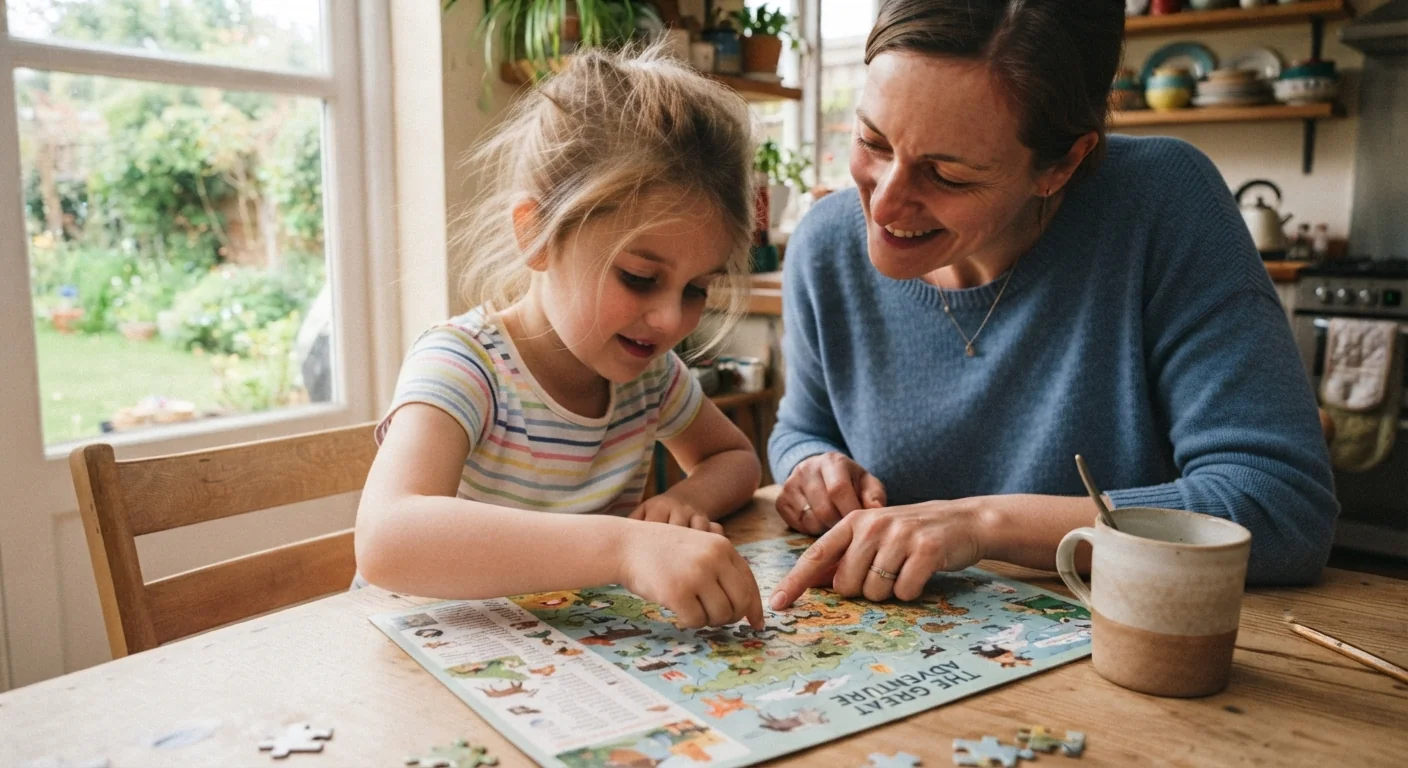
Math anxiety often grows in isolation, a child alone with a worksheet, feeling like every wrong answer is a private failure. Framing math as a shared challenge instead of a solo test changes that dynamic completely. Working through a problem together, taking turns figuring out different parts, or simply sitting side by side while tackling a page, signals that math is something done with support rather than something a child has to survive alone. That shift in framing alone can meaningfully lower the emotional stakes attached to getting an answer wrong.
Celebrating the process along the way, the strategy tried, the persistence shown, matters more here than praising only a correct final answer. A child who hears that their thinking was smart, even when the answer needed adjusting, tends to stay more willing to keep trying than one who only hears praise when everything is right. It’s also worth steering conversation away from comparisons to siblings or classmates during these moments, since that kind of comparison tends to reintroduce exactly the pressure a cooperative approach is meant to relieve.
Rhythm and Counting Songs
- Use skip-counting songs for twos, fives, and tens during car rides
- Clap or tap a rhythm while counting out loud together
- Make up a silly tune for a tricky math fact that’s hard to remember
- Repeat favorites often, familiarity is part of what makes them work
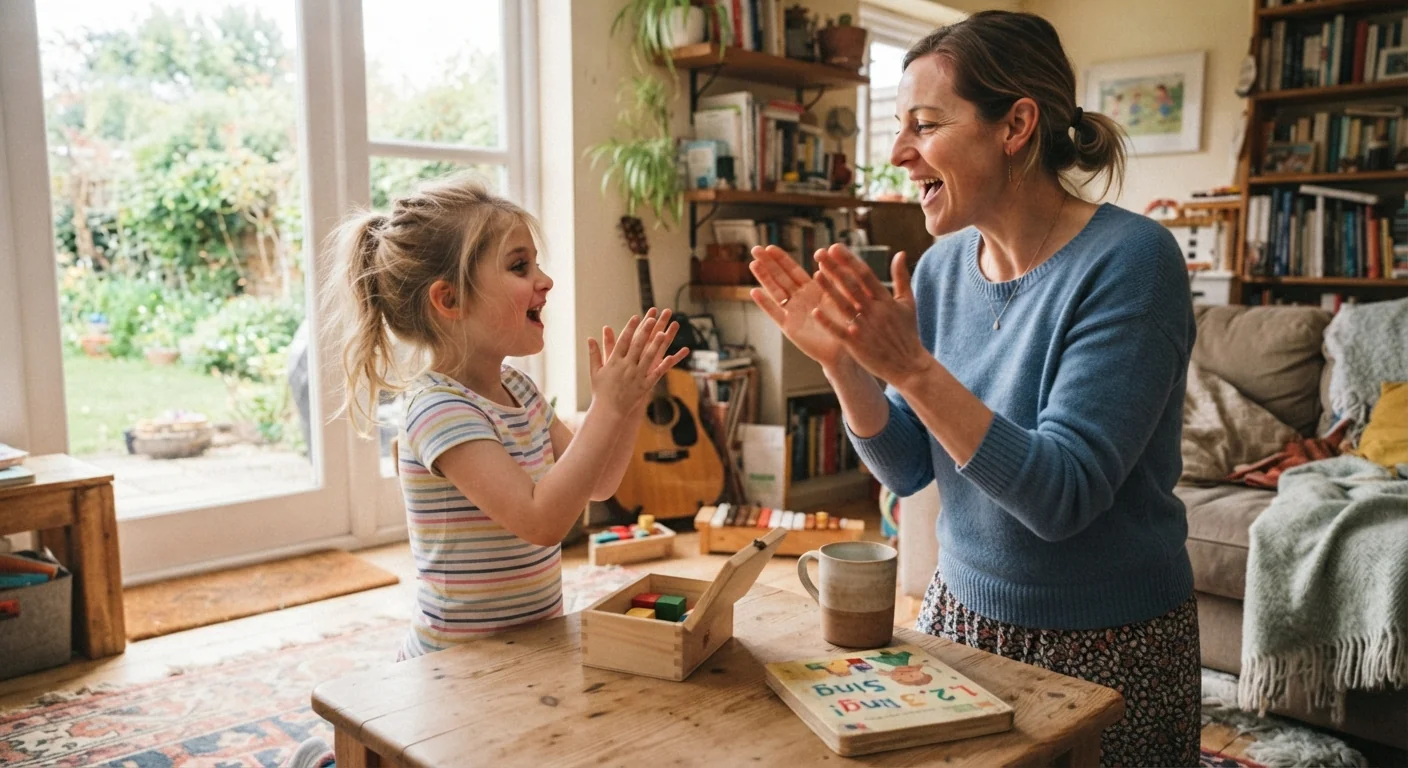
Music sneaks numbers into memory in a way that flat repetition rarely manages, which is part of why skip-counting songs work so well for kids who tense up around straightforward drills. A simple tune for counting by twos or fives, sung during a car ride or while folding laundry, gets numbers embedded into rhythm and melody instead of isolated on a page. That rhythmic pattern taps into a different kind of memory than rote memorization does, often making facts stick with far less visible effort or frustration involved.
Clapping or tapping along while counting adds a physical layer that reinforces the same idea through movement, which helps especially for kids who struggle to sit still through quiet, purely verbal practice. Making up a silly, family-specific tune for one particularly stubborn fact, the kind that never seems to stick no matter how many times it’s reviewed, often works better than another flashcard ever could. Repetition is still part of what makes this effective, but repeating a song a child enjoys feels nothing like repeating a drill they’re dreading.
Growth Mindset Phrases
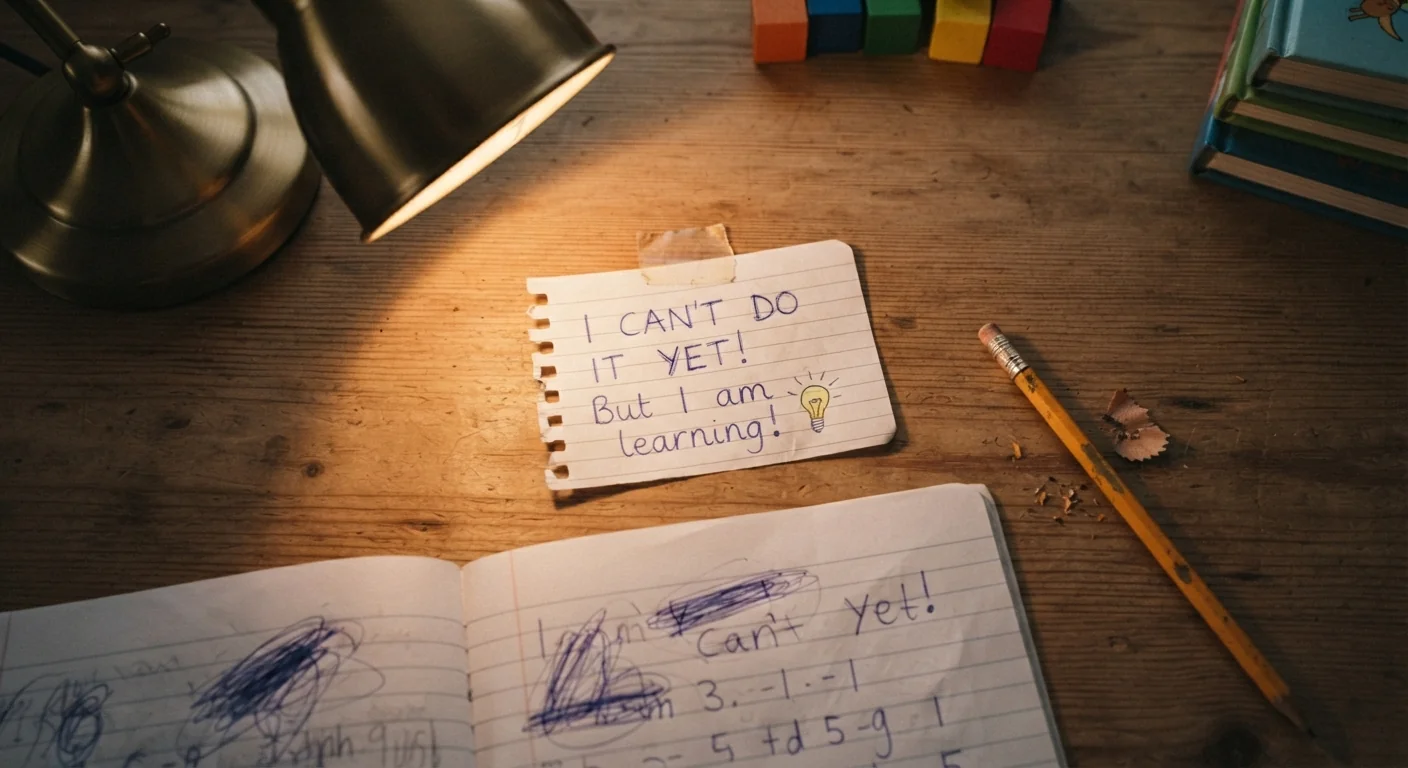
- Replace “I’m bad at math” with “I haven’t learned this yet”
- Praise effort and strategy out loud, not just speed or correctness
- Model the same language for your own mistakes in front of the child
- Keep the phrase visible somewhere the child sees it often
The words a child uses to describe their own math ability shape how willing they are to keep trying, often more than their actual skill level does. A child who has settled into saying “I’m bad at math” has usually stopped expecting to improve, which makes every new problem feel like confirmation of something already decided rather than a chance to learn. Gently replacing that phrase with “I haven’t learned this yet” reframes struggle as temporary and normal, a small linguistic shift that research and classroom experience both consistently point to as genuinely effective.
Praise plays a role here too, and where it’s aimed matters. Praising the strategy a child used or the effort they put in, rather than only how fast or how correct the answer was, teaches them that the process itself has value, not just the result. Modeling this same language when an adult makes their own mistake, saying “I haven’t figured this out yet either” out loud during a shared task, reinforces the idea further. Keeping a favorite version of the phrase somewhere visible, a sticky note by a desk, keeps the mindset shift present even outside of active practice time.
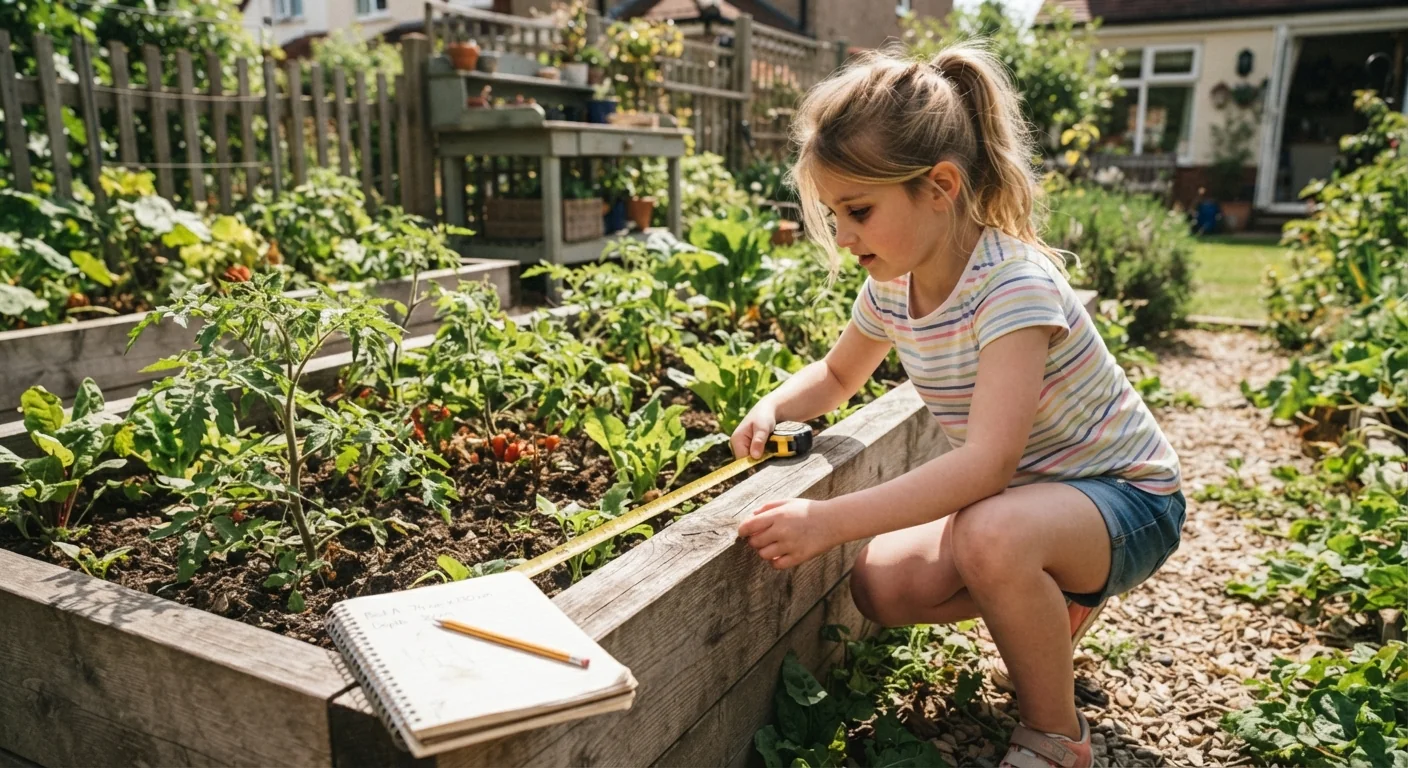
Outdoor Measuring Projects
- Measure garden beds, sidewalk chalk drawings, or backyard distances
- Compare estimated measurements to the actual tape measure result
- Let kids record their own measurements in a small notebook
- Turn it into a project, like planning space for a garden
Taking math outside changes its texture almost immediately, turning a subject often associated with sitting still into one that involves movement, tools, and real space. Measuring a garden bed, a sidewalk chalk drawing, or the distance between two trees gives a child hands-on practice with length, estimation, and units, all without a worksheet in sight. There’s also a natural feedback loop built in: guessing a measurement first and then checking it with a tape measure teaches estimation skills that traditional practice sheets rarely manage to build as effectively.
Letting a child record their own findings in a small notebook adds a layer of ownership and turns the activity into something closer to a real project than a lesson. Planning space for a small garden bed, figuring out how many plants will fit based on measured spacing, gives the math an actual purpose beyond practice for its own sake. That sense of real-world usefulness tends to stick with kids far longer than an abstract page of measurement conversions ever does, since they can see exactly what the numbers were for.
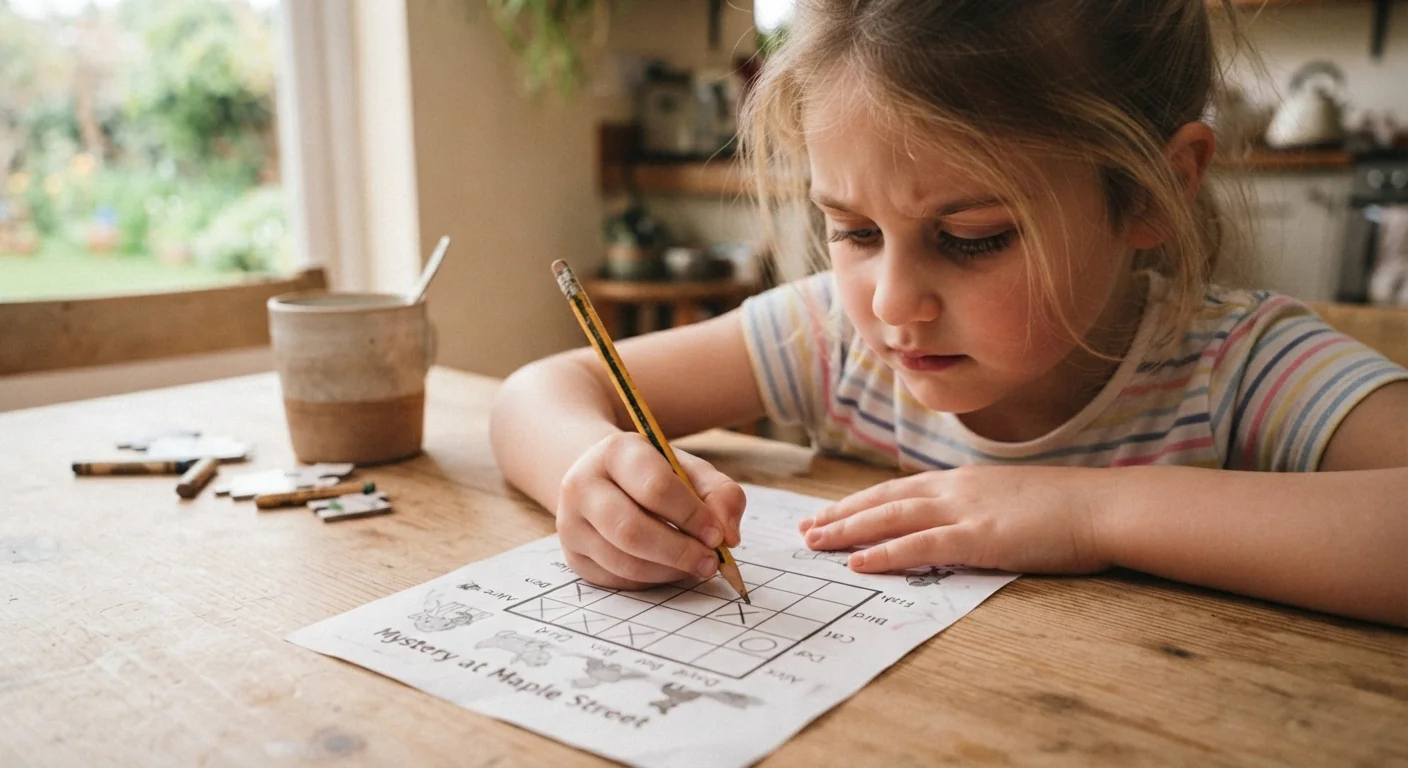
Logic Puzzle Time
Logic puzzles, riddles, and simple brain teasers build the same reasoning muscles as formal math without ever wearing the label. A puzzle asking a child to figure out who owns which pet based on a set of clues exercises deduction and sequential thinking, skills that quietly underpin algebra and problem-solving years later. Because these puzzles rarely look like traditional math, kids who have grown wary of worksheets often approach them with far more willingness, sometimes not even registering that they’re doing anything mathematical at all while working through one.
Keeping a small stash of age-appropriate puzzle books or printable grids on hand gives this option an easy, low-effort presence at home, something to reach for during a slow afternoon rather than a scheduled lesson. Working through one together occasionally, thinking out loud about the clues, models patient reasoning in a way that feels collaborative rather than instructional. Over time, puzzles like these tend to build a genuine comfort with structured thinking that transfers quietly back into more traditional math, even though that was never the explicit goal.
Celebrating Small Math Wins
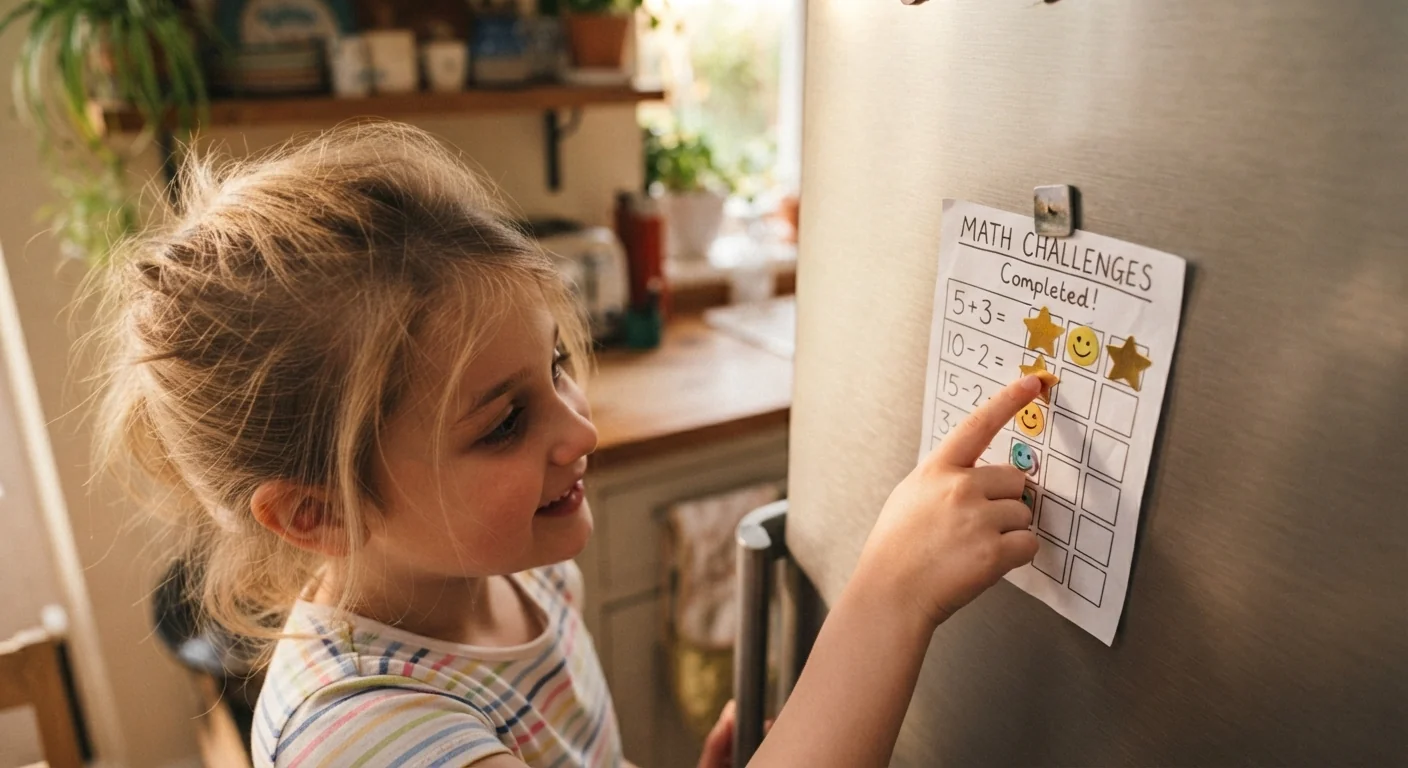
- Notice and name specific progress, not just perfect scores
- Keep a simple visual tracker for small milestones reached
- Let the child choose how a win gets celebrated
- Revisit old, harder problems occasionally to show how far they’ve come
Progress in math is often invisible to the child experiencing it, since improvement tends to happen gradually, one small step at a time, without the dramatic before-and-after moment a worksheet score might suggest. Actively noticing and naming specific progress, pointing out that a problem which took ten minutes last month now takes three, gives a child evidence of growth they might otherwise miss entirely. That evidence matters especially for anxious learners, who tend to focus on what still feels hard rather than registering what has already gotten easier.
A simple visual tracker, even a basic sticker chart, gives that progress a physical form a child can see accumulate over time. Letting the child decide how a win gets marked or celebrated, choosing the sticker, picking a small reward, keeps the celebration feeling personal rather than imposed. Occasionally revisiting an old problem that once felt impossible and watching a child solve it with relative ease can be one of the most powerful confidence-builders available, offering concrete proof that the anxiety they still feel about new material doesn’t reflect their actual ability.
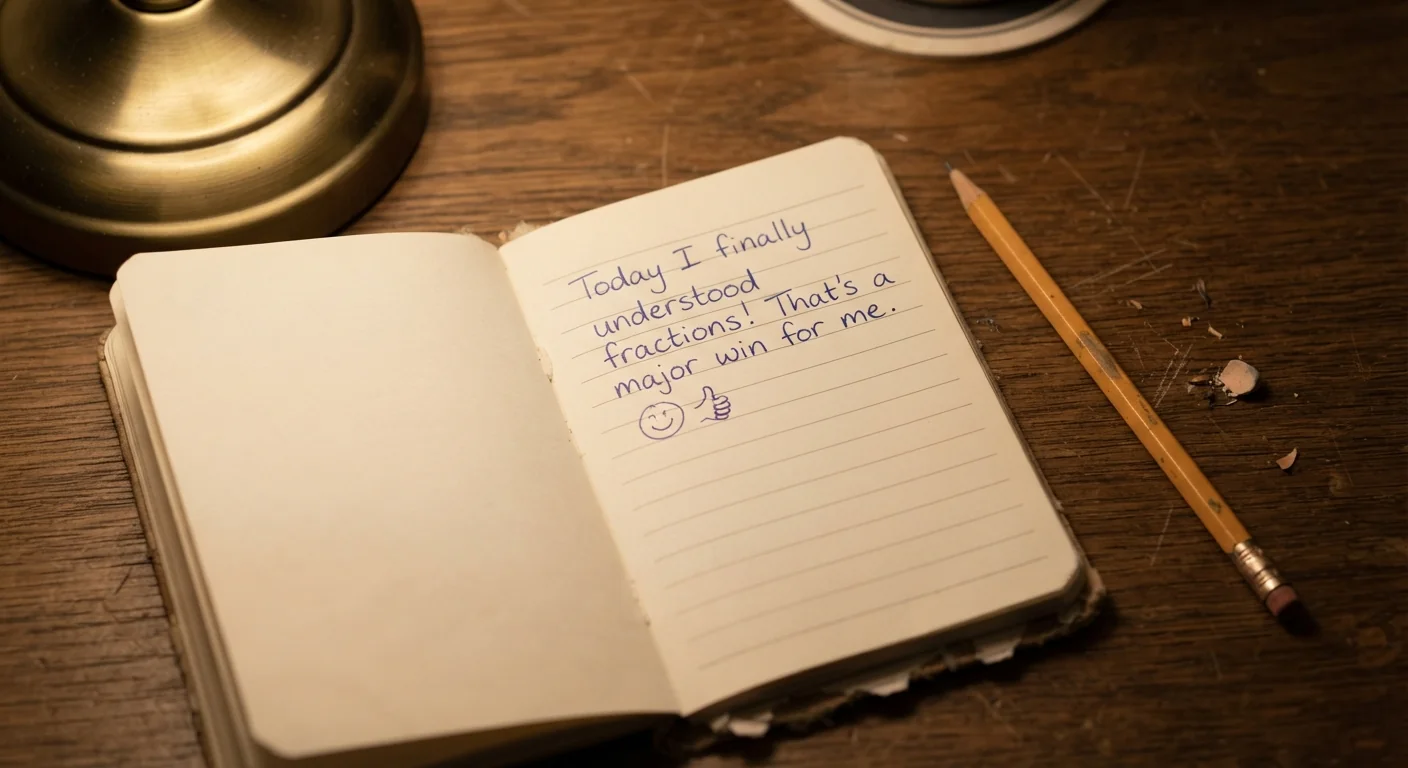
Math Confidence Journal
- Keep a small notebook for jotting one math win at the end of each day
- Write in the child’s own words, not corrected or rewritten by an adult
- Reread past entries together occasionally to show visible progress
- Keep entries short, one sentence is enough to count
A short, dedicated journal for math wins gives a child something concrete to look back on when their memory defaults to only the hard parts of a lesson, which is a pattern I see constantly with anxious learners. At the end of a practice session or a school day, writing down just one sentence, something like “I figured out the harder page without help today,” creates a small, growing record of competence that exists outside of test scores or grades. Over weeks, that stack of entries becomes real, visible evidence a child can hold onto, something a single grade never quite manages to provide.
Letting the child write the entry in their own words, even if it’s simple or slightly messy, keeps the journal feeling like theirs rather than another assignment to get right. Correcting the spelling or rewording it defeats the purpose, since the value sits in the honesty of the reflection, not its polish. Rereading a few old entries together every so often, especially during a discouraging week, can remind a child that today’s struggle isn’t the whole story. Keeping each entry brief also means the habit stays easy enough to actually stick with over time.
Interest-Based Math Connections
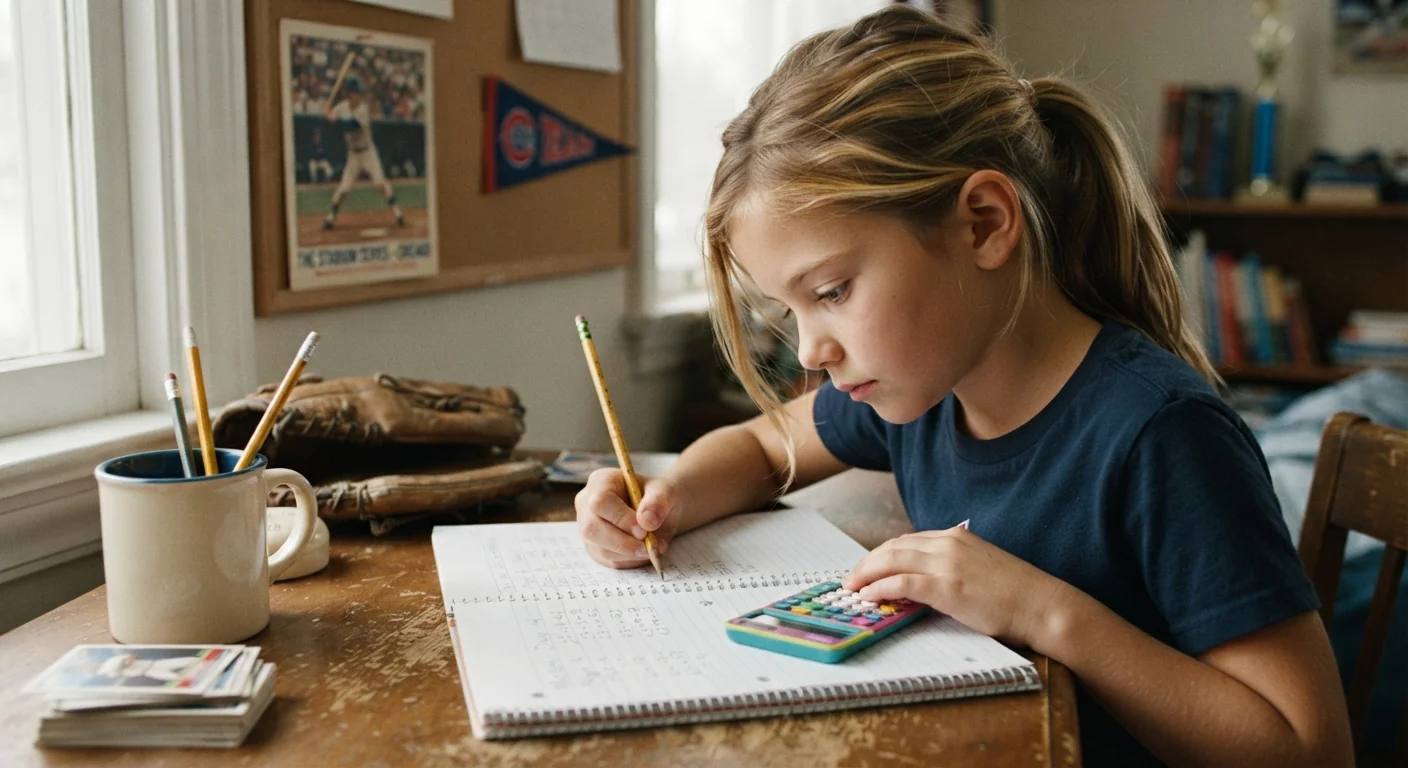
Connecting math to whatever a child already loves, sports statistics, a favorite video game’s scoring system, the ingredients in a recipe they enjoy cooking, tends to lower resistance faster than almost any other approach. A child who insists they hate math will often happily calculate batting averages or figure out how many more points a favorite team needs to win, without registering that they’re doing the exact same arithmetic they avoid on a worksheet. The math itself hasn’t changed, only the context surrounding it, but that context shift matters enormously to how willing a child is to engage.
Finding these connections takes a little observation rather than a fixed lesson plan, since every child’s specific interest points somewhere different. A kid obsessed with building sets might respond to counting pieces and calculating proportions, while one who loves a particular show might enjoy tracking episode lengths or character ages. The goal isn’t to disguise every math lesson this way forever, but to use these natural entry points often enough that math starts to feel like something that shows up inside things a child already enjoys, rather than something separate and unwelcome.
FAQ
Why does my child suddenly seem scared of math when they weren’t before?
This often happens around the time math shifts from concrete counting to more abstract concepts, like multi-digit operations or fractions. A single tough test or a comparison to a sibling can also trigger it. Reintroducing hands-on, low-pressure practice at home usually helps rebuild confidence faster than more worksheets alone.
How much time should I spend on these activities each week?
Even fifteen to twenty minutes, a few times a week, makes a meaningful difference when it’s consistent and low-pressure. Longer, less frequent sessions tend to feel more like a chore. Short, regular, genuinely enjoyable practice builds comfort far more reliably than occasional long study sessions.
Should I avoid timed math drills altogether if my child gets anxious?
Not necessarily forever, but pausing timed drills while confidence rebuilds is usually a good idea. Once a child feels steadier with the underlying skills through untimed, playful practice, timed work can be reintroduced gradually, ideally alongside the calm breathing techniques covered above.
What if these activities work at home but my child still struggles in class?
Classroom anxiety can have different triggers than home practice, like pace, peer comparison, or a specific teaching style. It’s worth mentioning what’s working at home to the classroom teacher directly, since small classroom adjustments, like extra think-time, can often be made once a teacher understands the pattern.
Is math anxiety something kids typically grow out of on their own?
It’s less likely to fade on its own and more likely to fade with intervention, especially the kind that rebuilds confidence through low-stakes, positive experiences with numbers. Left unaddressed, math anxiety tends to compound over school years rather than resolve by itself.
Conclusion
Making math less scary for kids rarely comes down to one big fix, it comes from stacking small, low-pressure moments where numbers feel safe to explore instead of something to fear getting wrong. A card game here, a measuring cup there, a mistake met with curiosity instead of correction, these add up over time into genuine confidence. Save this list for the next time math homework turns tense, try even two or three ideas this week, and share it with another parent or teacher watching a child brace against a subject that’s meant to feel like discovery, not dread.