
A small apartment starts to feel bigger the moment furniture stops doing just one job. Multi functional furniture is the quiet fix behind homes that somehow have a guest bed, a home office, and enough storage in a space that looks half the size on paper. This list gathers twenty pieces that genuinely earn their footprint, from beds that fold into desks to tables that expand for dinner and disappear again after. Nothing here is a gimmick bought once and forgotten in a closet. Each idea is chosen because it solves a real problem small apartments share: not enough surfaces, not enough storage, not enough floor. Work through the ones that match your daily routine first, and the rest of the apartment starts to feel less like a compromise.
Start Here: Storage Ottoman
It requires no installation, fits almost any layout, and instantly solves two problems at once: extra seating and a place to hide clutter, making it the easiest first win in this entire list.
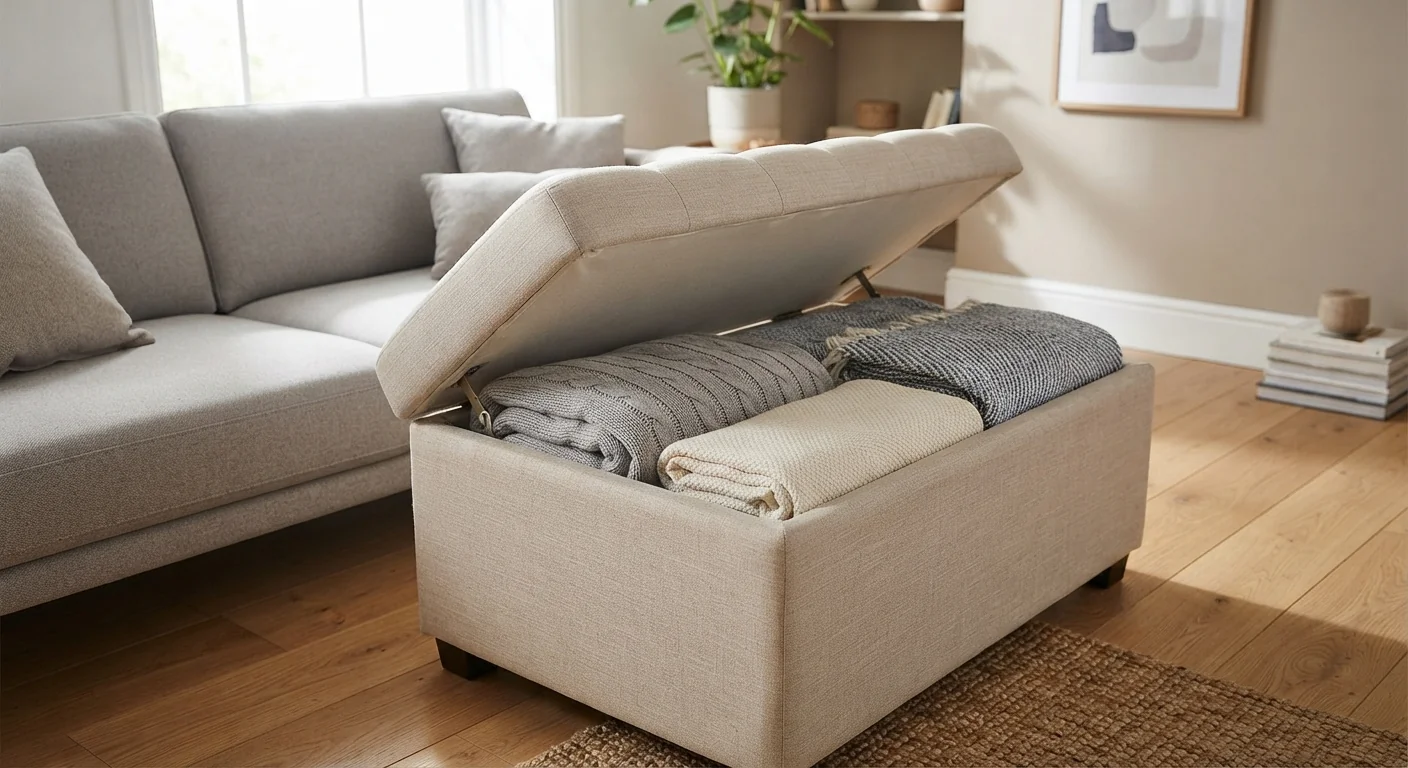
Storage Ottoman
A storage ottoman earns its spot first because it solves two space problems without asking for a dedicated corner of the room. In a small living area, floor space spent on a coffee table and a separate storage bin is floor space wasted, and an ottoman collapses both into one footprint. The lid lifts on a hinge or simply lifts off, giving instant access to throws, extra pillows, or the odds and ends that usually pile up on a shelf. Because it is upholstered rather than boxy, it also softens a room that might otherwise feel like it is full of hard edges.
The real advantage shows up when the apartment has people over. A storage ottoman slides toward a sofa as a footrest on a quiet night, then becomes an extra seat the moment more people arrive than chairs can hold. Choose one with a sturdy, flat lid so it can also carry a tray of drinks or a stack of books, and the piece is doing three jobs from a single spot on the floor. For a studio, this is often the single easiest upgrade, since it needs no assembly logic beyond picking a size that fits under the existing coffee table height.
- Opens from the top so nothing needs to be pulled out to reach it
- Doubles as a coffee table when topped with a tray
- Keeps blankets and remotes out of sight without a dedicated cabinet
- Adds extra seating instantly when guests visit
Sofa Bed
- Converts a living room into a guest room in minutes
- Frees up a second bedroom’s worth of rent for other use
- Modern versions fold flat without leaving a visible seam
- Available in sizes that fit narrow apartment doorways
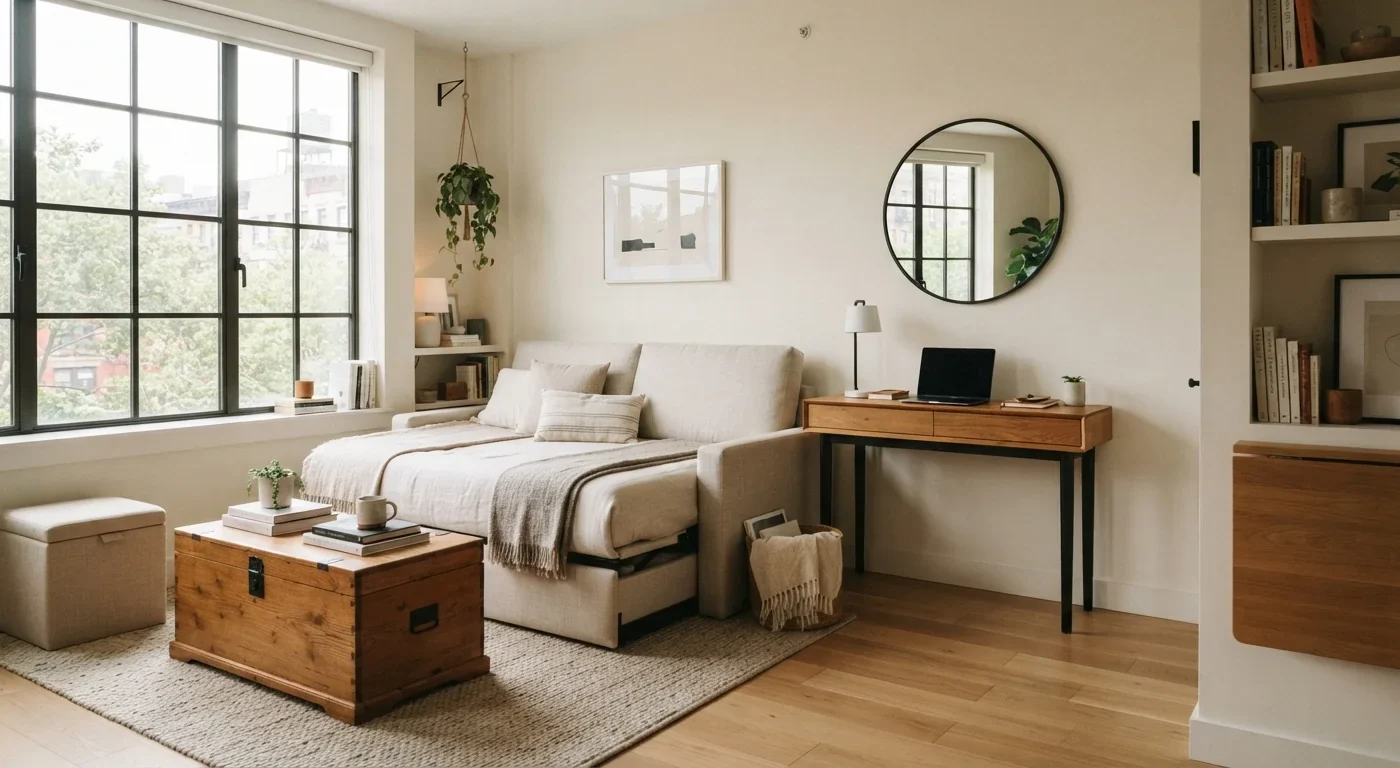
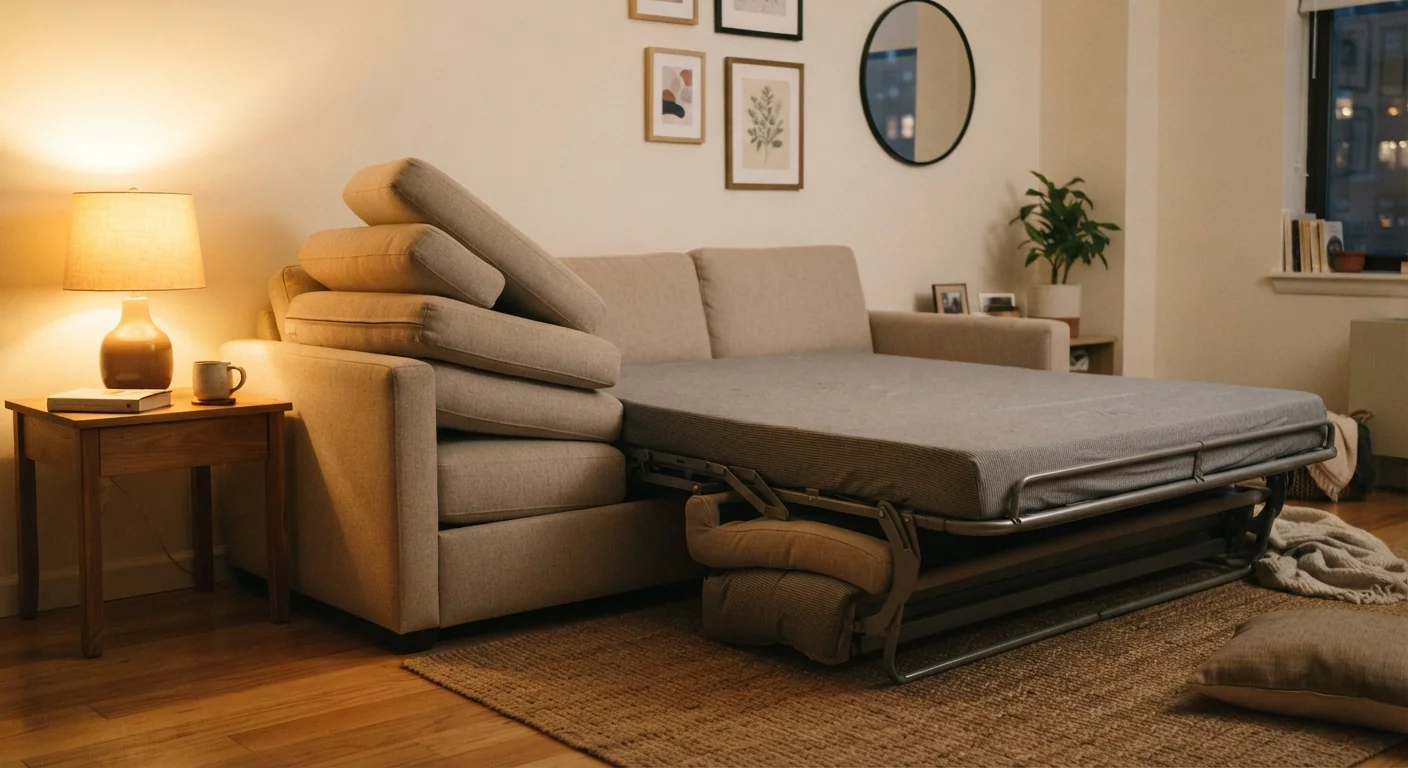
A sofa bed remains the most obvious multi functional furniture choice for a reason: it replaces an entire guest bedroom with a single piece of seating. For anyone renting a studio or one-bedroom, that trade is significant, since it means the apartment can host overnight guests without a room being set aside and left empty most of the year. Newer designs have also solved the old complaint about lumpy, uncomfortable mattresses, with many now using the same foam layers found in standalone beds rather than a thin folding pad.
What makes a sofa bed work well in a small apartment specifically is choosing the right mechanism for the room. A pull-out style needs floor clearance in front of it to unfold, so it suits a living room with an open path, while a click-clack style that reclines in place fits tighter rooms better since it never needs to be pulled forward. Measuring the clearance before buying prevents the common mistake of owning a sofa bed that technically works but can never actually be opened in its intended spot.
Extendable Dining Table
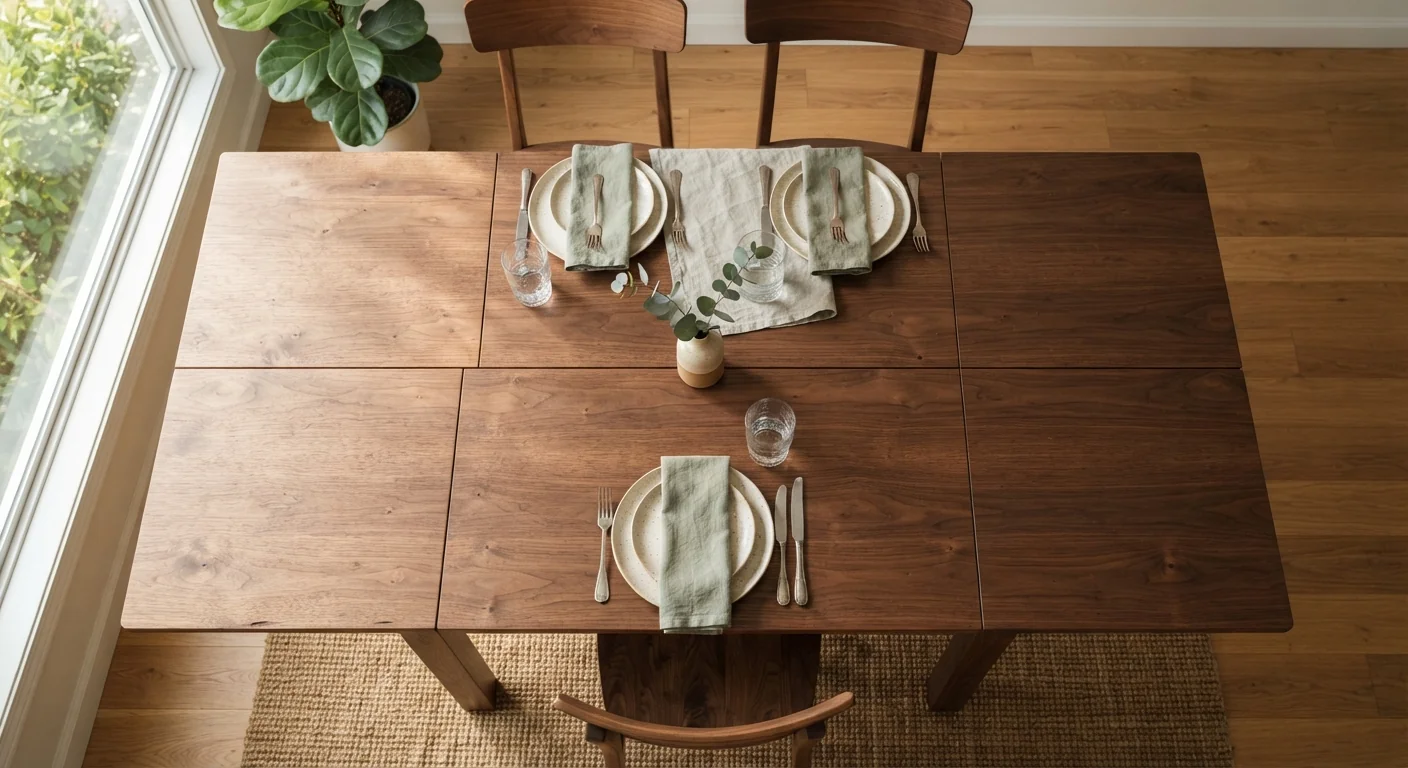
Most small apartments do not have room for a table sized for a full dinner party, and most days do not need one either. An extendable table solves this by staying narrow and unobtrusive for everyday meals, then widening in seconds when more people show up. Drop-leaf and butterfly-leaf versions are the two most common styles, and both can go from a two-person table to a six-person table without needing a separate storage spot for extra leaves, since the mechanism is built into the frame itself.
The practical upside goes beyond dinner parties. A collapsed extendable table also works as a desk during the day, a spot to sort mail, or a surface for a laptop, since its everyday size is closer to a console than a full dining table. Choosing a model with a simple slide-and-lock mechanism, rather than one requiring loose leaves stored elsewhere, keeps the whole piece genuinely low-effort. It is one of the few furniture upgrades that changes size to match the moment instead of asking the room to accommodate it.
Murphy Wall Bed
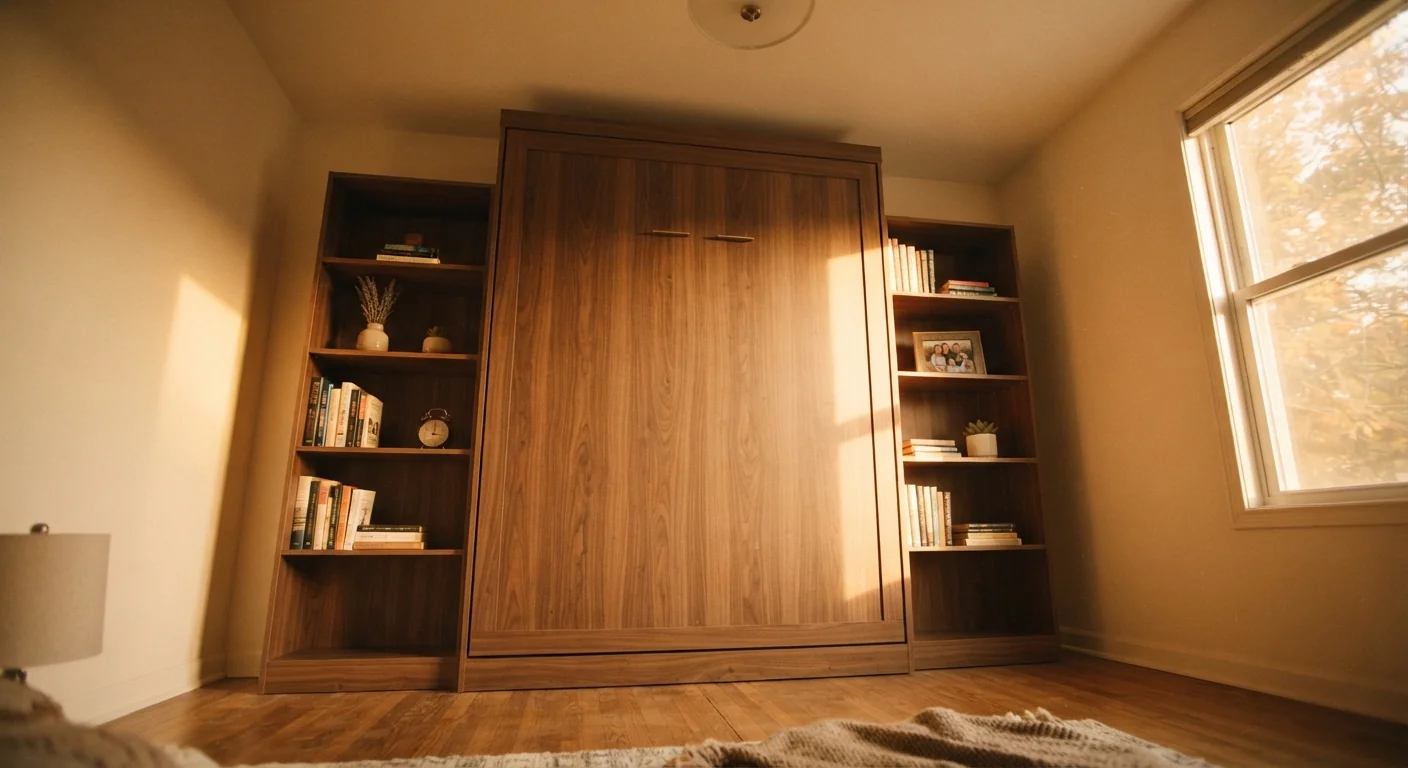
A Murphy wall bed is the closest thing to architectural magic available to a renter, since it turns a fixed piece of furniture into something that only exists in the room when it is actually needed. Folded up, it reads as a cabinet or a wall panel rather than a bed, which means the square footage it would normally occupy goes back to being open floor for the rest of the day. For a studio apartment where the bed and the living room share one space, this single change can make the room feel functionally twice its size.
Installation is the one real consideration, since a proper Murphy bed needs to be secured to a wall stud rather than freestanding, which makes it more of a semi-permanent fixture than the rest of this list. Many newer models are designed for exactly this kind of anchoring without requiring structural changes, and some come with attached side shelving that stores books or a lamp when the bed is down. Anyone renting should confirm with a landlord before installing one, but the payoff in reclaimed floor space is hard to match with any other single piece.
- Folds flush against the wall to reclaim the entire floor during the day
- Built-in cabinetry often includes shelving that doubles as storage
- Turns a studio into a bedroom and living room on alternating hours
- Mattress stays in place, so there is no daily setup beyond folding
Trunk Coffee Table
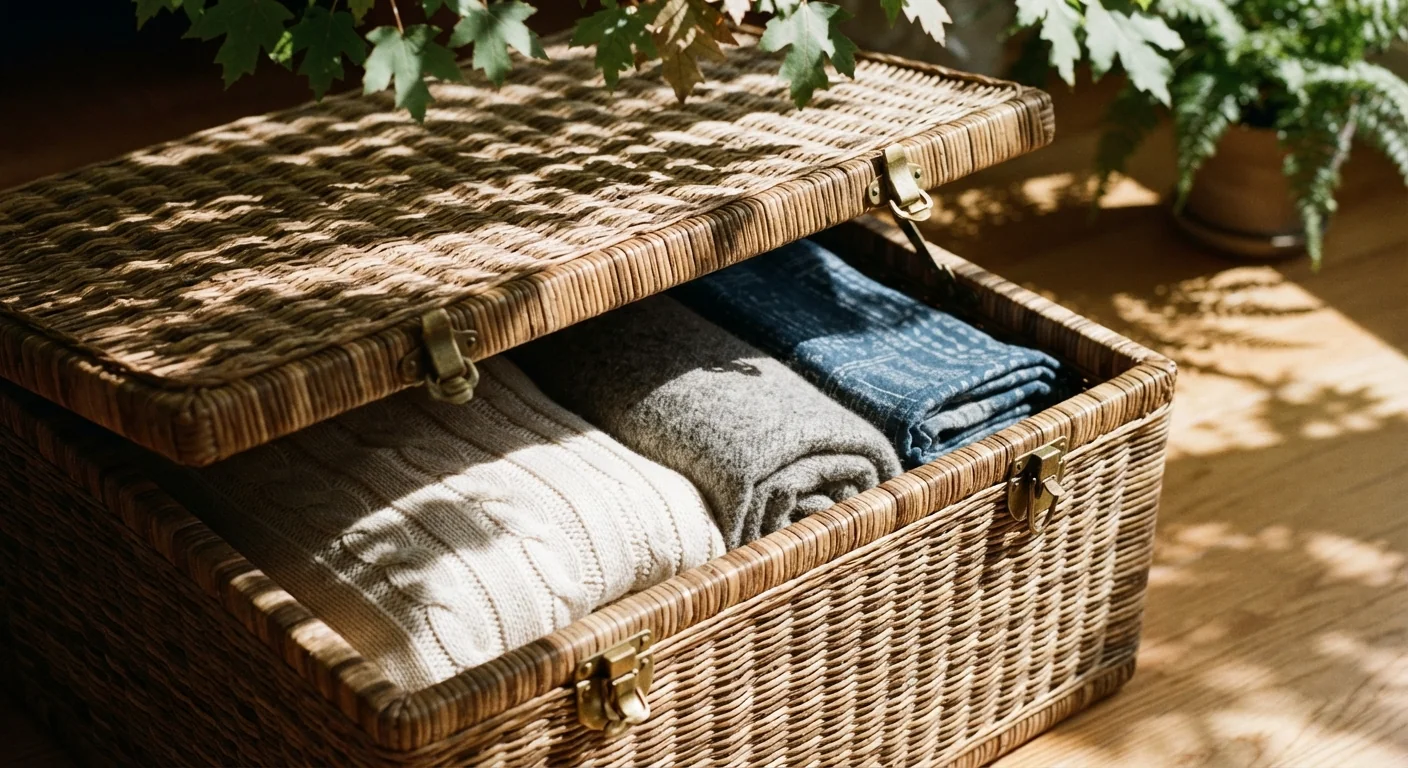
- Lid lifts open for storage without needing a separate console
- Sturdy flat top holds drinks, books, or a laptop
- Woven or leather styles add texture without extra clutter
- Works as a footrest when the lid is closed
A trunk-style coffee table takes the same storage-first idea as an ottoman but in a harder-wearing, more surface-friendly form. Because the top is a flat, rigid lid rather than upholstery, it comfortably holds a drink, a stack of magazines, or a laptop without worrying about spills soaking in, which makes it a better fit for anyone who actually uses their coffee table as a workspace. Inside, the trunk cavity swallows blankets, board games, or seasonal items that would otherwise need a closet shelf that a small apartment simply does not have.
Materials matter more here than with most furniture on this list, since a trunk table sits at the visual center of a living room. Woven rattan or leather-wrapped versions read as intentional design choices rather than plain storage bins, which helps the piece pull double duty without looking like a compromise. Look for one with reinforced corners and a lid that can hold weight, since it will likely double as extra seating during gatherings, and a flimsy hinge is the most common failure point on cheaper versions.
Storage Bench
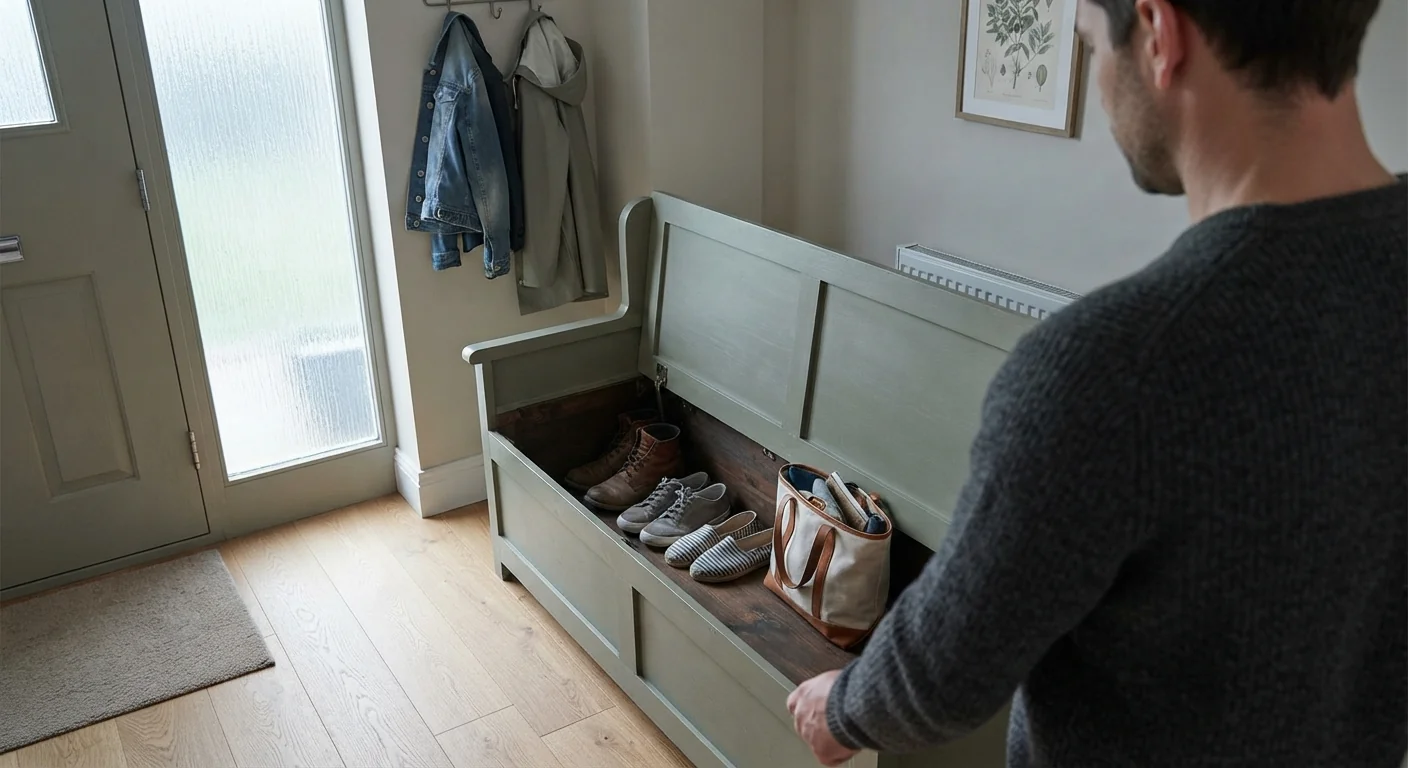
- Fits neatly under a window or along an entryway wall
- Lid lifts to reveal shoe or bag storage underneath
- Doubles as a spot to sit while putting shoes on
- Slimmer profile than a cabinet, so it suits narrow hallways
An entryway is one of the most underused spaces in a small apartment, usually just a stretch of wall between the front door and the rest of the room. A storage bench claims that stretch productively, giving residents a place to sit while putting on shoes and a lidded cavity underneath for the shoes themselves, bags, or umbrellas that would otherwise pile up on the floor. Because it sits low and along the wall, it does not compete with walking space the way a freestanding shoe rack often does.
The same bench works just as well under a window in a bedroom or living room, where it becomes a reading nook seat with hidden storage for out-of-season clothing or extra linens. Choosing one with a soft-close hinge prevents the lid from slamming, which matters more than it sounds like in an apartment where sound travels between thin walls and shared hallways. A bench with tapered or hairpin legs also keeps the floor visually open beneath it, which helps a narrow hallway feel less boxed in than a solid cabinet would in the same spot.
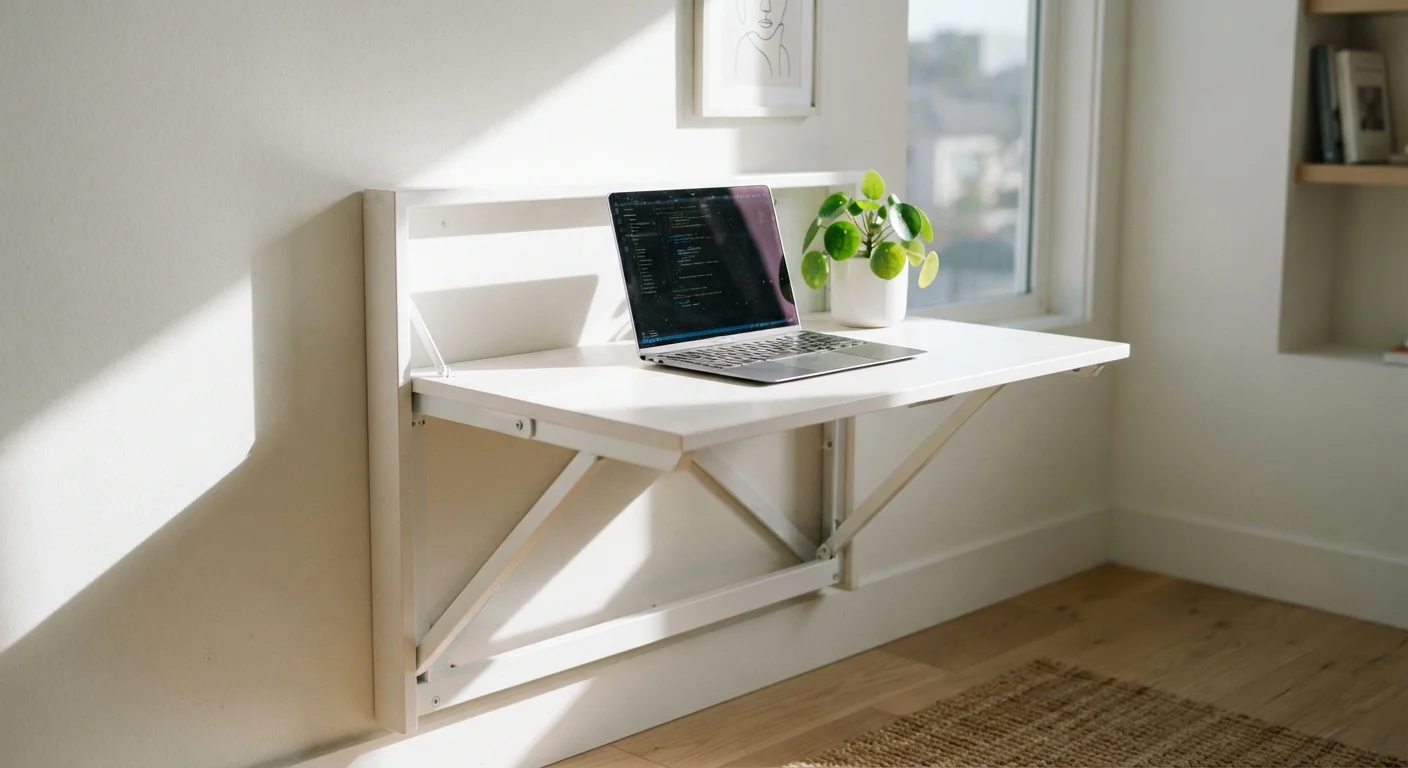
Fold-Down Wall Desk
Working from a small apartment without a dedicated office is one of the more common complaints since remote work became routine, and a fold-down wall desk is the most direct architectural answer to it. Mounted directly to the wall, it folds flat when not in use, taking up only a few inches of depth, then unfolds into a full working surface supported by a hinge or a drop-leg bracket. For a bedroom or hallway too narrow for a standalone desk, this reclaims a workspace from a spot that would otherwise sit empty.
The best versions pair the fold-down surface with a small shelf or cubby above it, so a laptop, notebook, and charger have a home even when the desk itself is folded away and the cables stay tucked out of sight. Mounting height matters here more than with most furniture, since it needs to sit at a comfortable working height without the folded panel becoming a hazard at head level nearby. Once installed, it turns an unused stretch of wall into a legitimate home office corner.
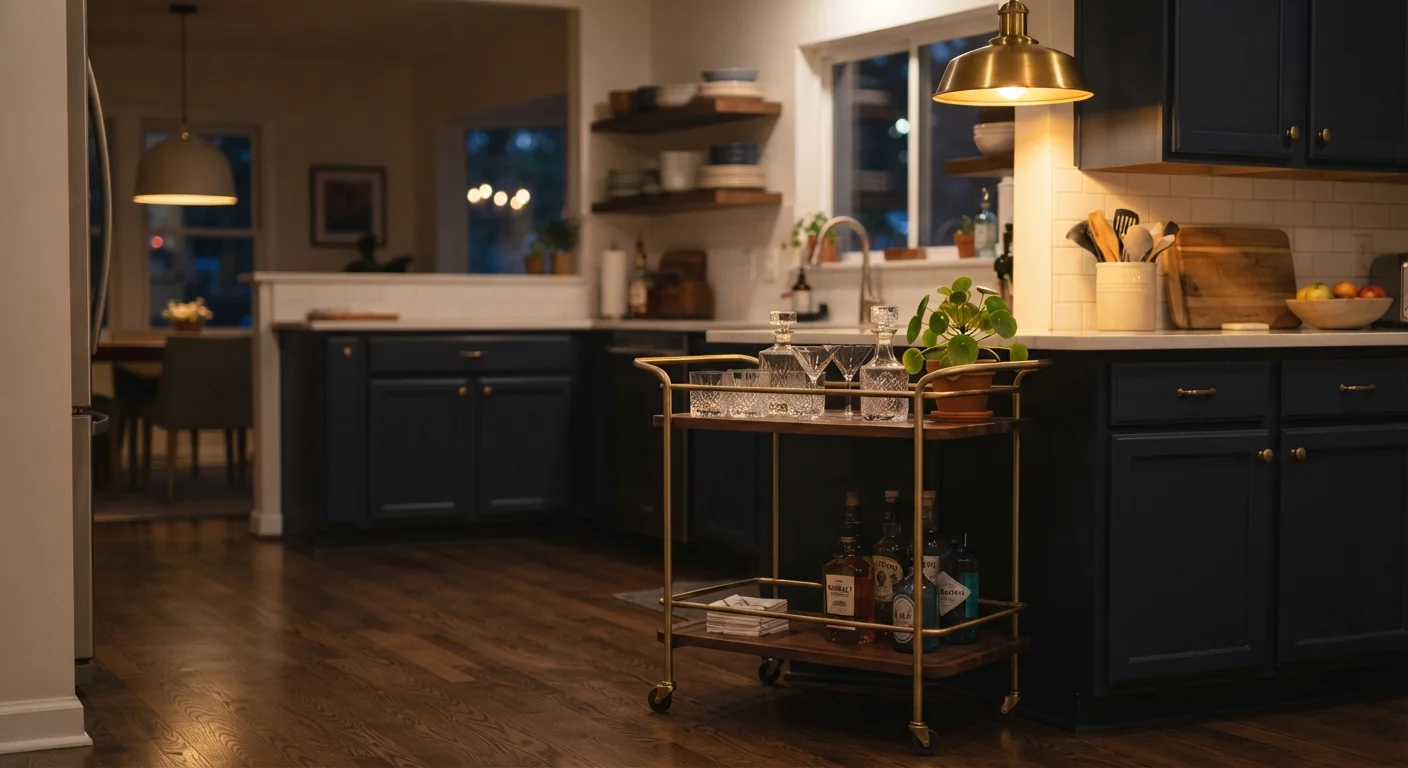
Rolling Bar Cart
A rolling bar cart is often bought for one purpose and ends up doing five, which is exactly what makes it worth including here. Its wheels are the real feature, since they let the cart move wherever it is needed most that day, whether that is beside the kitchen counter for extra prep space, next to the sofa as a side table, or tucked into a corner out of the way entirely. Two or three open shelves give it more storage than most side tables offer in the same footprint.
Beyond drinks, a bar cart works well as rotating storage for anything that needs to move between rooms occasionally, from plants that need better light in the afternoon to a stack of books being read in different spots around the apartment. Choosing one with a lower shelf rated to hold real weight, rather than a purely decorative bottom rack, keeps it useful as genuine storage rather than just a display piece. Its small footprint also means it slides into gaps other furniture cannot fit, like the narrow strip beside a fridge or a sliver of wall next to a sofa’s arm.
- Rolls easily between the kitchen, living room, or dining area
- Extra shelving holds glassware, plants, or cookbooks
- Works as a side table when not being used for drinks
- Compact footprint fits into a corner when not in use
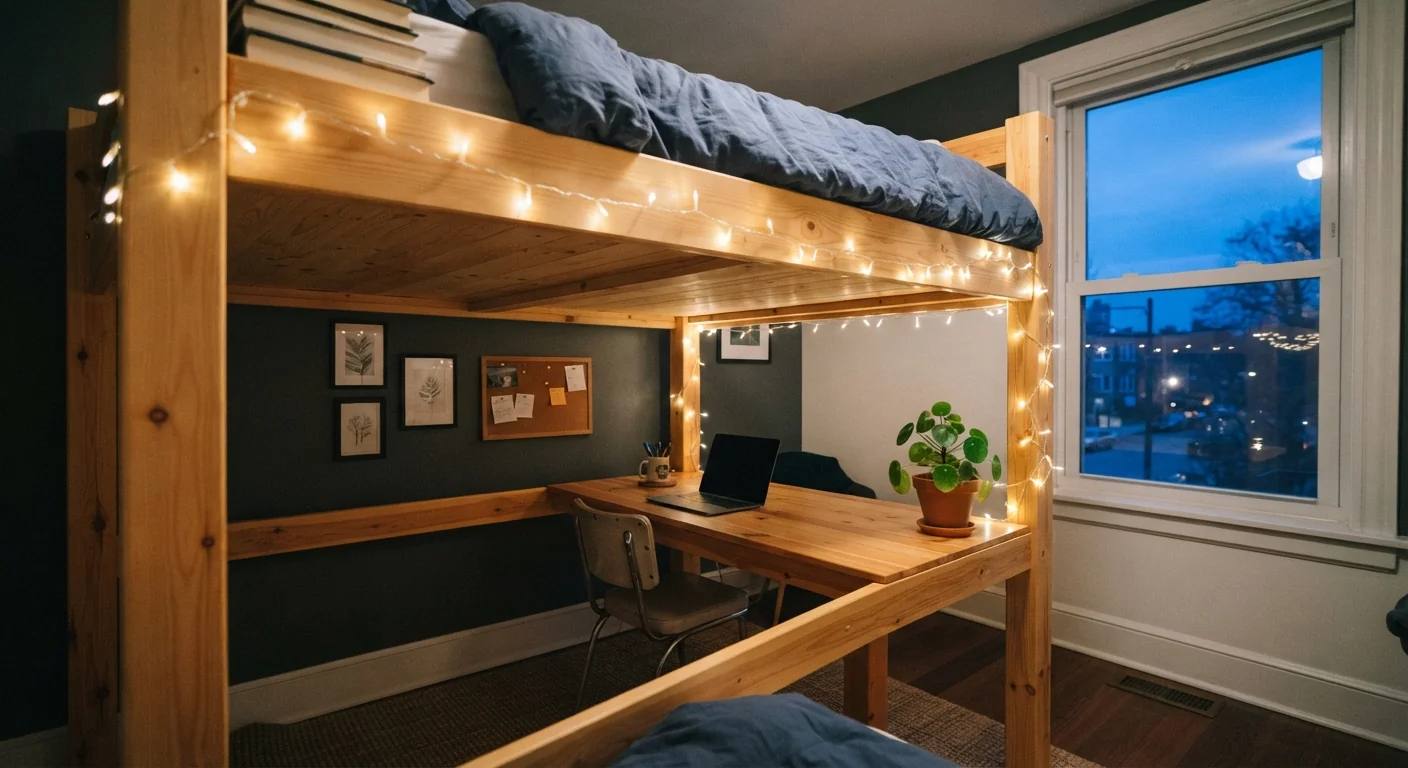
Loft Bed Desk Combo
- Elevated bed frees the entire floor beneath it for a desk
- Built-in ladder or stairs often include extra storage steps
- Suits studio apartments where the bed and workspace share one room
- Available in sturdy frames rated for adult weight, not just dorm use
A loft bed takes the Murphy bed’s core idea, reclaiming floor space from a bed, and applies it a different way: instead of folding the bed away, it lifts it entirely off the ground. What opens up underneath is a full-height pocket of the room that can hold a desk, a small wardrobe, or even a compact seating area, effectively giving a studio apartment two functional zones stacked into the vertical space of one. This works especially well in apartments with higher-than-average ceilings, where the extra height would otherwise go unused.
The tradeoff worth planning around is access and ceiling clearance, since climbing to the loft level needs a stable ladder or built-in stairs, and the space above the bed itself needs enough headroom to sit up comfortably without ducking. Adult-rated frames are sturdier and heavier than the dorm-style versions common in college housing, so checking the weight rating and frame material before buying matters more here than with most furniture on this list. Done well, it is one of the most dramatic space gains available in a studio.
Sleeper Sectional
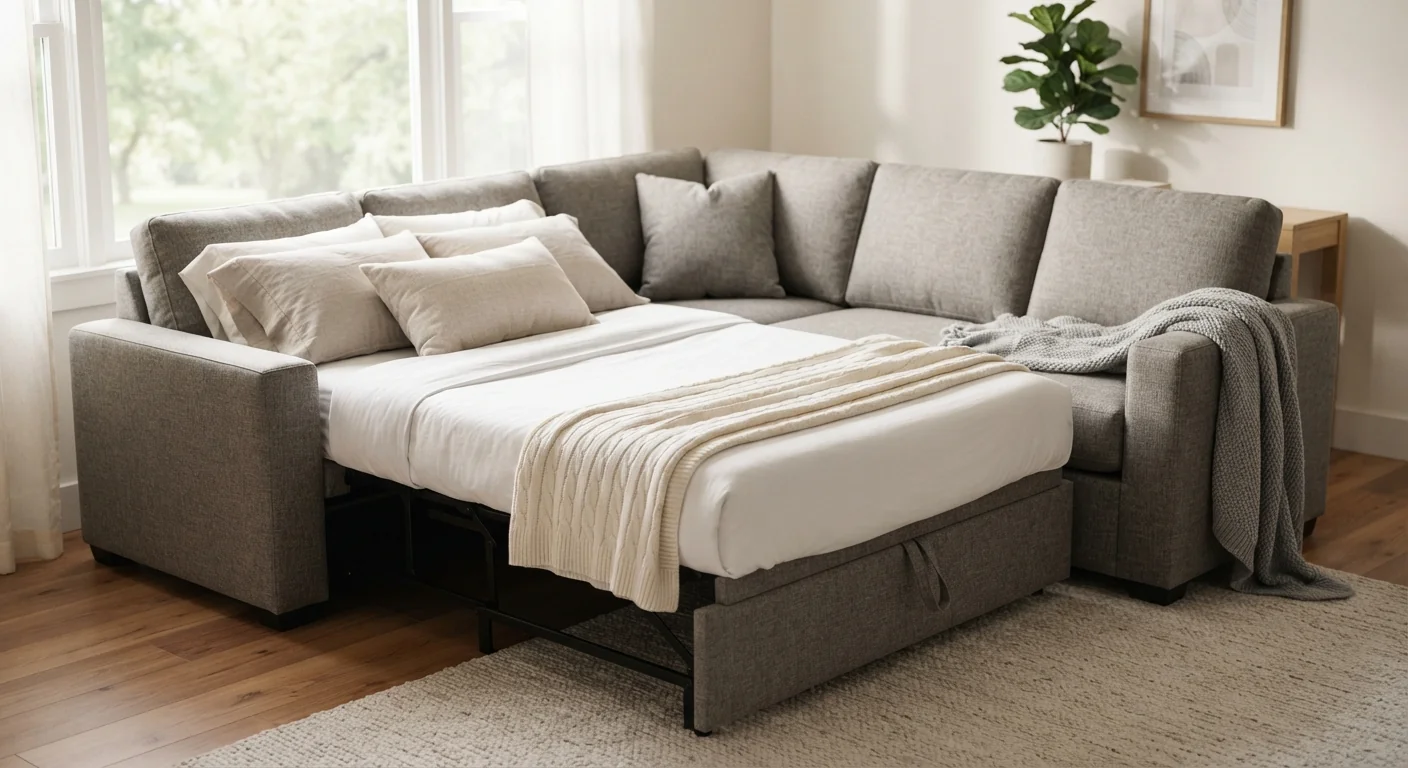
A sleeper sectional takes the sofa bed idea and scales it up for apartments that still want a full living room seating arrangement. The L-shaped or U-shaped layout hugs a corner the way any sectional would, but one section, usually the chaise, pulls apart or reclines flat into a genuine sleeping surface. For a one-bedroom apartment that occasionally hosts overnight guests, this offers more sleeping room than a narrow pull-out sofa bed while still functioning as comfortable everyday seating for the household the rest of the time.
Because sectionals are naturally larger, the buying decision comes down to whether the piece can physically get through the apartment’s doorways and hallways, which matters more here than with almost any other item on this list. Many manufacturers now sell modular sectionals with separate pieces that connect after being carried in individually, solving the narrow-stairwell problem that stops a lot of renters from considering one in the first place. Once in place, it delivers a genuine spare bed without the room ever looking like it contains one.
- Chaise or full sectional section converts into a bed
- Larger sleeping surface than a standard pull-out sofa bed
- L-shape still fits into a corner without extra floor space
- Removable covers make cleaning easier than a fixed sofa bed
Storage Headboard
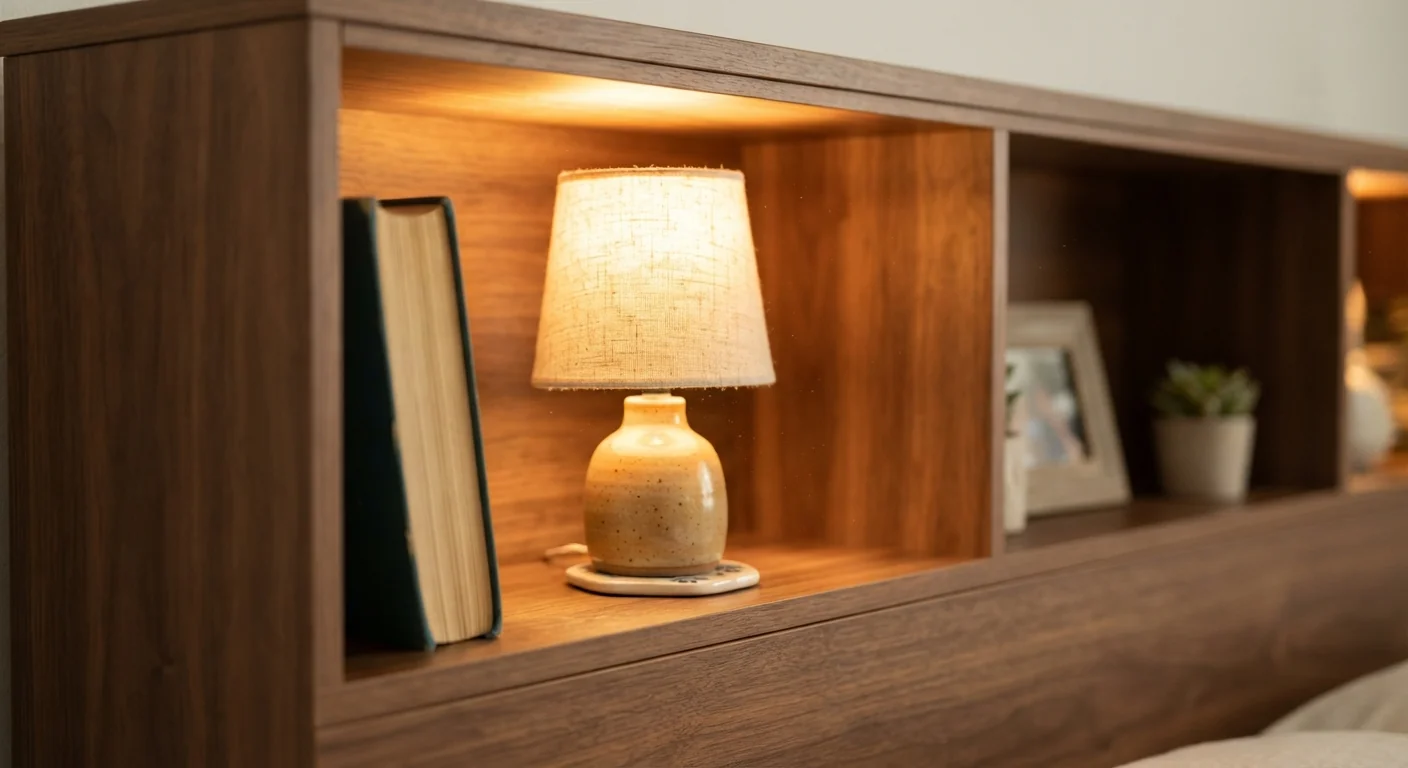
The wall behind a bed is prime real estate that most bedrooms leave completely empty, and a storage headboard is the simplest way to put it to work. Instead of a plain padded panel, it includes shelving, cubbies, or even small drawers built directly into the frame, giving a nightstand’s worth of storage without needing a nightstand to take up floor space beside the bed. For a small bedroom where every square foot beside the mattress matters, this shifts storage vertically instead of competing for floor area.
The most useful versions place the storage within easy reach from a lying position, so a phone charger, a book, or a glass of water has a home without requiring someone to sit up and reach across the room. Some models also include a reading light built into the shelving itself, which removes the need for a separate lamp entirely. Pairing a storage headboard with a bed frame that also has drawers underneath stacks two of this list’s ideas into a single piece of furniture.
Storage Bed Frame
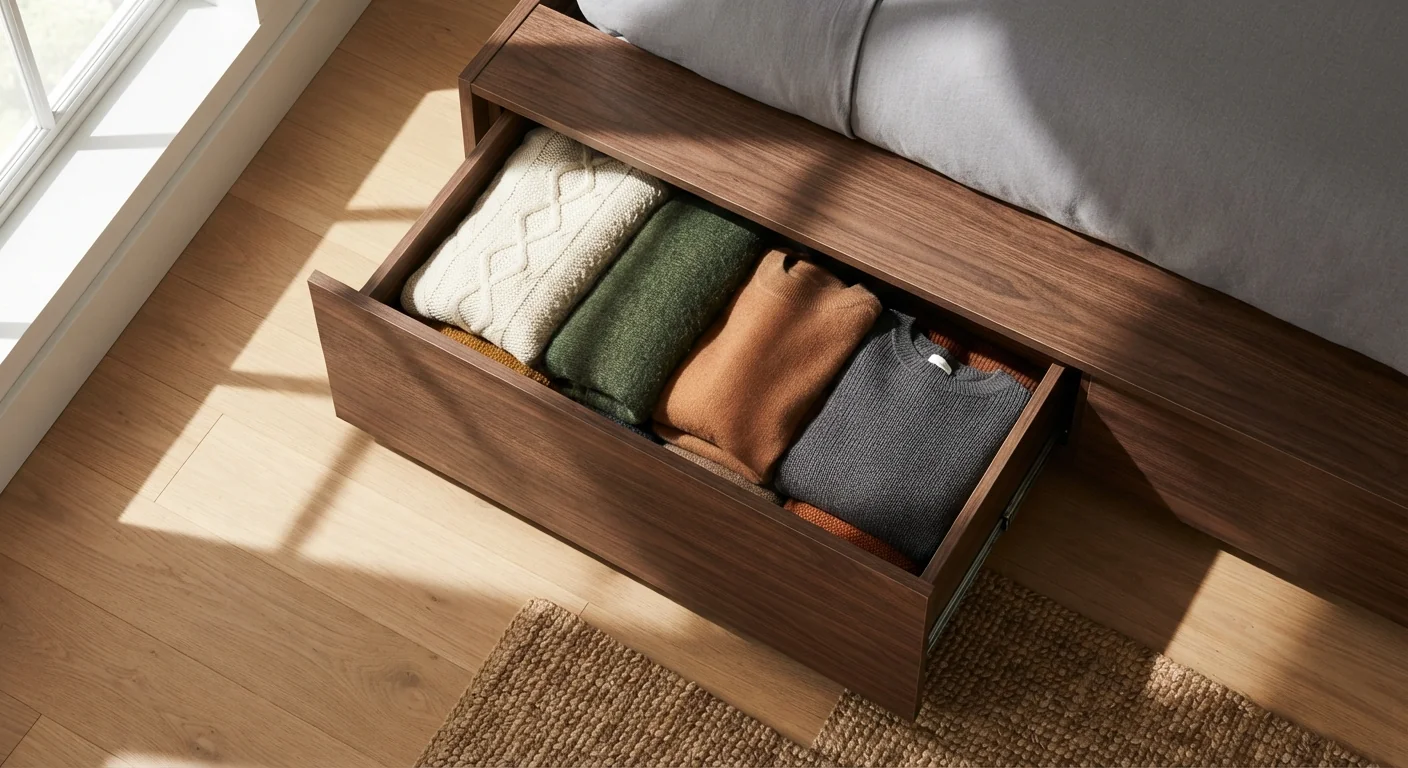
Under-bed space is one of the largest unused storage areas in almost any bedroom, and a storage bed frame is the most direct way to reclaim it without buying separate bins that have to be pulled out from under a regular frame. Built-in drawers slide out from the sides of the bed the way a dresser drawer would, holding folded clothing, linens, or off-season items in a spot that would otherwise just collect dust. For a small bedroom that cannot fit a full dresser, this can genuinely replace one.
A step further, some frames use a lift mechanism where the entire mattress platform hinges upward, revealing one large open cavity rather than several drawers, which suits bulkier items like luggage or spare bedding better than drawer compartments do. The choice between the two styles usually comes down to what is being stored: frequently accessed items favor drawers for easy reach, while rarely used bulky items favor the lift-up style. Either way, the bed quietly becomes storage furniture without ever looking like it from across the room.
- Built-in drawers replace the need for a separate dresser
- Some frames lift entirely for even deeper under-bed storage
- Keeps seasonal items accessible without renting a storage unit
- Drawer fronts match the bed frame for a clean look
Console Desk Table
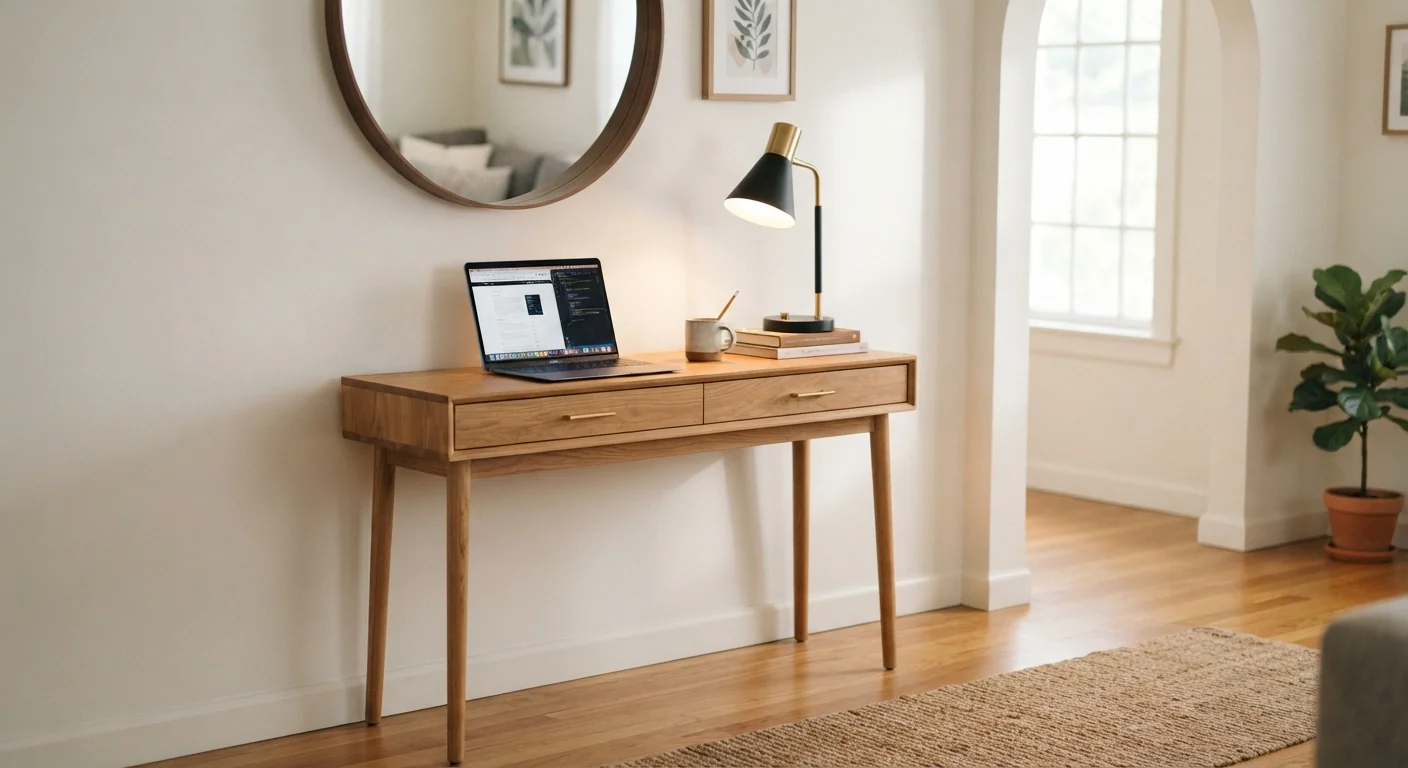
- Narrow depth fits hallways and behind sofas without blocking paths
- Works as a desk by day and an entry table by evening
- Slim profile avoids the bulk of a full desk
- Often includes a drawer or lower shelf for supplies
A console table is traditionally styled behind a sofa or against a hallway wall, but its narrow, elongated shape also makes it a natural stand-in for a desk in an apartment too tight for a dedicated office setup. Because it is built to hug a wall rather than seat someone comfortably on all sides, it fits into gaps a standard desk never could, like behind a sofa back or along a hallway that would otherwise sit completely unused. A chair simply gets pulled up when it is time to work.
What makes this pairing work well is choosing a console with a drawer or lower shelf, since that gives the piece somewhere to store a laptop, cables, or paperwork out of sight the moment work hours end and it needs to look like a normal console table again. Height is worth checking before buying, since standard console tables sit slightly lower than a dedicated desk, and a taller model or an adjustable chair keeps the setup comfortable enough for a full afternoon of working sessions.
Nesting Side Tables
- Smaller tables slide under the largest one when not in use
- Separate to create extra surfaces instantly for guests
- Lightweight enough to move around a small living room easily
- Mixed materials like wood and metal fit most decor styles
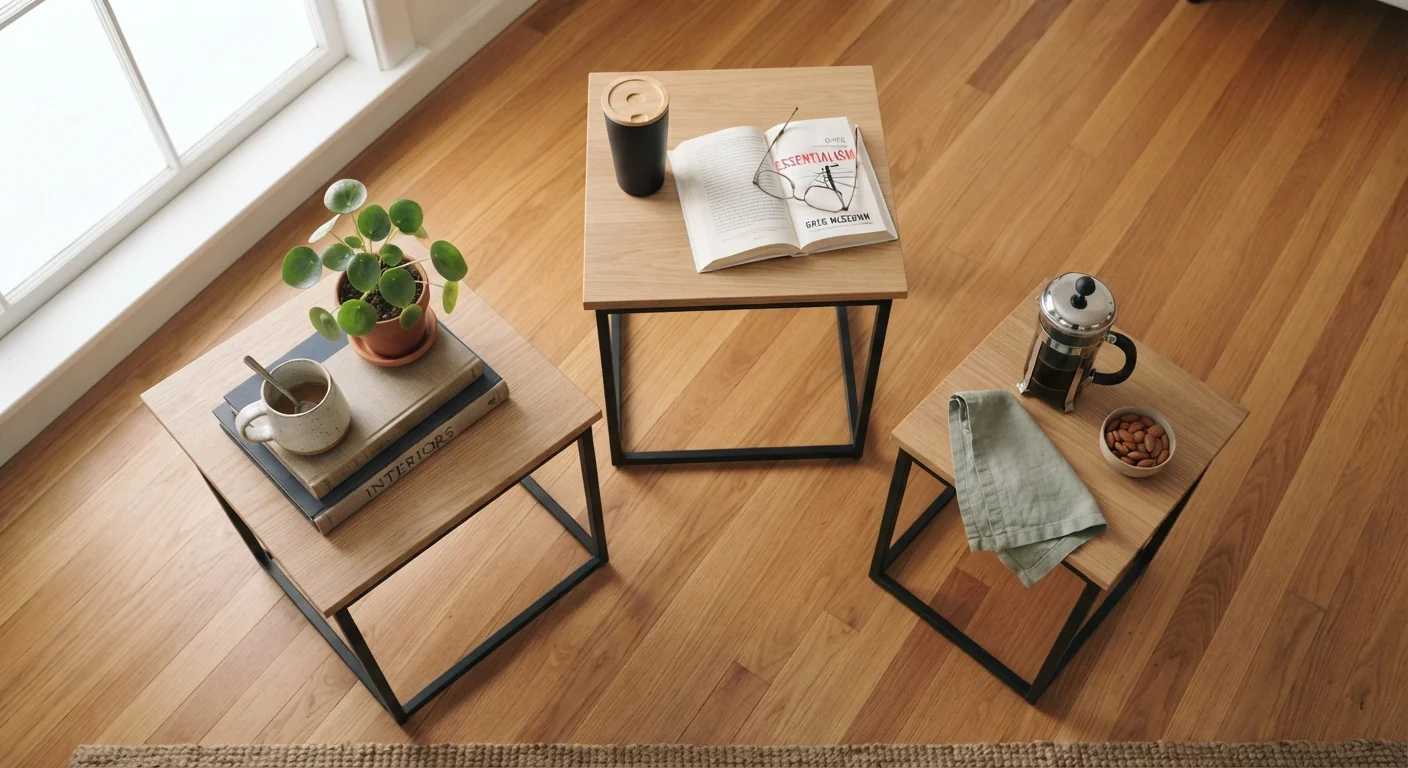
Nesting tables solve a specific small-apartment problem: needing extra surfaces occasionally without wanting three separate tables cluttering the room the rest of the time. Sold as a set of two or three graduated sizes, they stack together so the smaller pieces slide underneath the largest, taking up the footprint of a single side table when stored away in a corner. The moment more surfaces are needed, whether for drinks during a movie night or plates during a casual dinner, each one slides out and stands on its own.
Their light weight is as useful as their stacking design, since it means they can be repositioned easily to wherever they are actually needed that day, unlike a heavier coffee table that tends to stay put once placed. A set in mixed materials, like a wood top with a metal frame, also reads as more intentional than matching plastic stacking tables, which helps them look styled even when nested together in the corner. It is a small piece with a genuinely flexible daily use case.
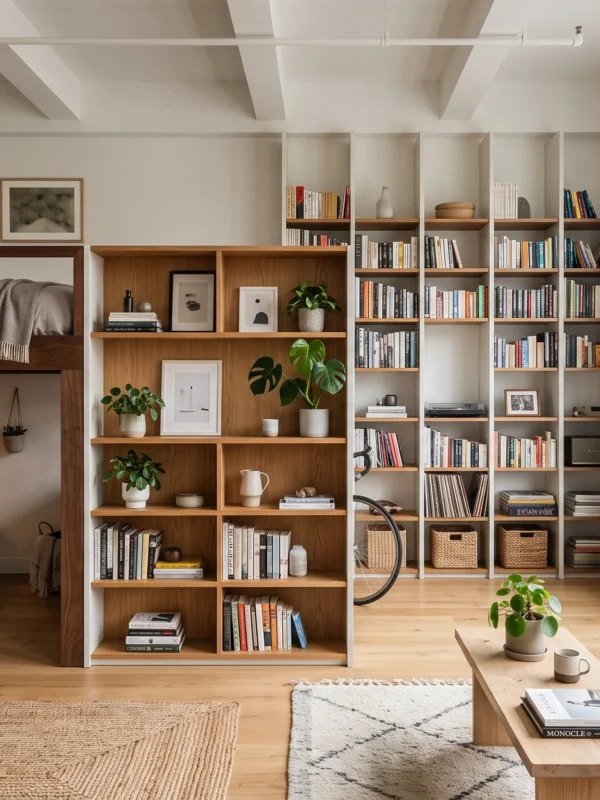
Bookshelf Room Divider
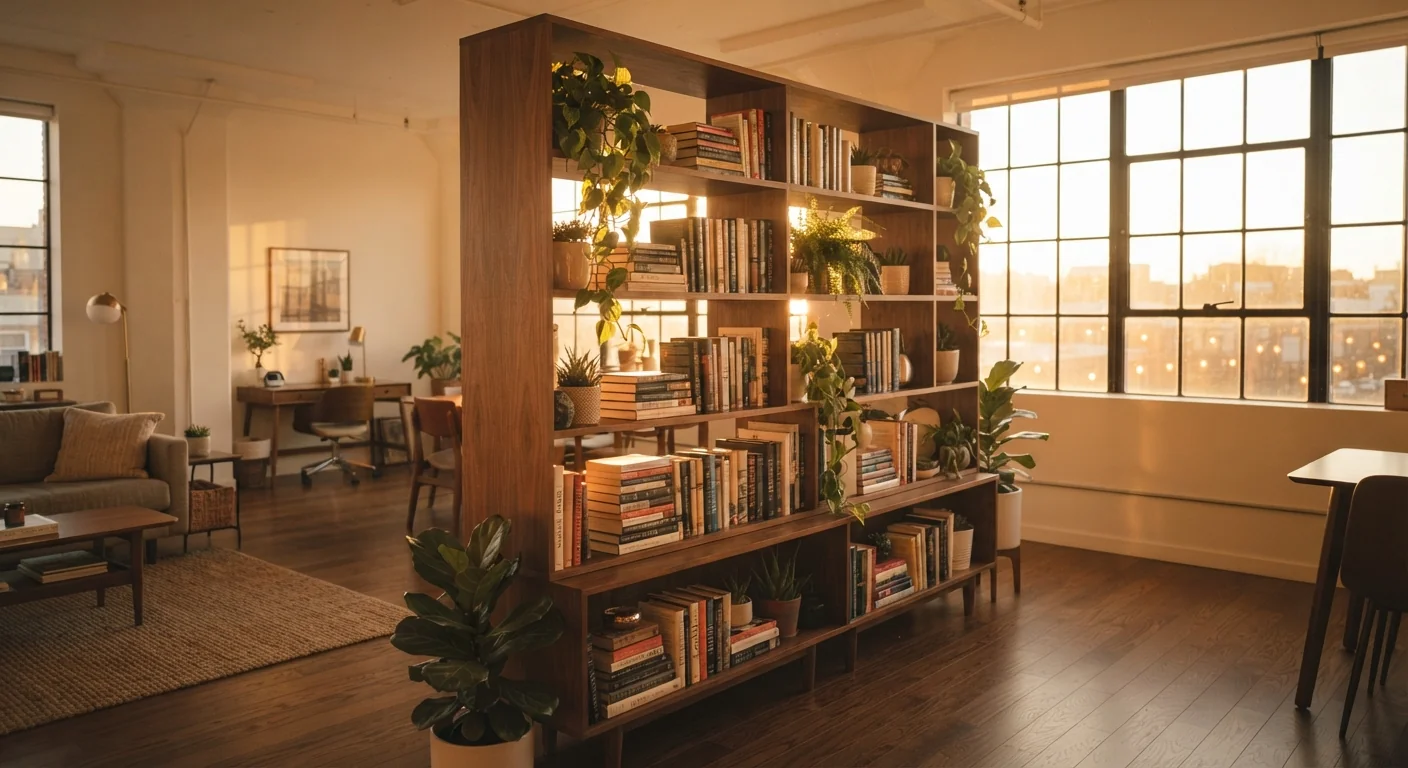
Studio apartments face a specific challenge that separate rooms do not: the bed, the living area, and sometimes the workspace all share one open floor plan with no wall to separate them. An open-backed bookshelf solves this without the cost or permanence of an actual wall, since it visually and physically separates two zones while still letting light pass through and remaining functional storage on both sides. Placed between a bed and a living area, it creates the feeling of two rooms out of one.
The open-back design matters more than it might seem, since a solid-backed bookshelf blocks light the same way a real wall would, making the far side of the room feel darker and more closed off. An open frame keeps the apartment feeling airy while still giving a clear visual boundary between zones. Styling books, baskets, and a few plants across the shelves also means the divider does not read as a barrier so much as a genuinely useful piece of furniture that happens to split the room.
Drop-Leaf Wall Table
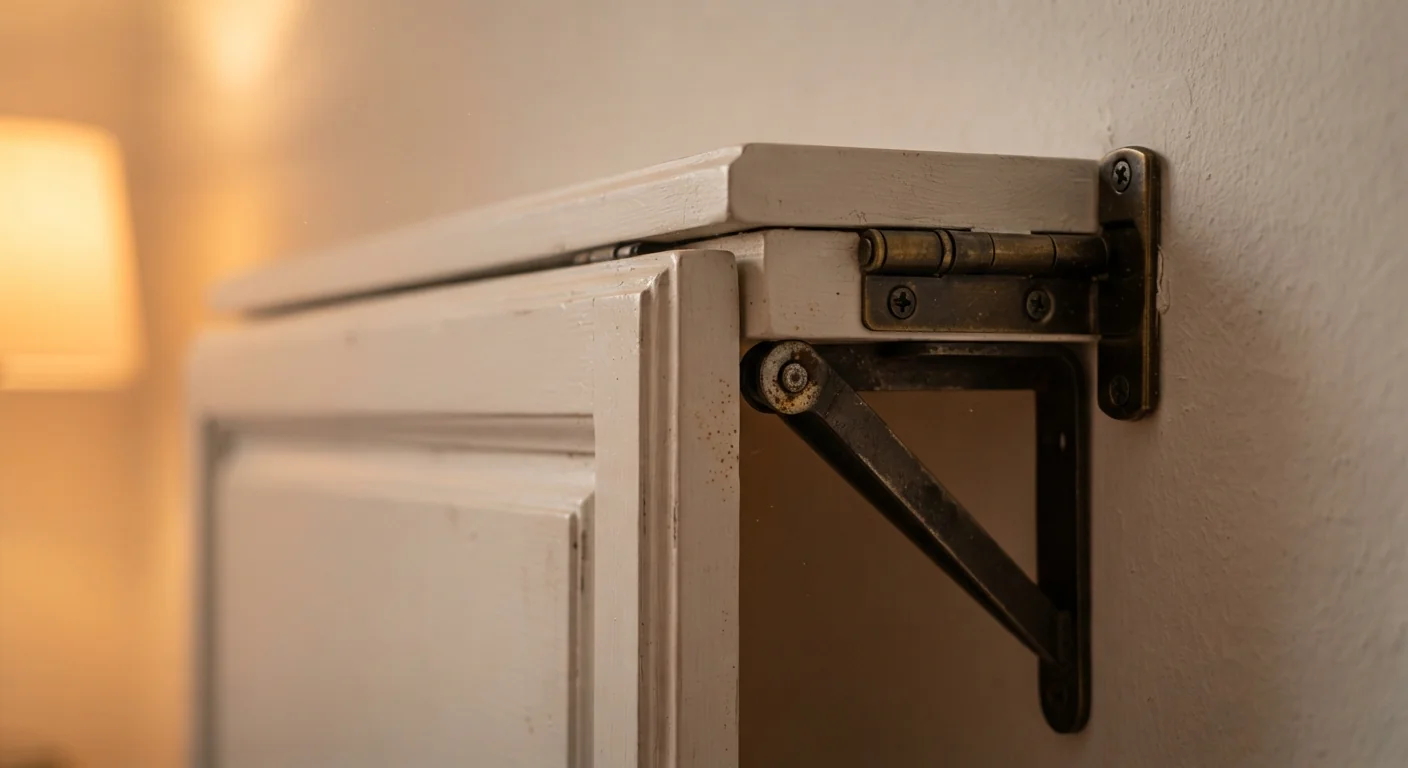
A drop-leaf wall table is essentially a hinged tabletop mounted directly to a wall, and it solves the problem of a kitchen or dining nook too small to hold a table at all. Folded down, it sits flush or nearly flush against the wall, taking up only a few inches of depth, which means it never blocks a walkway the way even a small freestanding table would. Raised, a supporting leg or bracket locks it into place as a genuine table surface for a meal or workspace.
This works especially well in a galley kitchen or a narrow dining nook where a standalone table simply will not fit without blocking the path to the stove or fridge. Because it folds away completely, the wall behind it can also hold shelving or hooks above the table itself, stacking storage into the same vertical strip of wall the table occupies. It is a smaller-scale, cheaper alternative to a full drop-leaf dining table for anyone whose kitchen genuinely has no floor space left to spare for extra furniture.
- Folds completely flat against the wall when not needed
- Unfolds into a full table surface supported by a hinge
- Ideal for a kitchen too small for a standalone table
- Takes up only a few inches of depth when stored
Sleeper Armchair
- Unfolds into a single bed for occasional overnight guests
- Smaller footprint than a full sofa bed or sectional
- Works well in a home office or reading corner
- Fits apartments too small for a dedicated sleeper sofa
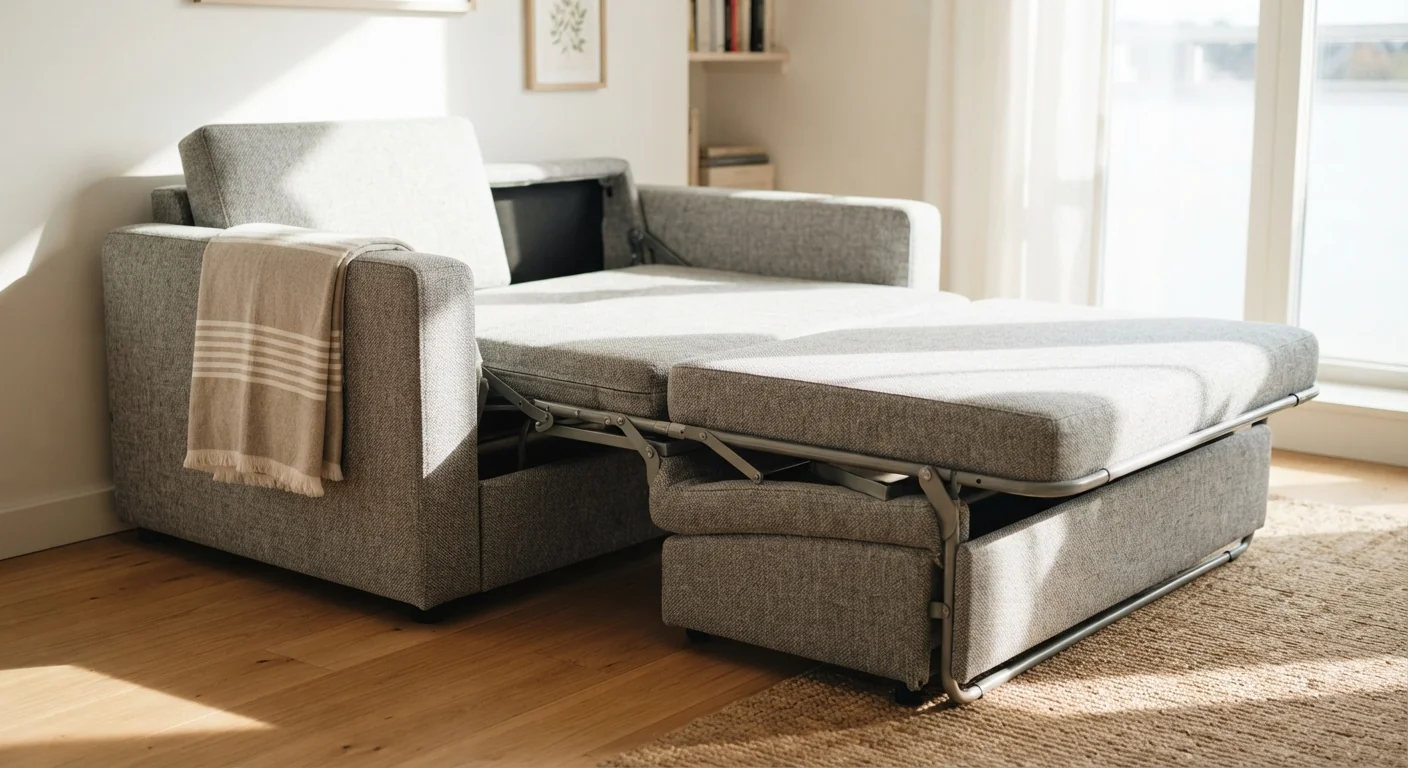
Not every apartment has room for a full sleeper sofa, and a sleeper armchair fills that gap for anyone who occasionally hosts a single overnight guest rather than a couple. Scaled down to the size of a regular accent chair, it unfolds into a single bed rather than a double, which keeps its daytime footprint small enough to fit into a home office, a reading nook, or even a bedroom corner without dominating the room the way a full sofa bed inevitably would take over.
The best use case for this piece is a room that already serves another primary purpose, like a home office or a nursery, where a full sofa bed would feel oversized for how rarely it gets used as a bed. Because the chair looks and functions like normal seating the rest of the time, it never reads as a guest room in disguise the way a sofa bed sometimes can. For occasional, single-guest situations, it is a genuinely proportional solution rather than an oversized one.
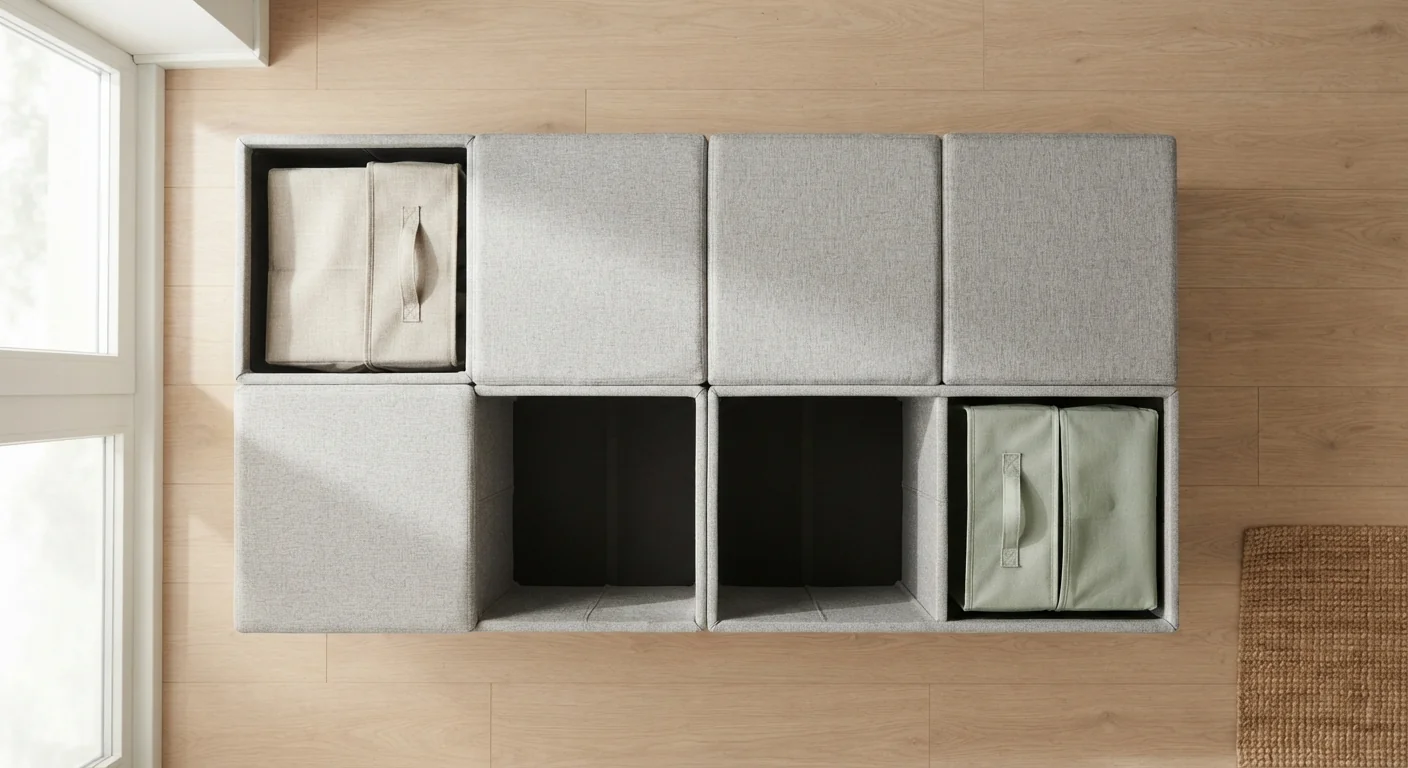
Modular Storage Cubes
Modular storage cubes take the idea of flexible furniture to its simplest form: individual boxes, usually upholstered or fabric-covered, that can be arranged however the moment requires. Lined up, they form a low bench along a wall. Stacked, they become a side table. Spread apart, each one becomes extra seating for guests without needing a single chair to be carried in from another room. Many versions also include a fabric storage bin inside, turning each cube into hidden storage as well as seating, so nothing about the arrangement feels like a compromise.
Their real advantage over fixed furniture is how easily they adapt to an apartment’s layout changing week to week, which matters in a small space where the same square footage might need to host a quiet night in one week and a gathering of six people the next. Because each cube is lightweight, rearranging them takes seconds rather than the effort of moving a real ottoman or bench across the room. For anyone still figuring out their space, cubes offer flexibility without committing to one fixed layout.
- Individual cubes rearrange into a bench, table, or extra seating
- Some include fabric bins for hidden storage inside
- Lightweight enough to reconfigure without help
- Stack or line up depending on the room’s layout that day
Nesting Stools
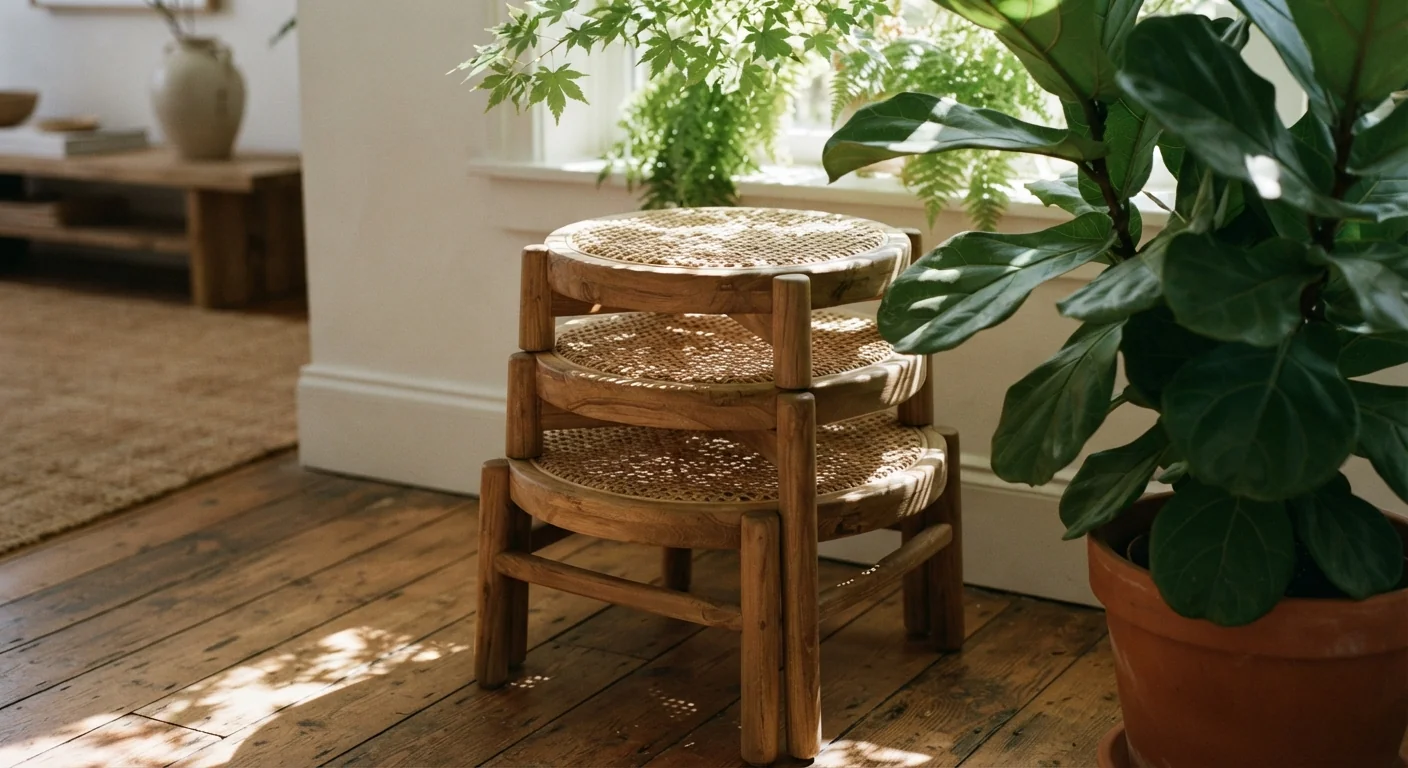
Nesting stools work on the same stacking principle as nesting side tables, but scaled for seating instead of surfaces. Two or three stools of graduated sizes tuck together into the footprint of one, ready to be pulled apart the moment extra seating is needed for a small gathering or a movie night with friends. Their small individual size also means they slide easily under a console table or into a corner between larger furniture, filling gaps that a regular chair would be too bulky to occupy.
Beyond extra seating, a single stool from the set doubles as a plant stand, a side table for a drink, or a step stool for reaching a high shelf, which gives the set more daily utility than most people expect from what looks like a purely decorative accent piece. Choosing a set in a durable material like solid wood or woven rattan, rather than lightweight plastic, means they can genuinely be sat on rather than just displayed, which is where a lot of decorative stacking stools fall short.
Wall-Mounted Fold-Down Bed
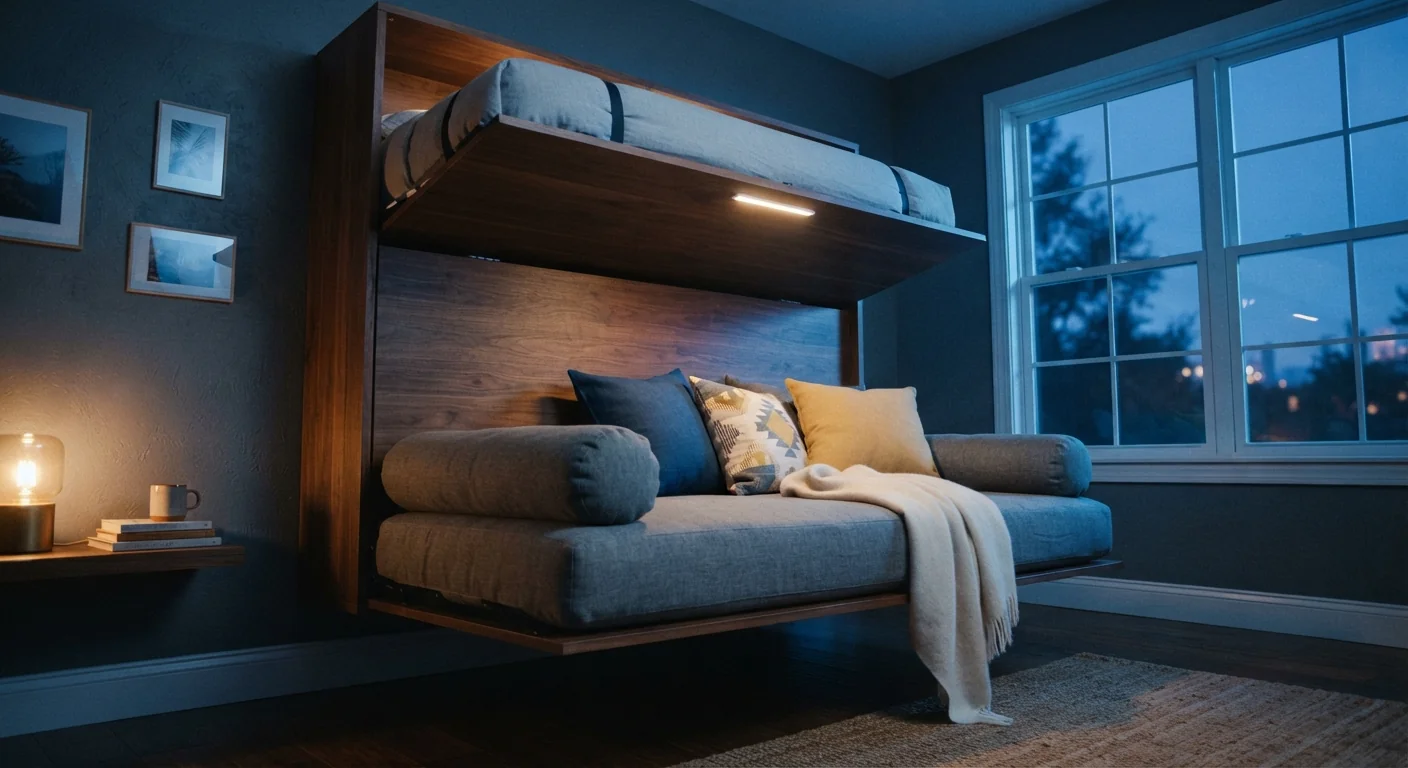
A wall-mounted fold-down bed is a lighter-weight cousin of the full Murphy bed, designed for apartments where a full cabinet-style installation is not practical or not allowed by a landlord. Rather than a built-in unit, it uses a simpler wall-anchored frame that folds up and locks flat, often with a cushioned front panel that turns the folded position into a usable daybed rather than a blank wall panel. This gives a studio the same floor-reclaiming benefit as a Murphy bed with a lighter, sometimes more rentable-friendly installation.
Because the mechanism is simpler than a full Murphy system, these frames also tend to be more affordable and easier to fold up and down daily without the smoother, more expensive hydraulics of a built-in version. The daybed-style cushion on the front means the folded position never looks like an obviously hidden bed, keeping the room feeling like a living space rather than a bedroom in disguise during the day. For a compact studio prioritizing budget, this offers most of the benefit at a smaller scale.
- Front panel doubles as a daybed cushion when the bed is folded up
- Compact system suits studios where a full Murphy bed cabinet would not fit
- Frees the entire floor for daytime use
- Simpler, lighter-duty alternative to a full built-in Murphy bed system
FAQ
What is the most space-saving multi functional furniture piece for a studio apartment?
A Murphy wall bed or wall-mounted fold-down bed tends to free up the most floor space, since it removes the bed’s footprint entirely during the day. For apartments that cannot install one, a sleeper sectional or sofa bed is the next best trade, since it replaces both a couch and a guest bed with one piece.
Do storage beds actually hold enough for a full dresser’s worth of clothes?
A drawer-style storage bed usually holds close to what a small two- or three-drawer dresser would, especially for folded items like sweaters and linens. It works best paired with a closet or a few extra bins for anything that does not fit, rather than replacing all clothing storage on its own.
Is it worth paying more for a higher-quality sofa bed mattress?
Yes, if the sofa bed will actually be slept on more than a couple of nights a year. Older-style thin foam pads get uncomfortable quickly, while newer memory foam or pocket coil inserts sleep close to a real mattress and are worth the added cost for regular guest use.
How do I know if my apartment can handle a Murphy bed installation?
Check with your landlord first, since most Murphy beds need to anchor into a wall stud rather than sit freestanding, and some leases restrict permanent wall fixtures. If a full installation is not possible, a wall-mounted fold-down bed with a lighter anchoring system is often a workable substitute. If you’re renovating anyway, confirm the wall can carry a Murphy bed before you install one.
Should every piece of furniture in a small apartment be multi functional?
Not necessarily. A few purely decorative or single-purpose pieces, like a favorite reading chair, keep a space feeling personal rather than purely utilitarian. The goal is picking multi functional pieces for the items that take up the most floor space, like a bed, sofa, or dining table, and letting smaller accent pieces stay simple.
Conclusion
Furniture that only does one job is a luxury most small apartments cannot really afford, and every piece on this list proves there is almost always a version that works harder for the same footprint. Multi functional furniture is not about squeezing more into a room; it is about letting fewer things do more, so the apartment feels calmer instead of more crowded. Start with whichever piece matches a problem this space already has, whether that is guests, storage, or a missing workspace. Save this list to Pinterest, try one or two ideas this month, and share it with anyone else furnishing a small apartment of their own.