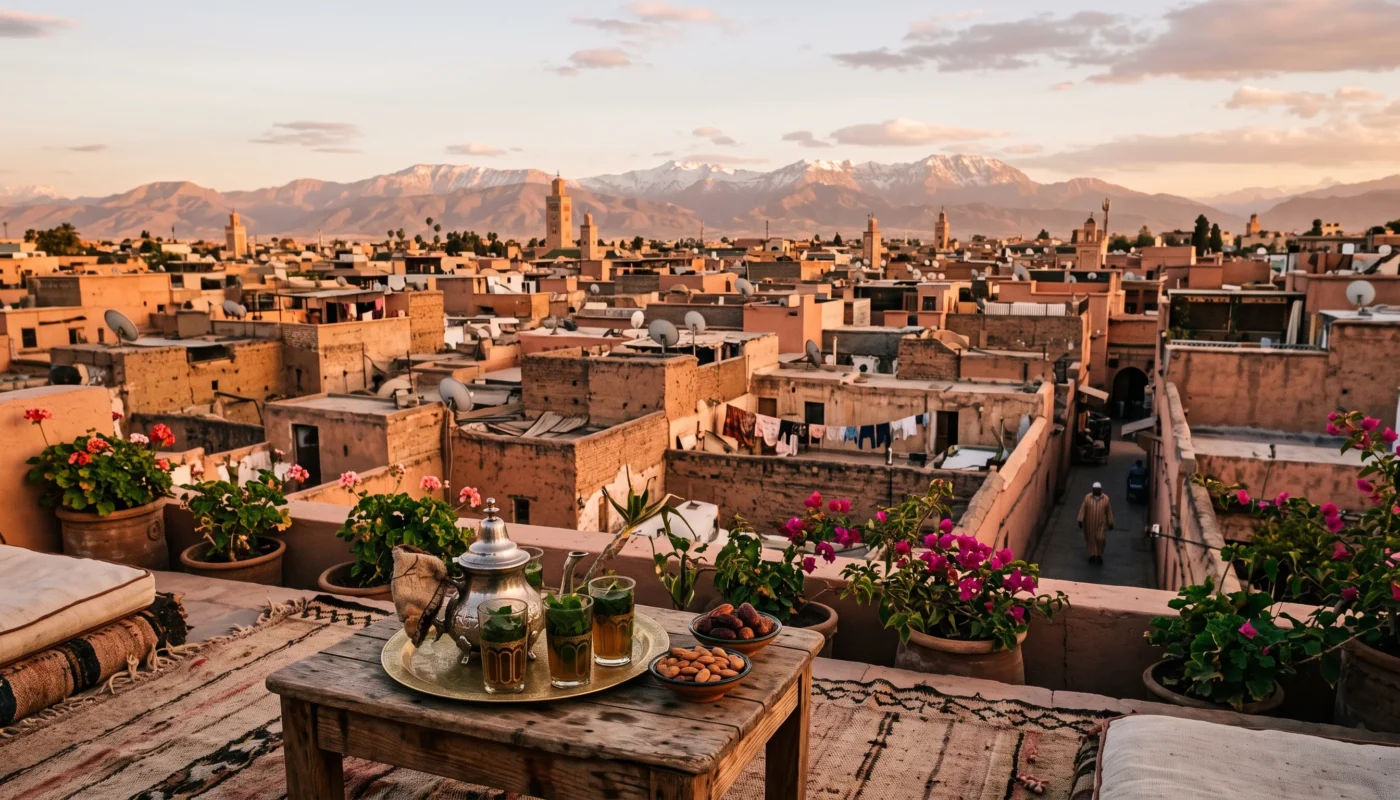

Morocco rewards first-time visitors generously, but it also runs on a different set of everyday rules than most Western travel destinations, and knowing them in advance makes the difference between a smooth trip and a stressful one. These 20 things to know before visiting Morocco cover the practical groundwork: currency and haggling norms, mosque access rules, medina navigation, and the specific cultural details that rarely make it into a standard packing list. This isn’t a generic overview. It’s a working checklist built from what actually trips up first-time visitors, covering money, culture, transport, and timing, so the trip’s energy goes toward the experience itself rather than avoidable mistakes.
Start Here: Entry Stamp Check
This is the single detail that can turn into a genuine problem at departure if missed on arrival, and it takes thirty seconds to check at the border while there’s still time to fix it.
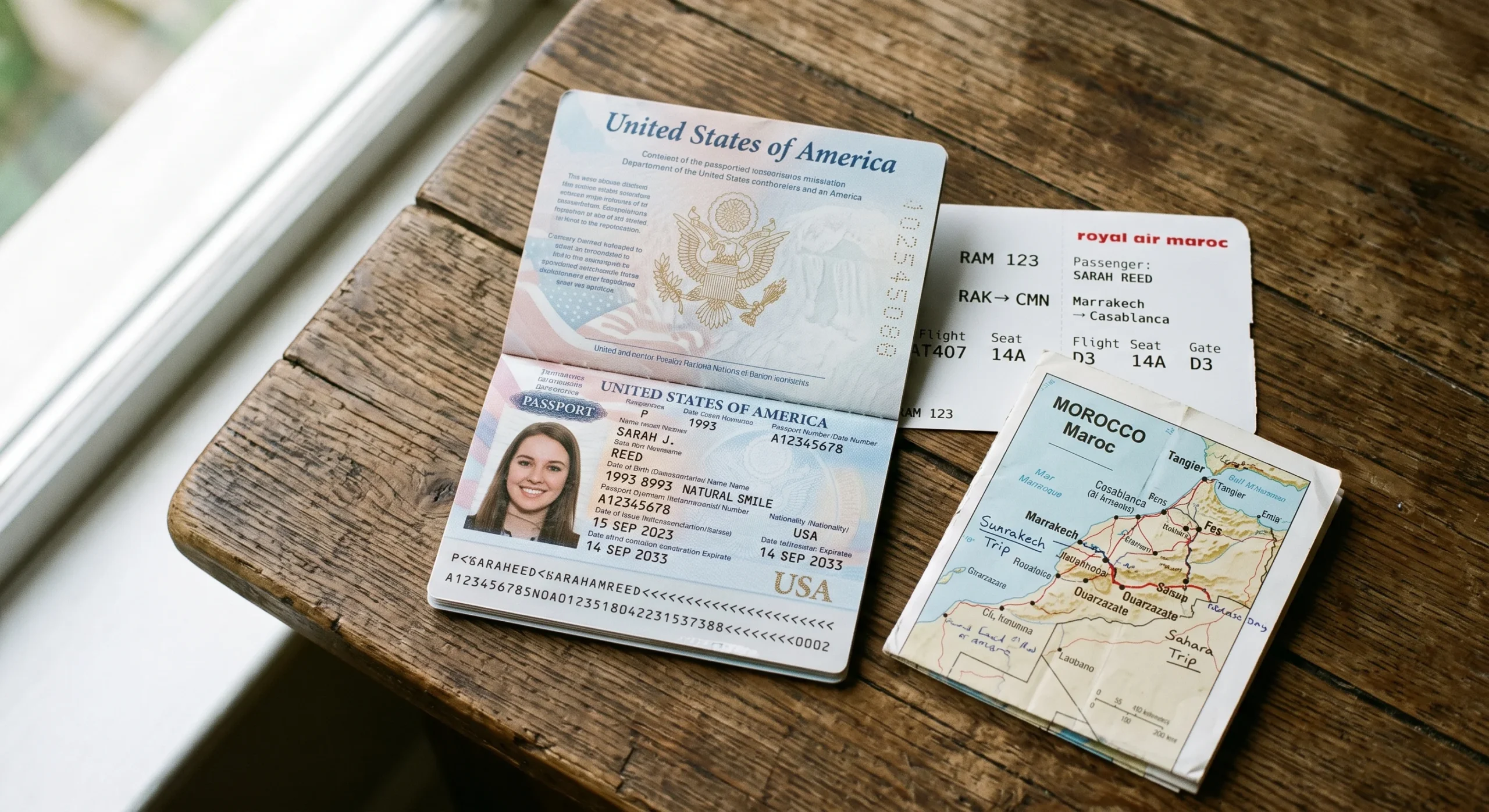
Passport Validity Rules
Morocco’s entry requirements are straightforward for most nationalities, but the passport validity rule catches travelers off guard more often than any other single document requirement on this list. Many countries require at least six months of remaining validity from the date of entry, not from the return flight date, which means a passport that looks fine for the trip itself can still fall short of the actual requirement once the math is worked out properly against the exact travel dates being planned for the visit.
For travelers from the EU, the US, and a number of other countries, a tourist visa generally isn’t required for stays up to ninety days, which simplifies the planning considerably compared to some other international destinations. Confirming the specific requirement for a home country directly through an official source before booking flights is worth the ten minutes it takes, since visa and validity rules do shift periodically and a generic blog post isn’t always current by the time a trip actually happens months or years later.
- Most nationalities need at least six months of passport validity remaining from the entry date.
- Many nationalities, including EU and US citizens, don’t need a visa for short tourist stays.
- Checking the specific requirement for a home country well before departure avoids a border surprise.
- A passport nearing its expiry date is worth renewing before booking flights to Morocco.
Entry Stamp Check
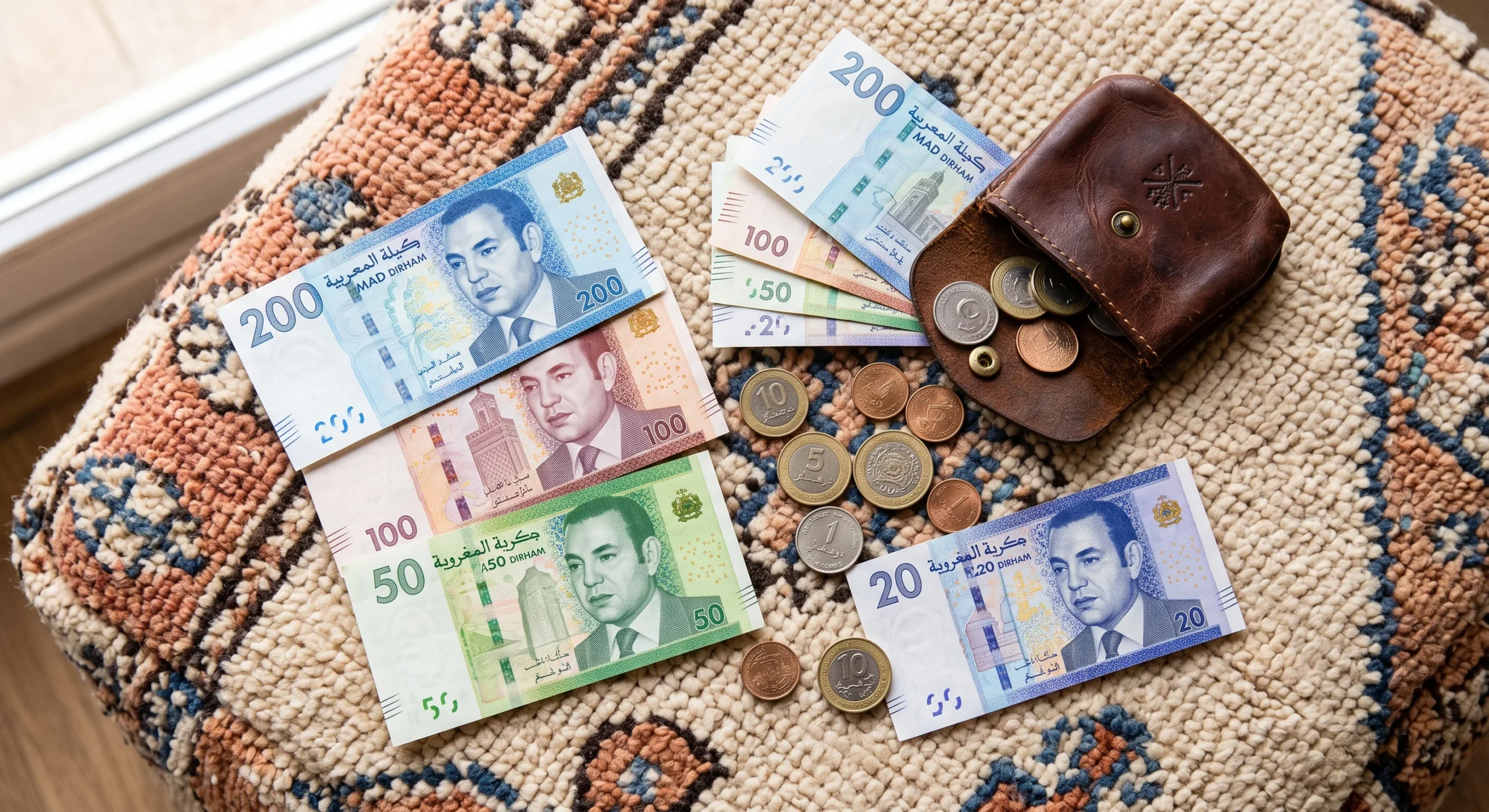
Getting an entry stamp checked before leaving the immigration counter is one of the smallest, easiest habits on this entire list, and skipping it has genuinely caused departure problems for travelers who didn’t notice a missing or unclear stamp until they tried to leave the country weeks later. Border staff occasionally miss stamping a passport during a busy arrival rush, and the traveler rarely notices at the time, since nothing about the moment itself feels unusual or incomplete to the traveler at the time when it happens.
Taking a few extra seconds at the counter to glance at the passport page before walking away removes this risk entirely, and asking politely for a stamp if one isn’t visible is a completely normal, expected request that immigration staff handle regularly without any issue. This single habit, formed in the first few minutes of the trip, prevents what would otherwise become a genuinely stressful conversation with airport authorities at departure, when there’s far less spare time and considerably more pressure to resolve it properly on the spot.
Dirham Currency Basics
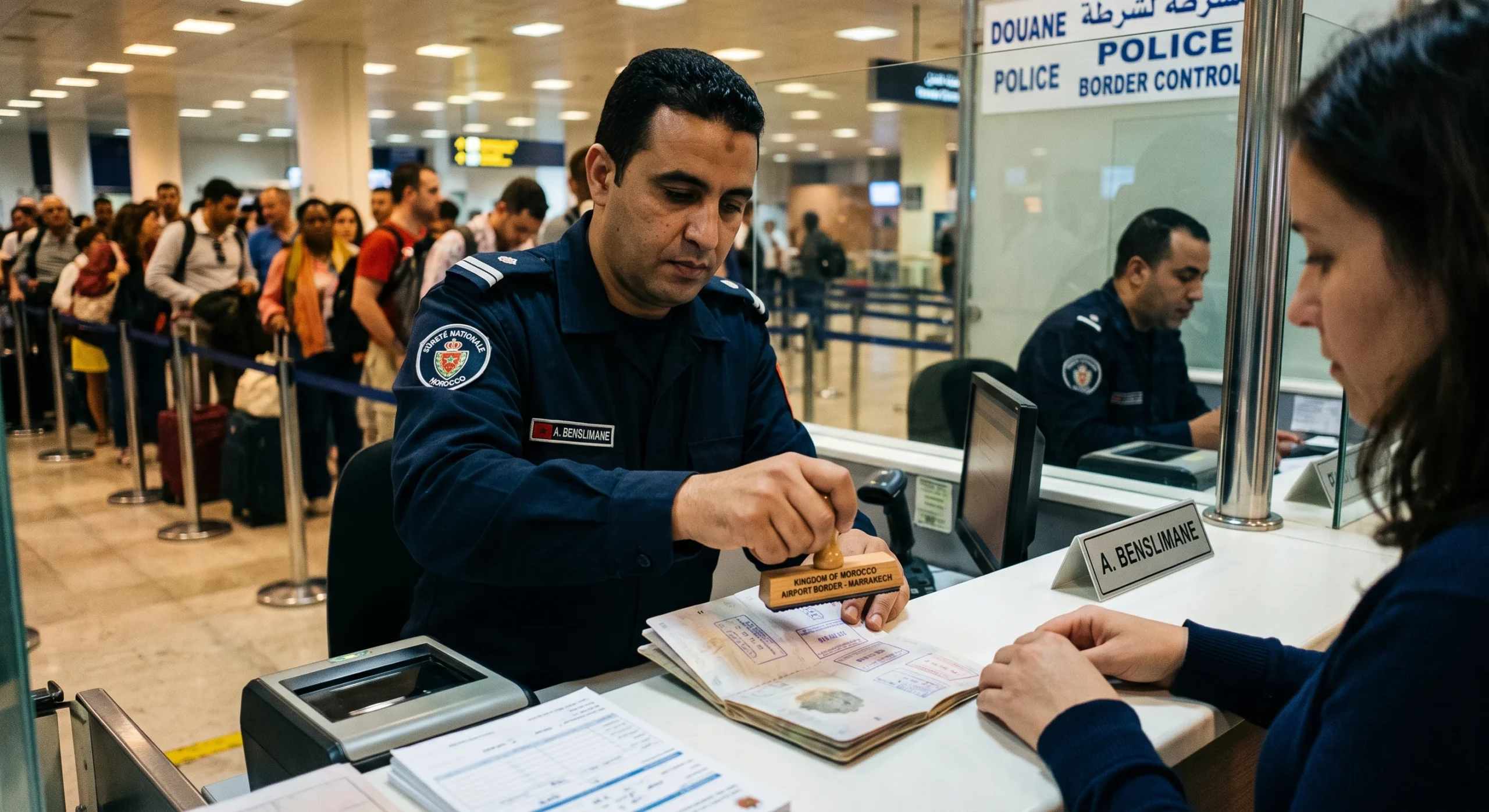
- The Moroccan dirham is a closed currency, meaning it can’t be exchanged before arrival.
- ATMs in major cities and airports offer reliable, competitive exchange rates on arrival.
- Small bills and coins matter constantly, for taxis, tips, and souk purchases alike.
- Currency exchange offices in tourist areas sometimes offer worse rates than ATMs directly.
- Keeping a small reserve of dirhams for the return trip covers last-minute airport costs.
The Moroccan dirham operates as a closed currency, which means it generally can’t be bought or exchanged outside the country before arrival, unlike many other travel currencies that can be picked up in advance at a home-country bank or exchange counter. Withdrawing dirhams from an ATM shortly after landing is the most straightforward approach for most visitors, and airport ATMs in major cities typically offer competitive, transparent rates without the hidden markup that some currency exchange counters quietly build into their posted exchange rate numbers.
Small bills and coins matter constantly throughout a Morocco trip in a way that surprises visitors used to relying mostly on cards elsewhere, since taxis, small souk purchases, and tips all run almost entirely on cash in smaller denominations rather than larger notes. Breaking a large bill early, at a hotel or a larger store, saves the repeated friction of a taxi driver or market vendor being unable to make change later in the day. Keeping a modest dirham reserve for the departure day covers airport taxis and last-minute purchases smoothly.
Souk Haggling Norms
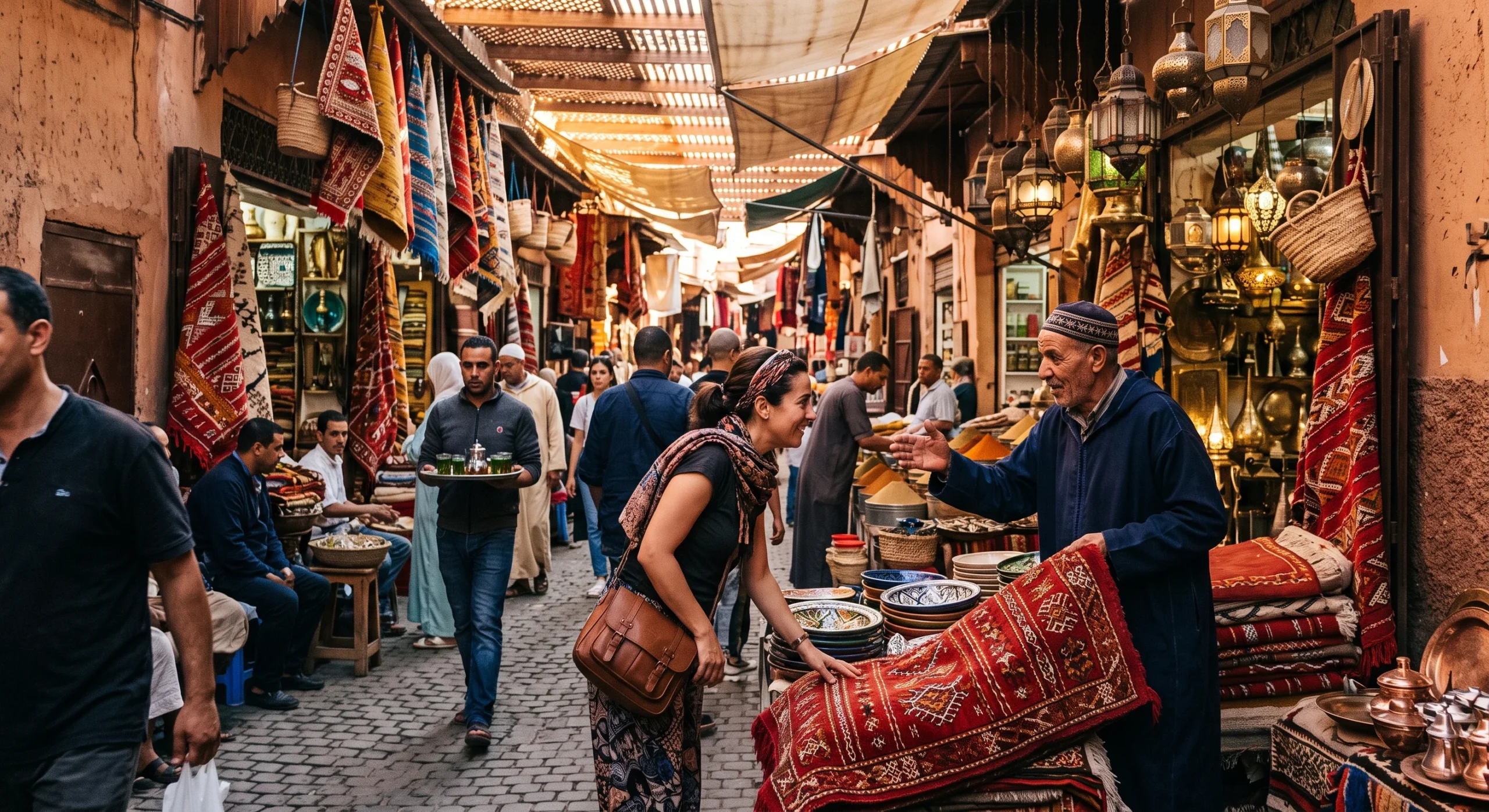
Haggling in Morocco’s souks isn’t an optional cultural curiosity, it’s genuinely how prices work in most of these markets, and treating the first quoted number as fixed tends to mean paying noticeably more than a local customer would for the same item. Starting an offer at roughly half the vendor’s initial asking price is a widely used, expected opening move, and the back-and-forth that follows is a normal, even social part of the interaction rather than an adversarial one that either side takes personally or seriously.
Keeping the tone light and unhurried tends to produce better outcomes than a rushed or overly aggressive approach, since many vendors respond more warmly to a genuine, friendly exchange than to a transactional one focused purely on the lowest possible number. Walking away calmly, without buying, is a completely normal part of the process and often prompts a better offer rather than causing offense. Setting a personal price ceiling before entering a shop helps keep the entire negotiation relaxed and enjoyable rather than genuinely stressful for either side.
- Starting an offer around half the vendor’s initial asking price is a common, expected approach.
- A friendly, unhurried tone tends to get better results than a rushed or aggressive one.
- Walking away calmly is a normal negotiating step, not a rude gesture, in most souks.
Friday Closures Timing
Friday holds particular religious significance in Morocco, and a meaningful number of shops, some smaller attractions, and certain businesses either close entirely or shift to shortened hours around midday prayers, which can catch visitors off guard if an itinerary assumes every day of the week runs identically. This doesn’t shut the country down by any means, but it’s worth factoring into planning, especially for anything scheduled around the midday hours on a Friday specifically, since timing shifts noticeably compared to any other day of the week.
Larger attractions, restaurants, and most tourist-facing businesses in major cities generally stay open regardless, so this mainly affects smaller local shops and certain administrative offices rather than the core sights on a typical first-trip itinerary. Checking specific opening hours for anything time-sensitive planned on a Friday, particularly around midday, avoids arriving somewhere only to find it temporarily closed. Many families also gather for a traditional Friday couscous lunch, which shapes the rhythm of the day in ways worth simply expecting in advance rather than working against once there.
Tap Water Caution
- Bottled or filtered water is the safer default choice throughout most of a Morocco trip.
- Ice in drinks at smaller, less tourist-oriented establishments is worth approaching with some caution.
- Larger hotels and established restaurants generally use filtered water in food preparation reliably.
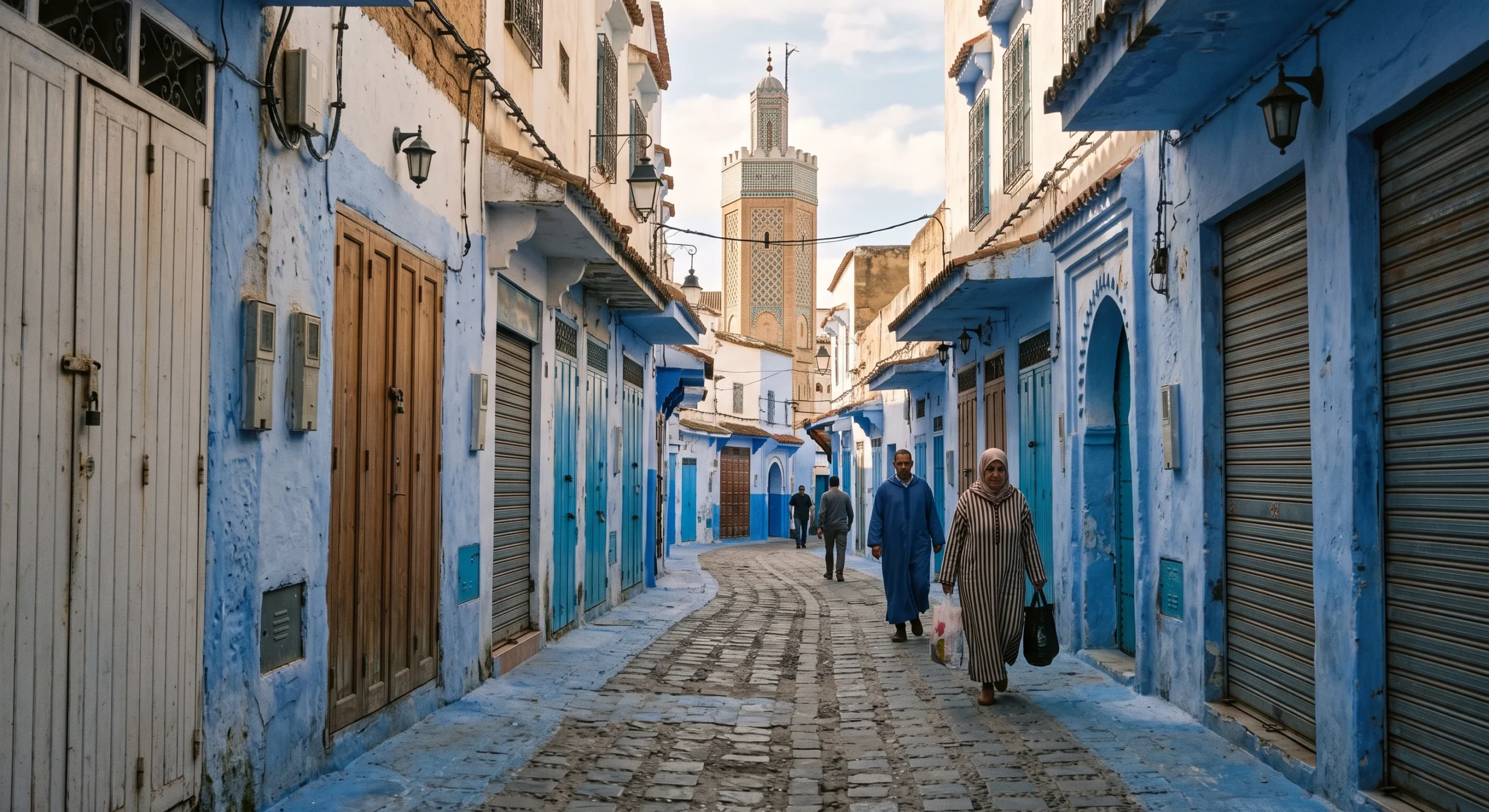
Tap water in Morocco’s major cities is generally treated and technically safe by local standards, but its mineral composition differs enough from what many international visitors are used to that stomach upset remains one of the most common minor health complaints reported by first-time travelers to the country. This isn’t a serious safety issue so much as a practical adjustment worth making from day one, rather than learning about it the harder way partway through a trip that’s already well underway and hard to adjust.
Sticking to bottled or properly filtered water for drinking throughout the trip is the simplest safeguard, and it’s widely available and inexpensive nearly everywhere, from small corner shops to hotel minibars across the country. Ice served at smaller, less established restaurants and street stalls is worth approaching with a bit more caution than ice at larger hotels or well-reviewed restaurants, which generally use properly filtered water in their kitchens. This one small habit prevents the majority of minor travel-related stomach issues that visitors commonly report afterward.
Mosque Access Limits
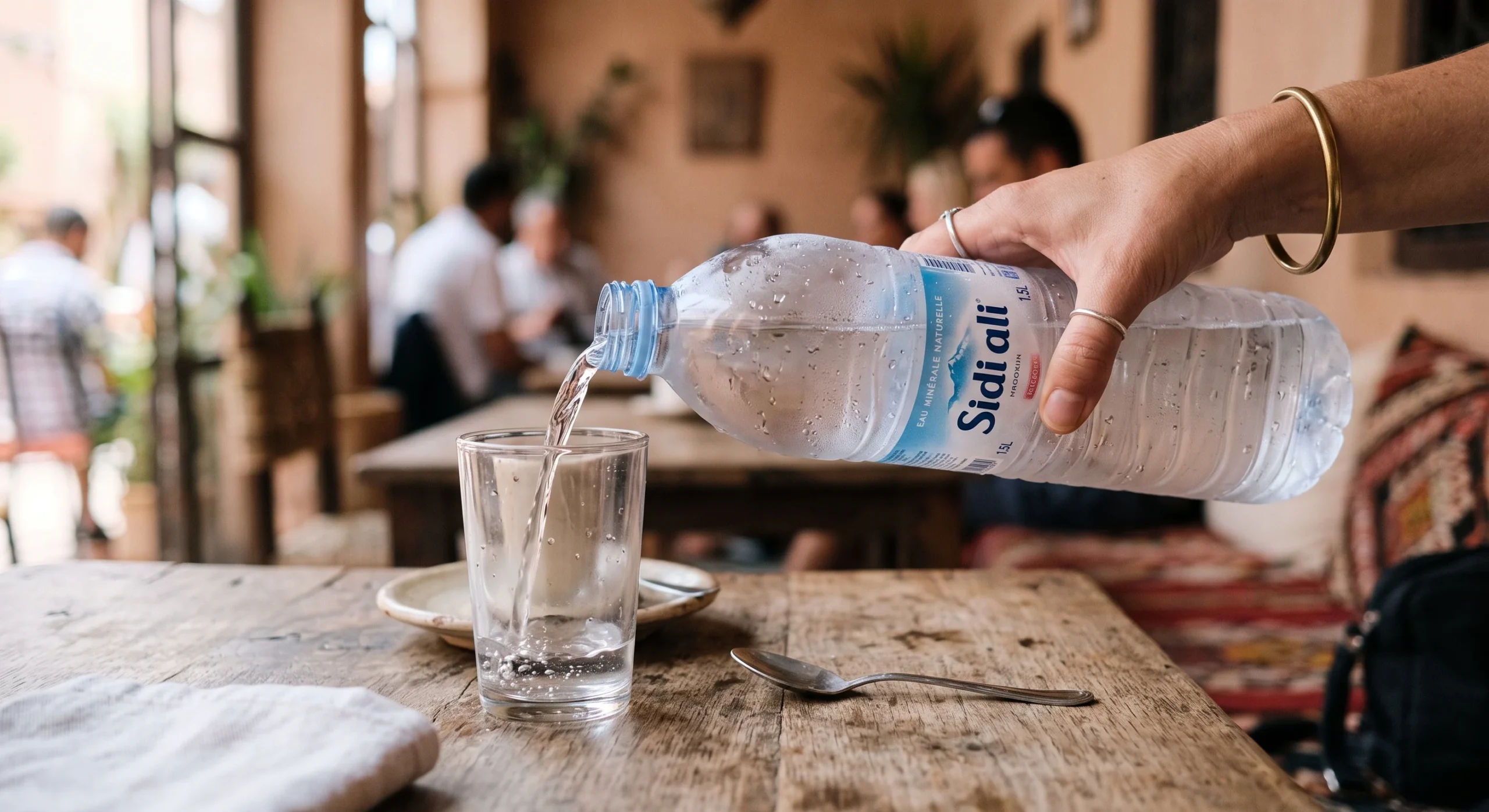
Most mosques throughout Morocco remain closed to non-Muslim visitors, which differs from the policy in some other Muslim-majority countries and surprises travelers who expect to be able to step inside and view the interior architecture the way they might at a cathedral or temple elsewhere on previous trips. This isn’t a matter of tourist restriction so much as it reflects the mosque’s function as an active place of worship rather than a general public attraction open freely to casual sightseeing visitors passing through the area.
The Hassan II Mosque in Casablanca is the well-known exception, offering guided tours to non-Muslim visitors at specific scheduled times outside of prayer hours, and its scale and coastal setting make it genuinely worth building into an itinerary that includes Casablanca. Elsewhere, admiring the exterior architecture, the carved stonework, tilework, and minarets visible from the street, remains a completely reasonable and common way to appreciate these buildings without needing interior access at all to feel like a genuinely worthwhile stop overall on the day’s itinerary.
Modest Dress Guide
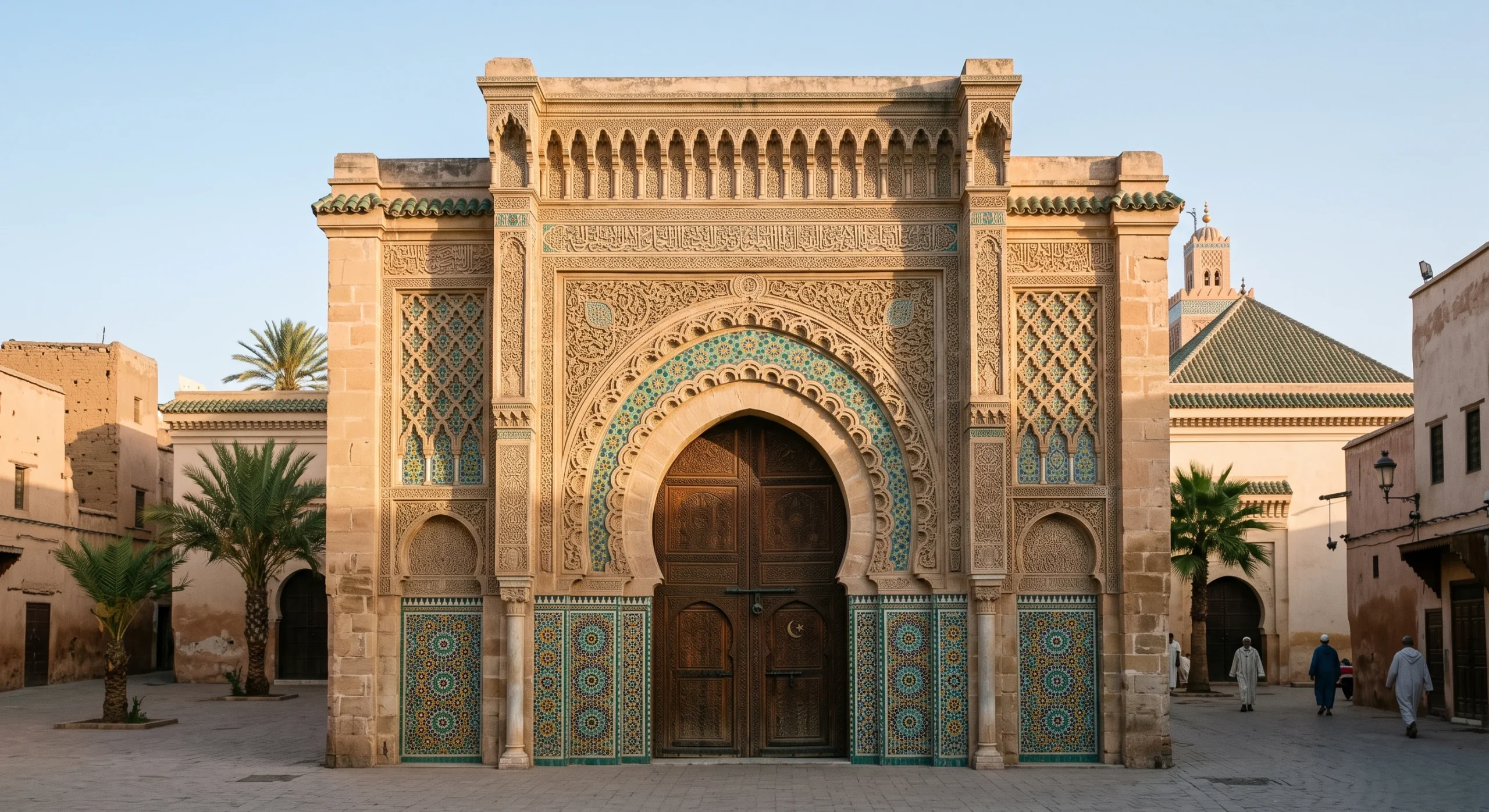
Morocco’s dress expectations sit somewhere between the more relaxed norms of European beach destinations and the stricter requirements of some other regional countries, which makes it genuinely easy to get slightly wrong in either direction without a clear sense of the actual local baseline. Loose, breathable clothing that covers shoulders and knees works comfortably in most everyday city settings, blending in reasonably well while also staying practical for the region’s often intense midday heat during the warmer months of the year overall, especially further inland.
Coastal resort towns and beach areas apply noticeably more relaxed norms than inland cities like Fez or Marrakech’s older neighborhoods, so it’s worth packing with the full range of planned stops in mind rather than one single dress code for the entire trip. A light scarf earns its place in nearly every packing list for this destination, doubling as sun protection during the day and as quick, easy modesty coverage near mosques or in more conservative neighborhoods without needing to pack a full separate outfit change.
- Loose, lightweight clothing covering shoulders and knees works well in most everyday settings.
- Beach and resort areas apply noticeably more relaxed dress norms than inland cities.
- A light scarf is genuinely useful for both modesty and sun protection throughout the day.
- Overly modest, heavy clothing isn’t required outside of specific religious or rural contexts.
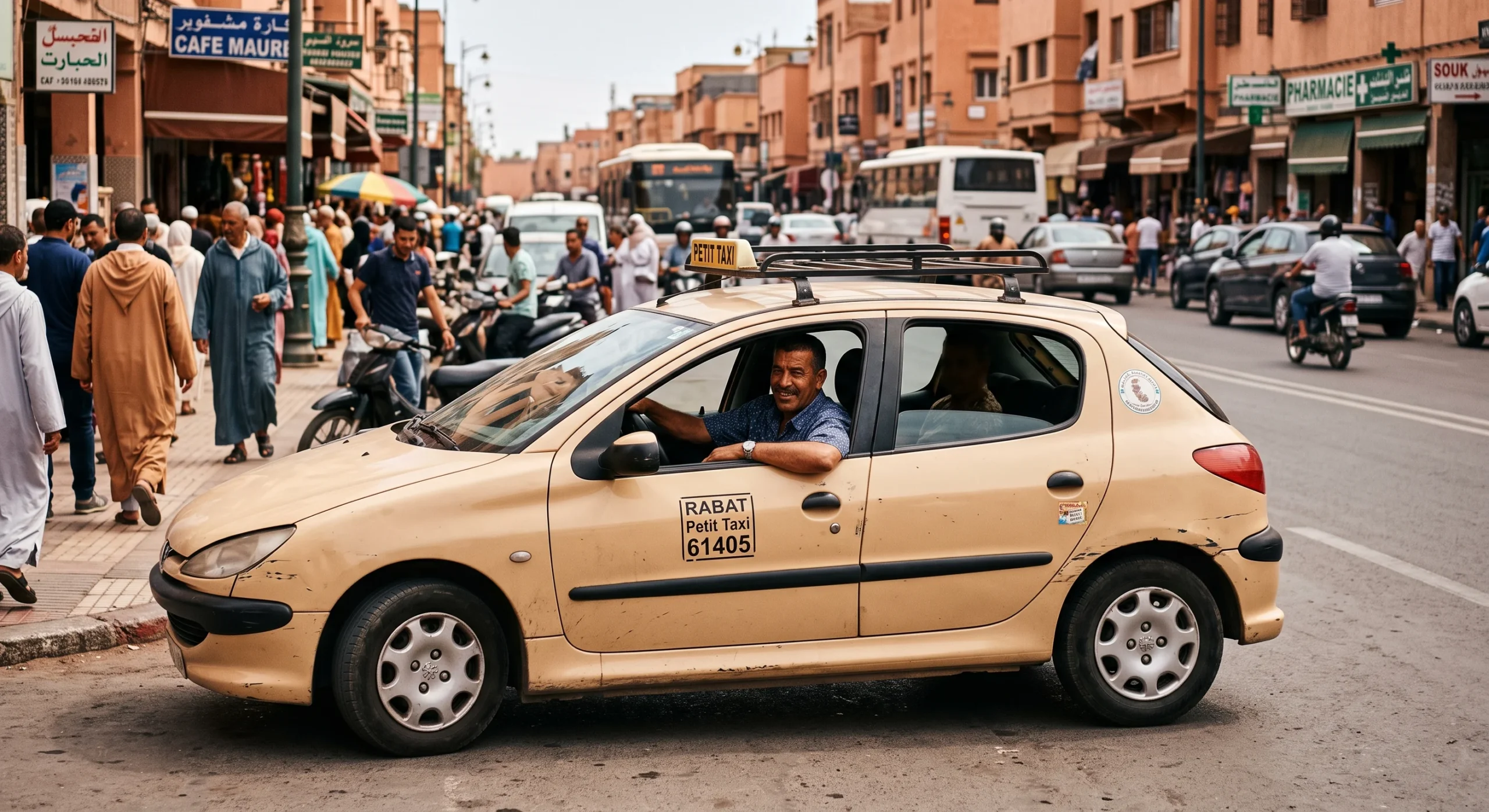
Taxi Fare Types
- Petit taxis handle short in-city trips and are generally metered in larger cities.
- Grand taxis cover longer intercity routes, often shared with other passengers heading the same way.
- Agreeing on a price beforehand for unmetered rides avoids disputes at the destination.
Morocco runs two distinct taxi systems that first-time visitors sometimes confuse, and understanding the difference upfront saves both money and the occasional confusing roadside negotiation. Petit taxis are smaller vehicles meant for short trips within a single city, and in larger cities like Casablanca and Rabat, they’re generally metered, though confirming the meter is running at the start of a ride is worth doing as a simple habit rather than assuming it automatically happens every single time without a quick check first at the start.
Grand taxis cover longer routes between cities and are frequently shared, meaning a driver waits to fill remaining seats with other passengers heading the same general direction before departing, which keeps the per-person cost notably lower than a private ride would run. Where a taxi isn’t metered, agreeing on a price clearly before getting in avoids the same kind of dispute that can happen with unmetered rides in many other countries. Asking a hotel for a fair local price range helps set realistic expectations beforehand.
Medina Navigation Tips
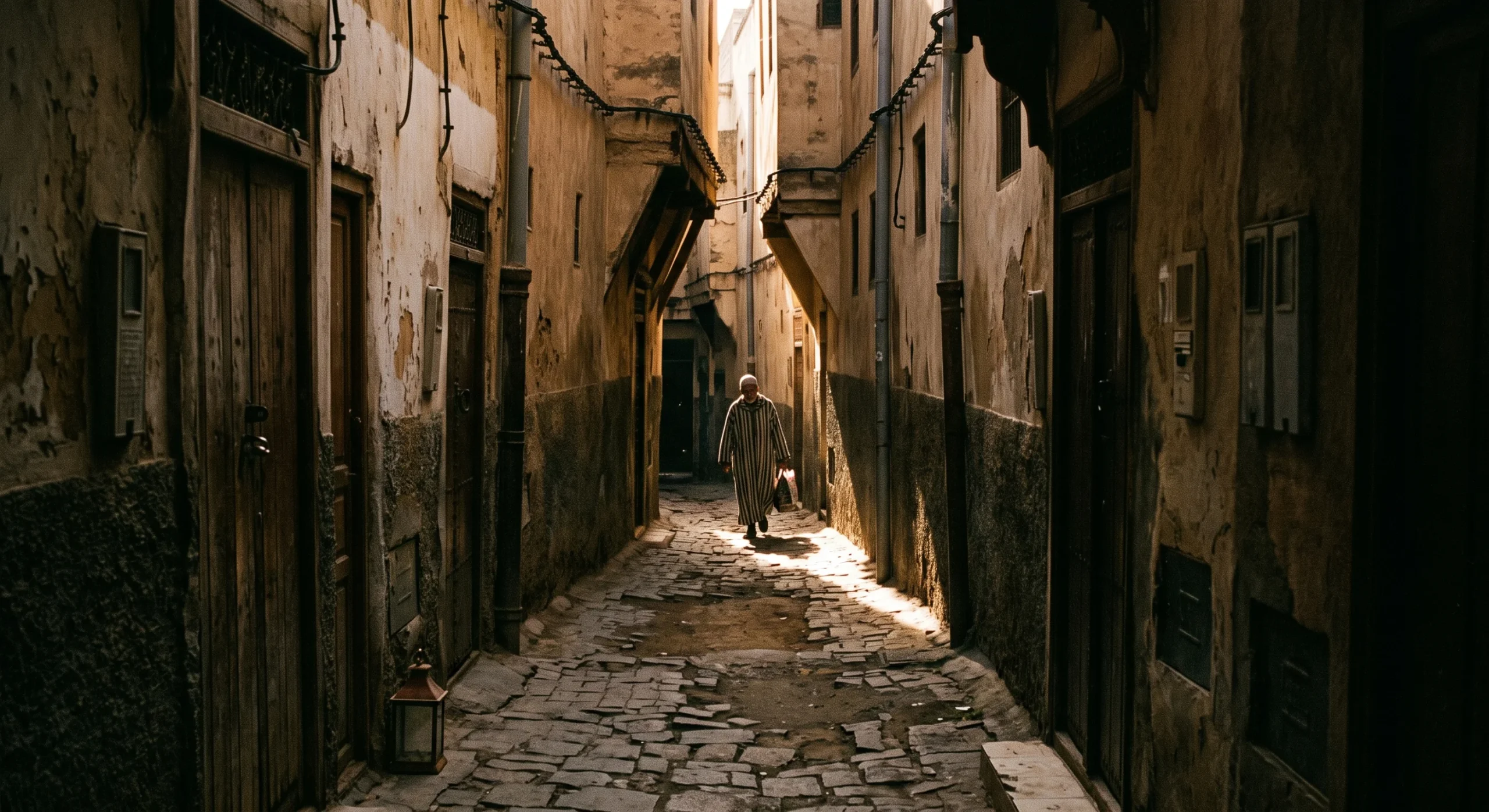
Morocco’s old medinas, the historic walled city centers found in Fez, Marrakech, and several other cities, are genuinely maze-like by design, built centuries before any concept of a modern street grid, and getting turned around inside one is less an exception than a near-certainty for most first-time visitors regardless of how carefully they try to track their route. This isn’t cause for real concern so much as a fact of the medina’s structure worth expecting in advance and planning around calmly from the very outset of the trip.
Downloading offline maps before entering, since phone signal and standard GPS accuracy can both weaken considerably within the dense stone walls, gives a rough general sense of direction even when the exact turn-by-turn path becomes unclear partway through. Landmark buildings, a specific mosque, gate, or well-known square, tend to work far better as navigation reference points than trying to track individual street names, many of which aren’t clearly marked or consistently labeled or signposted anyway throughout most of the medina’s older, historic sections of the city.
- Offline maps downloaded before entering the medina help considerably once phone signal weakens.
- Getting genuinely lost is common and rarely dangerous, more disorienting than risky.
- Landmark buildings, like a specific gate or mosque, work better as reference points than street names.
- Asking a shop owner for directions is generally reliable, though a small tip is appreciated.
Riad Accommodation Style
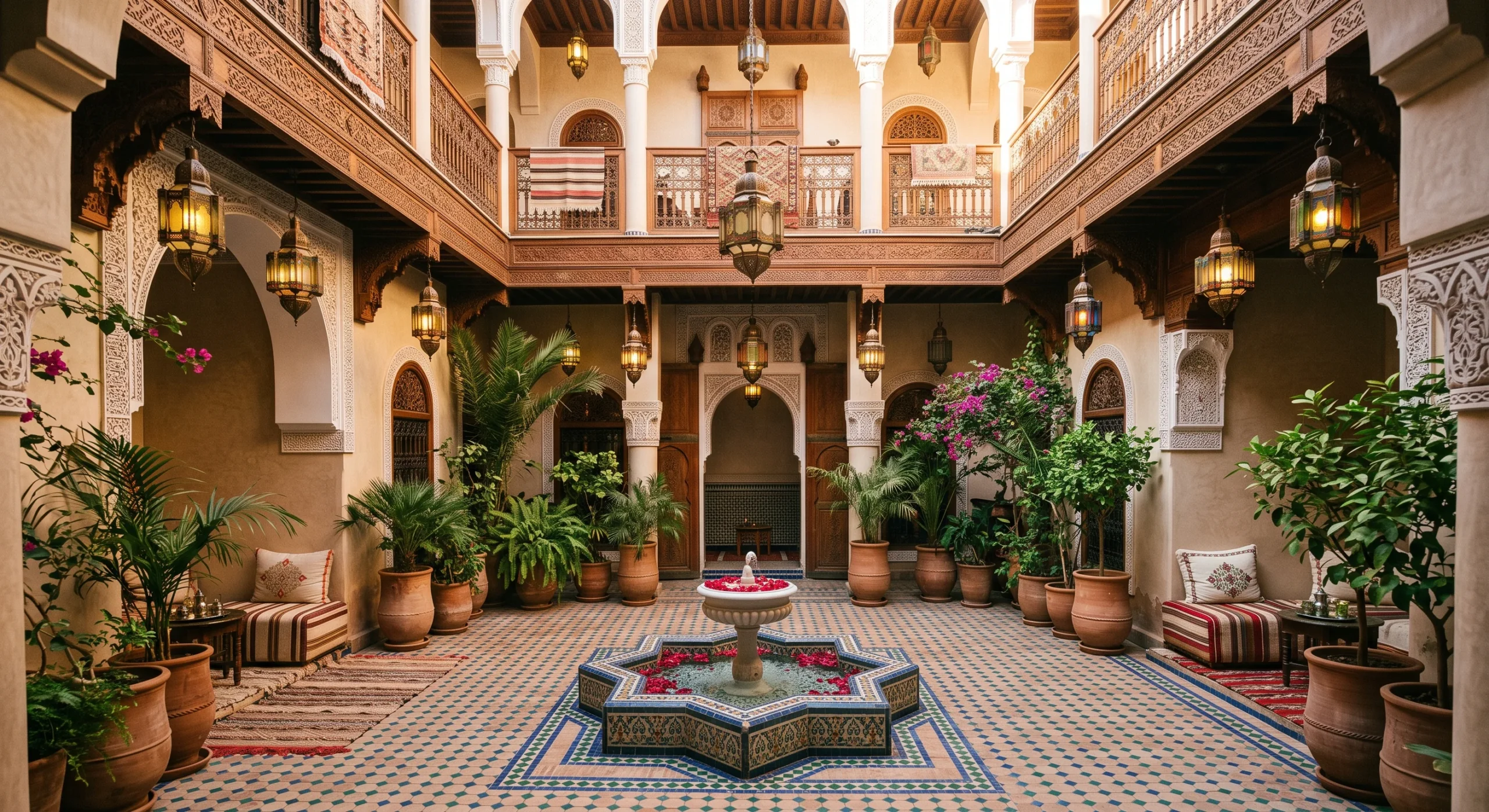
A riad, a traditional Moroccan house built around a central interior courtyard, offers a genuinely different accommodation experience from a standard hotel, and staying in one tucked inside a medina gives a much closer sense of the city’s actual daily rhythm than a larger hotel positioned outside the old walls typically would. Most riads convert this central courtyard into a shared communal space, sometimes with a small fountain or plunge pool, and rooms open onto it from surrounding floors rather than a standard hallway layout.
Because riads sit inside the medina’s narrow, vehicle-free alleys, arrival usually involves a short walk from the nearest accessible road, and most properties will arrange for a porter to help carry luggage that final stretch on request, which is worth confirming when booking. The tradeoff for this atmosphere is generally smaller room counts and a quieter, more personal stay than a larger hotel offers, along with staff who often double as informal local guides for navigating the surrounding medina streets confidently and without much hassle.
Sahara Desert Trips
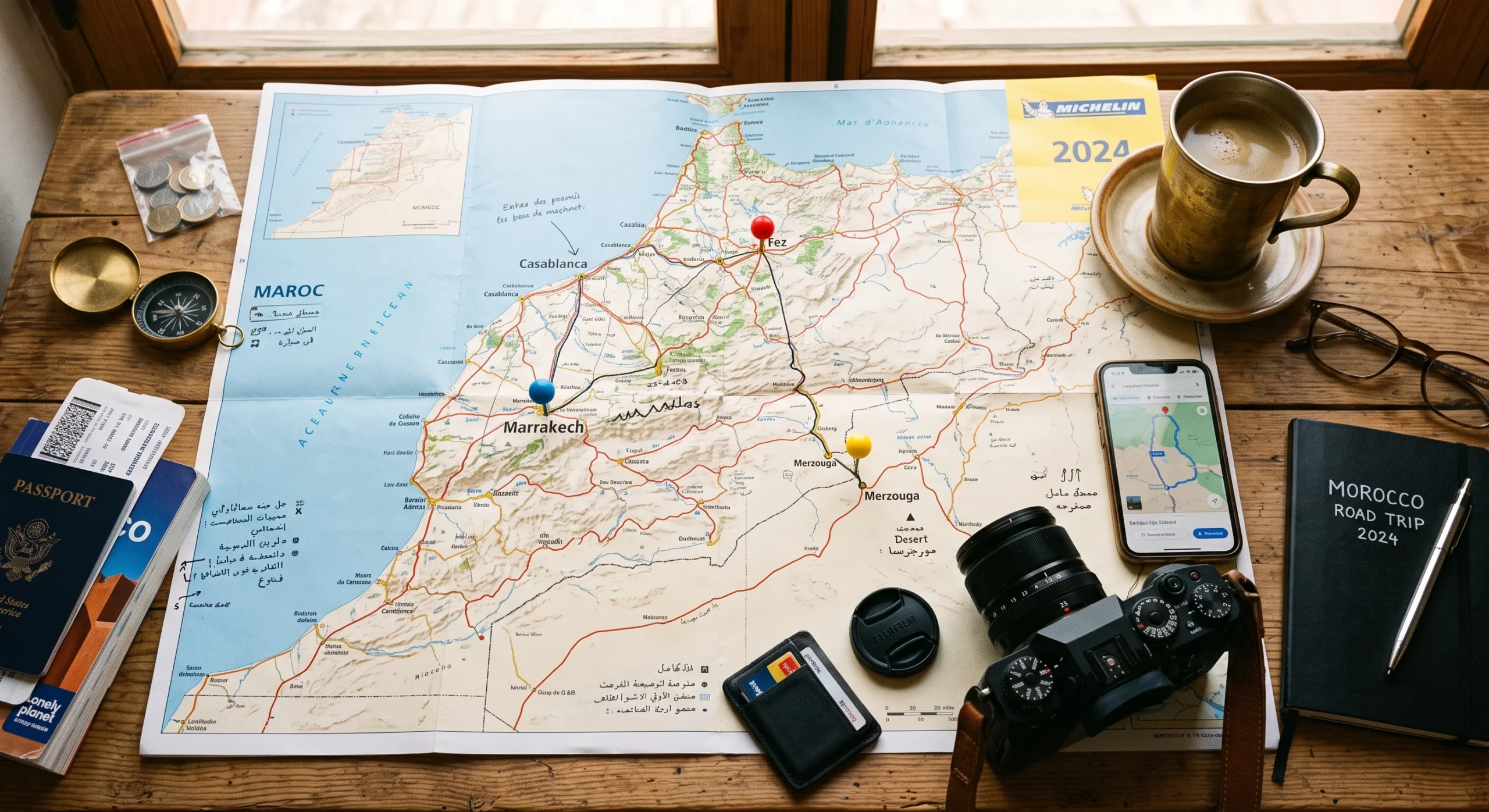
- Multi-day desert tours typically depart from Marrakech or Fez toward Merzouga or Zagora.
- Overnight desert camps range from basic shared tents to more comfortable private setups.
- Packing warm layers matters, since desert nights get genuinely cold even after hot days.
- Booking through a reputable, reviewed operator matters more here than on most other day trips.
- A two to three day round trip is the realistic minimum for a proper desert experience.
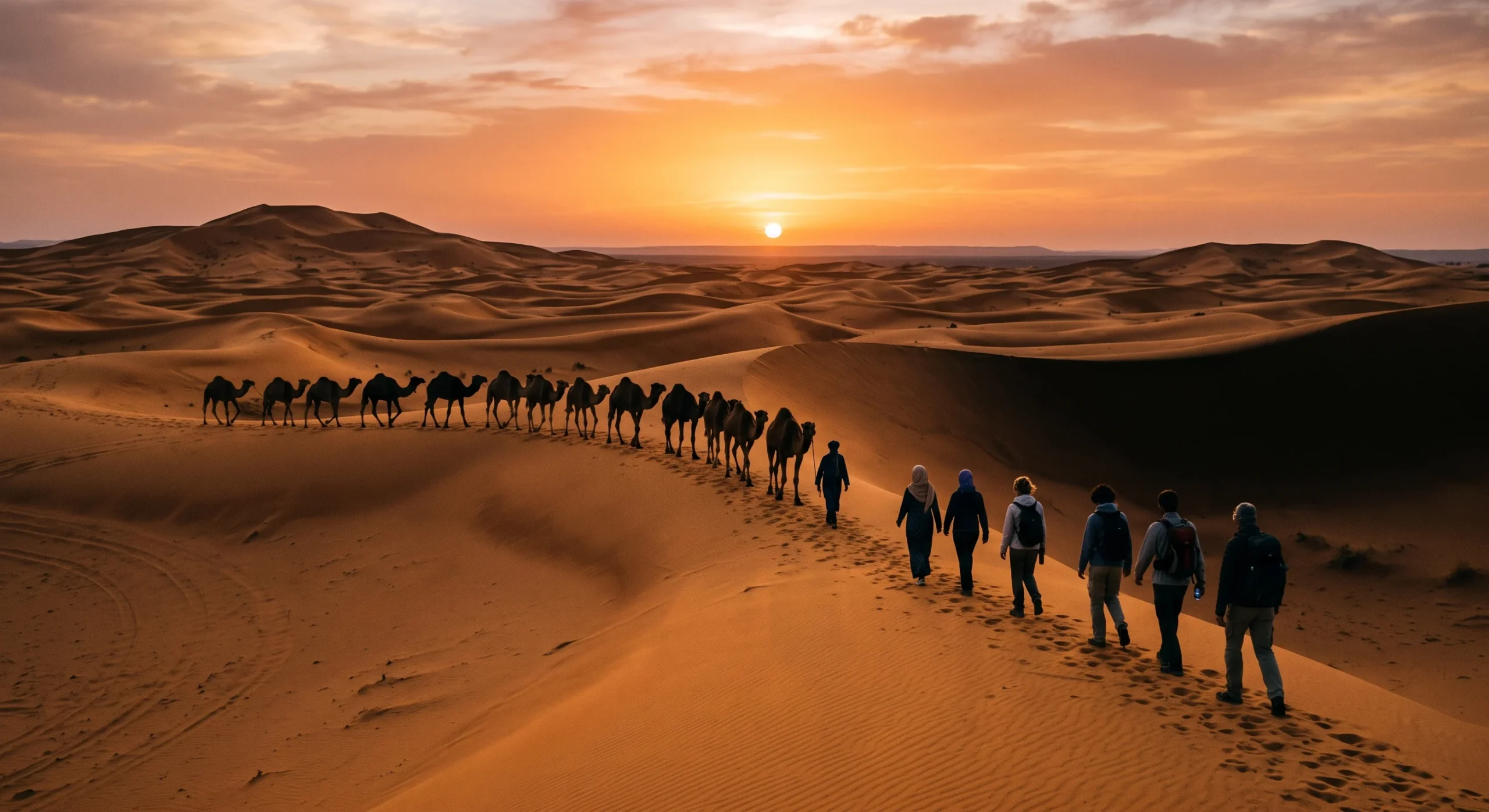
A Sahara desert excursion is one of the most commonly added extensions to a Morocco itinerary, and multi-day tours departing from Marrakech or Fez typically head toward the dunes near Merzouga or Zagora, covering substantial driving distance across the Atlas Mountains and into increasingly desert terrain along the way. This isn’t a quick day trip in most cases, and travelers should budget at least two to three full days for a proper round trip that includes genuine time in the dunes themselves, not just transit.
Desert nights get genuinely cold, even directly following a hot desert day, which catches travelers off guard who packed only for daytime heat and didn’t plan for the sharp temperature drop after sunset in an open desert environment. Overnight camps range from simple shared tents to considerably more comfortable private setups with proper bedding, and choosing a reputable, well-reviewed tour operator matters more for this specific excursion than for most other single-day activities planned elsewhere across a typical, more relaxed Morocco itinerary overall for most travelers.
Train Travel Routes
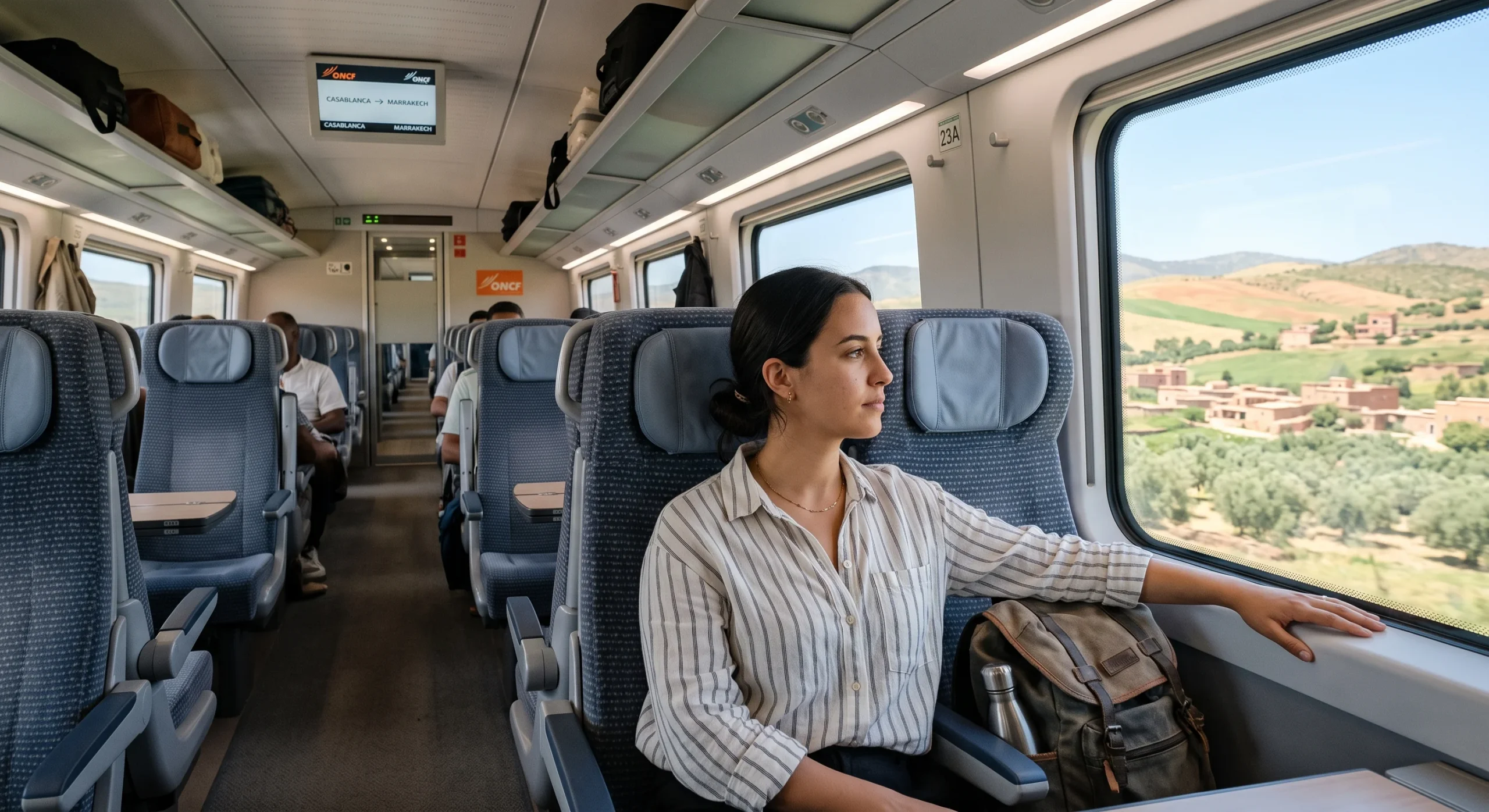
Morocco’s national rail network, operated by ONCF, connects most of the country’s major cities with a reliable, comfortable service that tends to surprise first-time visitors who expected a rougher or less developed system than what’s actually in place. Routes between Casablanca, Rabat, Fez, and Marrakech run frequently throughout the day, and the trains themselves are generally clean, punctual, and considerably more relaxing than the equivalent grand taxi or bus journey covering the exact same distance between two of the country’s major cities directly by road.
First class tickets cost only modestly more than second class but offer noticeably more comfortable, less crowded seating, which is worth the small price difference on longer routes crossing several hours of travel time between major cities. Booking a few days ahead during busier travel periods, holidays, and peak tourist season helps secure better seat availability, though shorter routes booked closer to the actual travel date generally still have space available without much advance planning required beforehand at all in most typical booking cases anyway.
- ONCF trains connect major cities like Casablanca, Rabat, Fez, and Marrakech reliably.
- First class offers a meaningful comfort upgrade for a modest additional cost.
- Booking a few days ahead during peak season secures better seat availability.
Tea Culture Etiquette
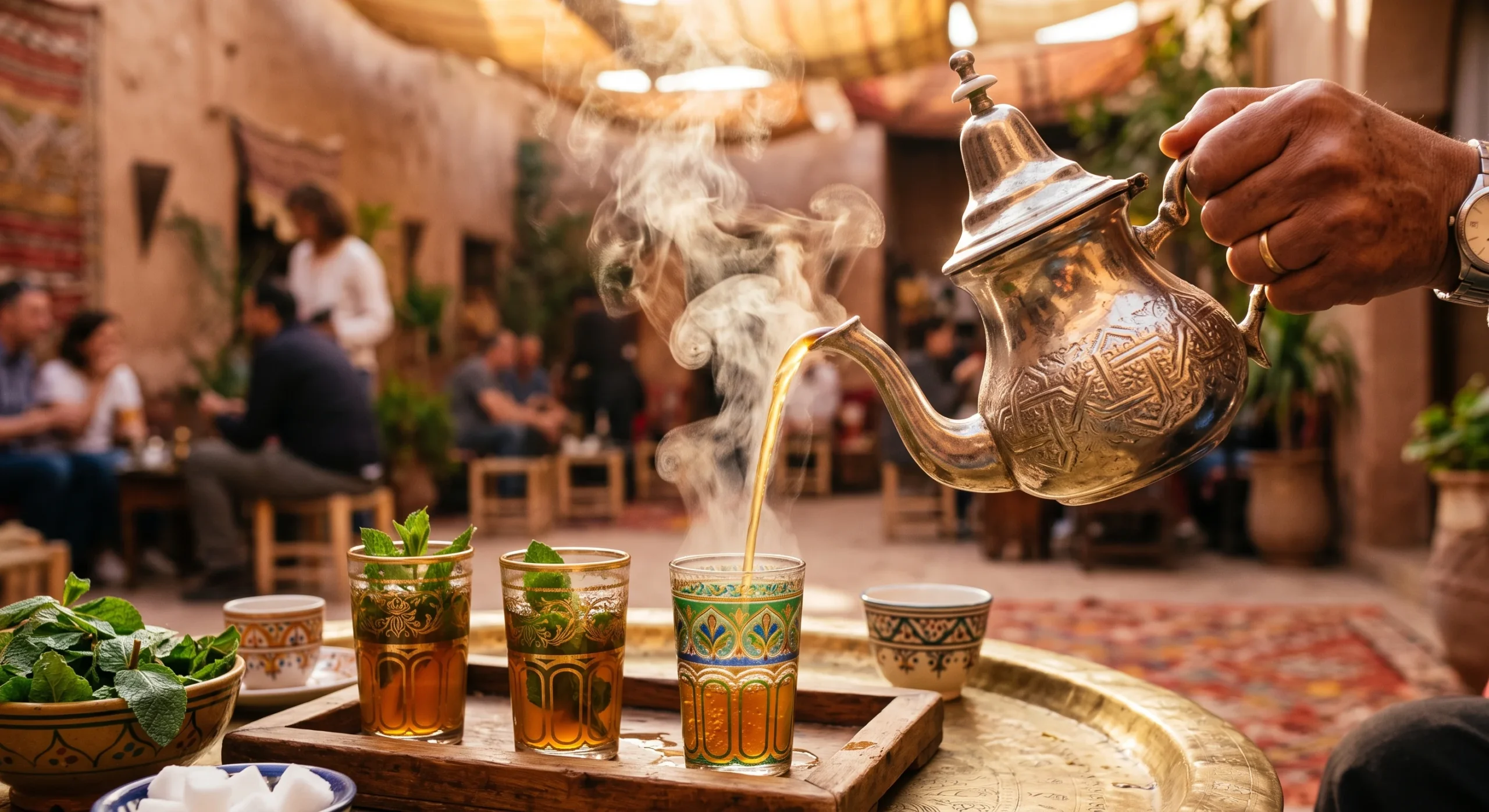
Mint tea holds a genuinely central place in Moroccan hospitality, and being offered a glass, in a shop, a riad, or even during a casual roadside stop, is a common gesture of welcome rather than a sales tactic, even though it sometimes precedes a shopping conversation in a market setting. Accepting the offer, even briefly, is generally appreciated and considered polite, while declining outright can occasionally come across as slightly abrupt in a culture where genuine hospitality carries real, meaningful, everyday social and cultural weight.
The tea itself is typically poured from a height into small glasses, both for visual presentation and to create a light foam on top, and it’s usually served quite sweet by default, though asking for less sugar is a completely normal, accepted request in most settings. Taking a few unhurried minutes to actually sit with the tea, rather than treating it as a quick formality to get through, tends to open up a warmer, more genuine interaction with whoever happens to be offering it that day.
Photography Consent Rules
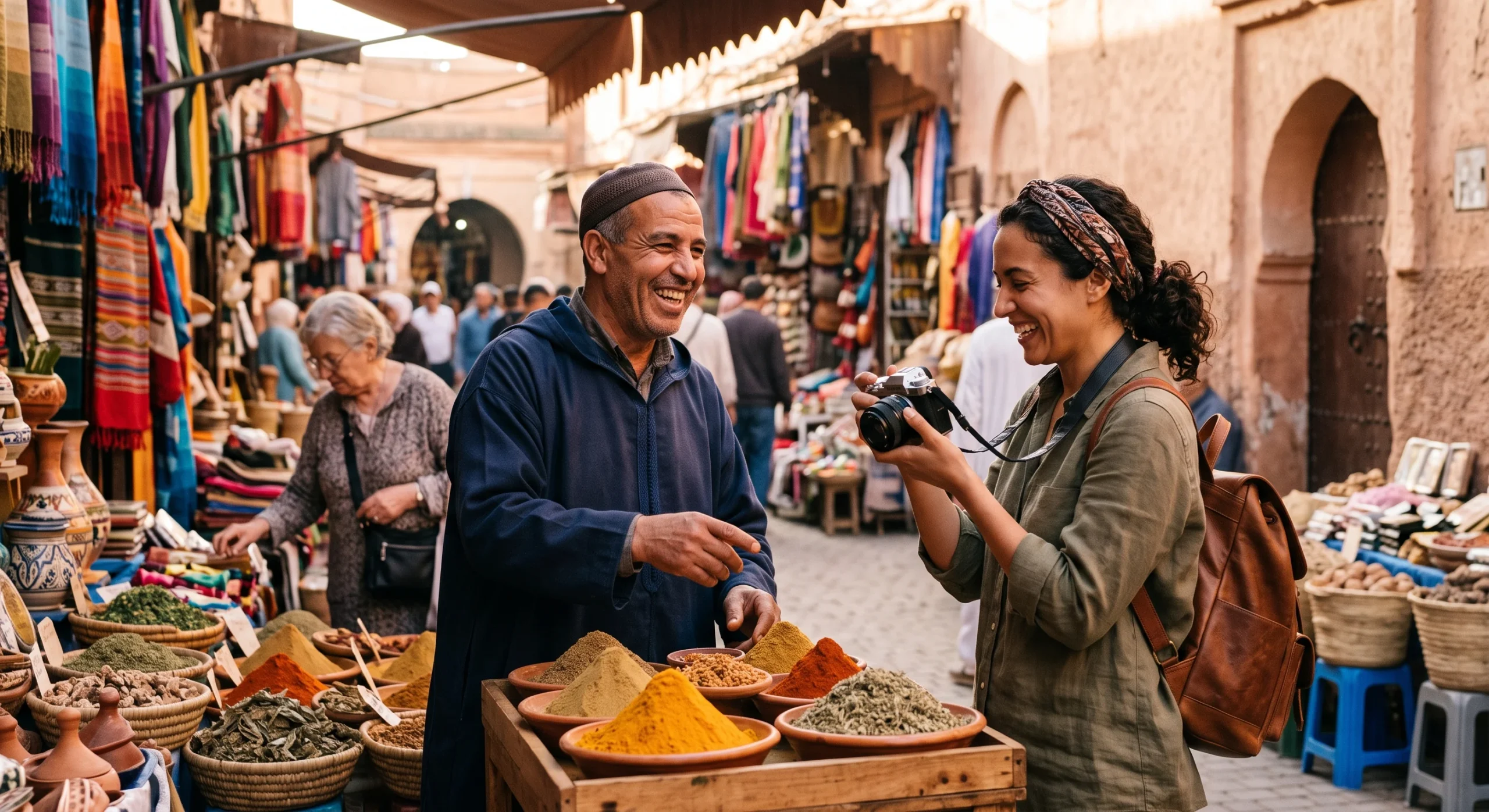
Photographing people in Morocco, particularly in busy market settings, without asking first is one of the more common etiquette missteps first-time visitors make, often without realizing it causes any real friction until a vendor or passerby reacts visibly to an uninvited camera pointed their way. Asking permission first, even with a simple gesture toward the camera and a questioning look when language is a barrier, is generally well received and often leads to a friendlier, more genuine interaction than simply capturing a candid shot from a distance.
Street performers and vendors who pose specifically for a photo often expect a small tip afterward, which is a reasonable, normal exchange rather than an imposition, and having a few small coins ready in advance avoids an awkward moment after the fact. Government buildings, military installations, and airport facilities are generally best avoided as photo subjects entirely, following the same reasonable caution that applies in most countries around sensitive infrastructure and official sites, regardless of the specific country or destination being visited on that particular trip.
- Asking before photographing individuals, especially vendors and performers, is standard, expected practice.
- A small tip is often appropriate after photographing someone who poses or performs specifically.
- Photographing government buildings, military sites, or airports directly is generally best avoided entirely.
Ramadan Timing Impact
A trip that overlaps with Ramadan runs on a genuinely different daily rhythm than the rest of the year, and visitors who don’t check the dates in advance sometimes find themselves confused by closed restaurants during the day or a noticeably quieter medina at hours that would normally be busy outside the fasting period. Many restaurants and cafes either close or operate on reduced hours during daylight, since the majority of the local population is actively fasting from sunrise to sunset throughout the entire month of Ramadan.
The evening tells a completely different story, as streets and markets come alive after sunset for iftar, the meal breaking the day’s fast, and this after-dark energy is genuinely worth experiencing for travelers whose trip happens to overlap with the month. Non-Muslim visitors aren’t expected to fast themselves, but eating and drinking discreetly in public during daylight hours out of general respect is appreciated. Checking the specific dates against planned travel dates well in advance shapes how the whole itinerary should realistically be paced day by day.
- Restaurant hours shift significantly during Ramadan, with many closed during daylight fasting hours.
- Evening hours come alive after sunset, with markets and streets busier than during the day.
- Visitors aren’t expected to fast but should eat and drink discreetly in public during daylight.
- Checking the current year’s Ramadan dates against planned travel dates matters significantly for trip timing.
Scam Awareness Basics
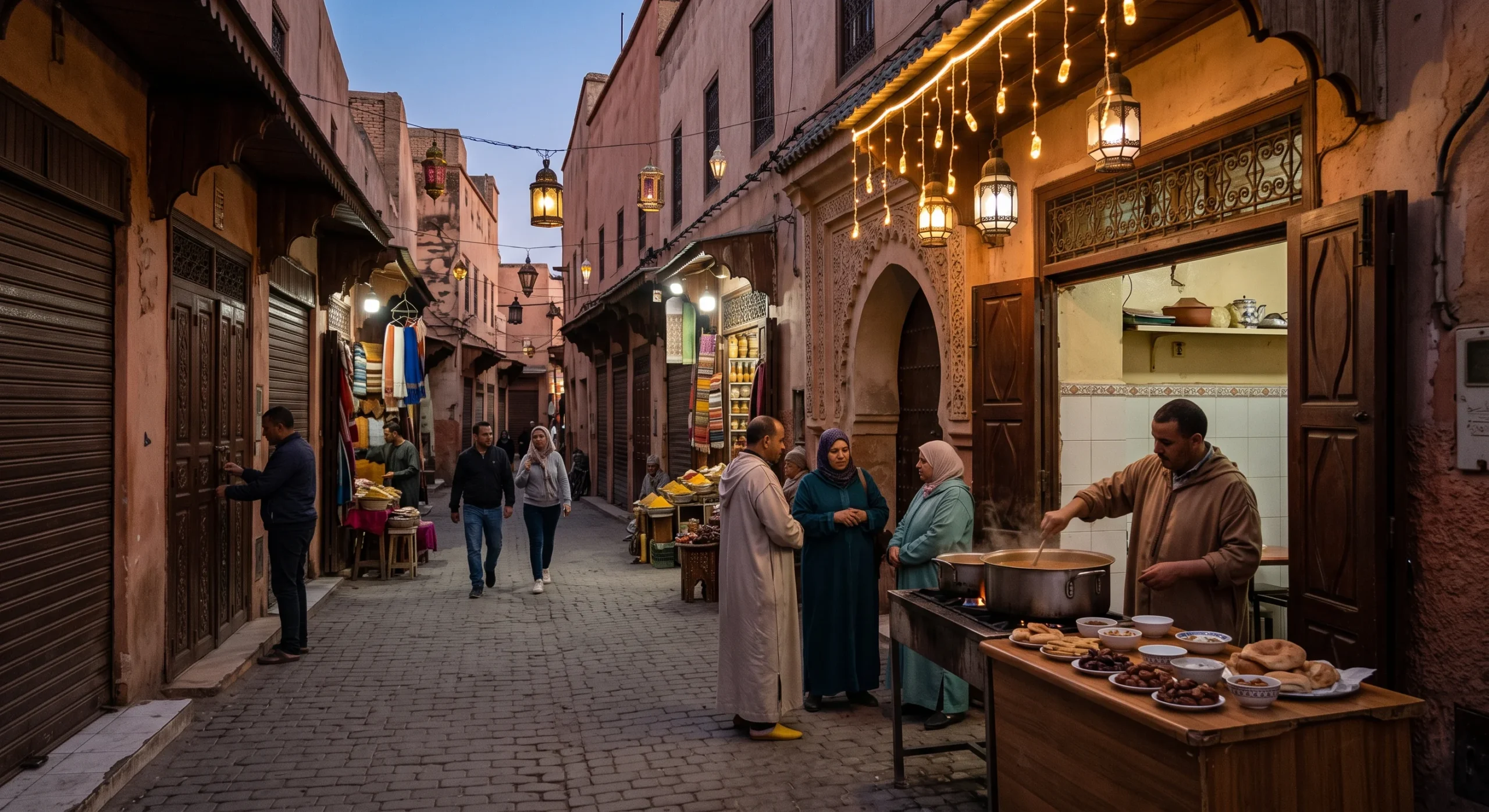
Like most heavily touristed destinations, Morocco has its share of common scams worth knowing about in advance, though being aware of the patterns removes most of the risk without needing to travel with excessive suspicion toward every interaction throughout the trip. A frequent one involves an unsolicited local offering directions or to walk a lost-looking tourist somewhere specific, then requesting a fee afterward for a service that was never actually asked for at all in the first place by the visitor themselves that same day.
A polite but firm decline, continuing to walk rather than stopping to engage at length, handles most of these situations without any real friction or confrontation. Similarly, unofficial guides outside major attractions sometimes claim official status they don’t actually hold, so booking guides through a hotel or a reputable, reviewed operator avoids this specific issue entirely. None of this should overshadow the trip’s overall tone, since the vast majority of everyday interactions throughout Morocco are genuinely warm, friendly, and entirely straightforward overall for most visitors.
Weather By Region
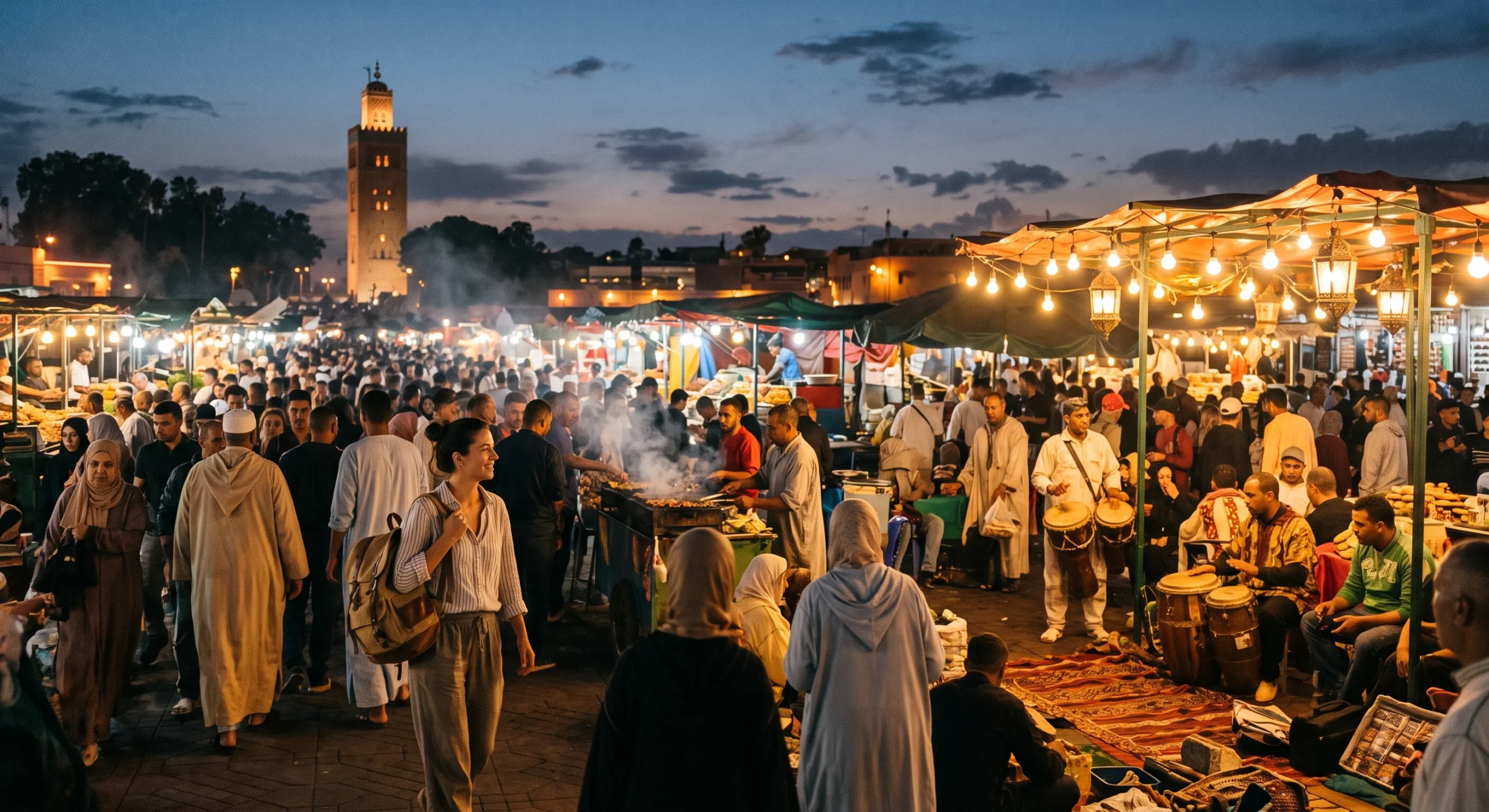
- Coastal cities like Essaouira stay noticeably cooler and windier than inland destinations.
- Marrakech and Fez run considerably hotter in summer, often exceeding comfortable walking temperatures.
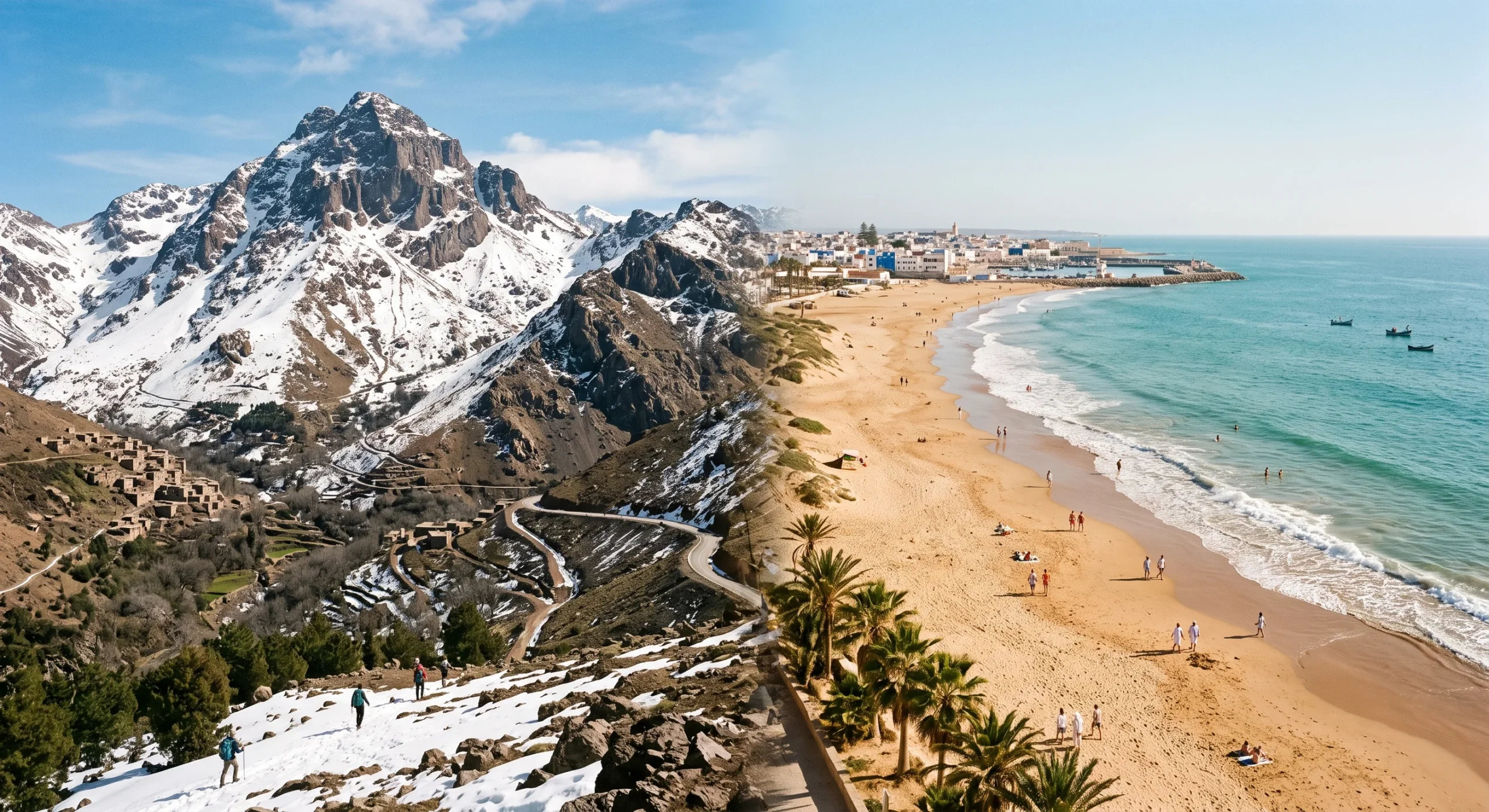
- The Atlas Mountains can see snow in winter, while desert regions stay warm year-round.
- Spring and autumn generally offer the most comfortable weather across most of the country.
Morocco’s geography produces a surprisingly wide range of climates within a fairly compact overall country, and packing for one region’s typical weather without accounting for a multi-stop itinerary covering several different zones is a common early planning mistake. Coastal cities like Essaouira and Casablanca stay noticeably cooler and windier year-round than inland cities such as Marrakech and Fez, where summer heat regularly climbs high enough to make extended midday walking genuinely uncomfortable for visitors not accustomed at all to that particular kind of dry, intense heat.
The Atlas Mountains introduce yet another climate entirely, with genuine snow possible in winter at higher elevations, while desert regions toward the south stay warm through most of the year but drop sharply in temperature after dark, as covered earlier in the Sahara section of this list. Spring and autumn tend to offer the most broadly comfortable weather across the country’s different regions simultaneously, which is why many first-time visitors find these shoulder seasons work best overall for planning a longer, more relaxed multi-city itinerary comfortably.
Packing For Medinas
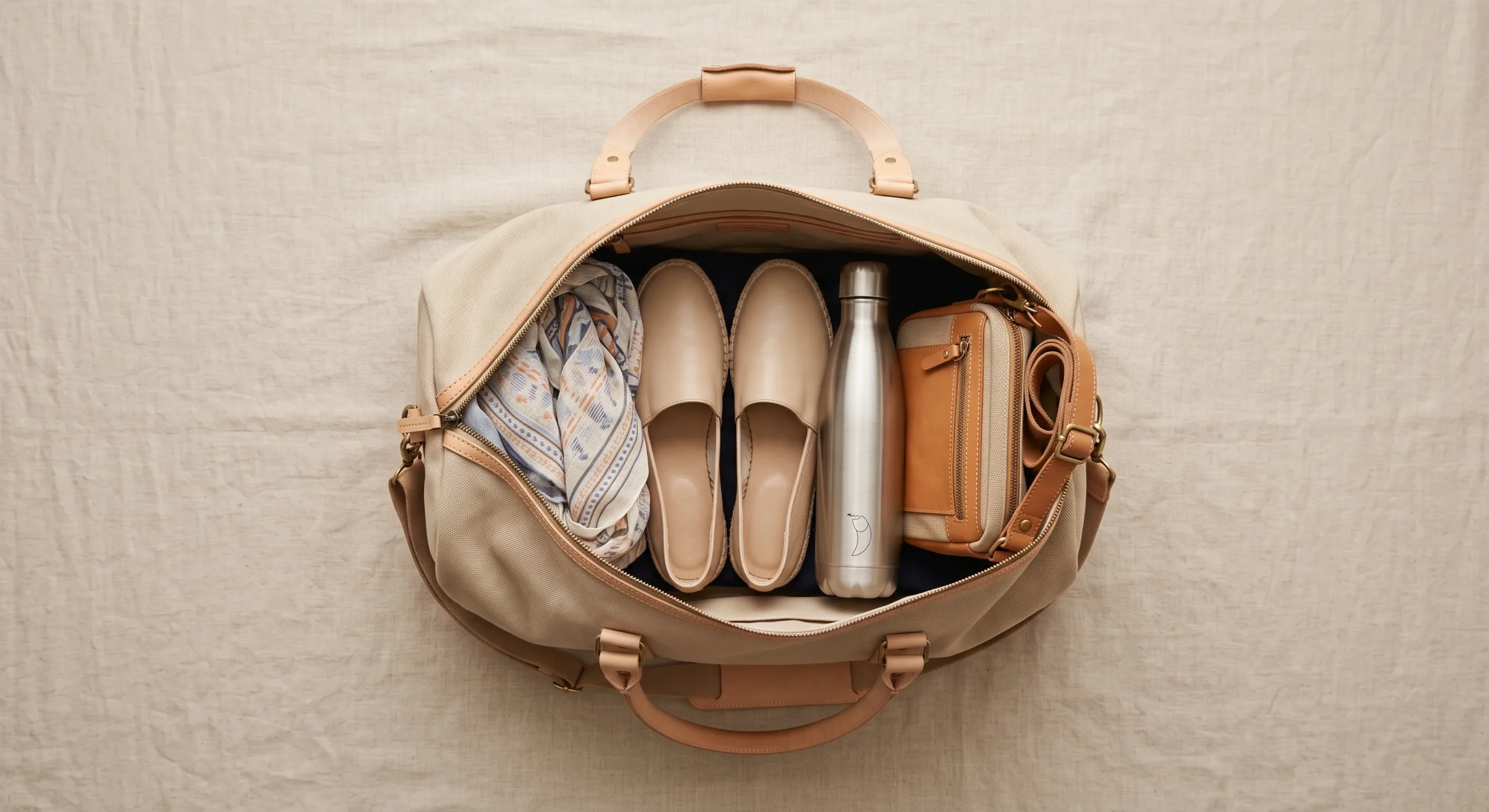
Medina streets are famously uneven, cobbled, and occasionally steep, which makes footwear one of the more practically important packing decisions for a Morocco trip, ahead of nearly everything else on a standard travel checklist. Flat, sturdy shoes with genuine grip handle these surfaces far better than sandals, which offer little protection from uneven stones and occasional debris, or heels, which are simply impractical across the kind of terrain most medina exploration actually involves throughout a typical, fully packed day of walking around the old city.
A crossbody bag worn toward the front of the body, rather than a backpack worn behind, keeps belongings more visible and secure while navigating busy, crowded souk alleys where pickpocketing, while not rampant, does occasionally happen in the most congested market sections. A reusable water bottle, refilled from filtered sources at hotels or riads rather than bought fresh each time, cuts down meaningfully on both cost and plastic waste across a trip that already involves drinking a lot of water constantly throughout each single day.
- Flat, comfortable shoes handle uneven medina cobblestones far better than sandals or heels.
- A crossbody bag worn in front keeps belongings secure in busy, crowded market alleys.
- A reusable water bottle, refilled from safe sources, cuts down on plastic bottle waste.
Trip Length Planning
Morocco’s cities sit far enough apart, and its highlights are varied enough, that a genuinely satisfying first trip needs more time than the three or four days some visitors initially budget for it, especially once a desert excursion or multiple cities get added to the plan. Seven days is a realistic honest minimum for covering two or three major cities plus a Sahara extension without feeling constantly rushed between stops, while ten days allows a noticeably more relaxed overall pace with plenty of room for slower, deeper exploration.
Trying to cram Marrakech, Fez, a coastal stop, and a desert trip into a shorter window tends to produce a trip that’s mostly spent in transit rather than actually experiencing any single place properly, which defeats much of the point of visiting a country this geographically and culturally varied in the first place. Choosing fewer stops and spending genuinely longer at each one consistently produces a more satisfying first Morocco trip overall than an overly ambitious itinerary that never quite catches its breath along the way.
FAQ
Is Morocco safe to visit as a first-time traveler?
Yes, Morocco is generally considered safe for tourists, holding safety advisory levels comparable to several Western European countries. The scam awareness basics covered above address the most common friction points, and the overwhelming majority of everyday interactions throughout the country are genuinely warm and straightforward for visitors.
How many days do I need for a first trip to Morocco?
Seven days is a realistic minimum for covering two or three major cities plus a short desert extension, as covered in the Trip Length Planning section above. Ten days allows a more relaxed pace, while anything under a week tends to feel rushed given how spread out the country’s highlights actually are.
Do I need to cover my head as a tourist in Morocco?
Head covering isn’t required for general sightseeing, though it’s respectful when entering the rare mosques open to non-Muslim visitors, like the Hassan II Mosque in Casablanca. A light scarf, covered in the Modest Dress Guide section, is worth packing regardless for both sun protection and quick modesty coverage when needed.
Is it easy to get lost in the medinas?
Very easy, and it’s genuinely expected rather than a sign anything has gone wrong. As covered in the Medina Navigation Tips section, offline maps and landmark-based navigation, rather than tracking street names, handle most of the disorientation without real difficulty or risk.
What’s the biggest mistake first-time Morocco visitors make?
Underestimating how much time a proper trip actually needs, often trying to cover too many cities in too few days, as covered in the Trip Length Planning section. A close second is not checking the passport validity requirement carefully enough before booking flights.
Conclusion
Morocco delivers a genuinely memorable first trip once the small, practical details are handled ahead of time rather than learned the hard way mid-trip. Knowing the currency and haggling norms, respecting mosque access rules, and giving the trip enough days to actually breathe between cities all add up to a visit that feels rich rather than overwhelming. Save these 20 things to know before visiting Morocco to Pinterest before booking flights, use this list to build a realistic itinerary, and share it with anyone else planning their first trip to the country.